
• There’s a common belief that misogyny is always silently lurking right outside the door of every Nigerian woman. And despite the rise of new-age feminism and increased awareness of women-focused issues, recent events keep reminding us that this belief isn’t a lie.

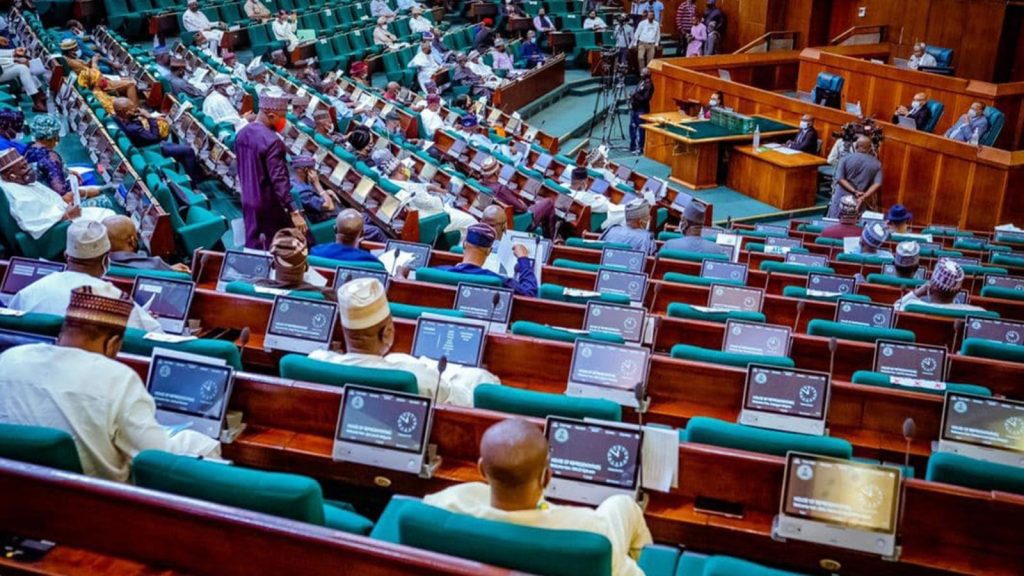
    For many Nigerians, the idea that  “abortion is healthcare” has always clashed with strong religious and moral beliefs, often leaving vulnerable women without real autonomy over their bodies. That risk might get even worse soon. On October 26, the Nigerian Senate started considering a controversial bill that proposes a 10-year jail term for abortion-related offences.
    So, what exactly is this controversial bill about?

    The Senate started its debate with promises of “updating” Nigeria’s Criminal Code, but somehow, in the process, abortion rights got lost in translation. 

    At first glance, the Criminal Code Amendment Bill 2025 looks promising. It aims to increase penalties for sexual offences like defilement and assault — a move that signals progress. But the proposed amendment to the present abortion laws in the bill quickly derailed the initially progressive nature of the debate. 

    The present laws guiding abortion practices in the country state that if someone supplies drugs or instruments for abortion, they will be sentenced to up to three years in prison. However, the amendment proposes a stricter and much brutal sentence by pushing for an increment to ten years imprisonment without the option of a fine.

    But the “no nonsense” approach of this amendment was not the only part that stirred up controversy and further debates; its vagueness also left room for questions, forcing some lawmakers to push for clarity on how the bill intends to define an “unlawful abortion.” If the bill gets passed without further modifications, even a medically necessary abortion could be punished. It offered no clarity, no safety net, just fear and controlled autonomy. 

    The lawmakers, who would often echo ayes at the end of similar debates, were split. Some argued abortion could save a woman’s life. Others said women often face unbearable circumstances, including economic hardship, rape, or health crises, which might necessitate terminating a pregnancy. 

    The chamber was in such a frenzy that Senate President Godswill Akpabio had to call a pause, though this is far from a full halt on the bill, as it has now been sent to the Committee on Judiciary, Human Rights, and Legal Matters for further review. In two weeks, the committee will report back, and the abortion clause could either be reshaped or deleted. Until then, Nigerian women are left waiting in uncertainty. 

    Why is this bad news for women?

    Nigeria already has some of the strictest abortion laws in the world. For context, abortion is only allowed when a woman’s life is at risk. There’s no legal protection for survivors of rape, incest, or women who simply want to have a choice over their reproductive lives. This is why hundreds of thousands of unsafe abortions happen every year, contributing up to 15% of maternal deaths.

    Women end up at quack clinics, take unsafe pills, risk infections, infertility, or death.

    The amendment does nothing to fix the root causes, like the limited access to contraception, poor healthcare infrastructure, social stigma, and lack of sex education. Instead, it threatens to pile more punishment on women. Now, doctors might hesitate to provide life-saving care because they fear the possibility of a ten-year jail term, simply for aiding a patient. If this bill is successful, fear becomes the law, and in a country where unsafe abortions contribute to up to 15% of maternal deaths, this is more than just bad policy; it’s deadly.

    It’s even more unfortunate that when the Senate had the chance to get a woman’s input from Senator Natasha Akpoti-Uduaghan, who pointed out that abortion directly affects women, she was shut down because Senate rules prevent reopening concluded debates. 

    What can Nigerians do?

    This is where your action matters. There are concrete steps you can take to make your voice heard:

    1. Pressure your representatives. Flood their lines, emails, and social media with calls to protect women’s rights. Lawmakers listen when the people push. Find their contact details here.
    2. Spread awareness. Talk about the bill with friends, share credible information online, and correct false narratives. Public scrutiny can stop lawmakers from passing harmful laws quietly.
    3. Support advocacy groups. Organisations fighting for sexual and reproductive health rights need volunteers, donations, and public attention. Stand with them.
    4. Demand legal clarity. Push for definitions that protect women and healthcare providers, not laws that punish them vaguely.
    5. Stay focused on the Senate committee. The next two weeks are critical. The louder Nigerians get, the harder it becomes for lawmakers to ignore.

    At the end of the day, this isn’t just another bill. It’s a reminder that whenever Nigeria tries to move forward, there’s someone ready to drag women’s rights five steps back, and that cycle needs to be broken. 

    [ad]

  • On May 22, 2025, President Bola Ahmed Tinubu addressed an APC national policy summit, where he accepted the endorsement of various party organs, including the Progressive Governors’ Forum (PGF) and National Working Committee (NWC), as their sole presidential candidate for the 2027 elections.

    But, in true Tinubu fashion, he had to make another addition to his growing list of unconventional quotes.

    During the address, he said: “You don’t commit abortion after the baby is born; that’s murder.”

    The statement makes very little sense in the context of his speech. The president was explaining the wisdom of ending fuel subsidy payments when he blurted out the unexpected line about abortion. He claimed the continuation of subsidy payments threatened the future of unborn generations. Only the president seems to know how this connects to abortion.

    As has become the norm with Tinubu’s remarks, social media content creators jumped on it, and it has made its way into hilarious lists alongside his other strange and confusing statements, such as “A dead fish cannot be sweet in any soup; they are dead.”

    For those of us who prefer the fish in our soup to be dead and properly cooked, the quote stands out as more than just another strange, confusing fusion of words to be included in humorous compilations.

    It brings to mind how religious and cultural conservatives in Nigeria often describe abortion, typically equating it with murder. Rather than trying to decipher what the president meant, it’s worthwhile to reflect on Nigeria’s hostile stance toward women’s sexual health rights.

    Being a woman in Nigeria is tough business. They have long been fighting to be treated as if their lives have greater meaning beyond being vehicles for childbirth. But Nigerian culture is stubborn and slow to change.

    In 2025, we are still having spirited debates online about whose life should be prioritised between mother and foetus in cases of medical complications.

    But the banger boys of X have a lot more in common with Nigeria’s religious and cultural conservatives than you might think. It is the same obsession to prevent female autonomy over their own lives and bodies that seems to fuel both.

    ALSO READ: 4 Nigerian Women On How Nigeria’s Abortion Laws Have Affected Them

    Enter religion and morality

    Religion and morality tend to shape debates around women’s autonomy. It is no different in the case of Nigeria’s abortion laws.

    Religious bodies have lobbied to keep Nigeria’s abortion laws unchanged since 1960, despite constant efforts from women’s rights groups to push for reform. In 1981, for instance, the Society of Gynaecologists and Obstetricians of Nigeria (SOGON) attempted to lobby for a Termination of Pregnancy Bill but were opposed by religious leaders and the Nigerian National Council of Women’s Societies, who argued that it would promote sexual promiscuity.

    In 2001, the Catholic Women Organisation (CWO) marched against a law that would legalise abortion, which they called murder. Several religious organisations spoke up against the law, including the Christian Association of Nigeria (CAN), and Alhaji Yusuf Yusuff, a chief Muslim imam in Lagos, said anyone who aborts a child should be punished the same as a murderer.

    However, Nigeria’s official stance on abortion is hypocritical. A 2024 study in Osun State found that, among women with unwanted pregnancies, 53.5% of those with anti-abortion religious beliefs still attempted to terminate their pregnancies. By contrast, 59.6% of women with pro-abortion religious beliefs also tried to end their pregnancies, suggesting that faith plays little, if any, part in the decision to seek an abortion.

    Get More Zikoko Goodness in Your Mail

    Subscribe to our newsletters and never miss any of the action

    Nigeria’s abortion stance = pennywise and pound foolish 

    Nigeria’s restrictive laws have never stopped or reduced abortions. In 2015, Guttmacher Institute, a US-based research and policy organisation, reported that around 25% of pregnancies in Nigeria are unplanned—due to poor sexual education and limited access to contraception—and 56% of these unintended pregnancies end in abortion. These laws only serve to endanger women’s health, driving them to untrained practitioners or harmful pills. According to the African Human Rights Law Journal, about 63% of abortions in Nigeria take place in unsafe conditions and account for 10% of the country’s maternal deaths.

    Even the Nigerian military has been accused of forcing abortions as part of its fight against terrorism. A Reuters report claims that, between 2013 and 2022, the military forcibly terminated at least 10,000 pregnancies resulting from rapes by Islamist militants in the country’s north-eastern region.

    The government vehemently denies these accusations, and the Nigerian National Human Rights Commission (NHRC) says its investigation found no evidence of forced abortions by the military. The Commission claimed that the military’s structure would make such acts difficult and instead accused Doctors Without Borders of performing abortions in the north-eastern region.

    Is it time for a review?

    Nigeria currently has the worst maternal mortality rate in the world. In 2023, Nigeria accounted for 29% of all maternal deaths worldwide, with an estimated 75,000 women losing their lives.

    With this being the situation at hand, is it not vital that women be allowed to make such a life-threatening decision as childbirth for themselves, instead of being forced into it by the arm of the state?

    Women’s rights groups and “pro-choice” advocates make their case with facts and figures. They call attention to the grim reality on the ground—there is a crisis of women dying while seeking back-door abortions. They dispel fear-mongering with the fact that abortions are one of the safest medical procedures when performed by qualified doctors in proper medical settings.

    They clamour for the upholding of women’s right to dignity through autonomy to exercise sexual health rights, but are met with opposition on the grounds of morality, equating their freedom with murder.

    Abortion is an incredibly sensitive issue in Nigeria, and for the women it affects, it is often a matter of life and death. That is why it is so jarring to hear it invoked so casually by the man who holds the highest office in the land, especially in a speech that had nothing to do with reproductive rights. It is strange, but sadly not surprising, given how such moments have become normalized under Tinubu’s presidency.

    His words are puzzling, especially in the context in which they were said. Still, they offer a chance to ask a vital question: How long will the Nigerian woman have to wait before the law reflects an obvious truth—her choice over her own body is not murder?

    ALSO READ: I Had an Abortion All by Myself at 16

    [ad]

  • A couple of weeks ago, I shared Alanna*’s story about how her teenage pregnancy and subsequent traumatic abortion still haunt her seven years later. Several ladies could relate to her story and reached out, wanting to share their post-abortion experiences as well.

    I decided to reach out to even more women, and here’s what seven of them had to say.

    Image source: Pexels

    “I think I’m being punished”

    — Ebi*, 52

    I had an abortion 20 years ago, and honestly, it was a rushed, emotional decision. I still blame myself, and I think I’m being punished because I’ve not had another pregnancy since.

    This is what happened: I was in a relationship with this man, and we were planning to get married. Then, I got pregnant. According to him, we had to push the wedding till after I gave birth because his culture frowned on pregnant brides. I agreed and moved in with him to have the baby while wedding plans were still undergoing. Four months into the pregnancy, I discovered I was expecting twins. At the same time, my fiance and I started having issues.

    To cut the story short, I had a surgical abortion at four and a half months because I didn’t want to go ahead with the marriage. It was in a hospital, but really hush-hush because it’s illegal. We broke up, and I later married someone else about six years later, but no child. Doctors say I have a depleted ovarian reserve, but if I didn’t have the abortion, I’d have two adult kids today.

    “It gave me a new lease on life”

    — Mercy*, 31

    I’m pro-life, and I sometimes feel guilty about my abortion, but it gave me a new lease on life. 

    I had it three years ago, a year into my marriage. It was an abusive union — the abuse started four months after we got married — and I was already planning how to exit when I found myself pregnant. I didn’t tell anyone because I didn’t want anyone to try to change my mind. I’d already waited almost eight months for him to change, and I knew having a child with him would bind me to him forever. I didn’t want to end up being yet another figure on the list of domestic violence victims.

    I got the abortion pill and did it within two weeks of finding out I was pregnant. It felt like really bad menstrual cramps, and I bled a lot, but it wasn’t so bad. I got better the next day and packed out the week after. I’m free. 

    “I don’t even think about them”

    — Anne*, 27

    I’ve had two pill abortions, both for the same ex-boyfriend. Each time, I thought I’d feel guilty about the babies, maybe because of how people try to bad-mouth abortions, but I don’t even think about them.

    It was a choice we both made because we weren’t ready to be parents — we weren’t even thinking about marriage. I’m now more attentive to birth control and contraceptives, so I don’t have to go down that route again. But if I get pregnant by mistake, I’ll abort again.

    “The depression is real”

    — Dany*, 34

    I don’t think we talk enough about the depression that comes after having an abortion. It’s real.

    I got pregnant at 25, after my boyfriend raped me in the university. I confided in my best friend because there was no way in hell I could tell my parents.

    She took me to a clinic, and they gave me two options: D&C or the pill. I was really paranoid about doing a surgical procedure because it seemed like the easiest way to lose my womb, so I opted for the pill. It was horrible. I bled terribly and still had to do the D&C two weeks later after all, because the pill didn’t evacuate the pregnancy completely. I still had symptoms. 

    For three weeks after the whole ordeal, I kept seeing babies in my dream, and I was depressed for a really long time. I’m married now and have one child, but I can’t forget the one I didn’t allow to live. 


    RELATED: What She Said: I Had an Abortion, I Regretted It


    “I wouldn’t advise anyone to do it”

    — Sade*, 41

    I’ve had two abortions; one while I was single, and the other after giving birth to my four children (my husband and I couldn’t afford a fifth), but I wouldn’t advise anyone to do it.

    It’s too risky, and I know many women who’ve had complications because they had to do it under the table since abortion is still illegal in Nigeria. No standard doctor would want to do it because they’d risk losing their license, so we’re left with the ones who just don’t care. I’m just lucky not to have had any complications.

    My first abortion was done traditionally. A local midwife inserted a leaf in my vagina, and within six hours, I started bleeding. My husband and I had to bribe a doctor to help us with the second one. I was scared, but I already have four children; there’s nothing I’m using the womb to do again. Thankfully, it went well, and I fully recovered within three days.

    “It shouldn’t stop you from having kids”

    — Mina*, 20

    I had a pill abortion at 19, and only my girlfriends knew. One of them was heavily against it, though. She said she had a dream that I couldn’t have more children. I’m still in school and can’t even provide for myself talk more of a baby, so it was the sensible thing to do. I tried not to take her seriously and went ahead with it, but it was eating me up for a while. So a few months ago, I went to a gynaecologist for a full check-up.

    The doctor confirmed all was well and emphasised that an abortion, when done properly, shouldn’t stop you from having kids. I think most people are scared because there’s so much misinformation in Nigeria.

    “I think I died”

    — Sophie*, 29

    I’ve had an IUD since I was 24, so I was really surprised when I got pregnant in 2022. I told my boyfriend; the goat ghosted me. I got information online and bought an abortion pill because single parenthood isn’t in my dictionary.

    I took the pill and mentally prepared myself, but I think I died. I blacked out for about three hours and woke up bleeding. I’m not sure what happened. Maybe I got dizzy and fainted, but I lost about three hours. I bled for two days, did another pregnancy test after a week, and it came back negative.

    A part of me feels I should’ve kept the baby. I’m pushing 30, after all. I feel guilty whenever I see a pregnant woman on Instagram, but we move. Being a single mother would hurt my chances of getting into a serious relationship even further. 


    *Names have been changed for the sake of anonymity.


    NEXT READ: My Husband Woke Up One Day and Decided to Join Politics

  • In June 2020, just when the lockdown regulations were wearing off in most parts of the country, Sandra* discovered she was pregnant. The 21-year-old remembered feeling shocked as she had taken a post-pill the day after she had sex with her ex-partner. She also understood, being in her early twenties, still in school and living with her single mother, that she couldn’t keep the pregnancy. 

    “The day I found out was the day I took it out,” Sandra* tells Zikoko. “ I think the stressful part was finding a place to get it done. My ex suggested someone who was going to give me something to drink but the idea didn’t go down well with me. Then I remembered a friend in my hostel whose friend had gotten an abortion, and she connected me with a doctor in Benin. Luckily for me, the doctor was nice. He actually said his goal is to destigmatise abortion, so he put me through the two types (medical and vacuum) and I opted for the surgical process. The process lasted like 5 minutes. It wasn’t as bad as I had imagined and that’s why I’m telling my story. Women need to know that it’s actually an easy process when done right.”

    25-year-old Uloma* found out she was pregnant on February 25th, 2019. She had been certain the symptoms she felt were indicative of her period, which was also supposed to start around that time. Uloma*, along with a friend, proceeded to call all the health workers she knew.  

    “First, I was afraid that abortions in the hospitals were unsafe and wouldn’t be done with the latest medical tools — it isn’t practised here so doctors wouldn’t have evolved. For example, who still does D and C for early pregnancies? Why that? I was also scared that they would call the police on me or ask for spousal consent or something funny. Of course, it would have been easier to find a place if the laws were different, places where reproductive rights are taken seriously and abortion is legal. Wouldn’t be doing James Bond for pills if it was that case,” says Uloma*. She finally settled on taking a pill, which took a lot of research and connections to get.

    Lola*, 28, who has had an abortion in London, attests to the importance of safe and legal facilities to carry out the procedure. “I was offered therapy and gained considerable compassion from my university, which supported me academically and financially through the situation. My friend’s situation in Nigeria was far more secretive and expensive. I practically had luxury compared to her. She had to go through the backdoors of a clinic and her university work was interrupted. I’m not sure how well she was able to do in her studies. How emotionally, physically, and financially taxing it was for her was not comparable to my situation,” Lola* tells us.

    Legalities of Abortion in Nigeria

    Abortion is currently illegal in Nigeria. Sections 228-230 of the Criminal Code, which applies in the southern states of Nigeria, provides that any person involved in the abortion procedure is guilty of a felony. Timinepre Cole, a legal practitioner, and writer who has covered abortion rights in Nigeria explains that persons who carry out the procedure will be imprisoned for 14 years and persons who aid and abet abortion procedures will be imprisoned for three years. 

    “Women who abort are also guilty of a felony, which is punishable by imprisonment for seven years. Sections 32-234 of the Penal Code assume a similar position in northern states, prescribing punishments ranging from fines to imprisonment for offences relating to abortion,” she says. 

    The only instance when abortion is allowed in Nigeria is if having that child puts the life of the mother in danger, thus erasing instances where the woman got pregnant through sexual assault or simply does not have the social and mental capital to rear a child.

    A major factor as to why abortion remains illegal despite its overpowering necessity, seeing as unsafe abortions contribute to Nigeria’s high maternal mortality rate, points to the country’s conservative views. “Religion and purity culture for one affects how we view abortion in Nigeria and having an abortion does not conform to the accepted standards of morality and chastity prescribed for women,” Timinepre says.

    26-year-old Mink*, a healthcare professional who has been able to access safe abortion methods through the help of her work, also believes that the current laws in place are helping unsafe abortion processes thrive. “They make safe abortions hard to access. Most hospitals in Lagos don’t offer the service.

    So women opt to have it done by untrained people under very unhygienic methods. This increases the risk of complications and death. To buy the pills from pharmacies, you have to know who to ask. I’m lucky because I have friends that are pharmacists, so they can get it for me. Most people don’t have that luxury, and I hate it.”

    The conservative views trickle down to the health sectors, where women who go to have safe abortions are judged and ridiculed. In Sandra’s case, for example, even though the doctor who attended to her was professional, the nurses were less so. “They gave me judgemental looks and were talking about how I needed forgiveness. Immediately after my surgery, not even up to a minute, a nurse brought the fetus and shoved it in my face saying, “See your baby”. I didn’t answer. Then she said she was going to throw it away. I just did not mind her. It was later that I noticed that, omo, that image did not leave my head.”

    Fighting for Abortion Rights in Nigeria.

    “It’s been crazy, but I don’t regret any bit of it. It’s a sensitive, money-consuming albeit worthy cause to advocate for, considering the type of country we find ourselves in.” Jekein Lato-Unah, visual artist and women’s rights activist shares with us what it means to fight for abortion rights in Nigeria.  “I mostly pay out-of-pocket for these procedures, follow them to the clinics, check on them afterwards especially if the person is a survivor of rape. I don’t profit from assisting women with safe abortion practices done by qualified medical practitioners, yet I’ve had people try to set me up, set the medical professionals up, publish the numbers of doctors that assist the women that come to me, made false accusations against me along the lines of sending women to their deaths & profiting off their predicament.” 

    For Iwatutu Joyce, programme lead, African Girl Child Development, and Support Initiative, other huge roadblocks to improving abortion rights apart from funding also rest in socio-cultural behaviours, acceptance, and a low level of education on the subject. “The knowledge gap affects the work that I do. Schools in Nigeria do not provide comprehensive information on this very important subject. They only limit it to modified versions and make it hard for young women to know what they need to about abortions in a safe and healthy manner. And because adolescents are not covered under the law when it comes to accessing reproductive healthcare services, they are required to get parental consent.”

    But Jekein believes that for a considerable shift to happen, the healthcare sector has to lobby for a change in the current law and to improve education on abortion. “Unfortunately, the problem with this is medical practitioners are also influenced by faux morals, culture, and religion, even though their utmost concern should be the choice and well-being of their patients as well as every other person, and not what their culture or religion permits. I believe the number of medical practitioners that want abortions decriminalized is significantly less than those who are vehemently against it.”

    Edited by Ope Adedeji and Ruth Zakari.