If there’s one thing society struggles to accept, it’s a woman who says she doesn’t want children. Somehow, making a personal decision about not becoming a mother is enough to invite unsolicited advice, religious lectures, predictions of future regret and, occasionally, questions about whether something is wrong with you.
It’s almost as though a woman cannot simply say she doesn’t want children without having to defend her decision to an entire committee.
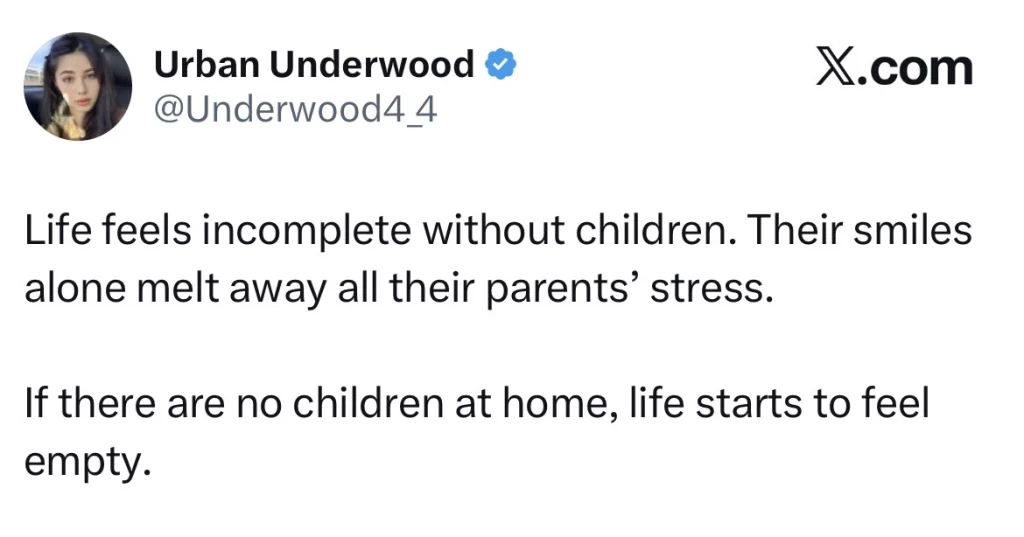
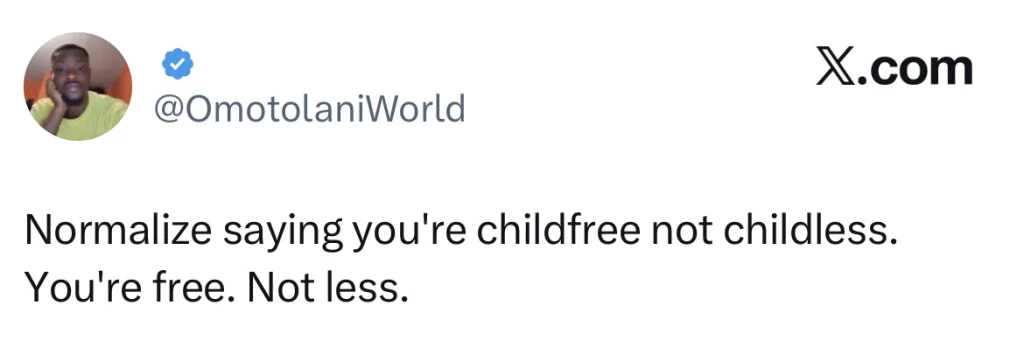
First, let’s establish something: being child-free is not the same as being barren or experiencing infertility. A child-free woman is someone who chooses not to have children, regardless of whether she is biologically capable of having them. Infertility, on the other hand, is a reproductive health condition that can make it difficult to conceive. While some women who experience infertility may eventually choose to live without children, there’s a significant difference between not being able to have children and not wanting them in the first place.
But somehow, when a woman says she doesn’t want children, people are quick to assume she hasn’t thought it through or that she’ll eventually change her mind.
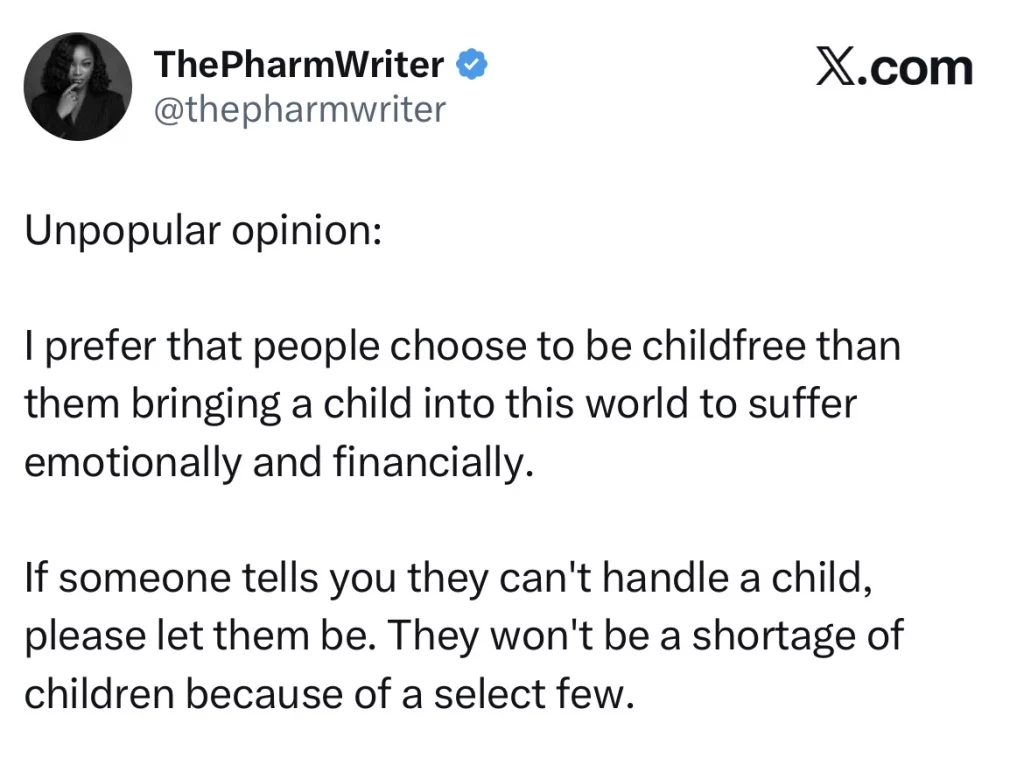
The questions are almost predictable. What happens when you get older? What if you meet a man who wants children? Won’t you regret it? Who will take care of you when you’re old? Don’t you want to experience the joy of motherhood?
Apparently, the possibility that a woman has considered all these things and still doesn’t want children is too difficult for some people to comprehend.
And this pressure doesn’t just come from family members who are eager to become grandparents. Religious leaders also contribute to conversations that frame choosing not to have children as going against God’s will.
In many Nigerian Christian communities, women are constantly reminded of the biblical instruction to be fruitful and multiply. Sermons about marriage and family often present procreation as an essential part of God’s plan, with some religious leaders suggesting that women who deliberately choose not to have children are being selfish, disobedient or refusing to fulfil their purpose.
A similar expectation exists in many Muslim communities, where marriage, family and raising children are strongly encouraged. Islamic teachings describe children as blessings and a source of joy, and some religious leaders use these teachings to encourage women to embrace motherhood. While there’s nothing wrong with celebrating motherhood as a blessing, problems arise when these conversations suggest that a woman who deliberately chooses not to have children is going against her faith or failing in her religious responsibilities.
You’d Also Like: Women – Led Protests That Made A Difference History
But does believing that children are a blessing mean every woman must have them? Can a woman not be devoted and faithful, maintain her relationship with God and live a purposeful life without becoming a mother?
The problem isn’t that religious teachings celebrate having children. It’s when those teachings are used to make women feel guilty about choosing otherwise. Why is a woman’s reproductive decision being treated as a spiritual obligation she cannot opt out of?
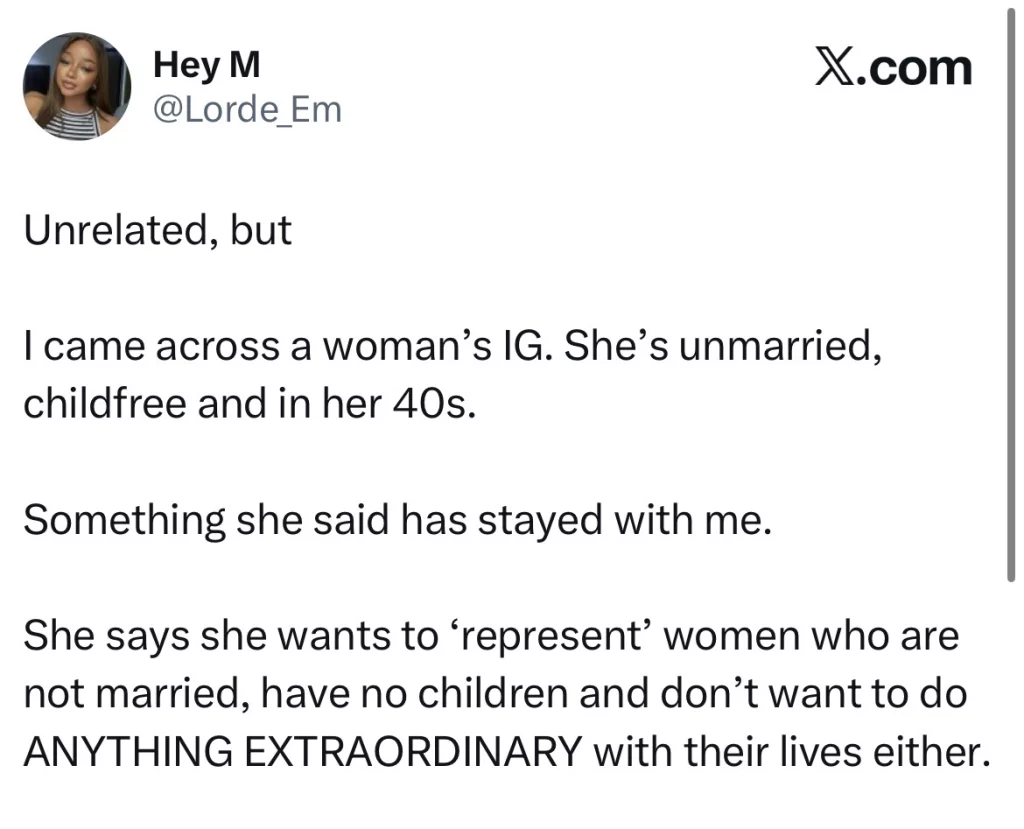
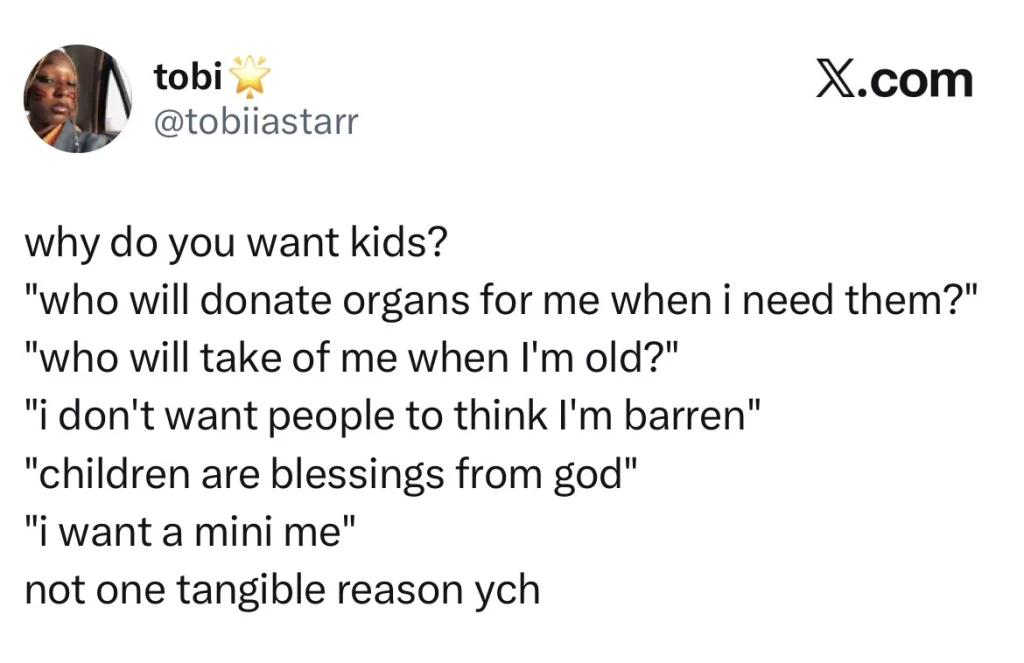
The irony is that these conversations rarely acknowledge that motherhood is a significant, lifelong responsibility. It involves physical, emotional, financial and psychological commitments that shouldn’t be undertaken simply because a woman has been told it’s what God or society expects of her. And if we’re going to talk about God’s will, shouldn’t we also consider that people can have different purposes, callings and definitions of fulfilment?
Read next: My Ex Is Holding Our Business Hostage
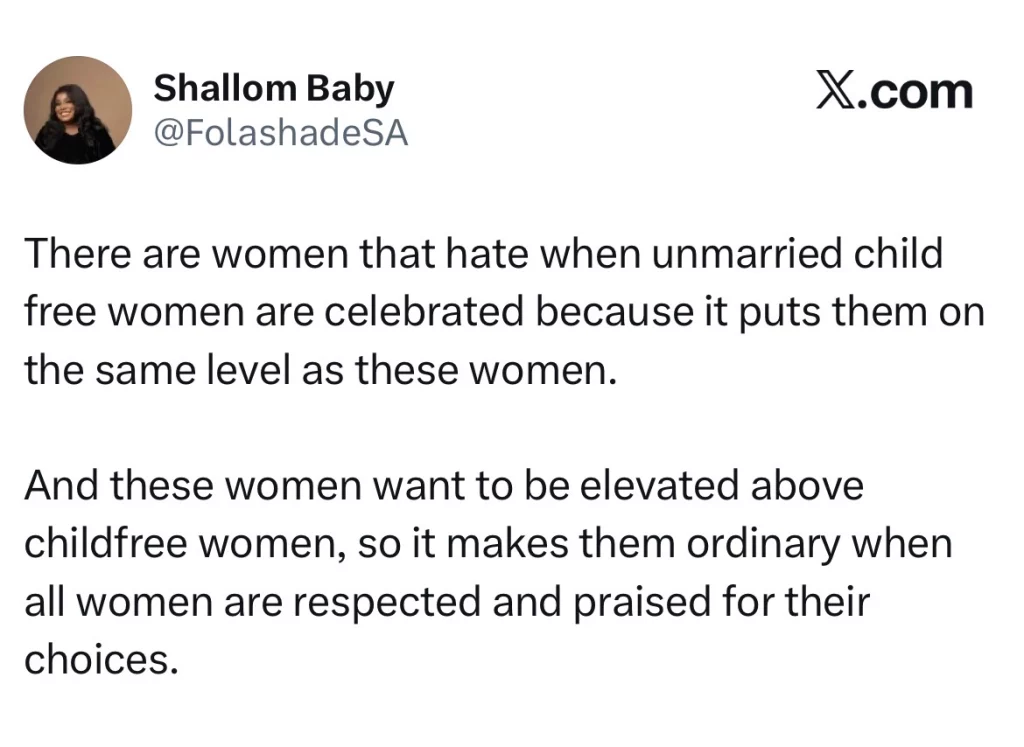
Some women don’t want to experience pregnancy or childbirth. Others don’t want the responsibility of raising children. Some would rather dedicate their time, resources and energy to their careers, businesses, relationships or personal interests. And some women simply don’t want children. They don’t have to be traumatised, financially unstable or secretly unhappy to arrive at that decision.
Yet, society seems to struggle with the idea that a woman can find fulfilment outside motherhood.
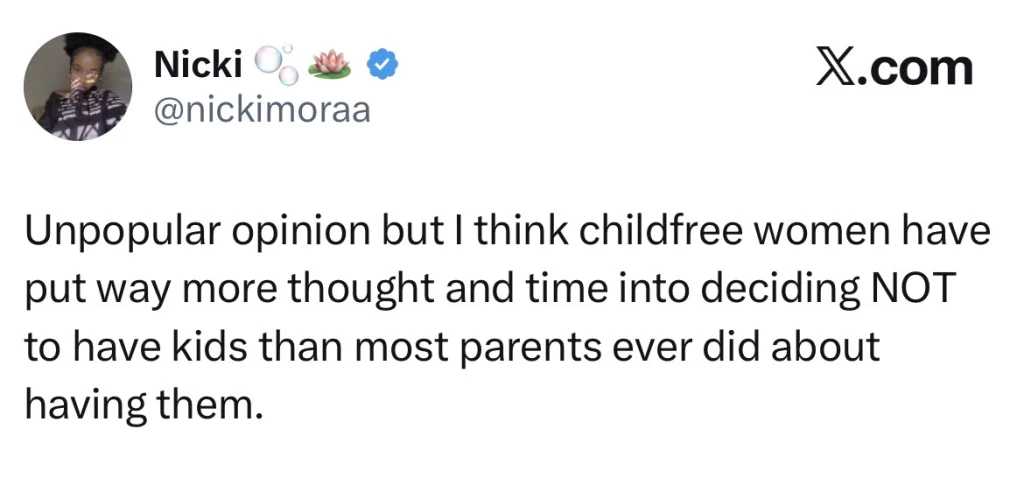
This is particularly interesting because many women grow up with the assumption that marriage and children are inevitable parts of their future. From childhood, conversations about their lives frequently revolve around finding a good husband, getting married and having children. Motherhood is presented as the natural destination of womanhood, and women who choose a different path are treated as though they’ve missed an important appointment.
Even when a woman is firm about her decision, people are quick to tell her she’ll change her mind. Apparently, she’s too young to understand what she wants, hasn’t met the right man or hasn’t developed her maternal instincts yet. It’s almost as though people would rather believe a woman doesn’t know her own mind than accept that she might genuinely have no interest in motherhood.
And speaking of men, why is one of the first questions women are asked whether their husbands or future partners agree with their decision? Why does a woman saying she doesn’t want children immediately become a conversation about what a man wants? Of course, having children is something partners should discuss before committing to a life together. However, a woman’s personal decision shouldn’t be treated as invalid until a man approves of it.
There’s also the argument that choosing not to have children is selfish. But what’s particularly interesting about this accusation is how little consideration is given to the sacrifices women are expected to make when they become mothers. Their bodies, finances, careers, time and personal ambitions can all be affected by parenthood, yet choosing not to take on those responsibilities is somehow considered selfish.
Nobody should have children simply because their parents want grandchildren, their church expects them to, their religious community demands it or society has decided that motherhood is the ultimate measure of a woman’s success. Children deserve to be wanted, and parenthood should be a decision people make willingly, not out of fear of disappointing everyone around them.
And this isn’t an argument against motherhood. Women who want children should absolutely have the freedom to become mothers without being judged for that decision. But that same freedom should extend to women who don’t want children. Neither decision should make a woman more or less deserving of respect.
At the end of the day, being a woman shouldn’t come with a compulsory motherhood clause. A woman’s purpose cannot be reduced to her ability or willingness to reproduce, and her life doesn’t suddenly become incomplete because she doesn’t have children.
Maybe the real question isn’t why some women don’t want to have children. It’s why everyone else feels so entitled to convince them otherwise.
Also Read: 16 Single Women Share The Worst Things Their Married Friends Have Said