Written by: Matilda Inioluwanimi Adegbola
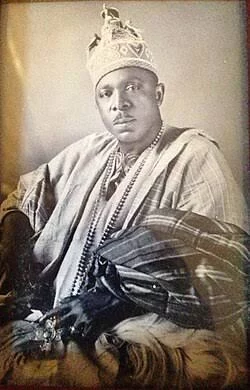
Born in 1898 in Isara, Ogun State, Samuel Akinsanya’s story stands out for the life he lived.
After his early education at the Anglican Church school in Isara, Akinsanya worked as a shorthand typist and writer from 1916 to 1931 before joining the Study Circle. Established in Lagos around 1923, it brought together several notable young figures, including Akinsanya himself, H.A. Subair, R.A. Coker, Olatunji Caxton-Martins, and Adetokunbo Ademola. The group initially focused on organising lectures, debates, essay competitions, and literary reviews, eventually transforming into a vital platform for political discourse.
From 1932 to 1940, Akinsanya would go on to lead major commerce and transit groups, including serving as the Organising Secretary for the Nigerian Produce Traders Union and President of the Nigerian Motor Transport Union. Expanding his focus to civic activism, he joined Dr J.C. Vaughan, Ernest Ikoli, and H.O. Davies in 1934 to launch the Lagos Youth Movement, which evolved into the Nigerian Youth Movement (NYM) two years later. What began as a local protest against the perceived shortcomings of Yaba Higher College soon transformed into the country’s pioneering nationalist movement, with Akinsanya serving as General Secretary and, in time, as the Vice-President of the organisation.
In 1937, foreign conglomerates, led by Cadbury Brothers, formed a buying cartel designed to squeeze cocoa producers and bypass local middlemen, resulting in a ruckus. Rising to the challenge, Akinsanya led the Nigerian Produce Traders Union (NPTU) in a hard-hitting offensive against the agreement, organising public demonstrations and threatening drastic action, including blocking transport routes and incinerating crops. Leading colonial officials to prop up opposition to Akinsanya in an attempt to undermine the movement. The crisis, however, was resolved the following year as market forces pushed cocoa prices back up.
Recognising the power of media in politics, Akinsanya joined six other partners in 1938 to form Service Press Limited, acquiring the assets and publishing rights of the Daily Service newspaper. Akinsanya would later align the paper with the Action Group and promote the party’s interests from 1950 into the independence era.
In 1941, when NYM President Kofo Abayomi resigned his Legislative Council seat to study overseas, forcing a by-election, a nomination battle ensued between Akinsanya, the then Vice-President and Ernest Ikoli, a distinguished Ijo journalist, who had recently assumed the party presidency.
When the party membership gathered, Akinsanya won a clear victory with 108 votes to Ikoli’s 60 and Akinola Maja’s 37. However, the executive committee bypassed the election results and declared Ikoli the official candidate, fueling a major crisis.
Akinsanya, with the strong backing of Nnamdi Azikiwe, believed that the leadership snubbed him because Lagos Yorubas harboured bias against his Ijebu heritage. Severing ties with the NYM, he ran independently for the council seat, but was defeated by Ikoli at the polls. The controversy triggered an intense press war, pitting the West African Pilot against the Daily Service.
In the same year, Akinsanya became a chief and Odemo of Isara, a position he held from 1941 until he died in 1985. Despite losing the legislative council seat, Akinsanya remained deeply engaged in regional politics, co-founding the Action Group in 1951 and serving as a member of the Western House of Chiefs from 1952 through 1961, and as a minister without portfolio in the Western Region’s government between 1952 and 1955.