


On Tuesday, August 18, some of Nigeria’s biggest political names gathered in Abuja, shook hands, smiled for the cameras, signed a document, and promised that, once again, they would play nice as we enter the campaign season of another general election.
Sounds like a plan, right? Well, not really.
Because at this point, many Nigerians are tired of the handshakes, matching smiles and “we are committed to peace” speeches that appear every election season like a recurring subscription nobody remembers signing up for.
But before we agree with the doubting Thomases, let’s talk about what exactly a Peace Accord is, what it’s supposed to do and, really, why some Nigerians think it’s about as useful as a raincoat in the Sahara desert.
Peace be upon you
The Peace Accord was first introduced ahead of the 2015 presidential election, when tensions were high enough that everyone wondered whether Nigeria would survive another election season without catching fire.
Some people came together to form the National Peace Committee (NPC), led by former Head of State, General Abdulsalami Abubakar, to set up an arrangement for politicians to actually keep their promises. So, yeah, the Peace Accord.
The idea was simple. To get presidential candidates to sign an agreement promising to avoid violence, tone down offensive comments, and accept the outcome of a credible, free and fair election.
And, well, we’ve been doing this every election cycle since. The politicians sign, the cameras flash, and everybody smiles.
Then Nigerians watch to see what happens when the ink dries.
The timing for this Peace Accord is just perfect. Campaigns for the 2027 presidential and National Assembly elections officially started on August 19, and we know how that usually goes.
So, before politicians flood the streets, social media and our WhatsApp groups with their campaign posters and increasingly creative insults, they have agreed to, among other things, keep their campaigns peaceful, avoid hate speech, respect electoral institutions and accept the outcome of the elections.
Who was there on Tuesday?
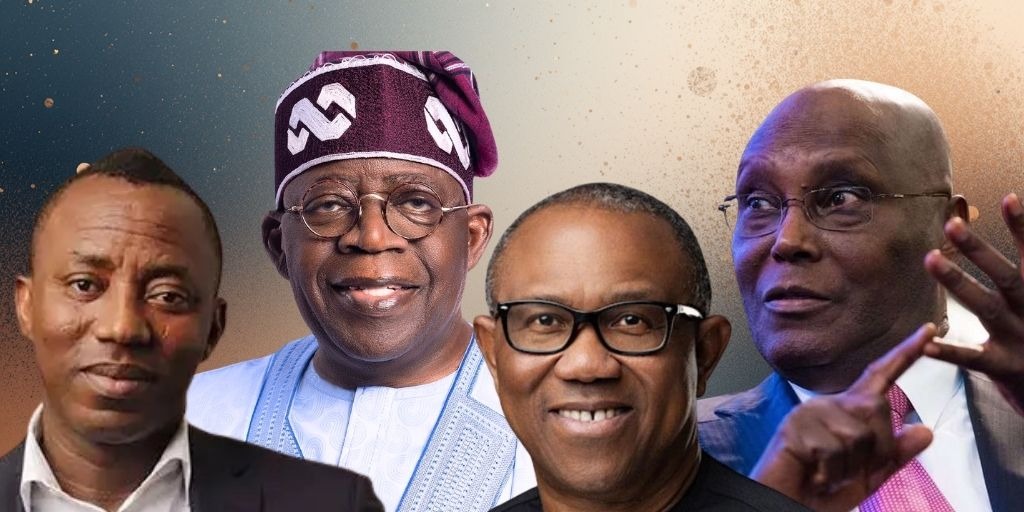
Presidential candidates, including Peter Obi from the National Democratic Congress (NDC), Omoyele Sowore of the African Action Congress (AAC), Adewole Adebayo of the Social Democratic Party (SDP), Donald Duke of the Peoples Redemption Party (PRP), and a few others, showed up to sign the accord. President Bola Tinubu was a no-show, but was represented by the Secretary to the Government of the Federation, George Akume.
Atiku Abubakar, the African Democratic Congress (ADC) presidential candidate, was also missing in action.
But the biggest absentee was Tinubu himself.
But this is kind of on brand for our president. During the 2023 election, he skipped a few presidential debates and town halls, with his campaign team citing his “hectic campaign schedule” as one reason.
So, when this Peace Accord came around, Tinubu decided to keep the tradition alive by showing a peace sign from a distance.
But even they are tired of the merry-go-round
Since 2015, the NPC has facilitated 30 peace accords; five at the national level and 25 for state-level and other off-cycle elections.
And the Committee usually monitors compliance with these accords. But the question isn’t whether peace accords are a good idea. Of course they are.
The question is: after all these signatures, handshakes and serious-looking photo ops, what actually happens when politicians break their promises?
Signing is the easy part. Akume signed for Tinubu. So, no big deal.
One interesting part of this year’s signing is that some of those who signed were already questioning how much a document can achieve without consequences.
Peter Obi said the real punishment for anyone who violates the agreement should come from voters at the polls, and that Nigerians should simply refuse to vote for them.
Sowore was less optimistic. He said he did not have “faith” in the accord, describing previous ones as having failed to prevent violence and promote free and fair elections. So, instead of applauding the “ceremonial opportunity for candidates to socialise,“ he suggested that what Nigeria needs alongside a Peace Accord is a Justice Accord that will enforce consequences on anyone who violates the peace.
Adewole Adebayo was even more blunt. He said there cannot be meaningful electoral peace without justice and questioned why politicians should need to sign an agreement to obey rules they are already expected to follow.
And really, what does “peace” mean if the person who breaks the agreement knows that the worst thing that could happen is just another warning?
The Big Daily is your weekday shortcut to the biggest news shaping Nigeria. We cut through the noise, connect the dots, and explain why the news actually matters, all in one quick read.
Who is watching them?
To be fair, the National Peace Committee isn’t just taking politicians’ word for it.
Ahead of the 2027 elections, the committee has established an Election Security Information Hub, hosted by the Kukah Centre, to collect and analyse information about election-related insecurity and political risks.
The hub includes field observers, security assessments and systems for tracking electoral offences. It is designed to help turn early warnings into coordinated responses and also monitor stakeholders’ adherence to the Peace Accord.
The committee has already been using the system in recent elections. Ahead of the 2026 Osun governorship election, its field observers identified 15 Local Government Areas (LGAs) as falling within critical, high or moderate violence-risk categories. The committee then engaged security agencies around those risk areas.
So, this time, there is at least something more than a handshake.
Beyond monitoring
Monitoring a violation is not the same thing as punishing the person who committed it.
And this is where Nigeria’s peace accord can quickly become “useless.”
The committee can observe. Civil society can analyse. Journalists can report. And Nigerians can complain on X. Literally, everyone can rant.
But who makes the politician face the consequences?
Despite the 2019 Peace Accord allowing the NPC to monitor adherence to the agreement, there were still reports of political violence, voter intimidation, vote-for-cash, and other electoral malpractices.
The Naira Life Conference is returning on August 22, 2026, in Lagos! Come learn from finance experts and industry leaders, and partake in unfiltered conversations about building wealth and diversifying your income stream in a country like Nigeria. Real stories, expert advice you can actually use, and a community ready to build wealth together. Secure your spot here.
The European Union (EU) Election Observation Mission recorded 101 violent incidents during the period 2023 general elections, resulting in at least 74 fatalities.
So, if politicians can sign a peace agreement and electoral violence can still happen, what exactly is the agreement capable of doing on its own?
Maybe we need less “please behave” and more “here’s your punishment” approach.
And that’s probably the part Nigerians should pay attention to as the 2027 campaign begins.
A peace accord can tell politicians what they should not do. But Nigeria already has electoral laws, criminal laws, and security agencies that do the same job.
So, the problem is what happens after the rules are broken.
If a candidate spreads false news, coordinates violence or encourages intimidation, there should be a clear process for documenting the offence, investigating it and imposing consequences where the law has been broken.
The NPC’s new security hub could help with the first part: identifying and documenting threats. But enforcement still depends on institutions like the police, INEC and the courts doing their jobs.
Is the Peace Accord useless?
Maybe. Maybe not.
The 2015 accord, for example, came at a time of serious fears about pre- and post-election violence, and former President Muhammadu Buhari later credited it with contributing to the relatively peaceful conduct of that election.
The NPC has also evolved beyond getting politicians into a room. Its current security information system shows an attempt to build actual monitoring capacity around the peace process.
But the accord cannot do the entire job.
Security agencies have to act impartially, and electoral institutions must enforce the rules.
The voters, too, must be ready to punish the politicians who cross the line.
Because the most powerful enforcement mechanism may still be the ballot box.
So, as the 2027 campaign officially begins, Nigerian politicians have made their promises. As usual.
But we already know the hardest part. We’ll see what happens when somebody breaks it.
