The subject of this story makes her money from selling soap and kerosene. She talks about how losing her job 18 years ago changed everything and how a social enterprise she belongs to made all the difference for her in 2020.
Do you remember when you started your business?
18 years ago. I used to be a secretary at an insurance company before I lost my job. My husband also lost his job at the same time. Banks and insurance companies were merging at the time, and we were among those who were affected.
That must have been tough.
It was. We didn’t have any money. My company gave me about ₦120k, and most of it went into finding a new house. We were in a 3-bedroom flat and had to come down to a room and parlour.
Do you want to know the toughest part of this? Changing my children’s school from a private school to a public school. I cried when I realised that we had no choice but to change their schools.
I’m sorry.
I got a shop, but I didn’t know the kind of business I wanted to do or have money to stock up the place. My friend introduced me to a lady who had just started a social enterprise — Mamamoni — and was training people on how to make soap. I think I was one of the first people she trained. I opened my shop and started making and selling soap and toilet wash.
How did you raise money to start this?
One of my sisters gave me ₦100k, and that was it. I also started selling kerosene and using what I made to take care of my family.
Have you had to raise more capital since you started?
Yes. A lot of times. Mamamoni has been helping a lot with that. I collect loans from her when I need them and pay her back. I think the first loan I collected was ₦10k, but I’ve collected up to ₦150k loan at a time. Also, I’m a leader in the community. So when people collect a loan from the organisation, they give me the money, and I pay it into the bank account.
How has your business evolved since you started?
The soap business hasn’t changed a lot. I used to buy kerosene and store it in a tank. But one time, I bought it in large quantities at ₦150 per litre. A week later, the price came down to ₦50. It was a great loss for me. When I managed to sell everything, I found out that I couldn’t afford selling from a tank anymore. So I started storing the market inside gallons. That’s what I’m still managing till now.
How much does this typically bring in profit?
Sometimes, ₦10k. At other times, ₦7k. When the market moves very well, I can make ₦15k. But if the market comes down, I have to bear the loss.
How have you been taking care of your family from this?
I manage oh. I don’t depend on anybody. And things are working out. My daughter will soon graduate from university. If not for Covid, she would have left. One of my boys has just finished secondary school and my last boy is about to write WAEC. When it’s time to pay my house rent, I use my savings. If it’s not enough, I take a small loan to complete the rest.
Do you pay interest on the loans you get?
There is a small interest. People don’t give women loans with no collateral, so Mamamoni stands in for us.
Interesting. How do you manage to save after taking care of your basic expenses?
I work with Mamamoni and help her train women on how to start businesses, and I get ₦20k at the end of the month. I save that in my account. I’m also in a daily contribution program and put ₦500 in it every day. I don’t touch the money unless a need arises — usually rent and other family needs.
That’s great. How was 2020 for you?
I don’t think I would have survived it if I had faced it alone. I had access to palliatives because of the organisation I belong to, so food wasn’t a problem. But some people around me had it worse. I saw how the pandemic affected people in the compound where I live. Since I had some food, I always gave them part of what I had. One cup of rice here, two cups of beans there. Everyone had to come together to help one another.
That’s sweet. Did your business take a hit?
People still needed kerosene, so I was still selling. But my profit dropped to ₦2k – ₦4k every month. I was lucky if I made ₦5k. Thankfully, things are getting better now. I want to start selling engine oil now because they sell very fast. But I’d need about ₦100k for that.
How do you plan on raising the capital?
I don’t know yet. But I don’t want to take another loan. With loans, you have to buckle up so you can sell your market and return the money you owe. I’ll just manage what I have until I find the money.
A lot of people would say that 2021 is looking better than 2020; how do you think the rest of the year will look like?
If God keeps us alive, everything will be better. I know the people around me will put a smile on my face. My two sons are my concern right now — I’m hoping the first one will get into a school this year. The second boy is about to write WAEC. When that’s done, I’ll ask him if he wants to go to school or learn a trade. Then I can relax small and concentrate on other things.
Every week, Zikoko seeks to understand how people move the Naira in and out of their lives. Some stories will be struggle-ish, others will be bougie. All the time, it’ll be revealing.
In 2016, this subject made a difficult but necessary decision to move to Nigeria from the UK where she was born and raised. How long did it take her to find her feet in the country? About four years? What made all the difference? Linkedin.
What’s your oldest memory of money?
That would be my pocket money when I was in primary school. It was about £2.5 every week. I was born and grew up in the UK. I don’t remember what I did with the money, but I knew to expect an allowance every week.
What was it like growing up in the UK?
I was taught independence very early on. By law, I was allowed to get a job at 16. So I always kind of knew that I would start making my own money at that age. I was motivated to get a job because I wanted to be able to buy all the things I couldn’t ask my parents for.
Haha. Do you remember your first job?
A weekend behind-the-counter job at an electronics store, and my pay was £4 per hour. At the end of each month, I was making around £400. That was good money for a 16-year-old. It also meant that I could make some of my own decisions and didn’t have to run everything by my parents. I did a couple of those kinds of jobs before I went to university.
What year was this?
2008. My parents wanted me to focus on my studies, and they put me on £250 per month. But I took a student loan from the government to pay my tuition.
Did you need to get it though?
I was trying to play it safe. My dad had just started a business and wasn’t working for a company at the time. His income wasn’t as regular. I didn’t want a situation where there was no money for tuition. A student loan promised stability. Interestingly, I don’t think my dad and I had that conversation. He’d relocated to Nigeria the previous year.
Anyway, I was getting about £4000 in student loans per term. My dad was paying rent, which was £1000. I definitely mismanaged money. After paying tuition, the rest of the money went into living large. I remember a time when my friend and I were buying hair attachments directly from Cambodia and spending like £1000 on weaves. Ask me where all of that hair is now?
Lmao. I have an idea what the answer to this question is.
Iwas always almost broke by the end of each term. But I could ask my parents, and they would happily send me £50-£100.
So after uni?
I graduated in 2012. I studied a finance-related course, and my dad wanted me to work in the finance industry. But I knew very early that I didn’t want to do that. When I was working those part-time retail jobs, I always thought that there must be a backend to everything that’s happening on the store floor. I did some research and found out that there’s a lot of different roles in retail. I had some experience, and I was like, “Okay, I’m going to work in the retail industry.”
I started actively job hunting in the summer of 2012. I applied to the big retailers in the UK and got so many rejection emails. Someone advised me to submit my CV to a recruitment agency. I did that, and they got back to me and went: “Your CV looks great. Can you start next week as contract staff at this retail company?” It was one of the biggest retailers in the UK. They had at least 3000 stores across the country at the time. Of course, I said yes. I started the job in September 2012.
What was your role and how much did it pay?
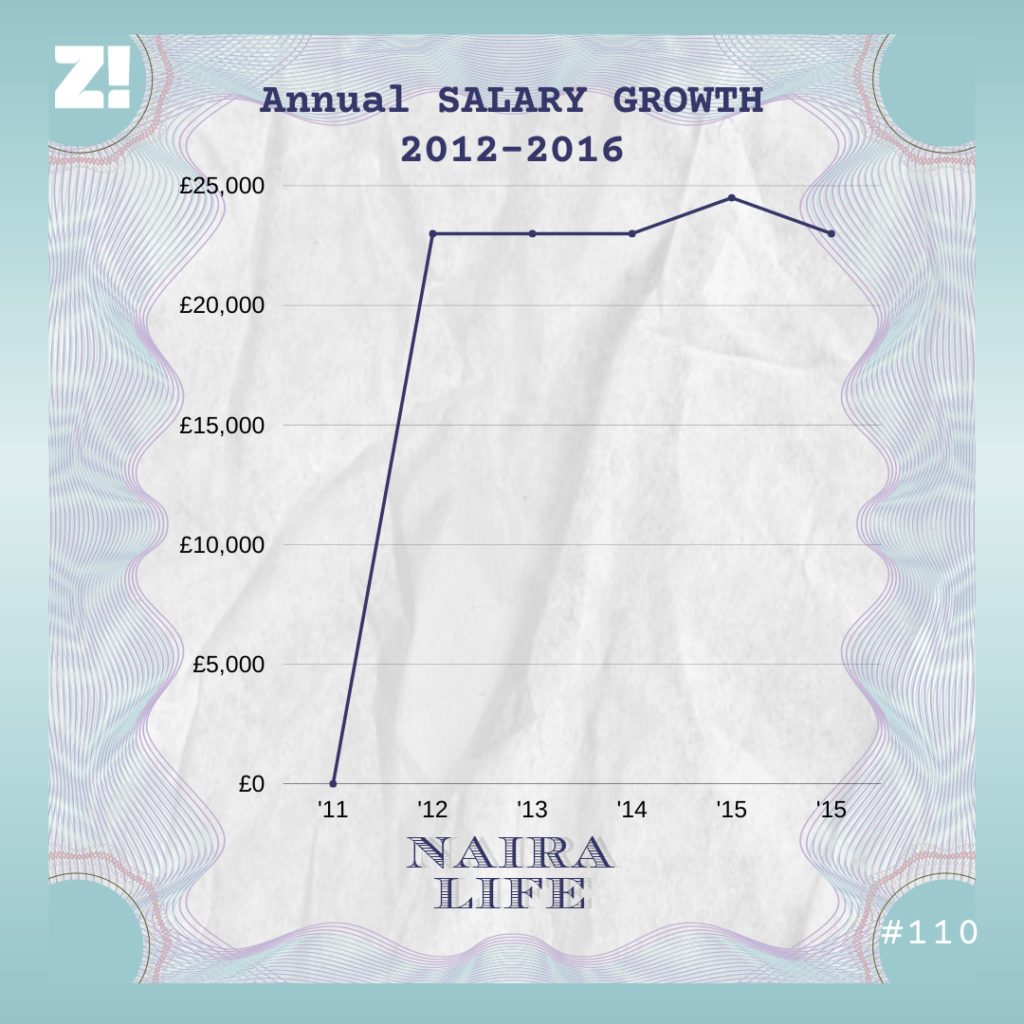
I was doing a lot of simple things — data entry and sending out orders to suppliers. £8.50 per hour and working for 36 hours a week. That was bringing in £1200 a month after tax. I liked the job and started asking questions about how to make it permanent. They had a graduate scheme for people who had left university. I applied for it, did the assessment, and I passed. By the end of that year, I’d moved from contract staff to permanent staff.
Lit.
Now I was a demand planner and merchandiser. My job was basically managing the demand and supply process of products in my department. My salary increased to £23k per annum. I was taking £1500 home every month. Also, there were appraisals every six months, and if you did well, you got a raise. I got a few of those and my salary had increased to £24500 when I finally left in 2015.
Why did you leave?
I got pregnant.
Whoa.
I didn’t leave immediately. I went on maternity leave in August 2014, which was great because it was a paid one. For the first six months, my company paid me my full salary. After that, they stopped paying, but I was getting a maternity allowance of £700 from the government. It was half my normal salary, but it was something. My daughter was born in October 2014.
How did this change things?
In the beginning, I was living in my mum’s house and wasn’t spending money on rent and groceries. But she decided that she wanted to be with my dad and relocated to Nigeria. I moved out to find my own place to rent. That was when the expenses started coming in. My siblings and friends helped out when they could, so that made things easier. My daughter’s dad wasn’t giving me actual upkeep, but he contributed to buying her clothes, food and those kinds of things.
After my maternity leave ended, I hadn’t yet figured out the daycare plans for my daughter. Then something happened — the company was dealing with some profit issues and offered everyone voluntary redundancy. I took it and got a £6000 – £7000 payout. This bought me some more time.
When did you finally return to work?
2016. I moved to the outskirts of the city and found a job as a forecast analyst at a distribution company — it was similar to what I did at my previous job. This one paid £23k per year. I couldn’t afford daycare on that salary. I finally found a childcare service, which was much cheaper but safe. It was £250 every month.
I returned to work, and it was a lot. I wasn’t spending time with my daughter as I’d have liked, and my salary was only enough to get us through each month. It was so exhausting. Earlier that year, my parents had advised me to move to Nigeria and find work here, so my daughter would always be around family and I would stop spending so much on rent. I discussed it with my daughter’s dad and he wasn’t a fan of the idea. I let it go.
But it became more difficult. I always had little money left after paying my bills. And my daughter was unhappy because she was spending so much time at the childcare arrangement. She cried all the time. It just wasn’t working out.
Mahn. What did you do?
I started giving more thought to relocating to Nigeria. I never thought I would, but I now had a child and raising her in the UK was a struggle. By the end of 2016, I’d had enough. I discussed it with my daughter’s dad again and made him understand why I had to do it. I moved back here in December 2016.
Was there a plan?
First, I didn’t have much savings. I came with £1500. And did I have a job waiting for me? Nah. All I knew was that my family was in Nigeria. I was running on vibes.
Aren’t we all.
But you know, I had retail experience and wanted to continue working in that industry. I started looking for supply chain, retail and consumer goods jobs. I got many rejection emails. One time, I got to the final stage at an e-commerce company but I wasn’t successful.
I finally met this woman who had a clothing store. I performed well in the interview and she really liked me. She was talking about how she wanted me to be her right-hand and travel with her all over the world. Okay, sounds great. But what’s the salary?
Brace for impact.
Lol. She said ₦50k. I was so confused. I had four years of retail experience. There was no way I was going to take that offer.
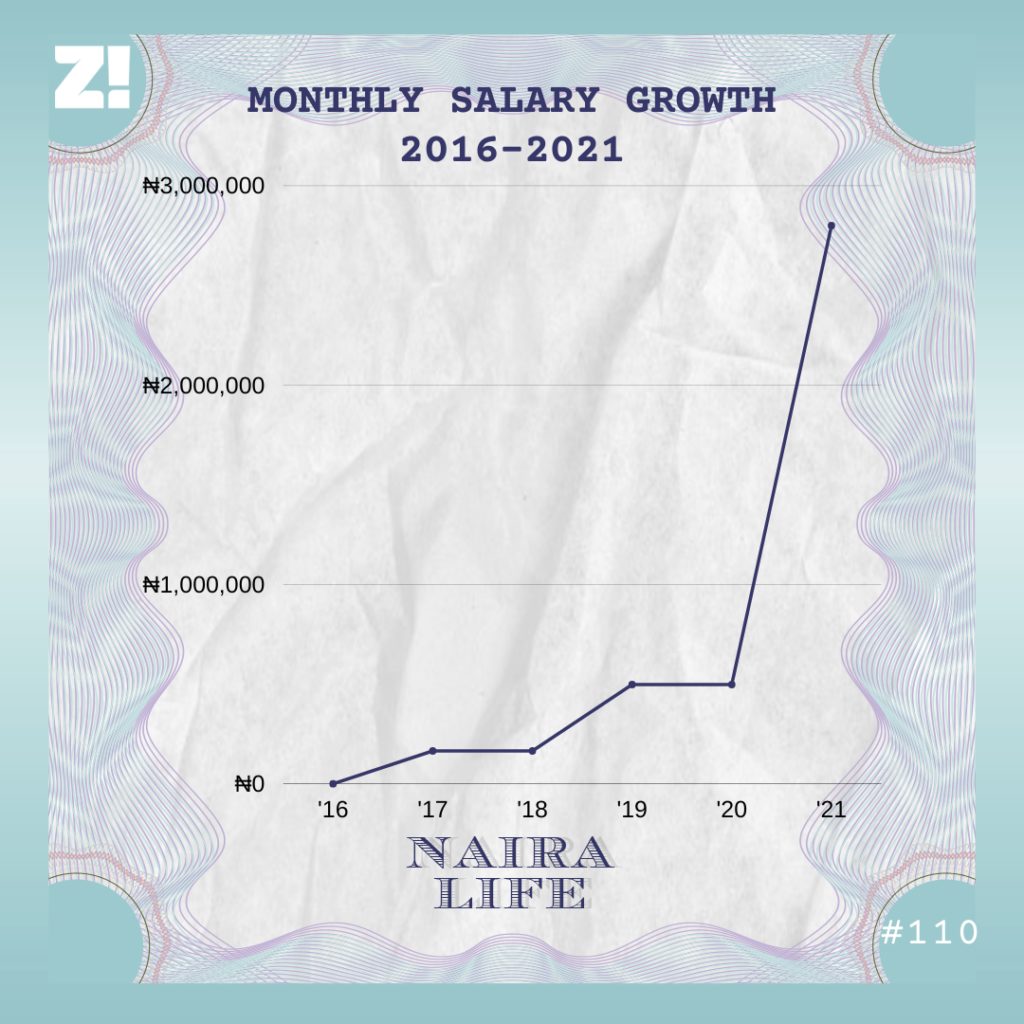
My dad knew someone who had a distribution company and was trying to do business with the retail company I first worked with when I left uni, and he linked us up. The fact that I understood how the company worked drew him to me, and he hired me as a sourcing manager. My job was to source new products they could add to their portfolio and distribute across the city. I don’t remember what the actual offer was, but my salary at the end of each month was ₦165k. I started in February 2017.
Ah, nice.
I was there for a year and a half before I got bored. I wasn’t doing a lot, and the company wasn’t very structured. Before I left, I’d started NYSC and that affected my salary at my next job.
How?
It was a head-buyer role at a supermarket. Initially, they gave me an offer of ₦220k, but when they heard that I was serving, they were like, “We are going to give you ₦80k.” I refused, and they finally increased it to ₦130k gross. After all the deductions, I was getting ₦113k in my account.
I’m curious, did they promise to increase it after your service year?
Scam! After POP, I took my certificate to HR and told her, “See, I’ve finished service, so I’m expecting my full salary.” ₦113K entered my account at the end of that month and the following month. They kept promising to look at it, but I never got that money until I left. That was one of the reasons I decided to leave. I was like, “Since you don’t want to pay me, I’m just going to leave.”
Energy.When did you leave?
September 2019. I connected with a lady on Linkedin, and she told me that she had a friend who was looking for a demand planner at a pharmaceutical distribution company. I thought it might be interesting and gave it a try. I got the job, and their initial offer was ₦500k. I negotiated for a higher salary, and they increased it to ₦605k gross. But I was getting around ₦450k + ₦48k transport allowance.
Your first significant pay jump in Nigeria.
Honestly, it was bittersweet. Yes, it was more money and everyone was telling me that it was a good salary by Nigerian standards. But for me, it still wasn’t enough. Don’t get me wrong, I was very grateful for it. But after a while, I just thought I could do better.
I get that.
Something happened a month after I started at the job. My parents travelled to the UK. They told me that they were going for routine tests, but then it turned out that my dad had cancer.
Oh damn. I’m sorry.
Oh, it’s fine. He’s a UK citizen, and he’s getting free treatment. He was working as a consultant for a Nigerian company before he left. But after he was in the UK for a while, they terminated his contract. I became responsible for more things at home — utility bills and things like that. Thank God I was earning more.
So… 2020?
I started working remotely because of the pandemic. The more I got used to it, the more I started thinking about getting a fully remote job. Two things really gingered me.
What were those?
First, it was NairaLife. I’d read about people who talked about earning dollars or pounds while living in Nigeria. I remember thinking to myself, “These people don’t have two heads.”
Lmao. Am shy. What was the second reason?
The EndSars protests. At that point, I realised that Nigeria is not a serious place. We heard gunshots all the time, and I was thinking about how this isn’t a sane place for me to raise a child. I felt guilty for bringing her here. I wanted to move back to the UK, but I looked at my calculations and figured that I would need to be earning at least £60k per year to live comfortably with my daughter in the UK. The offers I was getting were between £35k and £45k. I decided to go all-in and look for a remote job and earn in pounds. In my mind, if I was going to stay here, there was no way I could be earning in naira in 2021.
Energy.
I went back to Linkedin and updated and fully optimised my page — good profile picture, highlighted key skills and achievements and recommendations from other people.
I was sending at least 10 applications every day. Eventually, I was in talks with four companies, and each of them offered me different salaries.
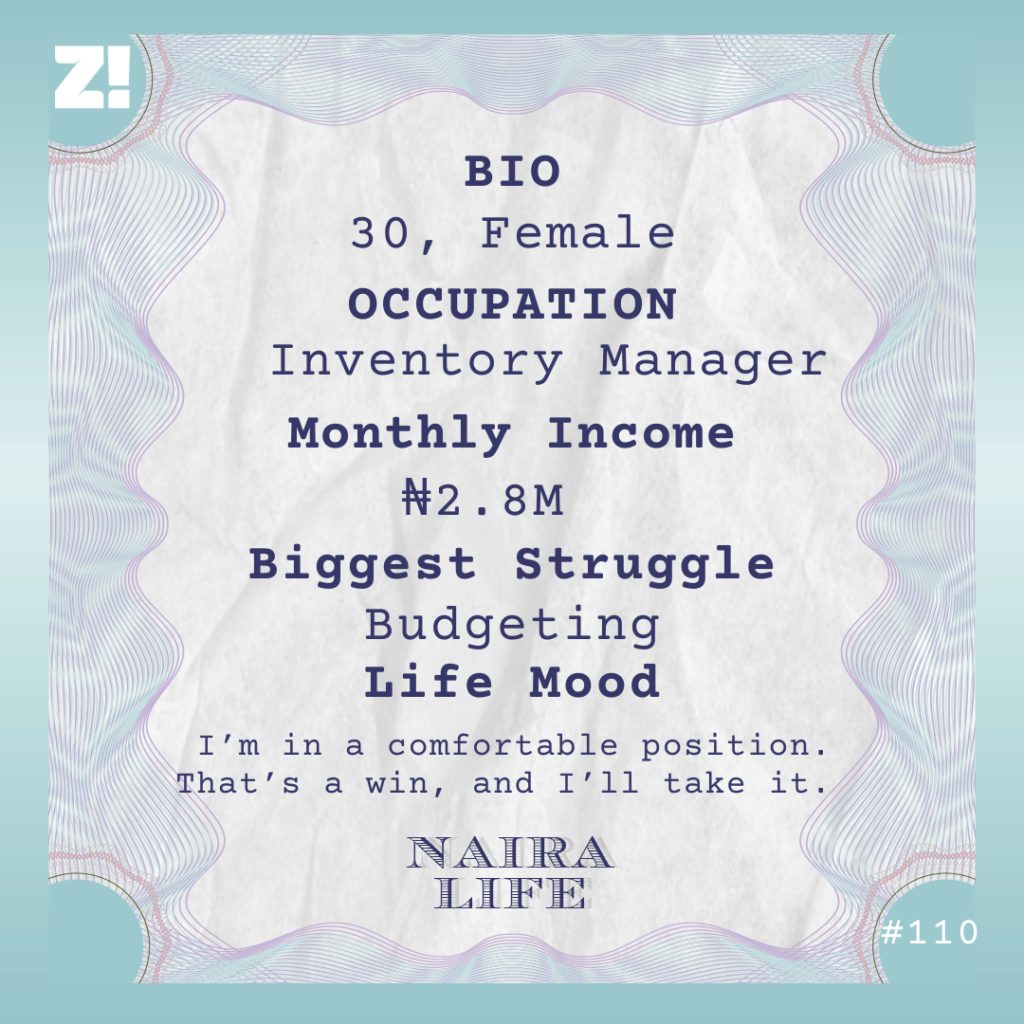
It came down to one company, and I had a couple of interviews with them, then an Excel sheet assessment, and a final interview after that. I applied to be a demand planner, but they gave me an inventory manager role — that’s a level up and it’s a management position. I was ecstatic. I was going to be working from home in Nigeria and collecting pounds.
The Nigerian dream.
Haha. I started the job in January 2021, and my new salary was £4000. That’s around ₦2.8m in total every month at the current exchange rate.
Man! Two significant bumps in less than two years, what does that do to someone?
I thought I deserved it. When people around me started saying things like, “Look how far you’ve come. Four years ago, you were offered ₦50k.” I was like, “Yes, this is how it should be.” But when I took the time to sit back and look at the journey, I realised how amazing it is. I know that I pushed for these opportunities, but not everyone is that lucky.
I also decided to be more serious with my financial planning. I’m in my 30s now and can’t vibe and inshallah my way out of everything. For the first time in forever, I sat down and created a budget.
What does it currently look like?
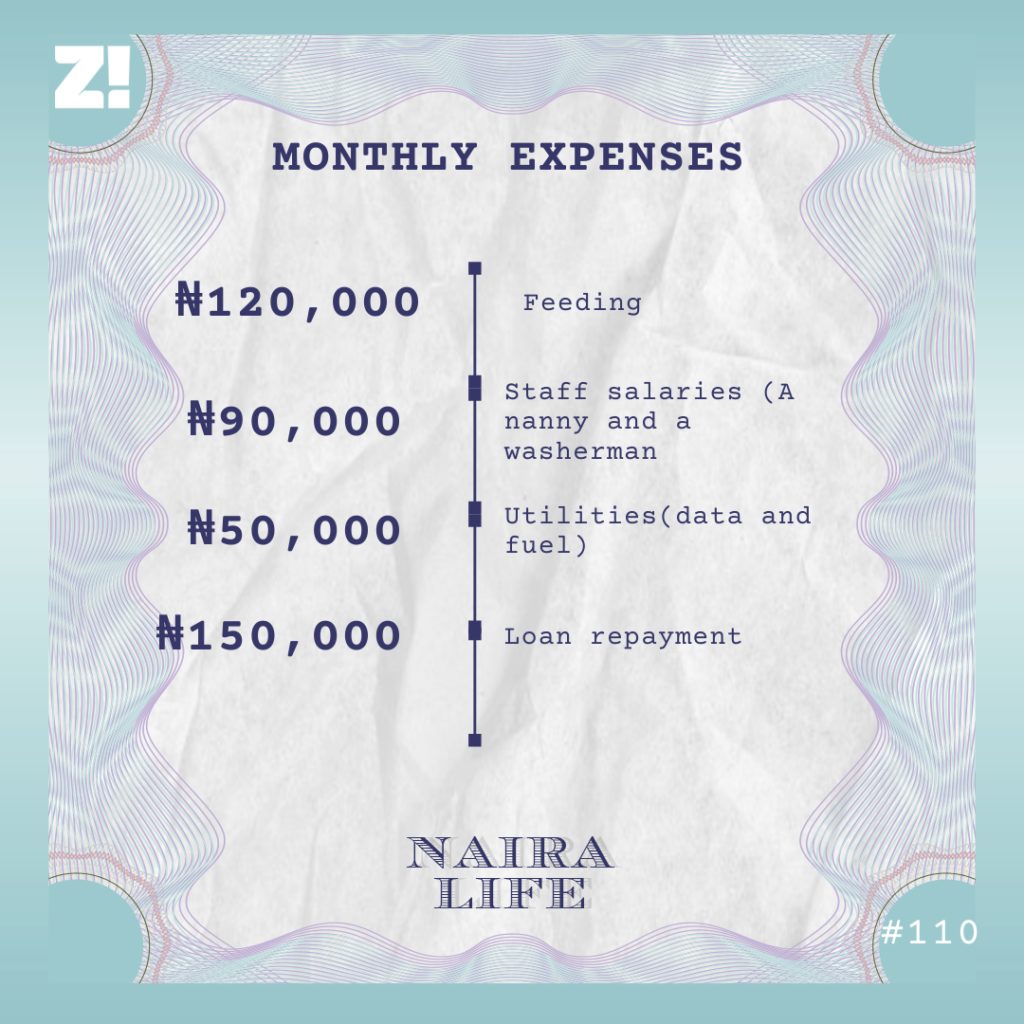
Do you want to talk about the loan?
This goes way back. I wanted to start a clothing line and took a loan. But I had some issues with my suppliers in China and lost the money. The interest on the loan was really high, so I took a low-interest loan — about ₦2m— to offset the previous loan, and I’m paying it back now.
Speaking of loans, what about your student loans?
Ah, that! They used to write to me a lot. I sent them proof of how much I was earning in Nigeria. They obviously converted it to pounds and realised that they can’t take money from me at that moment. That one is currently on hold.
Heh. What does your new salary mean for your savings plan?
My plan is to keep as much money as I can in my UK savings account. I’m allowing myself ₦1.2m every month and sending the rest into my UK savings account.
Investments?
I think I have £8k in my pension account in the UK and ₦1.8m in my pension account in Nigeria. I’ve been talking to a friend who works in an investment management company, and he advised me to get my personal investment account and build a bulk amount of money. So in the future when I’m ready to retire — let’s say around 55 — I can live off the interest. The plan now is to build that up to £1m.
Also, I want to start investing £400 a month in stocks and all of that. No major naira investments. I might do a bit of those agricultural investments, but for the most part, everything is going to the UK.
Is there an annoying expense you wish you don’t have?
The loan. The ₦150k should be going into my savings. But it will be over in nine months.
What’s something you spent money on recently that significantly improved the quality of your life?
My room renovations. I work from my room because my daughter controls the rest of the house. The cost of doing that was about ₦400k — the paint job, wallpaper, new wardrobe and furniture. It was so worth it.
How have all of these experiences shaped your perspective about money?
I used to be driven by impulse when I was younger. I didn’t think about saving for a rainy day. But now, I understand that there’s a time for everything. You don’t need to have everything straight away, and it’s okay to save up to buy something. I’ve learned the value of money, especially now that I’m a parent and there’s a lot of long-term planning involved.
Last question…
How do I rate my financial happiness?
LMAO. Yup.
I’m currently at a 7. Yes, I’m earning good money, but I still can’t afford my dream car. But again, I know I’m in a comfortable position. That’s a win, and I’ll take it.
What will get you to a 10?
They say that money can make you happy if you earn at least $75k every year. So that kind of money will get me to an 8 or a 9, maybe even a 10. But you know what? It’s only a matter of time.
The next Naira Life drops on Monday next week at 9 am. This is what you get when you subscribe to Zikoko’s Money Newsletter:
You get it before everybody else, plus all the things that didn’t make the cut.
You also get a #NairaLife throwback, where we check in with someone from the past, and see how they’re doing now.
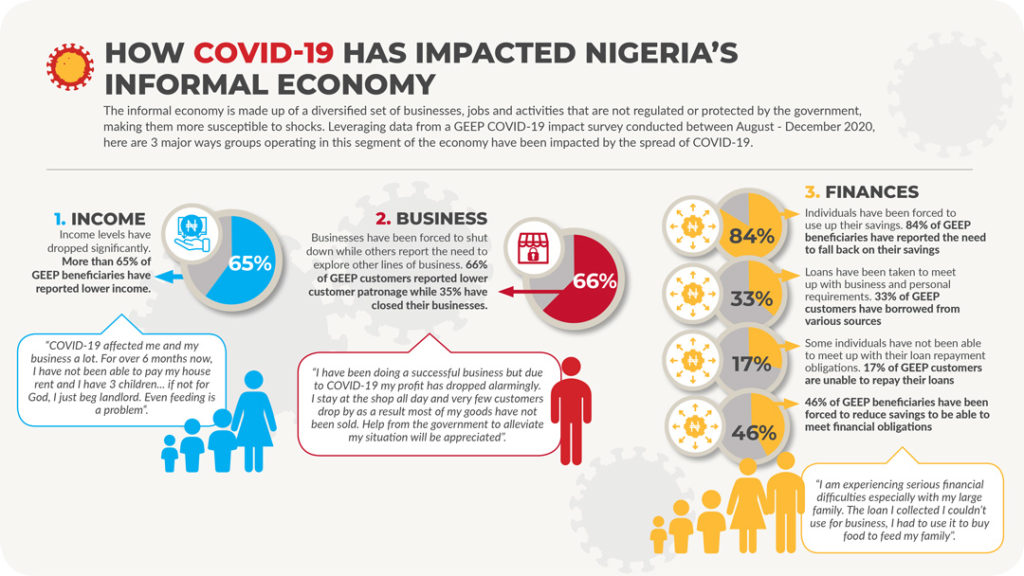
Since August 2020, Nigeria’s Government Enterprise and Empowerment Program (GEEP) and 60 decibels with the support of the Rockefeller Foundation have been administering a survey to GEEP clients to understand how COVID-10 impacted their personal and economic situation. An interim report has been published, and it shows that the Nigerian informal sector was adversely affected by the outbreak. 9 out of 10 GEEP clients recorded drops in their income levels, businesses struggled to stay afloat due to government-imposed closures, low footfalls and constrained supply chains. To survive, GEEP clients had to rely on their savings, borrowed heavily and reduced percentages set aside for household and business savings or stopped outrightly. The data also showed that 35% of GEEP respondents had to close down their businesses, 66% recorded fewer customers and 84% have been using their savings to cope with current hardships.We decided to examine how everyday Nigerians, particularly small business owners were affected by the pandemic. One story every week for the next six weeks.
The subject of this story sells tomato and other items at a market in Abuja. She talks to us about how she’s been building her business over the years and how the pandemic and a market dispute are making things a little more difficult for her.
Do you remember when you started your business?
I started this business when my husband passed away in 2005. After his funeral in our hometown, I returned to Abuja, and my people said that it was good for me to start something. They gathered themselves together and gave me ₦15k, and that was my capital. I started selling tomato and pepper. Later I added onion and ginger. I couldn’t afford a shop, so I sold in an open space. I’d put my goods on the ground and sell.
The market was moving. Then the government said we should leave the place in 2009.
Why?
They said it was illegal for us to sell there. Like that, I didn’t have a job anymore.
What did you do after?
Someone helped me to look for a job, and I started working as a house help for a woman. I was paid ₦30k every month.
How long did you stay at this job?
About a year. I started looking for another market to continue selling my goods. I still couldn’t afford a shop — a year’s rent was ₦75k if you got it directly from Urban Centre. But some people get shops from Urban centre and give them out to rent. Those ones usually want ₦120-₦130k per year. I couldn’t afford either, so I went for something else.
What was that?
Ground space, although I had to pay for it too. They were measured by portions, and I rented two portions at ₦40,100 per year.
Oh wow. How much did you start with this time?
I’d saved ₦97k from my previous job. After renting my space and settling the agents, what remained wasn’t enough to buy goods. I went to a friend and borrowed ₦100k. She asked me not to pay interest on it and take care of my business first before returning the money to her.
I managed for the first three months. When I started making some sales, I started putting ₦200 and ₦500 into a daily contribution programme. After a year, I had ₦132k. I returned ₦80k to my friend, and she didn’t even complain. I used what was left to stock up, and I continued the daily money contribution. This is what I’ve been doing since that time.
At the time, how much money were you making every month?
I was making about ₦6k profit per week. Sometimes, it was as low as ₦4k. It wasn’t a lot, but it was something.
What was life like for you during this time?
I was making enough to train my five children — four boys and a girl. Two of the boys have graduated now. My daughter has just finished her OND. My last boy has finished his secondary school education and is currently learning graphic design.
They are good children. When I was going through a hard time finding work, they were understanding. They managed whatever I provided. Also, my husband’s community always sent bags of rice, foodstuff and money during Easter and Christmas. I also joined some small-small NGOs to ease the burden. One of them paid two of my children’s school fees when they were in secondary school and bought books for them.
That must have been a huge relief. What about other things like rent?
Hmm. After my husband died, his elder brother threw us out of the house. He said I was the one that killed his brother. It was a big problem.
Our people reported the case to the minister of the FCT at the time, and he took it up. He promised to help. One day, I got a call from his people to go to FCDA in Abuja. They gave me a form to fill and asked me to write what I needed from the minister. Not long after, they gave me a 2-bedroom flat for free. They did the same thing for 29 other widows. This was 2007.
Wow.
But the place was very far from the market, so I put it up for rent — ₦150k per year. I’m living in a single room apartment in a government quarter now, and I’m paying ₦80k there. I pay my rent with the money I get from the house. The only problem is the tenants. There was a man who stayed there for over three years and didn’t pay. Before I knew it, he ran out. There have been other people like that. I just got a new tenant last year, and I hope they won’t be like the others.
Hopefully. How was 2020 for you?
It started out okay. February and March were good.
When the lockdown was announced, people rushed to the market to buy things. And everything crashed after that. Many people in the private sector were affected and lost their jobs, and this affected sales a lot.
I couldn’t afford to do my daily money contribution anymore. And I tried to. Things didn’t change after the lockdown because customers were afraid to come to the market because of the crowd.
What did this mean for you?
I would have goods sometimes and customers wouldn’t come. The ones who came would complain a lot before they bought whatever they had the means to buy. Sales reduced, and it was a struggle to even get the capital back. Let’s not talk about profit.
Things are better now than they were last year. I started putting ₦200 in my daily contribution at the beginning of this year, and I should be able to continue doing that for the rest of the year. But there’s a new problem now.
What’s that?
The sellers who have shops in the market gathered themselves and announced that those of us without shops should stop selling onions, Irish potatoes, water yams, dry fish, and some other food items. They said it isn’t fair that we didn’t pay what they did for their shops, but we’re selling the same thing they sell. I used to sell onions and Irish potatoes. Now, I can only sell tomatoes and pepper.
This is a problem because onions and Irish potatoes sell very fast. I finish selling a bag of potatoes in less than five days and get about ₦4k in profit. A bag of onions finishes in a week and brings ₦3k-₦4k in profit. I’m losing about ₦7k in profit every week now. I used to have more gain on tomatoes, but everyone is selling them now, so I don’t see a lot of profit anymore — maybe ₦1500 every week if I’m lucky.
Ah.
There’s no point going to the market every time anymore since I can’t sell the things that sell fast and bring me a better profit. I’m just managing my life. Wetin I go do?
Do you think access to credit facilities, like loans, will make it easier for you to rent a shop and buy more goods?
I don’t like loans because of the interest. They are too stressful. I’m almost 60 years now, and I don’t want anything that will be disturbing my peace of mind. If I see one that has the right conditions, and I know how to pay it back, I might consider it. But I haven’t seen one, so I will continue to manage. If I need money, I go to my friend and borrow it from her.
With the issue with shop owners, how do you think the coming months will play out?
I hope things will be better. The Covid scare is coming down. The only issue that could affect my business now is the insecurity in the North. These bandits are attacking farmers here and there.
I also hope that I have more money to put into my business. If I have enough capital, I can get a shop. But there’s a problem there. I hear that they will be selling some shops for ₦1.7m starting from June. How can I afford that? I don’t know what will happen, but I’ve decided to put my faith in God.
Editor’s note: This interview has been edited for clarity.
The idea for this article was inspired by a conversation on Twitter about what living on a ₦400k salary looks like in Nigeria, and if it’s enough to fund a “soft life”.
We thought it might be interesting to talk to people who earn within that range, so I put a call out on Twitter.
For a @zikokomag article, I'm looking to talk to people who earn between ₦300k-₦500k about what each month looks like for them. If this is you, please send a DM. Also, please RT. 🙏
The response was massive. Unfortunately, I couldn’t talk to everyone who reached out. I did manage to have a conversation with a couple of people, and this is what they said.
1. Ore, 26, Lawyer
Salary: ₦480k
I earn more than my siblings and parents, and I try to send money home every month. Last year, this was between ₦50k and ₦100k. My other expenses were at a minimum — I was sharing an apartment and didn’t always eat out, so I saved a lot. The major thing I spent money on last year was my IQAS application, which cost about ₦80k.
However, things have changed. My family’s needs are increasing, and I’ve moved out to get my own apartment. There are also some additional expenses like visa application fees and registration fees for school — I got a scholarship, but it doesn’t cover these fees.
At the moment, I spend 30% of my income on rent, 20%-25% on family needs, and save 30%. My personal expenses take whatever is left.
I love my job and I know I’m privileged to earn this much in this country, but I don’t think I’m living a soft life. Beyond what I earn, it’s the ability to retain it. Also about having good savings and investments. I’m only managing now and not living a life of convenience. To get there, I’d need at least $2k monthly.
2. Uche, 28, Consultant
Salary: ₦450k
I work in a Big 4. My first salary was ₦150k, and it’s grown over the years to ₦450k. I live way below my means. I haven’t changed my car in forever or moved out to a new neighbourhood. The thing is, while a month’s salary can cover my annual rent, I spend a lot on my car because it’s kinda old.
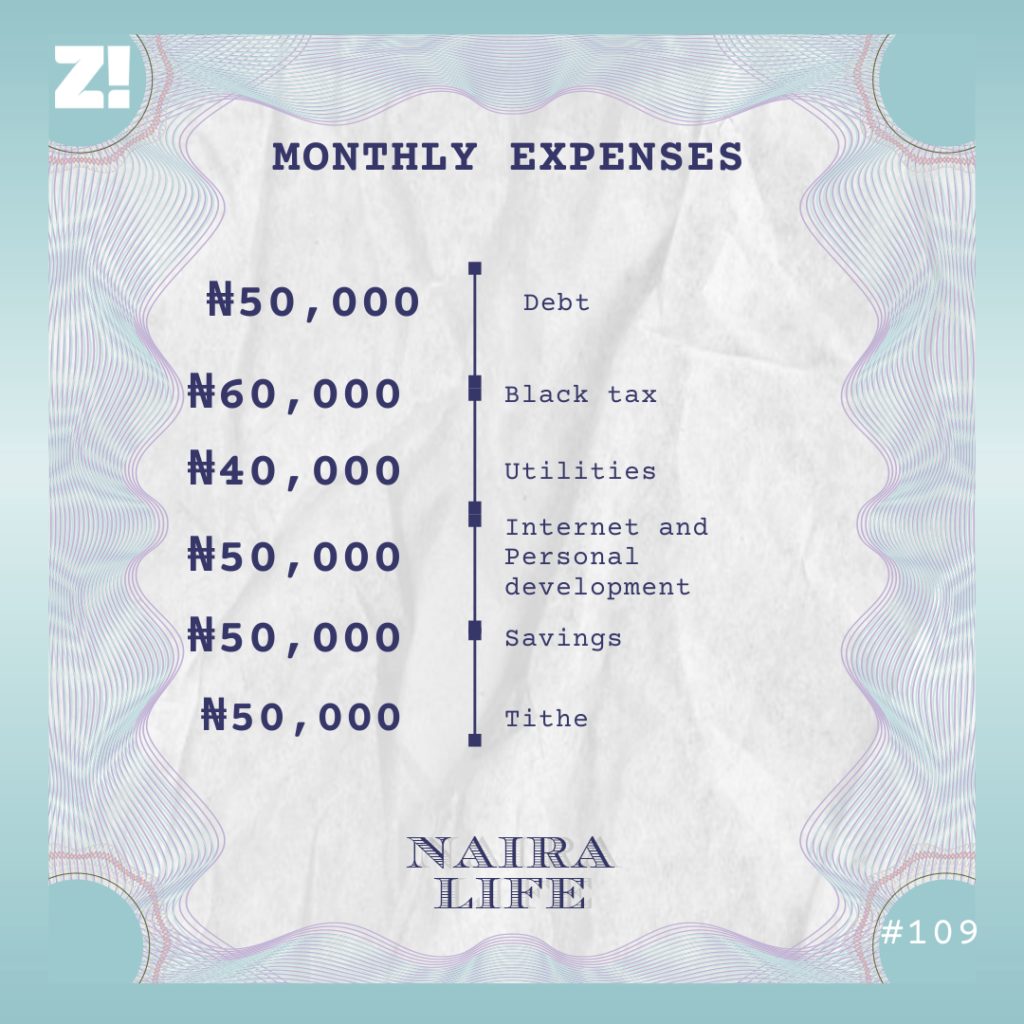
However, I’m able to outsource more and eat out more often. But I’m not living a soft life. If I was spending everything I earn and not worrying about savings, investments, or black tax, then I’d be enjoying life. A few years ago, my family needed money to work on a capital-intensive project, and I took a ₦2m loan from a bank. I still pay ₦100k every month to offset that debt.
At the moment, a soft life for me means being able to afford a serviced apartment, fibre-optic internet, regular Sunday brunches, and vacation outside the country at least twice a year. I will need to earn at least ₦1m to afford that life.
3. Bambi, 28, Sales
Salary: >₦5.3m/year
I get my basic salary every month, which is ₦220k, but they pay me housing allowance in bulk once a year — ₦1.7m. Also, I get bonuses every quarter, and those are between ₦400k and ₦600k.
My monthly running expenses are under ₦50k, and I spend less than 10% of my earnings on rent. My life is good. I eat when I want and take care of my parents. I’ve not been broke for a long time, and I always have at least ₦500k in emergency funds. But my income is just not enough for the life I want. The value of the naira keeps depreciating. To travel anywhere decent, you need at least ₦1m. Nothing I earn in this country will give me a soft life. There’s a constant fear that I’m one emergency away from poverty. I’m always praying that my parents don’t fall sick or I don’t get a terminal illness. Even if I earn ₦10m, I still won’t feel very secure.
4. Stephen, 27, Customer Experience Manager
Salary: ₦370k
The bills don’t stop. I believe living a soft life means that I can conveniently pay my bills and afford my needs and wants. I can’t do that with my salary. I went grocery shopping yesterday and spent ₦26k and everything I bought fit inside two plastic bags.
Don’t get me started on my running costs every month. I spend at least ₦1600 on my commute every day: this runs into ₦36k in a month. My laundry takes about ₦7k. Now, there are other expenses — feeding, utilities, subscriptions, and the stipend I send home to my parents. It’s really wild.
The point is, my salary is enough to cover most of my monthly expenses and some needs, but there’s hardly anything left after that, even though I’m not living above my means. I can’t afford to hang out with my friends as much as I’d like to or live in luxury. If I earn up to ₦800k and maintain my current lifestyle, I might be able to live that very secure, comfortable life.
5. Nike, 21, Investment Analyst
Salary: ₦327k
I’m in my second month at my first post-NYSC job, and my current salary is a significant upgrade from the ₦107k I was earning last year, which was my service year. Does it make me comfortable? Yes! Am I living my best life? Absolutely not! Here’s some context: My brother started working 10 years ago and his first job paid him ₦150k. The dollar rate at the time was between ₦160-₦180, now it’s ₦465-₦480. A tin of sardine was like ₦120, but it is now ₦400.
At the moment, most of my earnings go into my savings — ₦150k every month. The other major expenses spread across my rent for next year, feeding and utilities, data, tithe, and the random things that pop up.
I know that I’m earning above the industry average for my experience level, and I’m likely to get a raise up to ₦380k after I get confirmed at work, but I’ll still have to be extremely cautious of how I spend. It’s not enough for that soft life everyone is talking about. The ultimate goal is to leave the country, but if I earn ₦800k – ₦1m per month here, I can definitely live a soft life.
6. Shola, 26, Content writer
Salary: 500k
I earn ₦350k from my main job and an average of ₦150k from side gigs. Last year, I was earning less than half of my current salary, and I remember thinking about how I would live my best life on a ₦300k salary, but here we are.
Since I started earning ₦500k/month, the quality of my life has been better. About 40% of my earnings goes into my savings and investments, 50% goes into my monthly running expenses, and I leave 10% in my emergency fund. I don’t borrow money from my friends to get through each month anymore, and I help my folks out with stuff.
But I won’t say I’m living a soft life — I still worry about price tags when I go shopping and can’t afford a car or a vacation at the moment. I enjoy spending money and the feeling that comes with it. But right now, I have less than ₦10k in my account. Even my emergency fund is not enough to cover some of these costs sometimes. Random things happen and they come with bills. A sibling could need a laptop to write a school exam or my phone screen could break and I’d need ₦70k to repair it. When I factor in all of these things, my current income is definitely not enough.
I understand that some people have it harder. I’ve been there too. The next milestone for me is getting my place and a car and earning enough to take care of myself and my family, so they can be comfortable as well. If I have to peg that to an amount, ₦700k-₦1m won’t be bad for now.
7. Ope, 40, Communications Lead
Salary: ₦400k
Context matters, and I think it’s missing in many of these conversations. I have a family, and my two kids are in school. And here’s the thing: I earn enough to meet my responsibilities and still save 1/3 of my salary every month. I’ll admit that I live a spartan lifestyle, so it works for me. If I’m one to flex at posh restaurants and clubs, then it definitely wouldn’t be enough.
8. Martins, 27, Banker
Salary: ₦410k
My salary is only enough to make me comfortable, but I’m not quite there yet. As my earnings increases, so do my expenses, including my taste in things and black tax. It’s a cycle. However, I conveniently save ₦200k every month now, which wasn’t possible before I got this raise.
Every week, Zikoko seeks to understand how people move the Naira in and out of their lives. Some stories will be struggle-ish, others will be bougie. All the time, it’ll be revealing.
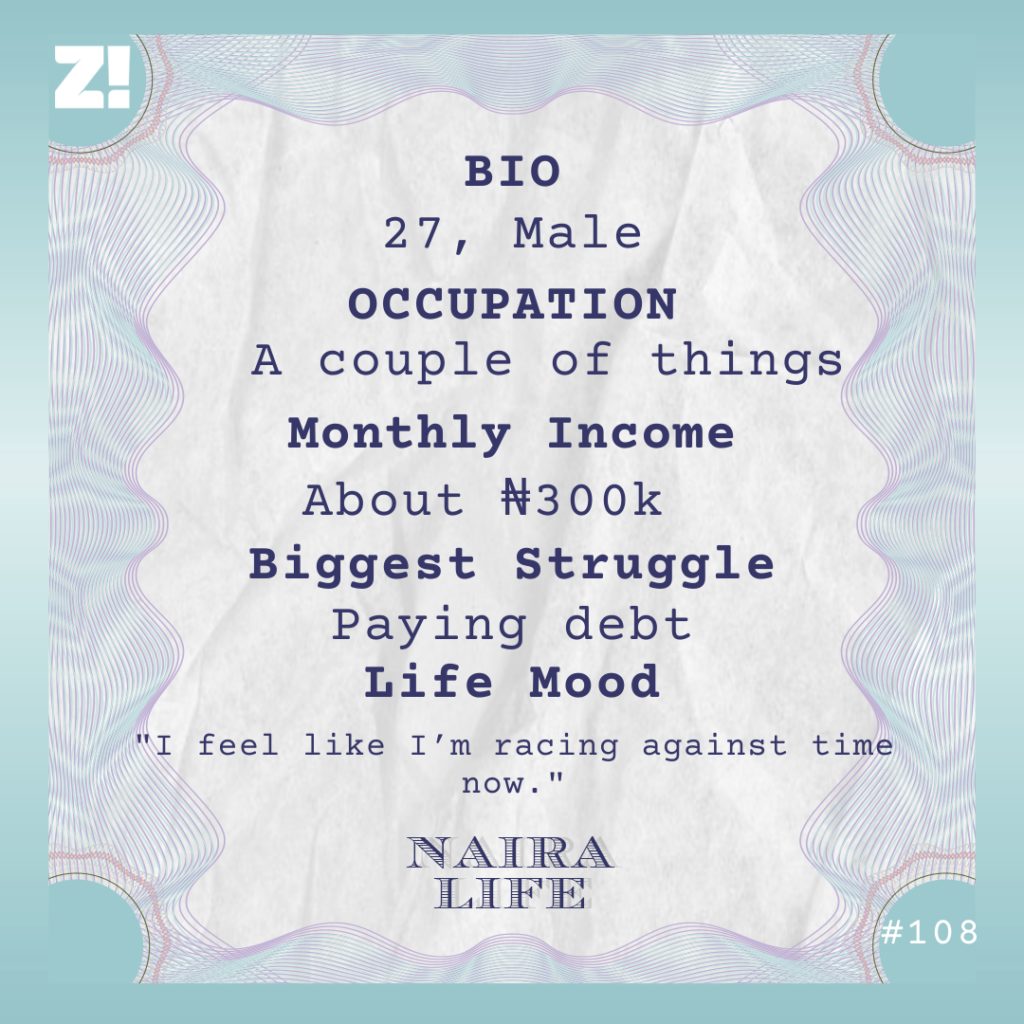
The subject of this story works with small businesses. But before this, he tried to build two businesses from the ground up. The first one landed him in debt. The second one ended with some more dire consequences: legal troubles and debt.
What’s your oldest memory of money?
When I was about to finish secondary school, my dad was laid off at his investment banking job. My mum was also a banker, but she had been laid off years earlier and had moved on to other things.
Do you remember how this changed things?
The driver was the first to go when my dad lost his job. My dad started saying things like, “Let’s find a bike to take you to school.” Then it became hard to afford rent. My parents were building a house already, and we moved in although a lot of work hadn’t been done. We slept on the floor for a while.
My dad never found another job, so it was all on my mum. And she managed it well because the lack wasn’t evident from the outside.
What was the first thing you ever did for money?
ASUU went on strike when I was in 100 level in 2009, and I returned home. Unfortunately, it was one of those long ones. After spending a couple months at home, I grew restless and wanted to do something. The house help had left, and my mum was looking to fill the position. I told her I’d do it, but we had to sign an agreement. I didn’t think she would take me seriously, but she asked me to draw up the terms. She was impressed with my proposition and agreed to pay me ₦10k every month for my work.
LMAO. You got paid for what most of us did for free?
Yup. After two months of doing this, they called off the strike. When I was returning to school, she added ₦20k to my ₦10k allowance and told me that was my salary for the months I worked for her. I was like, “Oh, I can make money from anything?”
In school, a final year student who was a friend needed money for his project. I decided to loan him ₦15k for a month at a 10% interest rate. I pitched it to him, and he agreed. He returned the money plus interest at the end of the month. I felt if I could do it for one person, I might as well do it for 10 people.
Another friend wanted to buy a phone. I loaned him ₦15k and jacked the interest to 15%. He also returned it on time. I decided to go all in. I turned my room into an office and started telling people that I operate a short-term loan business. Students always needed money, so the word started spreading.
Mad oh.
There was a challenge though.
What was that?
Answering the risk question. The chance of students defaulting on loans was very high. But I made everyone who wanted a loan submit the original copy of their school receipt, and I held on to it until they returned my money. My client base started to grow. Now I needed to figure out how to get more capital, so I started putting my monthly ₦10k allowance into the business. Omo, I drank garri ehn.
Haha. But it picked up?
Yes, more than I expected. My model was referral based, and I only dealt with people who were recommended by someone I knew and still had at least one year to spend in school. By 300 level, I’d built some structure and started paying myself ₦5k as salary every month.
Haha.
But I also knew it wouldn’t be sustainable in the long run, especially since I was running everything with my personal resources. I split the business into two and started funding students who had small businesses. I gave them working capital, and at the end of an agreed period of time, we split the profits.
How did it work out?
Great! Before the end of my third year, I had disbursed over ₦100k to people and small businesses. Because I was running two businesses, I brought in someone as my partner to monitor the small businesses and ensure that I got all my money back.
People were noticing what I was doing, and my clout shot through the roof. The rich kids on campus started hitting me up and going, “I have this ₦200k I’m not using. What can you do with it?” I started investing money for people and giving them their capital and returns at the end of the semester. I did that until I left uni in 2013.
NYSC?
Yes. One of my roommates from uni reached out to me and told me he knew a guy making good returns from palm oil. He shipped kegs of palm oil from the south-south where it was cheaper and sold at a higher price in the south-west. The numbers made sense, so I convinced my partner to let us give it a try. I told a few other people I knew from school and raised about ₦500k. The plan was that the guy would give us 5% of the capital every month.
And…
He turned in the first and second month payment. I think ₦35k each. At the end of the third month, my partner called me and went, “We’ve not heard from this guy.” I called his number but couldn’t reach him. I’ve not seen him since that time, and it’s been more than six years now.
Whoa!
I couldn’t bring myself to tell the people that invested that I’d lost their money, so I was paying them as though the business was profitable. I took more money from people and paid those that had invested earlier with it. I hoped to get a hold of the guy and get the money back before anyone noticed. I was in about ₦700k debt before I realised that it wasn’t sustainable and came clean to the investors. I had to figure out a way to pay them.
How did that go?
It was crazy. I started a food items delivery business for corps members in the town I was serving to pay the debt. I raised money from people who trusted me — it was more than ₦100k. I’d buy crayfish and periwinkle, which were cheap where I was, and ship. Corps members always wanted to buy food items and send them home because they were cheaper there.
I also had links to restaurants and food services providers and supplied these food times to them. I built and monetised the entire logistics value chain. This brought in at least ₦50k monthly. By the time I finished my service year, I’d cleared my debts and had ₦300k in savings.
That’s awesome.
I returned home and the question was, “What do I want to do next?” I wanted to do an MBA, but my mum said no. I couldn’t afford to pay for an MBA myself, so I decided to take JAMB and go for a degree in Economics. I was in the middle of the application process when an uncle called and convinced me to do my master’s degree in a science-related course to appease my parents. Then I could go for my MBA after. I thought it was a fair deal, and I took it. This was 2016.
What happened after?
It was quiet at first. But I was already hooked on doing stuff with money, so I was restless about taking a break. I sold small gadgets for a while, but that didn’t bring a lot of money.
Towards the end of my programme, a friend I knew from uni reached out to me. He wanted to start a fintech company and operate in the payment space. I thought I could use my experience in uni and during my service year to do something new. I signed on and dropped out of school to do this with him, even though I was in the middle of my final exams.
Omo
Yup! My plan was to return to school later and finish it.
We started as a micro-lending platform for market women. His dad had a relationship with microfinance banks, and we leveraged that. We gave the women small loans for their businesses. He dropped most of the money — mine was mostly working capital, about ₦40k.
Interesting.
Then he heard that forex trading was the hot thing. He was like, “How about we build a platform and get people to trade for us?” We would get people to give us money to invest and the traders would put the money into the market. We pivoted into it and got some people to invest, and it picked up from there. It was fine for a while, but we started losing money.
When did this start?
I actually don’t know. I was handling operations and comms. My ex-partner was supervising the trading room. I was supposed to know what was happening there, so I could figure out how to manage investor’s expectations and all, but I didn’t. My partner always told me everything was fine, even when it was not.
When did you find out?
We were close to one of the payouts, so I doubled down on asking for updates on when the funds would be available. That was when he eventually came clean and admitted that we were dealing with a significant draw down and had lost all of the money people had with us.
How much?
It depends on who you ask. I have no idea of the exact amount. He was in charge of getting money from investors. And when everything happened, they said it’d run into a couple millions of naira.
Oof.
My ex-partner went into hiding. He wasn’t picking up calls or responding to messages. I thought that since I was the company’s comms guy, I could pacify the investors. Haha. I got arrested. It was a case of if you can’t find a way to give him to us on a platter, we’ll come for you.
Ah.
I was the fall guy. I spent nights in the police jail. The question I kept hearing over and over was, “Where did you keep the money?”
It was a harrowing experience, especially for my mum. By the time law enforcement looked at our trade records, finished their investigations and found that we weren’t trying to rob people and actually incurred losses, she had spent so much money in legal fees trying to get me out, and the family was in debt.
Do you know how much she spent?
For my bail alone, the family raised close to ₦500k. The ensuing drama cost her at least ₦5M. She took loans with crazy interests to raise the money. The money went to paying my legal fees, law enforcement and some of the aggrieved creditors.
I’m curious, where was your ex-partner in all of this?
His family had clout, so they shielded him. He even tried to travel out of the country.
Gosh, I’m sorry.
Things began to calm down in 2019, but I still had to keep showing up at the police station to continue the cycle of interrogations. I was at the lowest point of my life in 2019. I had nothing. I’d started two businesses I thought I could build to something, and both put me in trouble and debt. I couldn’t even go back to school. The shame wouldn’t let me.
I started the year with literally nothing. Later that year, I got a job at a non-profit where I worked on content and business advisory. They paid me ₦20k, and I stayed with them for two months.
Why did you leave?
A mentor contacted me. He was organising a training programme for government officials close to retirement and needed someone to do a workshop on how to avoid investment pitfalls and manage their funds. He thought I had quite the story to share. I was paid ₦150k for that, but it felt like ₦50M.
Oh man.
I mean, I was struggling to buy a one gig data subscription at the time. That gig was a turnaround for me. I put everything into it.
What happened after?
I got more gigs. A feasibility study here, a business plan there. I was getting ₦150k-₦250k on each job and using everything to help my mum clear the debt she was paying off. Most of the jobs came from my mentor’s network, so he decided to integrate me into his company.
I joined his team, and after some time, I started managing a team myself. I got a monthly stipend from my boss to help with remote work set up, but my main pay came from the projects I could execute in a month, and these were getting me an average of ₦300k monthly.
What does the company do?
Business consulting for SMES. Some of these businesses are understaffed and need fixers like me to help create plans and business documents and help them find ways to source funds.
The projects could be anything: creating a feasibility study or developing a social media campaign. My job function changed according to the projects. I could be Head of HR or Chief of Staff.
I did this for a few months. Then Covid started.
How did it affect you?
You know how some people talk about how their income saw an uptick because of the pandemic? I’m one of those people. There was a huge demand for people with technical skills. Organisations were organising virtual events and needed help setting them up. Companies were looking for people to help their staff adjust to working from home. Things like that.
My team made an average of ₦250k on each project. After taking out 10-15% admin fees for the company and allowance for the team — we were often an average of five on a project. I had at least ₦100k left. We did an average three of these projects every month.
Mad.
I was still paying off my debts, but things were beginning to pick up. Then my dad died in 2020. I couldn’t even grieve him because I couldn’t stop working. I was handling a project in the middle of all the burial arrangements. He died when I just started to turn things around. Also, I can’t shake off the sentiment that my legal issues may have been a factor in his death, and I’ll probably live with that guilt forever.
I’m really sorry for your loss. The last couple of years have been rough, but where are you at now?
I’m still at the company. I have a team of six people who work with me on these projects. At the end of the month, I still make up to ₦300k, even after paying the company and my staff.
Let’s break it down.
When do you think you will finish paying off your debt?
I’m hoping it will all be over next year. First quarter of 2022 in the worst case scenario.
What do you imagine life will be like when this happens?
There will still be bills to pay, but nothing as crippling as this. I’ve learned to be more resourceful than ever and looking out for actual opportunities. It’s why I consult for like seven businesses. The challenge is that I bring people on these projects, so I share profits I could have kept. That said, I’m confident my family will never lack.
With everything that’s happened, how do you feel about investments now?
I’m currently averse to investing in anything even though I know that it’s not wise. I’d rather just save. I’m currently my investment, and that’s why I’m putting money into personal development — training programs and short courses.
If someone comes to me and goes, “There’s an investment opportunity.” I’ve logged out already. There’s some PTSD I have to deal with first before I go down that route again. If that ever comes, I’d stick to real estate investments because they are a relatively safer option.
How would you say all of this has shaped your perspective about money?
First, maybe don’t invest money with people because you know them or trust them. Before I put resources in any project now, I have to know everything about it. Also, I place a high premium on personal development. Whatever money you invest in yourself will hardly go to waste.
Is there anything you want now but can’t afford?
I’d like to put about $10,000 in a dollar-denominated portfolio. But I currently can’t do that because I’m not earning enough. If I don’t have any project coming in, I’m toast. Also, my girlfreind came at a time when I’d lost hope and stuck with me until I snapped back to reality. I’d like to marry her as soon as possible, but I’m not sure I can afford that this year.
Rooting for you. This was heavy, but on a scale of 0-10, how would you rate your financial happiness?
5. I feel like I’m racing against time now. I’ve kind of wasted some time I’m not getting back. And playing catch up is very exhausting. This number I gave myself is even me being nice. But when I clear my debt and settle down to start a family, this number can move to 8.
Are you living your best life already or do you have to wait for a little more time? Let’s find out.
[donation]
Since August 2020, Nigeria’s Government Enterprise and Empowerment Program (GEEP) and 60 decibels with the support of the Rockefeller Foundation have been administering a survey to GEEP clients to understand how COVID-10 impacted their personal and economic situation. An interim report has been published, and it shows that the Nigerian informal sector was adversely affected by the outbreak. 9 out of 10 GEEP clients recorded drops in their income levels, businesses struggled to stay afloat due to government-imposed closures, low footfalls and constrained supply chains. To survive, GEEP clients had to rely on their savings, borrowed heavily and reduced percentages set aside for household and business savings or stopped outrightly. The data also showed that 35% of GEEP respondents had to close down their businesses, 66% recorded fewer customers and 84% have been using their savings to cope with current hardships.We decided to examine how everyday Nigerians, particularly small business owners were affected by the pandemic. One story every week for the next six weeks.
The subject of this week’s Coping In A Pandemic is a widow with three children. She talks about starting her businesses, how Covid-19 has affected her income and her current struggles with paying her rent.
Do you remember when you started this business?
15 years ago. I started as a salesgirl for someone at the mammy market in a barrack. My pay was ₦4k per month. The good thing about the job was that it was a good way to learn the business, and I almost always made more than my salary per month.
How?
My boss had his price, and I had my price. I could add a little to the price of cartons of frozen foods I was given to sell. And we sold hundreds of cartons every month, so it was easy to make my own money. I think I got up to ₦1k on every carton I sold.
So, you were making up to ₦100k per month?
On a good month, yes. I’ve always been good at saving, so I was always putting money away. The job was good, and I was learning and understanding how the business worked. We brought the goods in from Seme and sold them here. I was with him for six or seven years. By the time I was leaving, I’d saved enough to buy a shop in the same market and a car I could use for business — a Golf 3.
Wow. How much did you buy the shop and the car?
I bought the shop for ₦200k, and the car was about ₦700k. Now that I had everything to go out on my own, I left the job and started going to buy the frozen goods, mostly chicken and fish.
That’s great.
My husband and I would drive to Seme for the products, and because I had a shop, sales were good. I also supplied people. Life was really good. At least, I could conveniently pay my kids’ school fees and house rent. No wahala at all.
Then I went to Seme one time, and they seized my car and goods.
Ah, why?
Customs oh. After some back and forth, they released my car, but they held onto my over ₦200k worth of goods. I had used all the money I had for business on that trip.
Ah.
As if that wasn’t enough, my husband decided that we had to sell the car.
Why?
He said he wanted to travel to the US. I think he sold it for ₦450k. I don’t even know how he got the rest of the money. I guess he travelled to the village and sold a few plots of lands. Do you want to know what happened after?
Tell me.
He came back home after some time. It didn’t even take long. He said one paper was not correct, so he had to come back. And he came back empty-handed. All that money went down the drain.
I’m so sorry about that.
It didn’t end there oh. He started talking about how disrespectful I was to him. He packed and left. I heard he went to Abuja first, then went to the village. He left me with three kids. My last daughter was one year and three months at the time. I couldn’t reach him — his number was always switched off.
He didn’t come back till he died about six years ago. It’s been me and my kids since that time.
Wow, I’m so sorry.
Life became harder for me. I was not doing any business, and I had no money to do it. Since my husband died, his family has never checked up on me or offered to give me ₦5. They made it clear that my girls and I don’t matter to them, and we would have to figure our lives without them.
I didn’t have money to go back to the business until 2016.
How did you pick it up again?
I joined Mamamoni, and they gave me a ₦100k interest-free loan to start my business again. I went back to my shop and picked up where I left off. Whatever I made from it, I put it back in the business. And I was there until I had to sell the shop in 2018.
What happened?
I was going through another rough patch and couldn’t make rent. The pressure the landlady put on me was a lot, and I couldn’t let her kick us out. I had to put my children first. Rent was ₦200k, so I sold my shop to get the money. With the shop gone, I moved my freezer home and continued my business from there.
How much did you get for the shop?
₦300k. What remained after I paid rent went to their school fees. Two of them were in secondary school already at the time, and their tuition was ₦37k each.
I’m curious, how much did you make in sales every month at the time?
At least ₦50k. It never went below that.
Did you have enough to save after meeting your basic needs?
I’ve always been very particular about saving. You know what I used to do? Ajo. I put ₦500 in every day and ₦100 for each of my kids. I don’t touch that until the end of the year, and that’s what I used to settle rent. But it didn’t work out in 2018. That’s why I had to sell my shop.
What about loans? Did you have access to those?
Ah, I fear loans a lot. The mere mention of loans with interest gives me a panic attack. I’d rather borrow money from people and agree to a payment plan. Those kinds of loans where you will pay excess money in interest put people in trouble. I can’t touch it.
Anyway, I didn’t need to take those kinds of loans. I was managing just fine with my savings until Covid came.
2020.
Covid did a lot. Sales declined rapidly during the lockdown. I couldn’t go out to supply and the light wasn’t good, so most of the goods I had in my freezer spoiled. Thank God for Mamamoni; they took care of food and supplied foodstuff for me and my girls. They also gave me another ₦50k interest-free loan to start another business. This was lifesaving. I travelled to Ogun state to buy cassava, and I also bought a gas cooker. That’s how I started selling fufu. And I’m still doing it now.
How much has this been bringing in?
I have small small customers I supply to, but It depends on the market and the number of people I can supply in a month. But on average, I’ve been making about ₦20k per month since I started last year.
That’s different from what you used to make every month. How has this affected things?
I couldn’t continue my Ajo last year. What this means now is that I may not meet this year’s rent. And the landlady has increased it to ₦250k. I told her that I cannot afford that, and she was like, “If you cannot pay, move out.” I don’t know how it will work out because I have only ₦50k. I’ve asked her for more time to do what I can do to find the ₦200k. I believe in miracles. One of my daughters is writing an exam this year, and I had to pay school fees — about ₦50k. When finding the money to pay for school fees was becoming a problem, God sent someone to give me ₦70k. I don’t know the lady. Someone just told her about me, and she decided to help.
That must have been a huge relief. Do you ever want to go back to selling frozen food items?
Yes, I was making more money from that. Also, the stress of selling fufu is too much. It takes a lot of strength to turn the cassava, and the pain that comes with it is too much. I got sick one time, but I couldn’t stop because I needed all the money I could get.
How much do you think you need to go back to it?
Everything is expensive now. A carton of chicken used to be as low as ₦8k, but it’s almost ₦18k now. A carton of fish is even more expensive. And also, I can’t go on that Seme road again because of Customs. They treat you like you’re carrying cocaine and seize your goods. I can’t deal with that stress. Although things are cheaper there, I’d have to buy locally. I also need a generator — Nepa has shown me a lot. I’d need at least ₦200k to return to the business.
As it is now, won’t a bank or microfinance bank loan be helpful for you?
As I said earlier, these loans that come with interest are not for me. Some people will add interest so high that the thought of paying it back will give you high blood pressure. I don’t want to be one of those people who take a microfinance bank loan and start hiding when the collectors come. I cannot do it. It will kill me.
It’s not like I don’t have the power to collect a loan, I just don’t want to. If I had a shop now, I might consider it. I’ll just concentrate on this fufu thing I do for now and hope things open up soon. I know how to do business very well and make the best use of money, so my children and I will be fine.
What aspect of your finances do you think you could be better at?
Savings, maybe. I couldn’t save last year, and that’s affecting a lot of things now. If I can save more, that can help prepare me for something like Covid. That being said, It’s hard raising a family alone. I don’t know how I’m taking care of these responsibilities. But God has been helping me through a lot of people.
With everything that has happened in the past year, would you say you’re happy?
Why wouldn’t I be? There’s life, and there’s always hope. Also, I’m watching my kids grow, and that means everything to me. My house rent is the only problem now. When I settle that, I’ll be happier.
Every week, Zikoko seeks to understand how people move the Naira in and out of their lives. Some stories will be struggle-ish, others will be bougie. All the time, it’ll be revealing.
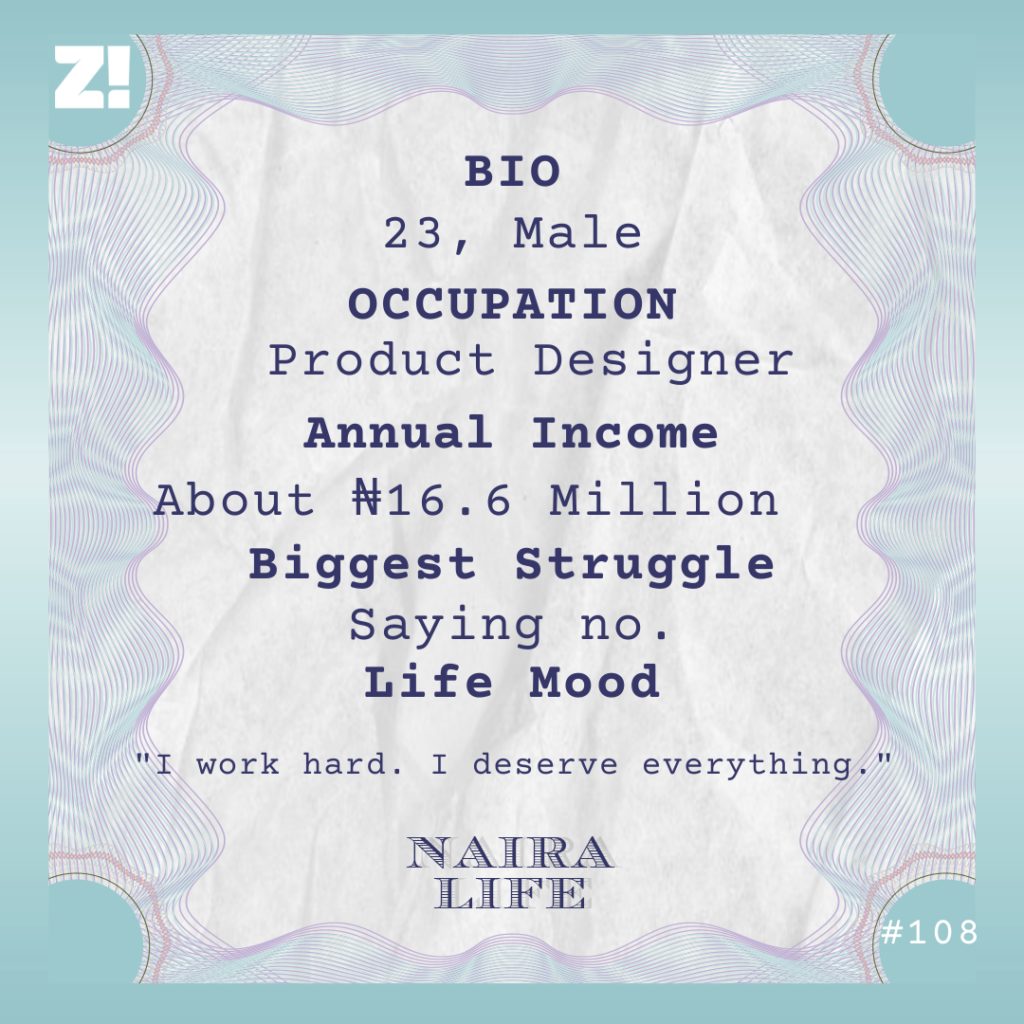
The guy in this story has two things going on for him: developing new skills and taking a leap of faith. The ultimate gamechanger for him, though, is a tech hub he joined at uni and a DM he got in 2020.
What is your oldest memory of money?
My dad always did this thing for me and my siblings when we were growing up: at the end of each term, he would drive us with his motorcycle to a restaurant in the town we lived in to flex us. We would order yoghurt and meat pie, sometimes we threw ice cream into the mix. At other times, he would drive us to the zoo.
What did your dad do for a living?
He ran a computer business centre with my mum. At first, all they did was type and print documents for people. But it grew into a printing press. I should add that my dad has done everything — he used to be a barber and then an electrician. He still runs these businesses to date.
What was life like, though, growing up?
The family was never hungry. We could be broke, but food was always on the table. For me, though, my childhood was tough. My dad made sure of that. I was the first child, so he thought I needed to be raised with an iron fist. I spent most of my childhood learning how to be a man. My dad always bragged about how he was an employer at 18, so it was like I was competing against him.
I would wake up at 6 am, say the morning prayers, go to school. There were extra classes after school, and then I would head to the shop to handle the business. I started helping around with the smaller tasks, but as I grew, my responsibilities also grew. I think I started managing all aspects of the business when I was 16.
What was it like handing the family business at that age?
My job was to make sure everything ran smoothly: the computers, printers and generators. I also did the books and made sure the numbers were right. I was paid ₦5k per month, although the money didn’t come to me. It went to a trust fund my parents kept. Subsequently, my salary was increased to ₦7k, then 10k, then ₦15k.
What was revenue like?
We averaged about ₦300k per month. But when it was time for elections or other large scale events, the number went up to ₦750k. During the 2011 general elections, I think we did about ₦1.5M to ₦3M every month.
Omo. So, when did you get into uni?
2014. I was supposed to study medicine, but I was offered biochemistry instead.
This sounds very familiar.
So, the plan was to do biochemistry and go for medicine later. My first year and second year were great. My grades were fine. In 2016, I replicated my dad’s hustle on campus and started a design and printing business. This brought in at least ₦200k in a good month. The best times were during the end of year events when I did about ₦400k.
Impressive. How old were you when you started this business?
19 or 20. The only thing was that this income wasn’t constant, so it was hard to plan around it. I mean, there were months I did only ₦15k.
I was making money on the side, but something happened in my third year.
What?
I was hit with depression and anxiety. I didn’t want to do the whole school thing anymore. I had my sights set on tech, but I didn’t know how to get into it. It kinda spiralled out of control. One day in 2017, I drank an entire bottle of vodka, Moet and Baron. The plan was to go off to sleep and maybe never wake up. I had forgotten that my girlfriend at the time was supposed to visit me later that day. When she came and couldn’t get in, she called my neighbour and they broke my door. They found me on the floor, laying in my vomit and my eyes rolled in. I remember the guy pouring buckets of water on me and pumping my stomach to get the content out. I eventually slept it off. I didn’t wake up until the following night. The pain was mad.
I’m so sorry you had to go through that.
We move. Later that year, my university started a tech hub. I was invited by a friend to join their team that was incubated to be mentored in the tech hub. All of us were rebels of sorts — we were tired of uni and just wanted to do something different. We had a building to ourselves, 24 hours of interrupted power supply and the fastest wifi on campus. Omo, I was sleeping there, just building stuff with my team. We became the cool kids on campus. The VC gave us ₦2M at some point.
What did you do at the tech hub?
My team was building drone technology of sorts. We wanted to deliver blood to cities like Zipline does in Rwanda. When we started, I was in charge of graphic design and marketing communications. I gradually moved into product design and front-end development. I also did a lot of strategy work. It was my biggest strength. People in other teams always wanted to pick my brain on something, and I absolutely loved it.
Where do you think this edge came from?
My dad. He’s a chief strategist. See, that guy didn’t go to uni, but he was a smart man. Also, I’m very curious about stuff. I’m interested in details as well as the big picture. So, when people tell me the big picture, my mind is looking for a million paths to get there.
Interesting.
I basically ditched classes. My classmates and lecturers thought I was a fool. Maybe I was, but I wanted better. Finally, I got to my final year in school and I was supposed to do my project. One day, I woke up and went to my supervisor to tell him that I wasn’t interested in the project anymore and needed him to refund the ₦30k I had paid for it.
This next person I saw at the hub was my dad. My supervisor had called him. This man came with a chain and he said: “I know an evil spirit has possessed you, so we will chain you and take you to the psychiatric hospital, then carry out some spiritual deliverance for you.” I was arrested and detained at the school security post for most part of the day. The school asked my dad to go home and that I would join him later, so we can settle our issue. This was in 2018, and we still haven’t settled it.
What happened after your “deliverance”?
They actually took me to see about three pastors. I sat through the whole process thinking of how to leave home. After everything, I lied to them I was going to school to fix a few things. It’s been two years now.
So, you came to Lagos.
Yup! A tech bro I met on Twitter bought me my ticket. I stayed at an uncle’s place for a while.
Wait, was a job waiting for you in Lagos?
Nah. There was no job waiting for me. I had sent applications before I came, but nothing clicked. I roamed the streets of Lagos for three months before I got my first job. I saw a tweet where someone said you could message recruiters at companies you applied to on Linkedin. So, I sent a message to a recruiter and she asked me to mail her my details. Two days later, I got an interview.
What role were you applying for?
A Creative Designer at a software company.
And you got it?
Yup. This was May 2019. My net salary was ₦145k.
Nice. How did that go?
That job got me settled in Lagos. But damn was it challenging. It was a lot of sleepless nights. The biggest challenge was navigating the commute. Where my uncle lived was too far from where I worked. After trying to wing it for two months, I started sleeping at the office. I would wake up early to go have my bath at a friend’s who lived close to the office. The work was crazy, but I didn’t do badly.
In 2019, the company flew me and a few other people to Dubai. That was my first time out of the country.
How did that feel?
Omo, it was mad. On the day we were leaving the country, I called my mum on my way to the airport and she broke down in tears — tears of joy and fear.
Lmao. Why fear?
It was that panic parents feel when you’re travelling. She has never been on a plane, so I guess I understand how she felt.
2020, how did that go for you?
It started with some massive gbas-gbos. I left the company where I worked because I got an offer to do something different in another company. This one was an actual product design job. And it came with a bump to my salary: ₦250K.
The company was on the Island, so I paired up with a friend and got an apartment together. I was also getting a few side gigs, so I was doing ₦400k-₦500k every month. Then Covid happened, and I got fired.
Whoa!
I didn’t adjust very well to working from home — with poor power, internet, and the emotional side of things. I got back to back queries before they terminated my appointment. It was a fair decision, sha.
The sad part about this was that my contract did me dirty. By the time they finished picking out the small details in the contract, my salary for that month came down to ₦160k. Naso I take broke oh.
Damn. How did the subsequent months go?
I had no job from May to August. What kept everything together was a few side gigs I got. Towards the end of August, I got another job. The salary was ₦300k monthly. It was actually one of the best places I worked. I quit at the end of last year.
Sometime in October 2020, I got a DM from someone wanting to know if I was interested in a job. I looked at it but the application process was too long, so I left it. One night, I went back to it and sent in an application. Two weeks later, I was invited to interview. A design test followed and a series of more interviews. In November, I got an offer from them.
*Drum Roll*
It was ₦16.6M per annum. $35k in addition to $4k in gadget, insurance and internet allowance. That’s ₦1.4M per month. Also, it’s a fully remote job.
Omo. What has this jump meant in this little time?
It feels good. It is more than any validation I could have gotten about my work, and it’s not even all about the money. Throughout every stage of the hiring process, they kept talking about how impressed they were with my work. See, I work hard. I deserve it.
Energy. Let’s break down your monthly expenses now.
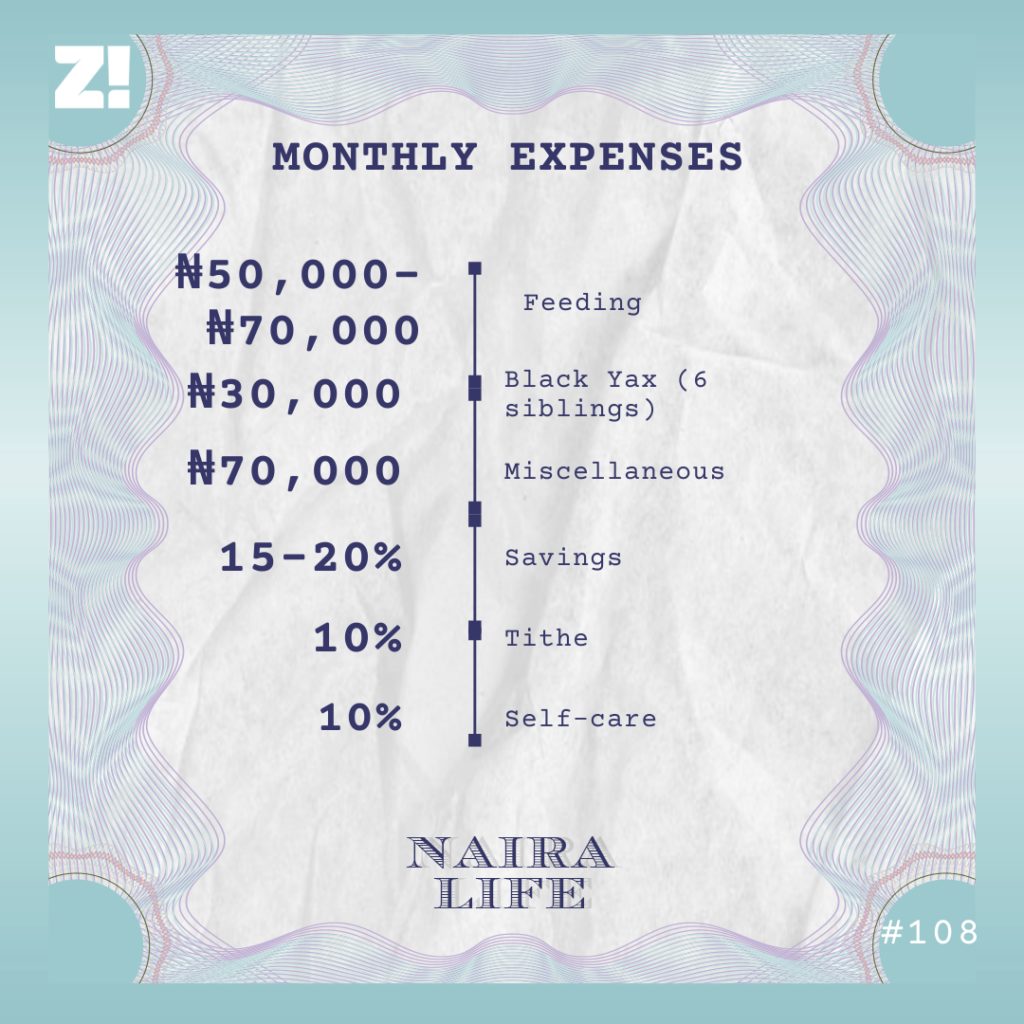
I have this tradition, any lump sum I make, I spend at least 10% getting myself something
Is this break down pre-new bump or based on the new bump?
Pre-bump. Oh, I didn’t mention; I make about ₦500k-₦600k every month from side gigs.
What do you do for people on the side?
Product design as well. I used to do WordPress but stopped for a while. I also get gigs to help prototype products launch into full products. Then people pick my brain for a price.
Walk me through how your skill sets have evolved over the past decade.
I started designing with CorelDRAW 9 and Adobe PS 7. After that, I went into print production. I don’t think there’s a printer out there I don’t know how to operate. In uni, someone I met online taught me brand identity and strategy. At the time, coding was the rave, so I learned a bit of frontend technologies (HTML, CSS, JS), but computer engineering wasn’t something I wanted. UI/UX and product design were the perfect alternatives, so I explored and grew in it. I dropped graphic design totally and moved on.
The years you picked them up?
2010: I was already typing faster than my mum.
2012 – 2013: My design skills were getting better. By 2014, I was solid
2014 – 2017: I picked up most of the skills set. Brand Identity design and strategy was key at this time.
2017: I picked up UI/UX.
Growth. So, what do you imagine the next 5 years will look like?
I should have one or two products in the markets. I have enough resources to start — human capital and funds. I’m currently enrolled in a university in the UK and will be starting classes this year for a degree in computer science. And yes, getting married to my girlfriend is also top of the list.
Back to the present. What’s something you want right now but can’t afford?
A collection of media production equipment for my church. It cost about ₦36M. This is very personal to me. With my current bump, I think I can afford most things I want. Last last, I’ll save up for it.
What is something you wish to be better at financially?
Saying no, maybe. I’m very reckless about giving people money.
What’s the largest amount you’ve given away at once?
₦330k. I was the president of an organisation in 2017, and we were planning an event. However, we were low on funds. I borrowed ₦200k, but it wasn’t enough. Then I started dipping into my personal funds. By the time we were done, I had spent ₦300k. I never got it back.
Lmao. What’s the most annoying miscellaneous you paid for recently that cost a lot?
Maybe my trainers? Got them for ₦25k after searching for months for my size. I am a size 50. The annoying thing was not the price but the fact that it had to be shipped from Germany, and I have been searching for three years for a size 50.
SIZE WHAT?
All my shoes are custom made.
Haha. When was the last time you felt really broke?
My first four months in Lagos. I trekked to places a ₦100-₦150 bus ride could have gotten me to. There’s this lady on Twitter that shares food in my area. One day, I joined the line to collect rice oh.
Wild. Have you ever imagined how life would have turned out if that Tech Hub didn’t get built in your school?
I would have found another way to survive. I may not have gotten to this point, but I definitely would have survived. I believe that the places we go to and the people we meet are all paths to a destination. Taking a different path might mean having a different experience, but they all lead to a result. Now the uncertainty is, nobody knows how good or bad the result will be.
What’s a purchase you made recently that significantly improved the quality of your life?
Ah, that trainers oh. In one week, I have lost 6.5 kg.
On a scale of 1-10, how would you rate your financial happiness?
A solid 7.
What would get it to a 10?
$140k/annum.
Do you act like you know people you don’t? Let’s see what this quiz thinks.
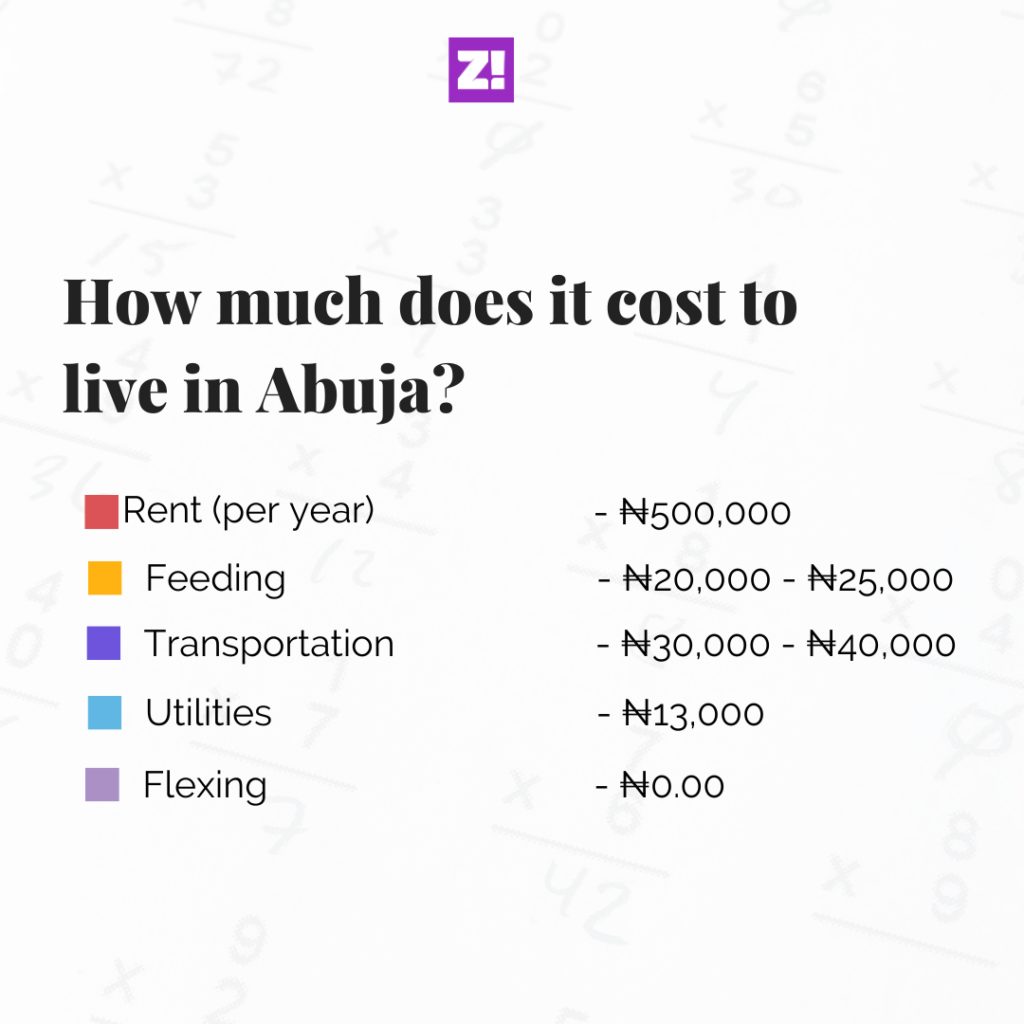
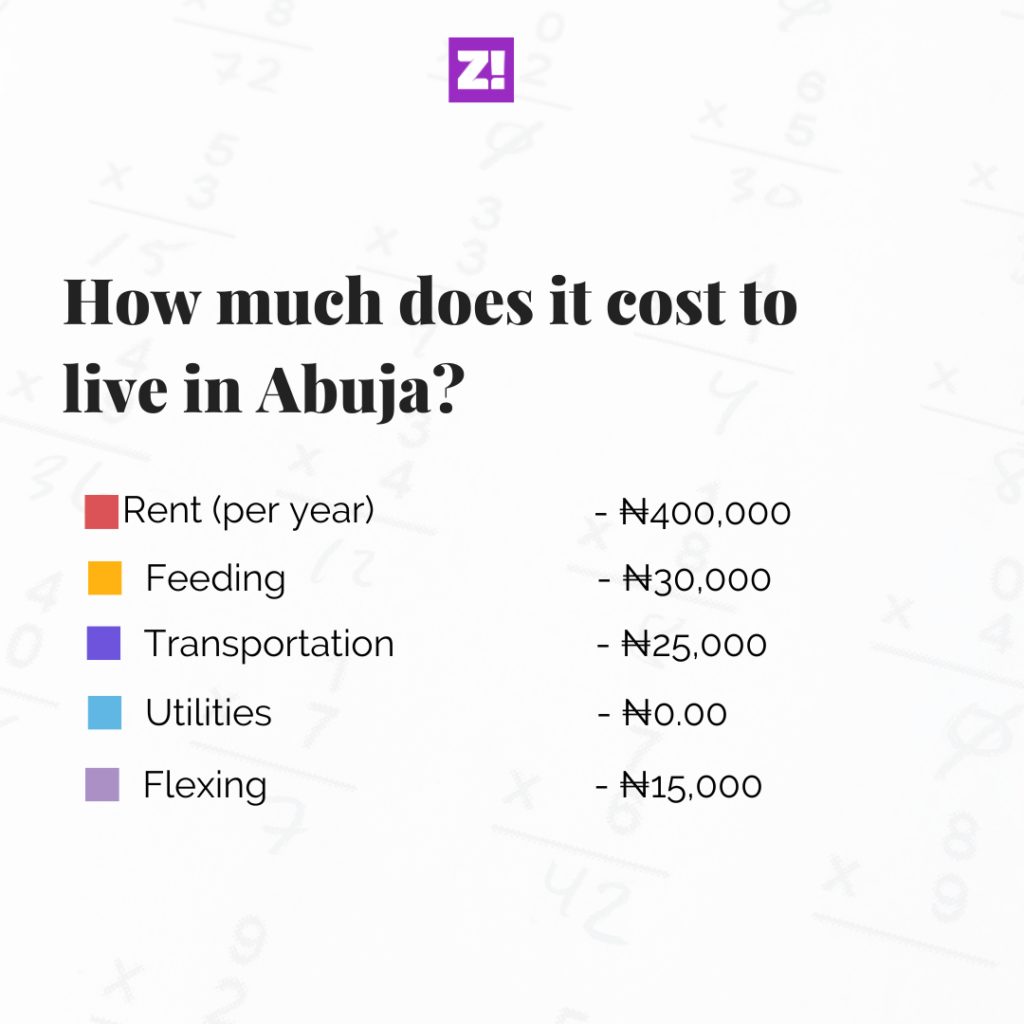
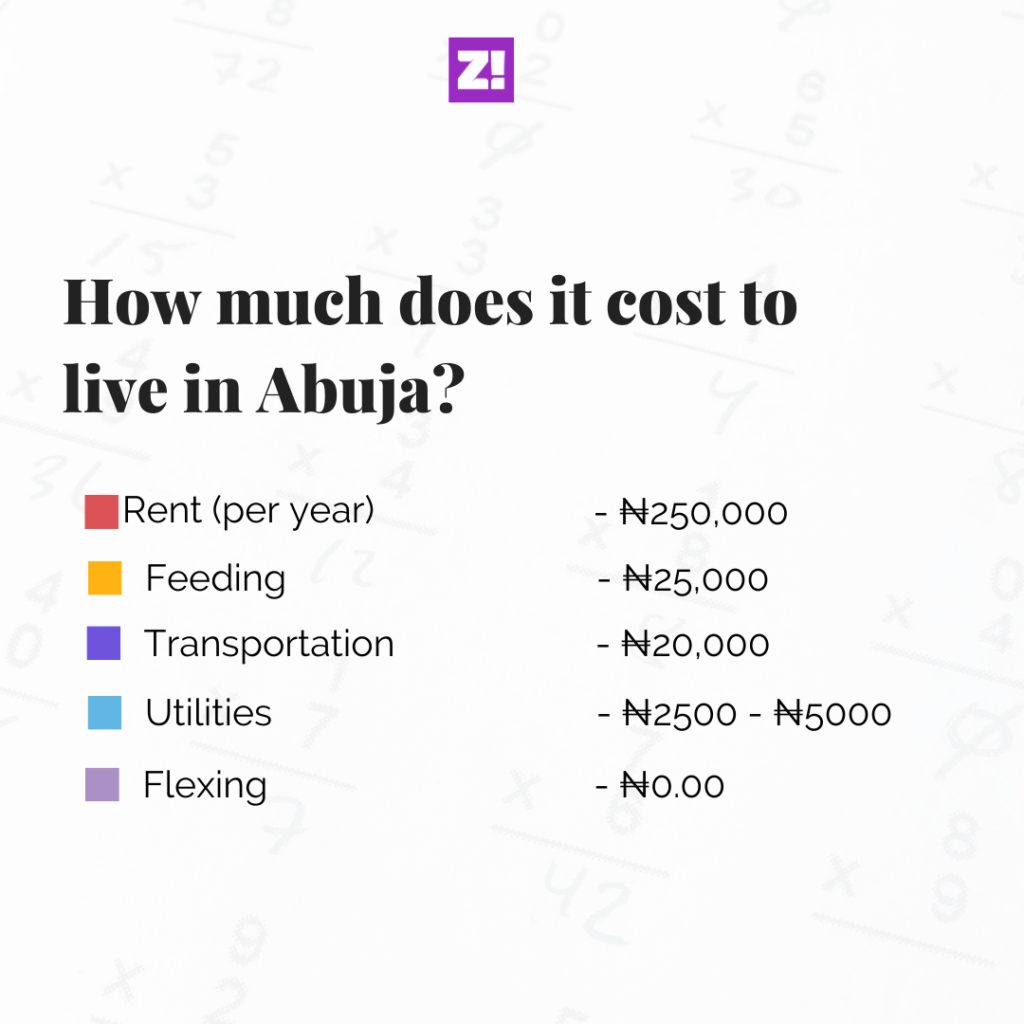
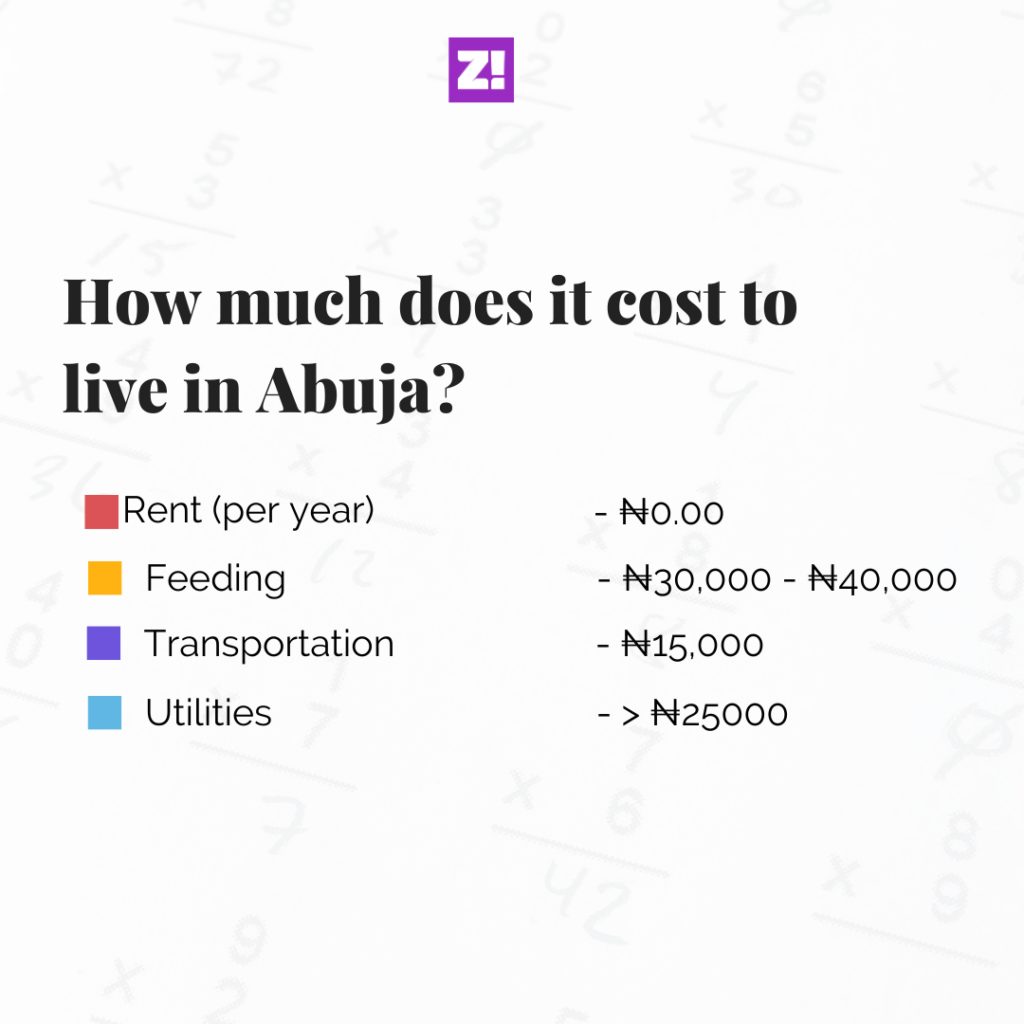
A lot of people swear that Abuja has a lot of things going for it. I mean, it should — it’s the nation’s capital. That’s a decent claim to fame too. I was curious about how money moves in the city, so I asked 7 people living there to talk about their expenses.
1. Patrick, 31 years
“Abuja is peaceful. I grew up in Lagos and worked there for a while, but I don’t miss it. “
Years lived in Abuja: 5 years. I moved here in 2015
Occupation: Product Designer
Monthly income: ₦600k. My side hustle brings in an additional ₦100k – ₦500k once in a few months.
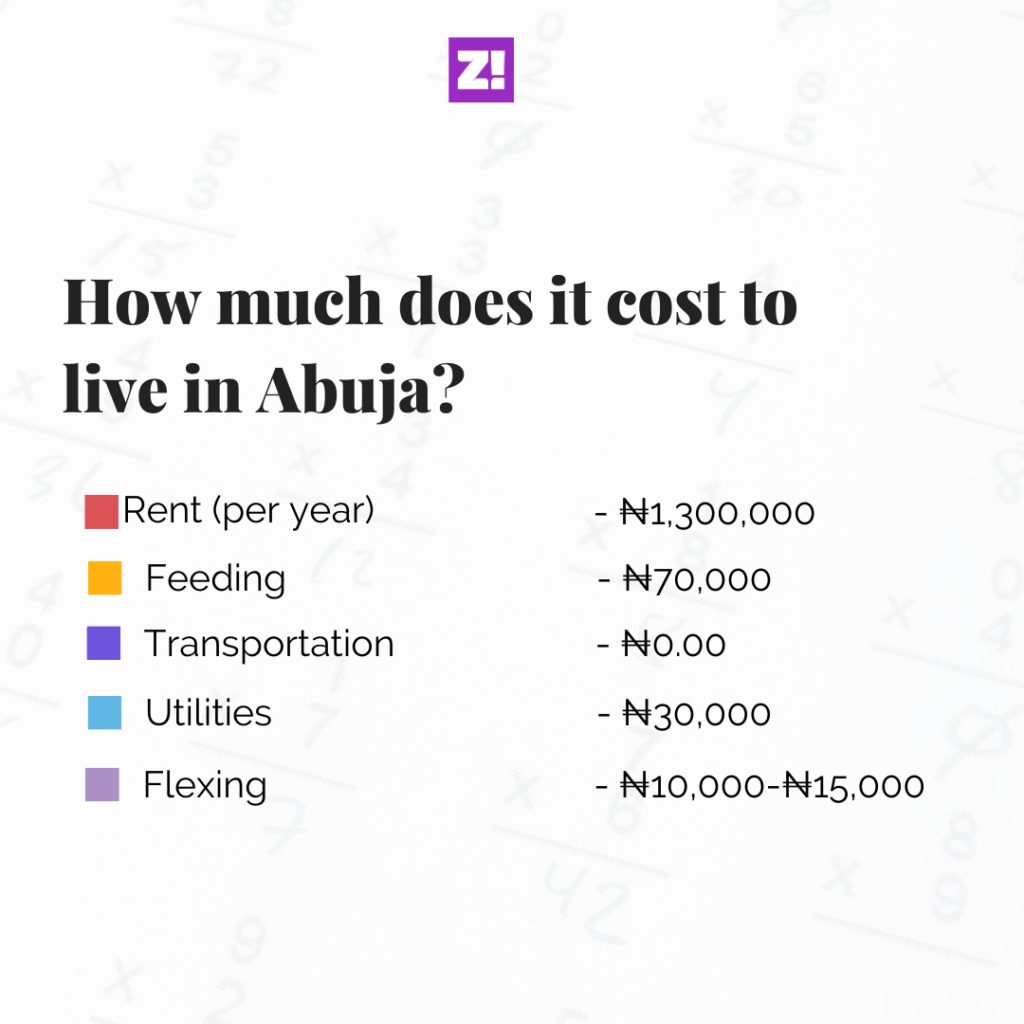
Feeding: ₦70k. I cook a lot, so I spend about ₦40k on the major food supplies every month. I spend an additional ₦30k on groceries and beverages.
Accommodation: ₦1.3m for a 3-bedroom bungalow in an estate in Lokogama, and I get the compound to myself. I pay an additional ₦100k service charge yearly.
A 2-bedroom bungalow in one of the newer estates in the area cost ₦1.4m. But you can also get a 2-bedroom apartment in a building for about ₦700k.
Transportation: ₦0.00. I work remotely and hardly go out. Save for my evening strolls, I spend my days inside my house.
Utilities: ₦30k. ₦20k goes to my power bill every month. My service charge covers waste disposal. My laundry is outsourced and runs into ₦10k every month.
Internet: ₦40k
Flex: This depends on the month, but I budget ₦10k-₦15k per month on alcohol, and I treat myself to grilled fish and Sharwama at least once every week and on days I get some money from a minor gig. I rarely go to the club, but I spent close to ₦90k the last time I went.
Savings: I save between ₦150k – ₦300k in a month.
2. Deborah, 29 years
“I love living in Abuja. Although I have to admit that it’s a hard city to make it in. There aren’t many opportunities, so you’ve got to be creative to secure the bag. I’ve been here for three years now, and I plan to stay a little longer.”
Years lived in Abuja: 3+ years. I’m originally from the Democratic Republic of the Congo, but I moved to Abuja from Paris in 2017 for an internship and ended up not leaving.
Occupation: Consultant.
I also run a food business on the side.
Annual income: It boils down to the number of contacts I’m able to secure in a year. In a good year, I make ₦5M-₦6M. But it hasn’t been a good year in what feels like forever — I made approximately ₦2.5M in 2020.
My food delivery business brings in ₦100k-₦200k monthly, so that too.
Feeding: ₦50k-₦70k. I love good food. I’m big on buying quality ingredients to make my gourmet meals. But since food prices have skyrocketed, I’ve been fasting.
Rent: My rent is on the high side. I pay ₦3.4M for a semi-furnished 2-bedroom flat in Asokoro. I’m in the process of moving and looking to find a 1-bedroom apartment that won’t cost me more than ₦2M.
Transportation:₦10k-₦12k. I’m always at home, but when I go out, I use Uber for the most part. My trips are between ₦500 and ₦700, and I spend some ₦2k-₦3k on moving around weekly.
Utilities: Power bill is a madness! I used to pay ₦15k every month, but now it’s ₦30k, even though I’ve reduced my power consumption. The cost of other utilities is included in my rent. I have a washing machine for my laundry needs.
Internet: ₦5k per month.
Flexing: I love travelling back home to the DRC, and I do it at least once a year. The cost of doing this runs into $3000.
3. Fadila, 28 years
“I enjoy living in Abuja a lot. I would hate to move.”
Years lived in Abuja: 2 years
Occupation: Executive Assistant
Monthly income: ₦85k
Feeding: I currently don’t have a food budget. I’m in a situationship with a guy who owns a big eatery/supermarket, so I get breakfast, lunch and dinner delivered to me every day. Before I met him, I was averaging ₦20k on food.
Accommodation: I pay₦400k for a self-contained apartment in Kubwa. It’s possible to get a good self-contained apartment here for ₦200k. ₦150k is doable too, but you might not get what you want. If you’re really about comfort, a rent budget of ₦200k-₦500k will do.
Transportation: ₦16k. A co-worker drives me to work and drops me off at home every day, and I pay him ₦10k. The other transportation expenses go into cabs and uber rides.
Utilities: I pay ₦15k service charge every month, and it covers power, laundry, and cleaning.
Internet: ₦5k
Flexing: That’s never on my dime. There’s always someone ready to take care of that.
Savings: I’m a big saver. I save ₦25k from my salary. I get a lot of cash gifts too, and I mostly save all of it.
4.Teju, 26 years
“I love Abuja. There’s hardly any stress. I honestly can’t live anywhere else in Nigeria. I moved here from Lagos… Lagos is hell.”
Years lived in Abuja: 4 years. I came to Abuja in 2016 for NYSC and didn’t leave.
Occupation: Chef
Monthly income: ₦500k
Feeding: ₦20k-₦25k. I’m not a big fan of cooking for myself, so I eat out a lot. A meal costs between ₦1000 and ₦2500 on a meal. I do buy food supplies, but it’s not something I do every month. I stocked my house with ₦50k in December, and I still have enough foodstuff to last me until the end of the month.
Accommodation: Accommodation is the biggest problem in Abuja. I currently pay ₦500k for a very tiny room and parlour in Gwarinpa. The room is so small that it can only fit my TV and bed. The kitchen can only take my gas cooker. My refrigerator and wardrobe stay in the parlour.
I’m moving to a bigger space in Kado — a room and parlour, and the rent is ₦1M.
Transportation: ₦30k-₦40k. I drive sometimes, but I don’t buy more than ₦4k worth of fuel at a go. My friend fills my tank sometimes. I take Ubers on days I don’t drive, and my trips in a day can run into ₦4k-₦5k.
Utilities: ₦13K. I pay ₦3k per months as service charge, and it covers waste disposal, security, and all of that. A lady comes to clean my house twice a week, and I pay her ₦10k every month. I have a washing machine for laundry.
Internet: ₦15k-₦20k
Flex: I don’t have a budget for this. I’m a homebody, and when I do go out, I hardly pay for it.
Savings: ₦150k-₦200k. I’m frugal, so I manage to save that every month. But the thing is, I buy things on impulse. I can wake up one morning, dip into my savings and splurge on a purchase. I’ve started saving in Dollars, and it’s helped me curtail this.
5. Gbenga, 25 years
“Abuja is a very nice city if you can afford it. Otherwise, it’s just another Lagos with wider roads.”
Years lived in Abuja: It’s my second month here. I got a new job and relocated in January 2021
Occupation: Policy analyst
Monthly income: ₦300k
Feeding: I spent about ₦30k on food last month. Most of it went into buying lunch at restaurants. On average, a meal cost me ₦1k – ₦1.5k, although I did try some Bukas that cost ₦500 or less.
I like to cook, but I haven’t had the chance to do a lot of it because I’m still trying to figure out the markets here. I’m budgeting ₦50k for food next month, but I expect that the cost of feeding will drop in subsequent months as I get more used to the city.
Accommodation: I got a mini flat for ₦400k in Dutse-Alhaji.It’s about 40 minutes away from work, but I think it’s fair. Getting a place closer would mean paying as high as ₦800k.
It’s easy to get a self-contained apartment in the area for ₦250k-₦300k. The price of mini-flat ranges from ₦300k and ₦500k, depending on how neat and “modern” the house is.
Transportation: I work in Maitaima, and commute has been a little tricky. I combine “Along” (the public transportation system) with drops/Uber. In the last month, I spent ₦25k on moving around. I’ve estimated my transportation cost to be ₦30k per month, but I would have to limit using Uber/Bolt to once a week.
Utilities: Nothing on that front yet. I’m currently enjoying my first-month benefits. I do my laundry myself.
Internet: ₦10k
Flex: I like food a lot, so I put an extra ₦15k aside to try one or two restaurants.
Savings: ₦50k. But now that my apartment is sorted, I plan to start saving at least ₦70k every month.
6. Esther, 24 years
“Abuja is amazing. The traffic is good and the people here are friendlier. Lagos people are always angry.”
Years lived in Abuja: 3 years.
Occupation: Procurement officer
Monthly income: ₦100k
Feeding: About ₦25k monthly. I spend ₦4k-5k₦ on food every week. I also spend an extra ₦5k on provisions and beverages — these are the things I fall back on when I’ve squandered my feeding money.
Accommodation: Accommodation cost die! I pay ₦250k for a room and bathroom in Lugbe, and that’s because my landlord is super nice. I don’t even have a kitchen.
On average, the price of a room self-contained apartment ranges from ₦250k to ₦400k in Lugbe. You will get a kitchen if you’re lucky. A room and parlour cost between ₦500k-₦700k. For a 2-bedroom apartment, you can expect to pay at least ₦1M and up to ₦2M.
Transportation: ₦20k. I spend about ₦900 moving around every day. This runs into about ₦5k every week. I mostly use “Along” — the public transportation system. If I do Bolt/Uber rides, I spend up to ₦30k.
Utilities: I pay between ₦2500 to ₦5000 per month on power bills. This is because my landlord is super nice and my power consumption is pretty low.
Internet: ₦12k
Flexing: This is pretty much vibes and inshallah. I don’t have a budget for it.
Savings: It’s hard to save. I’m struggling to find a balance. I’m working on putting ₦25k asides every month. I currently have ₦20k in an investment company. At some point, I had ₦300k with them but here we are now. This money thing is tricky but shoutout to my friends, sugar daddies, brothers, parents, and grandma for always coming through.
7. Tife, 30 years
“Abuja has evolved over the years, but it’s still not a stressful place to live and transportation is cheap. The number 1 rule to survive in Abuja? Learn Hausa.”
Years Lived in Abuja: 25 years. My parents moved from Lagos in 1994 when Babangida transferred civil servants here.
Occupation: Digital Producer
Monthly income: ₦300k gross
Feeding: ₦30k-₦40k. I live with my retired parents and the only major provider. I buy food supplies in bulk at the beginning of each month. My budget used to be ₦20k, but Covid happened and affected the price of everything.
Accommodation: I live with my parents. They bought a 3-bedroom apartment in Life Camp from the government when Obasanjo was the president.
Transportation: ₦15k. I mostly move around with “Along.”
Utilities: I pay ₦10k every two weeks for power. ₦5k every month for the water bill, although they just bring a huge bill without checking the metre. Fortunately, the waste bill comes once every 6 months, and I just give them ₦5k. My laundry costs run into ₦10k per month, but I’m planning to buy a washing machine.
Internet: ₦15k
Flexing: Hard to put a figure to this. Once I take care of my basic expenses, savings, and black tax, whatever remains is for vibes.
Savings: I put ₦15k in my emergency savings and ₦50k in my Piggyvest fixed deposit account. I recently started saving an extra ₦100k aside for trips with my girls. I’m frugal with money, so it works out.