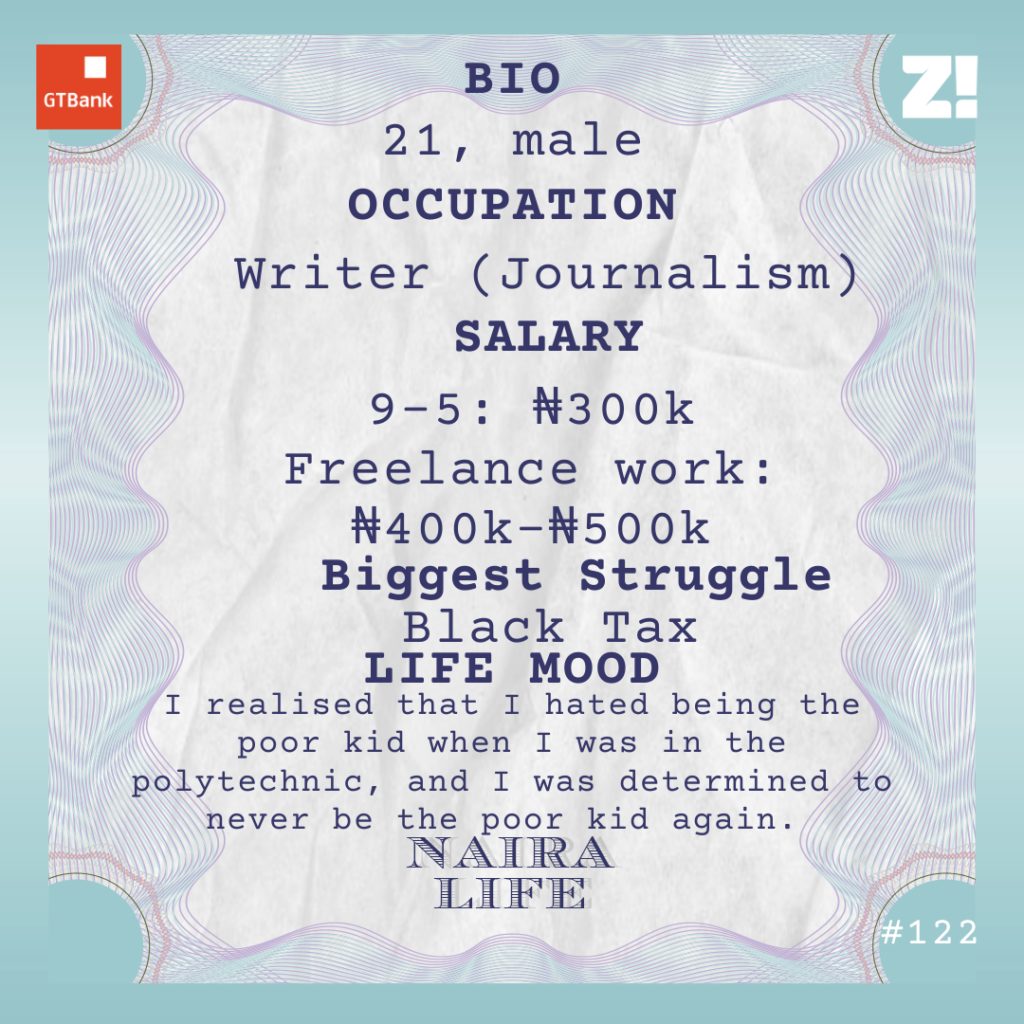
• Every week, Zikoko seeks to understand how people move the Naira in and out of their lives. Some stories will be struggle-ish, others will be bougie. All the time, it’ll be revealing.

    This week’s Naira Life is brought to you by QuickCredit. With QuickCredit, you not only get the funds you need instantly, but you also get to pay back at the lowest interest rate in Nigeria.


    What’s your oldest memory of money?

    In 2000, when I was in Primary Three, my dad came home with two bundles of ₦50 notes. We counted it together and everything was ₦10k. I had never seen that much money. I was so excited I couldn’t stop talking about it to my friends the following day at school. 

    Flex. What was it like growing up though?

    My dad used to work in a bank, but he resigned when I was about five years old to set up a consulting practice. This period was tough for the family though we kids didn’t really understand that there were money issues.  My mum was a full-time housewife who did some petty trading on the side. On a few occasions, when my dad didn’t have money to go to work, my brothers and I were asked to break open our piggy banks and give him whatever we had saved so he could go to work. 

    Things weren’t rosy, but we never got to the point where we didn’t have food to eat. However, it was difficult to pay school fees. 

    Tell me about that. 

    One of my brothers was on a scholarship, but it was still difficult for my parents to raise school fees money for me and my other sibling. For the most part of my junior secondary school, I was always sent out of school. I didn’t realise how hard and embarrassing it must have been for my parents until a few weeks ago. I was at my daughter’s school and saw some students being sent back home because they owed school fees. That broke my heart.

    Back then, though, I didn’t care very much. Being sent out of school meant having the whole day to play. My dad’s business picked up between 2007 and 2008, and this stopped being a thing. For my senior secondary school, I was enrolled in a boarding school in 2006. My allowance was ₦1k per month. 

    Do you remember the first thing you did for money?

    This was 2008. I came home for the holidays from boarding school one time and my dad asked me to work for him. I did for three days, and he paid me ₦5k. He said that I did a great job and saved him time, so he insisted on paying me. 

    Haha. What happened after?

    University. I left home in 2010 to live with a family member while preparing for my university entrance examination, and my allowance at the time was ₦10k. When I got into university in the following year, it increased to ₦15k. From there, it got to 20k. At the time I was leaving university, I was getting ₦20k–₦30k at the beginning of the month and ₦10k in the middle of the month. 

    Because both my parents were running businesses when I was growing up, I grew up with an entrepreneurial spirit. I hadn’t seen my parents work for anybody, so I was determined not to do that either. I decided to start a small business in my second year in university. 

    How did you get started?

    My savings. I had been saving ₦10k from my monthly allowance. My capital was ₦20k when I started off selling hair attachments. Then I did other things at different points — I ran a printing outlet for a while, then I sold sunglasses, frames and makeup.

    I was making about ₦10k–₦15k extra every month from these businesses. I stopped everything at the end of my fourth year and concentrated on academics in my final year.

    Interesting. What did your finances look like at the end of university?

    I had about ₦200k in my account. It should have been more than that, but I had loaned my mum some money when I was in 500 level. She was running a poultry business at the time. I don’t remember if I ever got the money back. 

    Somehow, my dad caught a whiff of how much I had in my account and stopped sending me all the extra flex money he used to. 

    Men.

    Hahaha. I was home for about a year before I went for NYSC. During this time, I helped my mum with her poultry; I raised some birds and sold them. I also started writing to document my experiences with agribusiness. 

    I was mobilised for NYSC in 2016. I wanted to work in a government agency, but they rejected me. My dad helped me find a job in another government agency.  Just as I was about to start work there, I received a text from a private health management consulting company, inviting me to a test and an interview. I passed both and was offered a job as an intern. I had to go back to beg the people at the job my dad got for me to reject me. 

    Whoop. How much did this company offer to pay?

    ₦75k. I was also getting ₦19,800 from the federal government, so my total monthly income was close to ₦100k. I was saving ₦50k every month and making do with the rest. I limited myself to spending ₦1k per day. 

    At the end of my service year, the company asked me to stay and offered me an entry-level position as a full staff. I declined the offer. 

    Why was that?

    A couple of factors. My family didn’t think it was the right career move for me at the time. My mind wasn’t made up either. I felt I needed to do something in agriculture because that was what I studied at uni.

    Also, I was going to get married. 

    Oh. 

    My husband and I had been dating for five years and he had been working for almost two years when we decided to get married. We got married in March 2018.

    You hadn’t found a new job when you got married, had you?

    No. But I had some of my savings from my service year. Then I went into my agribusinesses. 

    I started a fish pond in March 2018. I put in ₦300k and made about ₦150k in profit when I sold them six months later. In between this, I got a job that paid ₦50k per month. I quit after two months because my farm investment was beginning to suffer. Also, I was five months pregnant with my daughter. 

    The day after I quit my job, I drew an estimate for a snail farm and realised that I needed about ₦300k for it, which I didn’t have at the time. I tried to get investors, but they wanted up to 60% in ROI. From my experience, small scale agriculture doesn’t work that way. An outbreak, for example, could wipe out all your stock in one go.

    After trying so hard to raise the money I needed without much progress, I put out a request on Twitter and raised about ₦200k. After that, a friend reached out to invest ₦100k in the business. Also, I borrowed ₦100k from another friend. The snail pen I  built cost about ₦400k, and I bought stock worth ₦175k. But guess what happened?

    What?

    More than half of the snails died before they got to me. 

    Omo. 

    The driver who transported them was careless handling them. I had lost almost half of my investment before I started. 

    The snails were breeders and the plan was that when they mated and hatched new snails, I’d start selling them. It was a long term investment that wouldn’t turn in a decent profit until a year and six months. Then came June of 2019 with other plans. Heavy rain started and one night, a storm blew off the roof of the pen. I couldn’t keep snails without a roof — they were going to drown and die. 

    Ah. 

    There was no other choice. I had to sell off what remained at a massive loss. I think I sold them for about ₦50k. For six months the farm ran, I was spending about ₦3k per week on their feed and paying salaries. At the end of it all, I had lost over ₦800k.

    I’m so sorry. 

    Moving on. I returned to fish farming and invested ₦50k in it. I bought 4000 fingerlings, but they were a bad stock and almost all of them died. Only about 300 survived. I let them grow for a few months before I sold them — that brought ₦15k – ₦18k. 

    Now, I told my friend who invested in the snail business what had happened, and we agreed that I’d return his capital. I paid him back the ₦100k he put into the business.

    Brutal. 

    This was the end of 2019 I had run out of my savings. Things were beginning to get tight. My daughter had arrived in December of the previous year. We were living on what my husband made from his job and boy, was it tough. Let me paint a picture of what that looked like: we had to substitute almost everything for baby food. Every time we wanted to do something for ourselves, baby food or diaper expenses would spring up. Neither of us bought any personal items in 2019. Every resource went into taking care of our daughter. 

    It dawned on us that we couldn’t possibly raise a family on one source of income. I realised that I may have made a mistake turning down the job I got after NYSC. I didn’t enjoy agribusiness the way I thought I would.

    Man. What were the next steps?

    My husband started a side business. I started looking for a job too, although my mum fought me on this one. She was a stay at home mum and she believes every woman who has a family should be at home, raising the kids instead of chasing a career. In her words, “Your children will thank you for it”.

    Anyway, I started applying for jobs again in 2019. I even sent an application to the people I turned down in 2017. I passed their interview, and they put me on a waitlist. I haven’t heard from them since that time. 

    While looking for a job, I was surviving and paying for basic things like data from what I made from booking flights for members of my family. Also, I started freelance writing in October 2018. My friend, who invested in the snail business, reached out and asked if I was interested in writing for him. He outsourced some writing gigs to me. This brought in between ₦5k and ₦20k per gig.

    I finally got a job at my dad’s company in November 2019. At first, he was skeptical about hiring me, but he came around and offered me a job and an annual salary of ₦480k. He also topped up my salary with an extra ₦10k every month. 

    Aw. 

    I worked there for less than a year. I quit in September 2020 when I got a better paying job.

    Lit. How much?

    ₦150k. My dad was upset that I was leaving though. He offered to increase my salary. But I had to leave — the new job was a role in management consulting in agriculture, and that was kind of my dream job. 

    I resumed work in September. 

    Yay. 

    A month later, I found out that I was pregnant. 

    Man. Was that a problem?

    It wasn’t to me. But it was a new job, and the Nigerian workplace culture is not the best for women because of things like this. I didn’t want it to become a problem, so I worked as hard as I could. I avoided taking sick leaves. The two times I had to go to the hospital on a workday, I showed up at the office first. 

    I was supposed to get confirmed in March — six months after I started working there — but my appointment wasn’t confirmed. 

    Everything happened so fast. I got notified that my appointment wouldn’t be confirmed on Friday. By Sunday, the owner of the company was calling me, asking me to resign. I was so upset. Like even if my appointment wasn’t going to be confirmed yet, is a termination of appointment or asking for my resignation the next step? 

    I’m so sorry. That must have been tough. 

    I was heartbroken. That was one of the hardest things that has happened to me, and I cried for days. They did let me keep my health insurance for a few months; I guess that was to cushion the blow.

    Now that I was out of a job again, I returned to freelancing for my friend. I did one very small gig in May and got paid ₦10k. That’s been it so far. I gave birth to my son in June. 

    Congratulations!

    Thank you. Thankfully, the health insurance covered that, so we didn’t spend anything on hospital bills. 

    What about your emergency funds?

    While I was at the last company I worked at, I was saving ₦50k per month. I still have the ₦300k I saved in the six months I spent there. Half of it is in a PiggyVest investment and the other half is in cash. 

    What do your monthly expenses look like now?

    My cost of living is low. I pay ₦5k for my internet and ₦5k to the lady that helps me around the house. My husband covers the rest. We spend ₦40k on groceries per month and about ₦80k–₦20k a week for the other things and house utilities.

    When I was still at my job, I contributed to this and my husband and I split the bills in half. But he’s taking care of everything for now. 

    I’m wondering, how much would be good money to you right now? 

    ₦200k+. I’ve done a lot of things–data analysis, programme management and operations. Now I need to stick to one and build a career around it. I know if I get a new job now, I’ll probably have to start at an entry-level position though I’ve been working since 2017. I should be earning above ₦300k, but I’ll most likely have to settle for lower pay. 

    Do you have any financial regret?

    Maybe not taking that job in 2017. The entry-level salary was ₦250k. Asides from that, I don’t regret any of the subsequent decisions I made. There were losses, but these things happen. 

    Do you have plans to return to running your farm?

    I don’t think so. At least not any time soon. I’ve realised that I don’t like the uncertainty and the lack of structure that come with entrepreneurship. The farm is still running, but I don’t make anything from it at the moment. My mum handles the operations. I provide technical help where necessary. Maybe there’s a version of the future where I return to running it by myself. 

    What parts of your finances do you think you could be better at?

    Investing. I have a low-risk appetite. I don’t want anything to happen to my money and I want good returns. That kind of combination is hard to find. If I could up my risk appetite and make bolder investment decisions, that would be nice. 

    What do you want now but can’t afford?

    I don’t have a lot of wants. At the moment, there’s really nothing I want. A new job would be great, though, now that I’m done having kids. It’s time to build a career. That’s why I’m being very selective about the kind of jobs I apply to these days. If I don’t see myself doing something similar in 10 years, I won’t apply for it. 

    What was the last thing you bought that improved the quality of your life?

    My laptop, but my dad bought it for me. It cost ₦180k. My last laptop was stolen, and subsequently, I had to use office computers. I had nothing to use for a while after I left that job in March, and it wasn’t a great experience.

    How have your experiences shaped your perspective about money?

    My family and friends call me frugal as I am almost always living below my means. Also, I place a heavy premium on saving and having emergency funds. My savings have come through for me during times I needed them the most. I’m grateful I learned the habit at a young age.

    One more thing I have learnt over the years is not to put money first. A lot of my decisions are not driven by money but by my value for relationships. I don’t know if that’s a good or bad thing, but I think the greatest asset anyone can have is the people in their corner. I know that if I’m ever in a fix, I have people who will help me out. 

    I feel you. On a scale of 1-10, how would you rate your financial happiness?

    5. I don’t have any pressing needs at the moment. However, at this point, I need to start earning again. If I could get a job that would pay me about ₦250k a month, this number will definitely jump to an 8. 

    I’m rooting so much for you. 


    Great! You got to the end of this article. Know what’s even better? You can get QuickCredit faster than the time it took you to read this article. With Quickcredit, GTBank customers can get N2million in less than 2 minutes and pay back over 12 months at an interest rate of 1.5%. No forms. No collateral. No hidden charges. Get Your Quick Credit on GTWorld

  • A Permanent Voters Card is one of the things every Nigerian wants to be armed with right now. The 2023 General Elections are less than two years away from now.

    Permanent voters card registration in Nigeria

    Well, here’s something you should know: the Independent National Electoral Commission (INEC) is set to begin the Continous Voter Registration exercise on June 28, 2021. This registration exercise is how every Nigerian applies for and gets their Permanent Voters Card, so you should be interested in it and participate if you haven’t gotten your card yet. 

    But first, who is eligible to apply for a Permanent Voters Card?

    1. Nigerians who are at least 18 years and have never registered to vote
    2. A registered voter who has issues with accreditation in previous elections
    3. Registered voters looking to change their voting locations 
    4. Registered voters whose Permanent Voters card is lost or damaged. 
    5. Registered voters who would like to correct important information, like name and date of birth. 

    Now, How do you apply for a permanent voters card?

    1. Visit the INEC registration centre in your local government area. 

    It is recommended that you choose a centre that is nearest to you. Find a list of all registration area centres across the country here.

    Also, search for the polling unit closest to you here.

    2. Present proof of identity and have your biometric information captured by the INEC officials

    Permanent Voters Card Registration

    Proof of identity could be your Birth Certificate, National Passport, Identity Card or Driver’s License. Once your identity and age has been confirmed, an official will collect your information with a Direct Data Capture Device. Your photograph and thumbprint will be taken and stored in the INEC database.

    3. You will be issued a Temporary Voters Card

    Guidelines for Transfer of Registered Voters in Nigeria • Connect Nigeria

    The Temporary Voters Card is proof that you completed the registration process. Go home and keep it safe, you will need it later. 

    4. INEC officials will contact you when your Permanent Voters Card is ready

    two stacks of permanent voters card on a table

    When you get the word, return to the centre where you registered and present your Temporary Voters Card. Wait to collect your Permanent Voters Card.

    Now, you can vote. 

    In preparation for the 2023 General Elections, INEC is introducing an online registration portal. You could start the process on this portal: fill out your details and print out the slip. Afterwards, find the nearest registration centre and submit yourself for data capture. 

    This is also useful for people who wish to replace their lost or damaged voters cards. Or people who wants to change their voting locations or correct their information. The Portal means you can start the application process online. 

    However, it doesn’t seem like this portal is online yet. 

    You might want to read this too: How To Set Up A Political Party In Nigeria

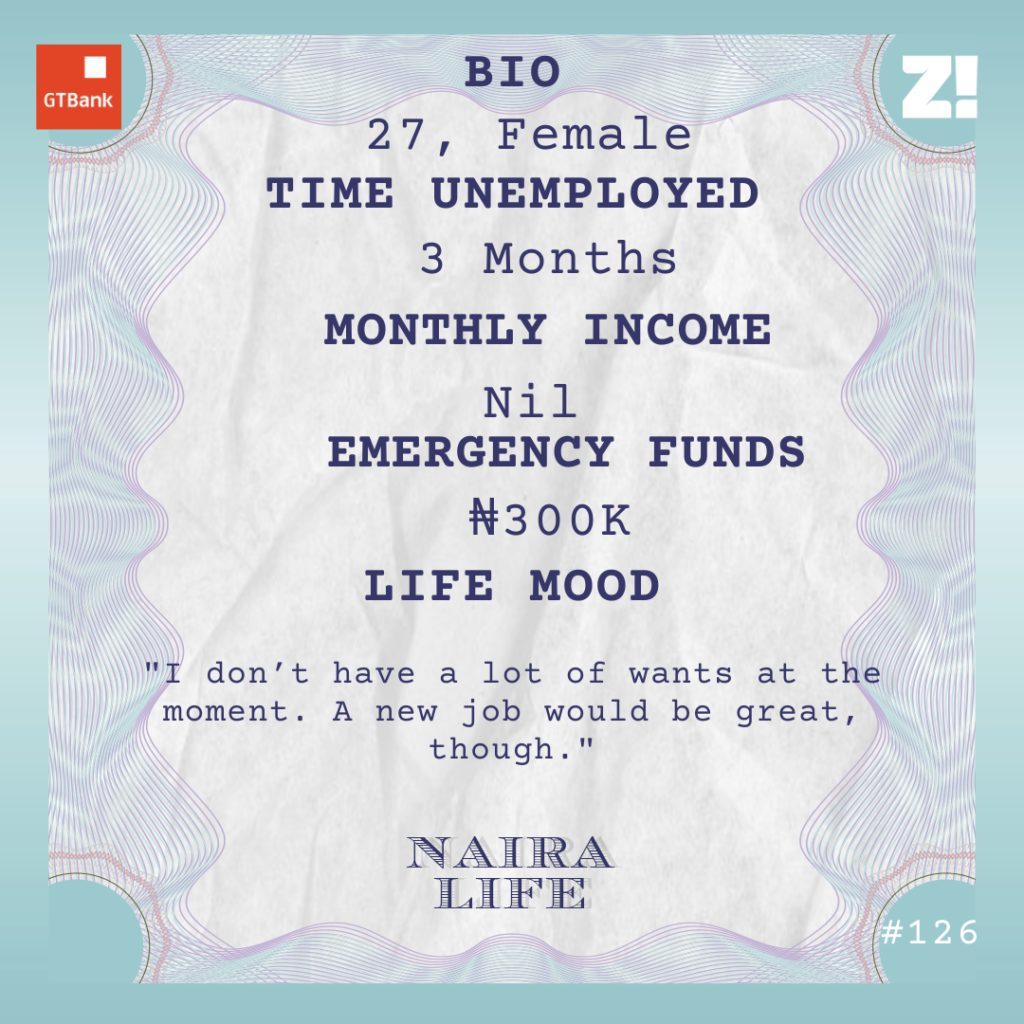
  • Every week, Zikoko seeks to understand how people move the Naira in and out of their lives. Some stories will be struggle-ish, others will be bougie. All the time, it’ll be revealing.

    This week’s Naira Life is brought to you by QuickCredit. With QuickCredit, you not only get the funds you need instantly, but you also get to pay back at the lowest interest rate in Nigeria.

    What’s your oldest memory of money?

    My mum is a businesswoman, so I was exposed to the concept of buying and selling at a young age. When I was eight years old, I started buying mint candy and selling them to my classmates in school. My school didn’t have a sweet shop, so I sold at a higher price. I always had about ₦200–₦300 at the end of every week.

    Ah, interesting.

    I lived on the allowance I got from my parents through the years until I finished university. I got into university in 2008 and lived at home for the most part — my parent’s house was close to the school. Then I got ₦1k every day. But for the few times I lived on campus, my allowance came in weekly — ₦10k. 

    I don’t imagine you ever went broke in uni then. 

    You would think so. My weekly allowance rarely lasted the week. But I could always go home if I needed more. I did a couple of things that brought in extra money. 

    What did you do?

    At first, it was a writing gig I got in my second year. I did it for a couple of months. The pay was ₦10k or ₦15k. I got another one in 2012, which paid ₦20k and lasted for three months. Also, I was selling stuff intermittently. I started with some jewellery I got from my mum. Then I sold clothes and hair. All of this brought between ₦5k and ₦15k every two weeks. 

    After uni?

    I went to law school in 2013. Again, I had to live on my mother’s grace and got a weekly allowance of ₦10k for the entire year I spent in law school. I didn’t go for service immediately after because I was posted to a state in the north, and I didn’t show up to camp. While waiting for the next batch, I got a job at a law firm and was earning ₦80k per month. I eventually went for service in 2015 and that came with ₦19,800 from the federal government. 

    What did your finances look like during this period?

    I was just spending money, to be honest. A lot of it went to food and clothes. It’s hard to find clothes my size in the country, and I started placing orders for clothes in the UK. I had nothing saved up at the end of my service year, which is interesting because I also sold stuff online during the course of the year.  I blew everything. The only thing going for me was that I always had at least ₦100k in liquid cash. 

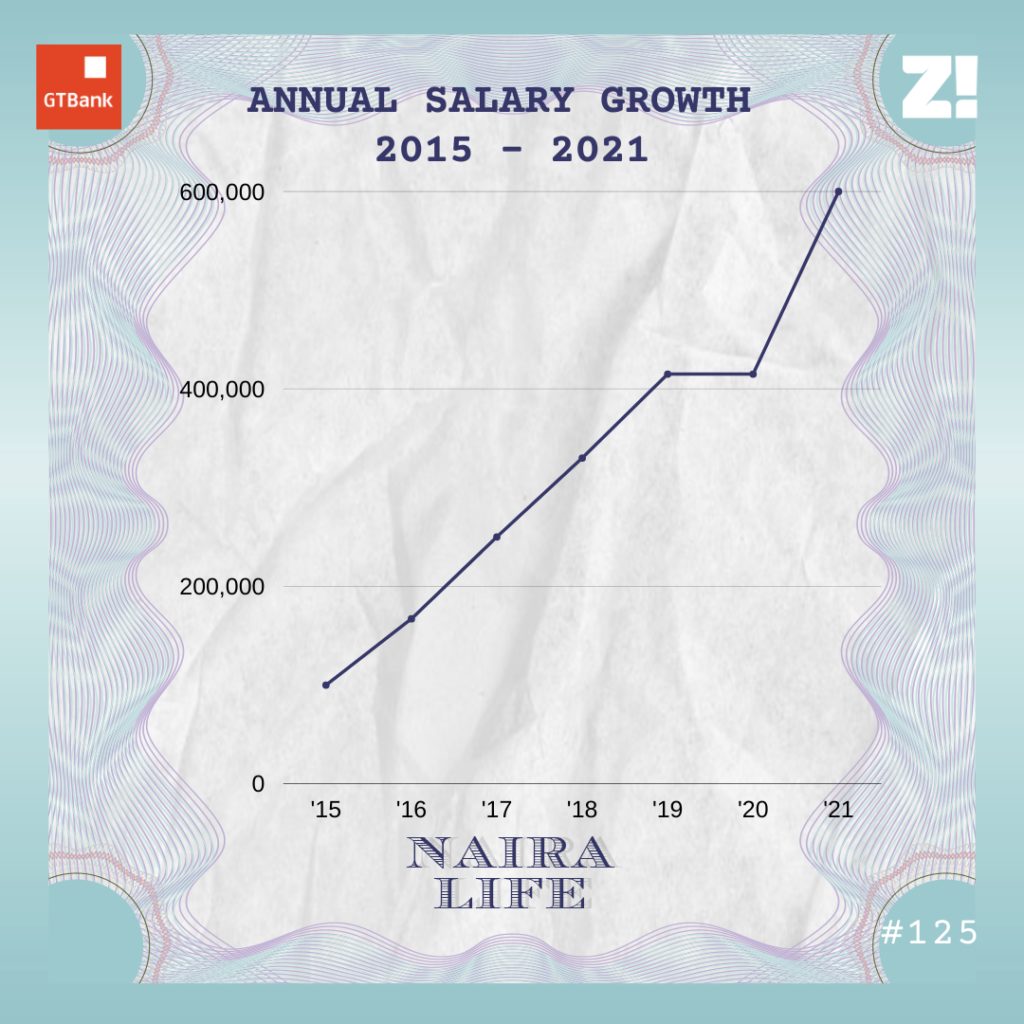
    Moving on, my service year ended in 2016  and the law firm increased my salary to ₦127k. I got a promotion later that year and my salary was bumped up to ₦167k. That’s what I earned until I quit the firm in 2017.

    Why did you leave?

    I wanted to do something different from corporate law and I got an offer from a company in financial services to work in their legal department. My salary when I resumed work at the company was ₦220k. Shortly after I joined, the company gave everyone a raise, and I moved to ₦250k. About a year later, I got a promotion and this came with a raise — ₦330k. 

    Lit. Lit. Lit. 

    That reminds me, right before I got promoted at work, I moved out and rented my own place. It was a self-contained room and I got it for ₦400k. It wasn’t a great apartment but it worked for me because it was about five minutes away from my office. 

    In February 2019  I thought it was time to buy a new car. My old car was old and had started making my life hell. I could be on the road and the silencer would fall off or the ignition would turn off. My new car cost me ₦2.6m, but I paid only ₦1.5m. Someone paid the rest. 

    What a flex.

    Haha. I also became tired of the company and my salary in 2019. I wanted something more challenging so I started looking for a new job. My rent expired a month before I switched jobs. I didn’t want to stay at the apartment anymore because it wasn’t up to taste and the security wasn’t great. I moved to a new apartment and started paying ₦900k in rent. 

    I stan.

    It may not sound like it but I’m very big on savings and investments. From the moment I got my first job, I started doing Ajo with a couple of my friends. We started with ₦15k a month and we increased it as our salaries grew. We were doing ₦50k a month at the time we stopped in 2019. 

    Also, I’m very big on crowdfunded  agriculture investments. I saw a few on the internet in 2017 and put money in them. I knew that I wasn’t great with liquid cash and that I was prone to spending money on stuff that wouldn’t be very useful in the long term. It made sense to put the money in something I wouldn’t have access to all the time.  Some portion of my salary went into these investment opportunities every month. When the time came to move apartments and buy a new car, my investments in these companies were about to mature. I just pulled my money from everywhere and kept it aside until I raised the money I needed. 

    Nice.

    I started a new job in September 2019, and my starting salary was ₦445k. Two months into the job, my salary dropped to ₦415k.

    Uh-oh. Why?

    They said something about reviewing their tax system. I guess I started paying more in taxes. 

    Omo.

    Nothing much happened for a few months after the pay cut. Not until I took a loan from GTBank and put the money in agriculture investments.

    Wait, what?

    I did my math. The ROI I was going to get was more than the interest rate I would pay on the loan. I mean, it was a big risk but I decided to go with it. My salary account is with GTBank, and I was eligible for their QuickCredit loan service. I requested ₦700k and the money hit my account in seconds. That was it.

    How did it work out?

    It worked out well.  Repaying the loan monthly was a bit of a strain on my baby girl lifestyle but it also wasn’t difficult because I could afford it. I only had to cut down on some of the frivolous things I was spending money on. My bets paid off and I made about 25%-30% on my investments. What did I do next? I went on holiday to Dubai in the first quarter of 2020. This cost me ₦400k-₦450k but I can’t lie, I had a great time. I returned just in time because Corona had hit and the country was about to go on lockdown. 

    Whew.

    During lockdown and the subsequent months, I worked from home, which meant that I wasn’t spending a lot on fuel and transport. However, I started spending a lot more money on food. Then August 2020 came, and I had to move apartments again. 

    Why?

    Long story. It came as a bit of a shock because I had no intention of moving. After house hunting for a few weeks, I found an apartment I liked. The only problem was that it was out of my budget.

    How much was the apartment?

    ₦1.5m. But I needed to pay an extra ₦220k for the tenancy agreement and agent commission. 

    What did you do next?

    I took another loan from GTBank.

    Wiun. 

    The thing is, I could afford the apartment on my salary in the long term. The issue was I didn’t have a lot of physical cash at that moment. I requested ₦1m from the bank, and I got it, added the money to what I already had and paid for the apartment. By the time I was moving in, I had spent about ₦2m and had only ₦50k in my account. 

    And you also had a loan to pay back.

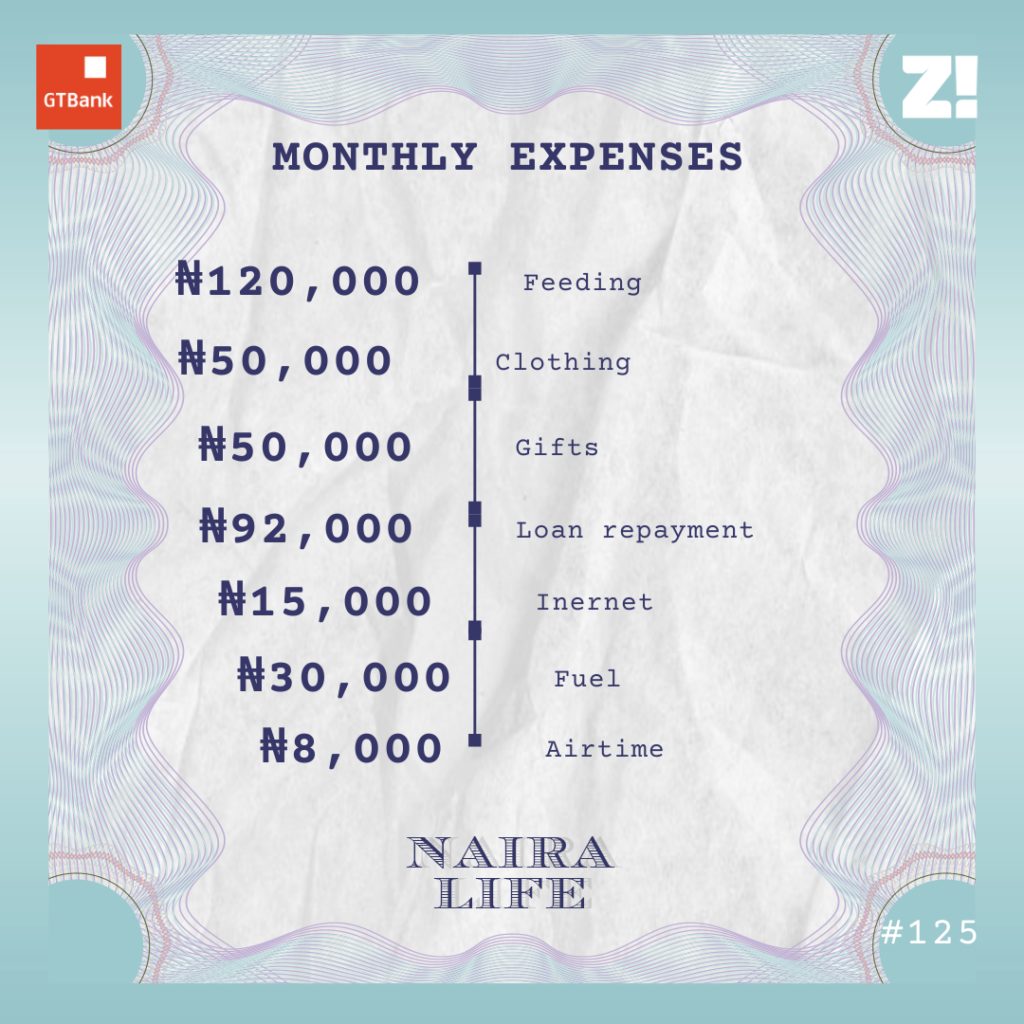
    Yes. ₦92k monthly. Again, it wasn’t much of an inconvenience. Save for the stress on my disposable income, all I had to do was cut down on some of my spendings. In real-life terms, however, my salary could take care of it.

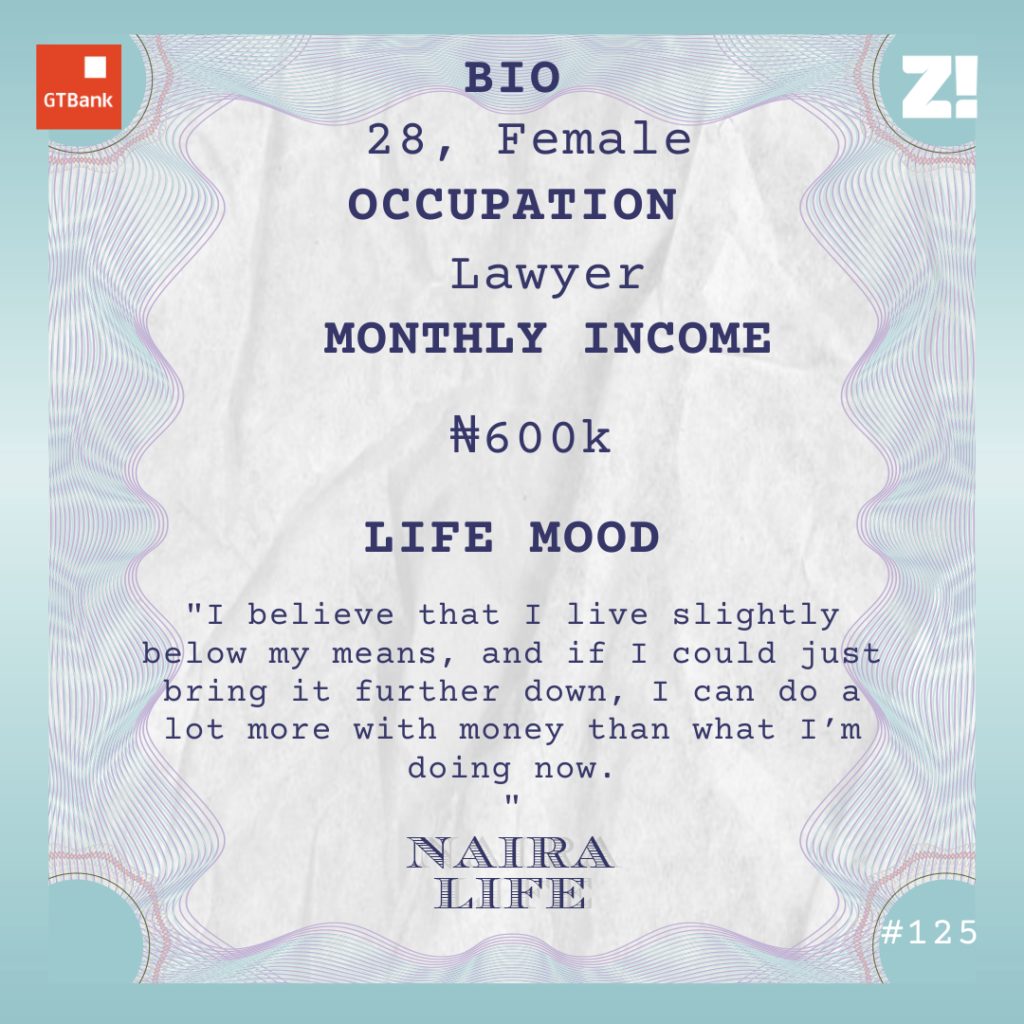
    Nothing major happened for the remainder of 2020. In January 2021, I got another promotion and started earning ₦570k. For some reason, it increased to ₦600k last month. I don’t know what happened there, and I have no intention of asking them. 

    Lmao. So what does 600k do for you now?

    I’ll finish paying the loan this month, thank God. I don’t think debt is a bad thing, but I’ve had a debt on my shoulder for about two years now. I need a break.

    Also, there are always additional expenses. The most recurring one is the extra ₦40k I spend on grocery shopping. The others are far and in-between —  ₦50k I spend on my birthday cake every year or ₦100k I send to my mum when it’s time for Sallah. 

    Man. How do you approach savings and investments now?

    Most of my investments are still in agribusiness. They present higher risks from the other things I would consider but they give better returns. Luckily, I’ve never had a bad investment. I have about ₦1m in investments now. I started putting ₦400k in my savings last month, but it’s for a particular goal. My savings chest has about ₦800k but I won’t exactly call what I have in it my emergency cash. Thankfully, I have safety nets for emergency situations.

    I’m listening. 

    It’s my boyfriend and my mum, to be honest. My mum is always there to help. I may not want to ask her for anything, but I know I have her. Since I started saving ₦400k every month, my boyfriend has been picking up a couple of bills, and that’s lightened my financial load. 

    Ah, I see. So how much do you think you should be earning now?

    I feel like I’m slightly underpaid for my role. I should be earning at least ₦800k. But ₦1m per month is a fair deal.

    What do you need to do to unlock your next level of income?

    Leave Nigeria with a quickness. See, money is not a big deal for me. I’m not trying to hammer. I just want to be able to take care of my basic needs and check a few things off my wants. I may not be able to live that life in Nigeria irrespective of what I earn.

    I feel you. What part of your finances do you think you could be better at?

    I need to be more deliberate about my expenses. I have a budget, it might be time to stick to it. Cutting down on these things will mean that I have more money freed up for my savings. I know what to do, the problem is actually doing it. I think I just believe that the money will always be there. 

    How have your experiences shaped your perspective about money?

    Money has always been a tool of independence, and that hasn’t changed. I’ve always wanted to make money and spend how I want to fulfil my needs. I’ve grown to understand and appreciate the importance of savings and investments. I may not leave the investment for long enough to compound before I use it for something though. What’s more important is that I’m not living above my means. I believe that I live slightly below my means, and if I could just bring it further down, I can do a lot more with money than what I’m doing now.

    Interesting. What’s something you want now but can’t afford?

    I can’t say there’s anything. It helps that I  don’t have a lot of wants. A second passport would be great, but I don’t have $100,000 waiting in my account. 

    LMAO. What was the last thing you spent money on that required proper planning?

    I bought a bone-straight wig last month and it cost ₦250k. I paid a deposit of ₦130k and haven’t balanced the payment. I plan on doing so this month. It definitely took a lot of thinking and planning before I placed the order. 

    How would you rate your financial happiness on a scale of 1-10?

    8. I can afford most of the things I want except that passport. The only thing is I may not be able to afford everything as readily as I would like to, but that’s not a problem. It’s also great to know my mum and my boyfriend are in my corner, especially if I need help with anything. I’m good.  


    Great! You got to the end of this article. Know what’s even better? You can get QuickCredit faster than the time it took you to read this article. With Quickcredit, GTBank customers can get N2million in less than 2 minutes and pay back over 12 months at an interest rate of 1.5%. No forms. No collateral. No hidden charges. Get Your Quick Credit on GTWorld

  • The inflation rate hit 18.17% in March 2021 according to the Consumer Price Index report released by the National Bureau of Statistics (NBS). The past couple of months have seen an uneven increase in the cost of things, and this has among other things, eroded the purchasing power of the average Nigerian. We spoke to five Nigerians about how they’re currently navigating this, and this is what they said.

    Nwakaego, 35

    Last year, I had a budget for alcohol and juice and bought them in bulk. During the lockdown, I reduced my spending on drinks because there were no visitors. But I increased my feeding budget. Things have slowly gotten worse between 2020 and now. I went from having goat meat, catfish pepper soup and Nkwobi in my freezer to having none of them. I went from buying a few bottles of wine to one bottle of wine. Now, I can either buy juice or malt drinks, not both as I used to. 

    I love food a lot, and I’m pissed that all of this is affecting my feeding. For example, a lap of goat has gone up from ₦1500 to ₦3000. I can’t afford to buy the quantity I used to buy in 2020, and I cut the meat into smaller pieces. The lady I outsource some of my cooking has noticed this and teases me about it all the time.

    Also, I used to budget ₦10k for groceries every month, but I spent ₦25k this month and I’m not sure what I bought is going to last me through the month. Don’t even get me started on toiletries — my budget was ₦10k. Now, it’s about ₦20k. I can’t braid my hair for ₦4k anymore, I need about ₦7k to do it now. 

    And oh, I used to do something for myself on my birthdays. In 2019, I gifted myself ₦240k. In 2020, it was ₦15k and a mirror. I don’t think I can manage to gift myself anything this year. 

    I was also big on holidays. Before 2020, I could conveniently afford a trip to Cape Verde. Everything was less than ₦500k at the time. I didn’t go last year because of the pandemic. Now, I can’t afford to go even if I wanted to. The same trip now costs about ₦1.1m. It’s exhausting thinking about it.

    Iyanu, 26

    These days, I give everything that costs money a lot of thought, and I try to figure out if I really need them. This is a departure from my spending habits last year. Things I used to buy at rather insignificant prices now drains my pocket.

    I’m making less and spending a lot more even though I’ve stopped doing a lot of things I used to do. Last year, I could go to the bar with my friends and foot the bill. I don’t do that anymore and have even stopped hanging out with people. Also, I only eat out when I need to and cook the rest of my meals at home. However, that’s also more expensive than ever. Think about it, ₦300 was enough to cook a pot of spaghetti and sardine about two years ago. In 2021, ₦300 is only enough to buy one of the two. Now, everyone is like “Do I really need to eat sardine?”

    Zainab, 19

    The inflation has affected all my vices. Alcohol is a shitton more expensive now, so alcoholism in the mud. Luckily, the price of loud hasn’t increased. However, I have crazy munchies, and the price of snacks have gone up. My favourite cookies used to cost ₦850, but now it’s ₦1100. Maryland cookie now sells for almost 500, and it still tastes like shit.

    Bread, sardine, and a bottle of Berry Blast was my regular Sunday morning routine, but not anymore. Sardine is now ₦500. Berry Blast is also ₦500. I mean, I can’t say “Let me use ₦1k to eat bread and sardine with Berry Blast.”

    When I think about it, I feel pain and privilege. I know a lot of people have it worse. I live with my family and don’t have to buy a lot of things myself. It’s hard to think about the fact that there are people who would probably no longer be able to eat three times a day because of this. I hate it so much, and it makes me sad.

    Divine, 32

    I’m an interstate driver, and the cost of maintaining my car has gone up. Recently, I had to fix something in my car and spent about ₦18k. A few months ago, the same thing would have cost me just ₦10k. I used to buy a keg of engine oil for ₦5,500, but it’s now ₦7500. 

    It’s especially painful because I’m making less money. Although I spend a lot more in ensuring that my car is fit for the road, the fares are still the same. I’ve had to adjust my budget and cut down on my spending on all fronts. Yet I’m not saving as much as I used to. In the past few months, my savings have dropped from ₦20k to ₦8k per week. I know Nigerians are good at adjusting and adapting to new situations — I’m doing that too — but God, It’s so exhausting. 

    Seyi, 22

    I don’t think I can get used to the new price of things. There’s an increase in the price of food items every time I go shopping. And all the time, I’m screaming “O por!” inwardly.

    My buying behaviour has definitely changed. For starters, I was big on buying things in bulk but I can’t afford to do that anymore. I’ve restricted my purchases to what I need and the best I can do now is buy half the quantity of what I used to buy and call it a day. 


  • Every week, Zikoko seeks to understand how people move the Naira in and out of their lives. Some stories will be struggle-ish, others will be bougie. All the time, it’ll be revealing.

    This week’s Naira Life is brought to you by QuickCredit. With QuickCredit, you not only get the funds you need instantly, but you also get to pay back at the lowest interest rate in Nigeria.


    This product manager may be only 30 years old, but he’s lived many lives. First as a small-time plug, then he ran the club scene in his university. Tech is his most recent stop. For him, this means working three jobs and living on less than half his monthly income. He isn’t looking back.

    What’s your earliest memory of money?

    I took a pack of chocolate to school once when I was in Primary 4, and someone in my class asked me to give him a bar. I’m not sure where it came from, but I said the chocolate was for sale and each bar cost ₦10. I sold five bars on that day.

    I took more to school the following day and sold out. At the end of the week, I had made enough money to buy a pair of plastic eyeglasses and one of those wristwatches that had a calculator built in them. I had arrived. 

    I also liked saving money a lot, thanks to my mum.

    Tell me more about this.

    My mum was the financial planner in the family. She would sit me and my four siblings down at the end of each week and quiz us about how we spent the money we got during the week.  

    Everyone in my family understood the concept and importance of financial independence very early. We had open conversations about money, especially about our financial situation. Life wasn’t rosy all the time. There were points we got sent out of school because we owed school fees. My mum would explain why this happened, and what it meant.

    My older sisters started picking up jobs in secondary school. I started actively making money in secondary school too, although my ways were different from theirs.

    How?

    While my sisters worked as lesson teachers and sales attendants, my own strength was in selling stuff to people. I pushed a lot of merchandise in secondary school — from shoes to mobile phones. 

    I started with shoes when I was in JSS 3. If anyone in my school had a shoe they wanted to sell, I would take it and find a buyer for them. I was particularly popular among the senior boys because they were the ones who changed shoes the most. 

    In SSS 2, I started selling second-hand phones. The first phone I sold was a Sendo X, and I made about ₦6k in profit from that deal alone. I brought more phones in from my plug in the city and sold them. After that, I started helping people download music on whatever phone they bought from me. This brought in extra cash. 

    In SS 2, I moved into planning house parties. I organised the first party in 2004, and the gate fee was ₦500. I don’t remember how much I made from it. 

    I must also mention that I sold tons of other things. Once I identified a product that moved fast, I would find a plug, get the product and push them to people. But shoes and phones were the quickest to move. At that point, I was making about ₦70k every month from all my hustle. I didn’t have a bank account, so I was saving the money in a section of my wardrobe. 

    Secondary must have been a lot of fun.

    It was. I was able to do all of this because I had good grades in school. My parents didn’t need to worry about me, so I had the freedom to do everything else I wanted. 

    What happened after secondary school?

    I finished secondary school in 2006 but didn’t get into uni until 2007. During my gap year, I tried to pick up some computer skills. Computer networking was too boring for me. HTML was too complicated. What I enjoyed was pulling computers apart and fixing them. I bought my first laptop that year — a second-hand Dell laptop, and it cost ₦65k. 

    There was barely time to do anything when I got into uni in 2007. I resumed two months after class started. They had started writing tests, so my first few months in uni was about catching up. By the end of my first year, I had settled down and was already thinking about the next thing I could do. 

    What did you decide on?

    Organising parties. Clubs were the rave during that time. Within a short time, I became the plug for the club boys in my school. Everyone who wanted to organise a lit party knew they had to contact me to help them plan it and handle the logistics.

    Later, I started working with a team of organisers and we partnered with clubs in the city where my school was. Most of the money we made came from gate fees, which were ₦2k, ₦4k and ₦6k for regular, VIP and exclusive tickets respectively. 

    The parties were a huge hit, and BBM played a big role. Once people who weren’t at any of these parties saw that people were having fun from the BBM updates they shared, they pulled up. That meant more money for me and my team. I didn’t organise more than two parties in a semester, and I got about ₦400k from each party I planned. It was a big market. 

    Well, damn. 

    Omo, I was living the life. I had an apartment outside of campus and bought my first car in 2009 — a Honda Civic which cost ₦1.4m. I was in 300 level at the time. 

    I wonder what your parents thought about this.

    I was open with them. I had a conversation with them once and explained what I was doing. They came on board when they realised that it wasn’t illegal. 

    When I left university in 2010, the party scene had started dying. The club owners got greedy and wanted a higher percentage of the gate fees. They complained that they were running at a loss because people weren’t buying drinks during the parties, which was a lie. Anyway, I knew my party days were over and it was time to move on. 

    What came next?

    NYSC. But first, I moved back into my parent’s house even though I had about ₦800k in my account. While waiting for youth service, I went back to computers, but they weren’t moving as I thought and my savings were running low. 

    On a whim, I went to the market and bought two first-grade China wristwatches. They weren’t the original thing, but they were close. I pushed them to some people I knew, sold them in no time and made some profit. I continued to repeat the process. During that time, an uncle who lived in Port Harcourt came to visit. He had friends who owned boutiques and asked me if I was interested in trying to get them to buy from me. I contacted my plug and got 50 wristwatches from him. I travelled with my uncle to the south-south with a bag full of wristwatches. Man, I sold 30 on the night I landed. The remaining 20 were sold the following day. 

    Mad. How much did you make from the trip?

    A watch sold between ₦50k and ₦100k depending on the brand. I made a profit of ₦20k-30k on each watch. I don’t remember how much I made exactly, but it was about ₦400k after I settled my plug and uncle and sorted out other logistics. 

    My uncle sent me back to bring more. I hit the road and brought another batch and there was no trouble selling those too. I decided that I would serve in that state. I started working to make it happen, but it was too late. I got posted to a neighbouring state. It was an hour away, so I didn’t mind. 

     I sold my car and moved to the south-south. 

    How did it go?

    I was posted to a private secondary school for my PPA. I negotiated with the principal, and he agreed to let me come in only three times a week. This freed up time for other activities. I got a job managing a club in the city, and that took my nights. My weekend was solely for selling wristwatches. 

    My guys shipped the wristwatches to Port Harcourt on Saturdays. I picked them up at the park and did all my distribution that weekend. On Sunday nights, I was back on the road to the state where I was serving. 

    You had about three streams of income, how much were they bringing in?

    Allawee: ₦19,800

    PPA: ₦10K

    Club: ₦30k

    Wristwatch hustle: ~₦200k.

    My service year ended in 2013, and I returned to the southwest. 

    After service?

    While I was figuring out the next thing I wanted to do, I decided to help my mum out with her business. She had retired from work and was running a pure water factory. The factory was struggling because her workers were stealing from her. It was three long months, but I managed to plug the leaks. 

    Then I started the nine to five life. 

    Where was the first place you worked at?

    A telecommunications company. I was hired as a customer service officer and my salary was ₦72k. It was a lot less than what I was making on the streets, but I was doing it because everyone wanted me to work in an organisation and have a well-defined career. However, I was still pushing wristwatches and other things on the side. I got tired in December 2013 and knew I couldn’t continue, so I quit. 

    Funny enough, this kicked off my journey into tech. 

    I’m listening. 

    I always heard people talking about building websites for their business. So I had an idea to build a one-stop solution for these people. Three friends came on board and we got some seed funding. Full operations started in 2013. I was in charge of sales and marketing, customer service and product management. I think we did well because a bigger e-commerce company bought us out in October 2014. 

    I can’t disclose how much they paid us, but seven years later, I think we could have negotiated a better deal. It was enough for me to change my car and move into a new apartment. So it seemed like big money at the time. 

    The good thing was that it was an acquihire. They absorbed the team into their company to lead their product development and merchant operations departments. My starting salary was ₦380k but by the time I left in December 2017, it had increased to ₦440k. Also, I was now in a full product management role.

    Why did you leave?

    They were downsizing and had already fired people. Besides, I’d pushed out a couple of products and cashed out, so it seemed like the perfect time to take a bow. I didn’t have another job when I quit, but I had done several interviews. Also, I had some safety nets. I cashed out my stock options at the company before I left and got about ₦3.5m. I knew I would be fine for a couple of months.

    When did you get your next job?

    February 2018. It was the head of product development role in the parent company of an advertising agency. My salary when I started was ₦660k, then I got a few raises. I was earning ₦710k when I left in October 2019. I was simply tired of the politics in the company. 

    Before I left, I had started working on some remote product management projects I got from a platform called Gigster and was also consulting for some politicians.  However, my monthly inflow reduced. I was making $1500 from the remote jobs and ₦400k from the politicians. 

    I was pretty much winging that period of my life because none of it was a full-time job. It wasn’t until June 2020 that I found a new full-time job.

    Where?

    It’s a remote job at an American company and the pay is $2k. In August, I got another product management job, which pays $4500. I started outsourcing the first job and working at the second one. The third one came in March 2021, and it’s bringing in $3500. So I’m working two jobs now and outsourcing one. I pay the person helping me ₦230k a month. The others are senior roles, so I can’t afford to outsource them. 

    Mad oh. 

    The $2k I get from one of the jobs goes into my wife’s account in Canada — I got married in 2019 —  and I don’t touch it. $3500 also goes into an account I don’t touch. I run my monthly expenses with the $4500 I get from the third job. That’s about ₦1.5m. 

    Let’s talk about your monthly running costs.

    I pay the person I’m outsourcing one of the jobs ₦230k every month. There are always additional expenses. For example, I send my younger brother ₦30k and a younger cousin ₦10k every month. My dad also gets between ₦50k and ₦100k. 

     I made a terrible financial decision last year, and I’m still paying for it. 

    What happened?

    I knew a guy who was helping people invest in forex. I vouched for him and got some of my guys to invest money with him. But the whole thing went south and my people had about ₦8.5m in it. When it happened, I promised my guys their capital. I’ve been spending ₦800k every month to service that debt. I should pay everything back by December.

    Damn. That’s heavy.

    It is what it is. After I settle all of these things, I typically save what remains which could be anything between ₦100k and ₦150k. I have ₦400k in my account at the moment. However, I always go back to take out of it because problem no dey finish. 

    Lmao. What do you mean?

    People in my extended family always need me to come through for something. So I use the money I have in the bank account to take care of these requests. I don’t stress it though. I do it when I have the money and say no when I don’t. I’ll admit that I don’t stress so much about it because I have more money stashed away.

    How much do you imagine you have in those savings accounts right now?

    About $20k. They are my core savings and will play an important role in my long-term financial goals.

    How do you navigate investments?

    I’m always investing in something, mostly forex. At the moment, I have two forex traders who do the heavy lifting and trade for me. I started with $10k last year and have topped it up over the months. I currently have $42k in it. I know forex is volatile. In fact, the people I outsource it to make losses. But so far, they’ve made more gains than losses. Once we lose 10% on a trade, we activate the stop loss. We cut our losses and move on. 

    Interesting. 

    What’s interesting is that I’ve made more money since I got married. I don’t know how to explain it, but getting married has been a blessing for me. My wife is also involved in every money decision I make and signs off on them. Once whatever it is will take more than ₦100k, she has to know. All of our expenses are documented on a google sheet, so she sees everything. 

    How much do you think you should be earning now?

    Between $12 and $15k. I’m probably earning less because I’m living in Nigeria. It’s the only reason I’m considering relocating. I’m not big on the whole japa thing, but I’ve gotten to a point where I know that it’s the best thing for me. It’s currently in the works. 

    Good luck. Where do you see all of this in five years?

    For starters, I’d like to build my savings and investments to $2m by the end of 2023. 

    The plan is to reduce overhead costs, work, outsource, save and invest. A lot of it will come from investments, which is why I save a lot. My investments can only grow as much as my savings. We’ll see what happens. 

    What do you want right now but can’t afford?

    The Mercedez-Benz ML 350. The 2019 model I want costs about $30k. I can close my eyes and splurge on it, but it will affect my 2023 goals. I like it and want it, but do I need it? It’ll have to wait. Besides, what’s the point of buying a car when I can buy a house, which is another thing I really want. I’ve started looking at some properties, but I don’t have ₦40.5m lying around right now. 

    What’s the last thing you bought that required proper planning?

    I didn’t really have time to plan because it was impromptu, but I thought long and hard about it. My wife’s Macbook crashed three hours before a presentation. The new one cost ₦1.1m, and I had to pull money out of a couple of places to buy it. 

    When was the last time you felt broke?

    2014 or 2015. I had less than ₦200k in my accounts at the time. That taught me to set up a minimum threshold. That number is at $10k at the moment. If I have less than $10k in all my accounts, I feel like I’m in trouble.

    What’s the last thing you splurged on that improved the quality of your life?

    I finally bought myself a MacBook after thinking about it for months. This baby cost me $2350, but I don’t regret it. It’s all about convenience, really. The old one had started slowing down and affecting my work.

    How have all your experiences shaped your perspective about money?

    I think mindset plays a big role in proper financial planning. If you think all that you can earn is ₦500k, then you may not be able to go past it. Of course, there are other factors, but I’ve realised that the more I expand my mindset, the higher I set the bar. Also, I put in the work to match the mindset. My approach to hustling has changed a lot over the years, but I still put in the hours. 

    Another thing I’ve learned is to live within my means. I earn more than ₦1.5m every month, but it’s what I live on. I’m good with the life it gives me. It’s great to have money but I think it serves more purpose than just showing off to people.

    On a scale of 1-10, how would you rate your financial happiness?

    8. However, I think I’m still struggling. First, I wish I didn’t have to work two full-time jobs and supervise the third one before I earn what I currently do. Also, there is stuff I can’t do without affecting my long term financial goals — I can’t buy the car or the house I want. I can’t travel to see the world. I’ll probably hit a 10 when I hit $2m. Then I’ll set a higher financial target and move back to an 8. Human wants are insatiable after all. 


    Great! You got to the end of this article. Know what’s even better? You can get QuickCredit faster than the time it took you to read this article. With Quickcredit, GTBank customers can get N2million in less than 2 minutes and pay back over 12 months at an interest rate of 1.5%. No forms. No collateral. No hidden charges. Get Your Quick Credit on GTWorld
  • It’s been more than 72 hours since the federal government ordered the Twitter Ban, a decision that has denied millions of Nigerians without “You-Know-What” access to the social media platform. The question on everyone’s mind is “how much longer will this ill-thought-out and  extralegal decision hold?” The answer remains to be seen. 

    However, the Nigerian House of Representative seems to have stepped in.

    Twitter Ban

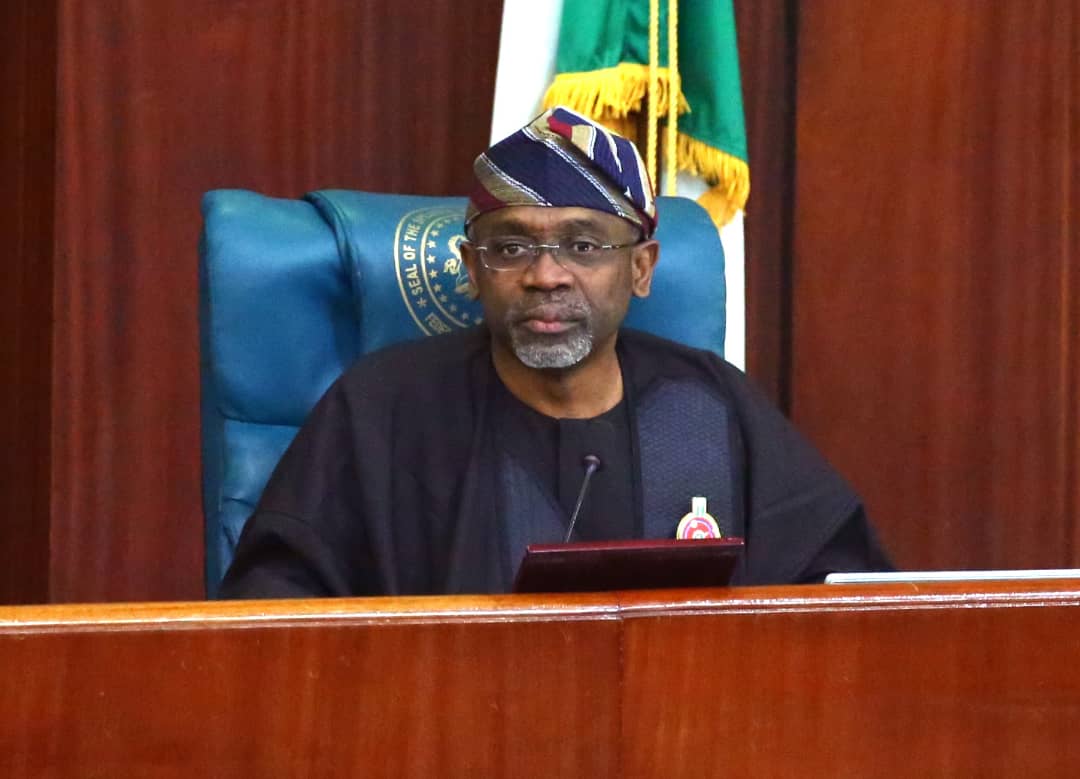
    During a plenary session on Tuesday, June 8, 2021, the Speaker of the House of Representatives, Femi Gbajabiamila directed the House Committees on Justice, Commerce, and Information to look into the circumstances that led to the suspension of the social media platform and the legality of the decision. 

    Also, the committee involved is to submit a report about their findings within 10 days. According to the speaker, this will help the House make the right decision on the ban. 

    The speaker agreed that Twitter has been a useful communication and business tool for young Nigerians. However, the government has a responsibility to ensure that it poses no risk to national security.

    Recall that the Federal Ministry of Information and Culture announced the ban on Friday and a part of the statement read:

    “The Minister of Infromation and Culture, Alhaji Lai Mohammed, announced the suspension in a statement issued in Abuja on Friday, citing the persistent use of the platform for activities that are capable of undermining NIgeria’s corporate existence.’

    The House will also summon the minister to appear and brief them on the decision.


  • Every week, Zikoko seeks to understand how people move the Naira in and out of their lives. Some stories will be struggle-ish, others will be bougie. All the time, it’ll be revealing.

    This week’s Naira Life is brought to you by Quick credit. With Quick credit, you not only get the funds you need instantly, but you also get to pay back at the lowest interest rate in Nigeria.


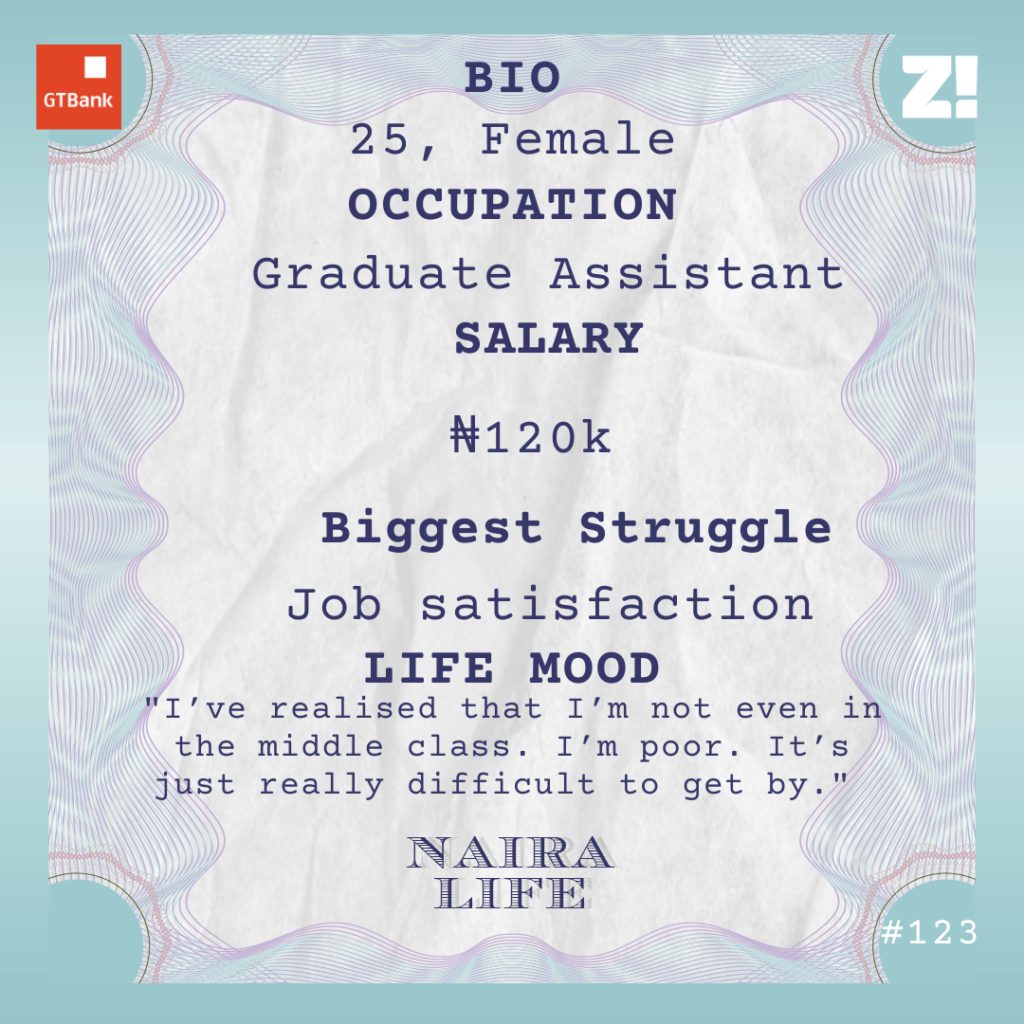
    The 25-year-old graduate assistant in this story worries about two things: her salary and her low job satisfaction. It’s also unlikely that either will improve in the next few years if she stays at her current job. So what does her #NairaLife look like?

    What’s your oldest memory of money?

    Handling money for the first time when I went off to boarding school in 2005. I was nine years old at the time. My parents put about ₦2k in my school account per term and gave me an extra ₦500 cash to hold. 

    What was it like growing up, pre-boarding school?

    My parents work in civil service. I’d say it was comfortable, although there was a time we were moving between upper and lower middle class. At some point, my parents struggled to pay the school fees and we got sent out of school But not for long. The longest we were out was a week. However, there was always food and accommodation and things got better over the years. 

    Do you remember the first thing you ever did for money?

    Does doing chores for my mum and getting money count? I got between ₦50 and ₦100 from my mum as an incentive to do some chores. But there was a time I got ₦1500. I started working and earning money actively after uni. 

    So how did uni go?

    I was 15 when I got into uni. My parents opened a bank account for me and topped it up with ₦50k. But they also gave me an extra ₦25k. They wanted me to have at least ₦50k in my account at all times. Subsequently, I got between ₦10k and 15k every month.

    But one day, I found out that one of my friends was getting ₦100k in allowances from her parents. She randomly showed me her account balance and it ran into millions of naira. I felt so poor at that moment but I won’t say I found it intimidating. It was just a realisation that there are people who will always have more than me. 

    I tried to leverage this information to negotiate a new allowance with my parents. It didn’t work the way I hoped — they didn’t increase my allowance from ₦10k – ₦15k, but the money started coming more frequently. Sometimes weekly. Sometimes biweekly. This worked for me. 

    I never got broke in school until my third year. 

    Tell me about that.

    My parents were upset with me — I don’t remember why. The allowance still came but the frequency went back to once a month. I was mostly living on vibes because the timing was wrong. I was writing an external exam and most of my resources were going into my transportation expenses.  My boyfriend at the time helped me get through it. He paid for a lot of my meals and randomly sent me money too. This lasted for a semester. 

    I went for my IT during the second semester and things got worse. I interned at a research lab and they were supposed to pay ₦25k every month. But I got in and they started giving excuses about how funding had stopped coming from their headquarters in Abuja. During the six months I spent there, I wasn’t paid once. 

    Ah. 

    Also, I wasn’t getting anything from my parents. They had been transferred to different states and I didn’t tell them what was going on, so they thought I was earning money. I was living with an uncle at the time and he would sometimes drop me at work or give me ₦5k once a month. I had to figure out how to stretch ₦5k for 30 days.

    Close to the end of my IT, I spoke to my mum and complained about the whole situation. She looked at me and said it was a lesson in learning how to communicate when I need help. 

    I graduated from university in 2016 and served in a government agency. My parents wanted me to save my ₦19,800 allawee so they put me on an allowance again. ₦20k per month. Also, my mum kept about ₦700k with me and instructed me not to touch it except in an emergency. Somehow, I spent everything on my boyfriend. 

    Ehn?

    It’s very funny in hindsight. He started by asking me to loan him small amounts of money. ₦5k here. ₦10k there. He would make purchases and ask me to pay for them with a promise to refund me later. I felt compelled because he came through for me when I was broke during my third year. In my head, he wouldn’t betray my trust. So I paid for these things. 

    Then one time, he said he needed to invest ₦200k in a business. I was so trusting that I gave him everything he asked for without asking questions. He ghosted me after he got the money. 

    Uh-oh.

    He returned after a couple of weeks and apologised for his disappearance. After that, he needed money for something else and I gave him another ₦200k. 

    I didn’t start panicking until my mum requested my account statement and I realised that I had just ₦40k in the account. 

    I called and texted him to return the money. Nothing. There was even a time I travelled to the state he lived in. I was at the car park from 10 a.m. to 7 p.m. waiting for him to pick me up. This man didn’t show up. After chasing him for some more time, I was like “fuck it” and came clean to my parents. 

    How did they take it?

    My mum was heartbroken, and I don’t think I forgave myself for betraying her trust. But she forgave me. My dad, on the other hand, wasn’t forgiving. It didn’t help when they found out that I wasn’t saving my allawee either — that money also went to my ex. Fortunately for me, he has a soft spot for me too, so he slowly started to come around. It took close to a year though. 

    Phew. You had finished your service year by that time, right?

    Yeah. I finished my service year in 2017. My aunt is a DG at the agency where I worked. I thought Nigeria’s nepotism would work for me and I’d get a full-time offer. Besides, she had promised me a job at the agency. On my last week at the job, I went to see her and she said “Ah, I’ve employed many of your cousins.  I don’t have any slots anymore.”

    Hopes dashed. 

    Nigerian uncles and aunts, right?

    Haha. I was home for close to a year. At first, I wanted to return to school for my masters but the process was long and expensive. In December, my parents and I agreed that I’d enrol in a tailoring school. I paid ₦25k for the course and I got good enough that I started making clothes for people. On average, I was earning ₦9k per month from that. 

    I lived on that until I got a job in February 2018. 

    Whoop! How did it happen?

    A cousin reached out to me in September 2017 and asked me if I’d be interested in a research assistant role at a company. I told her I was interested but when I didn’t hear from her after a couple of weeks, I forgot about it. 

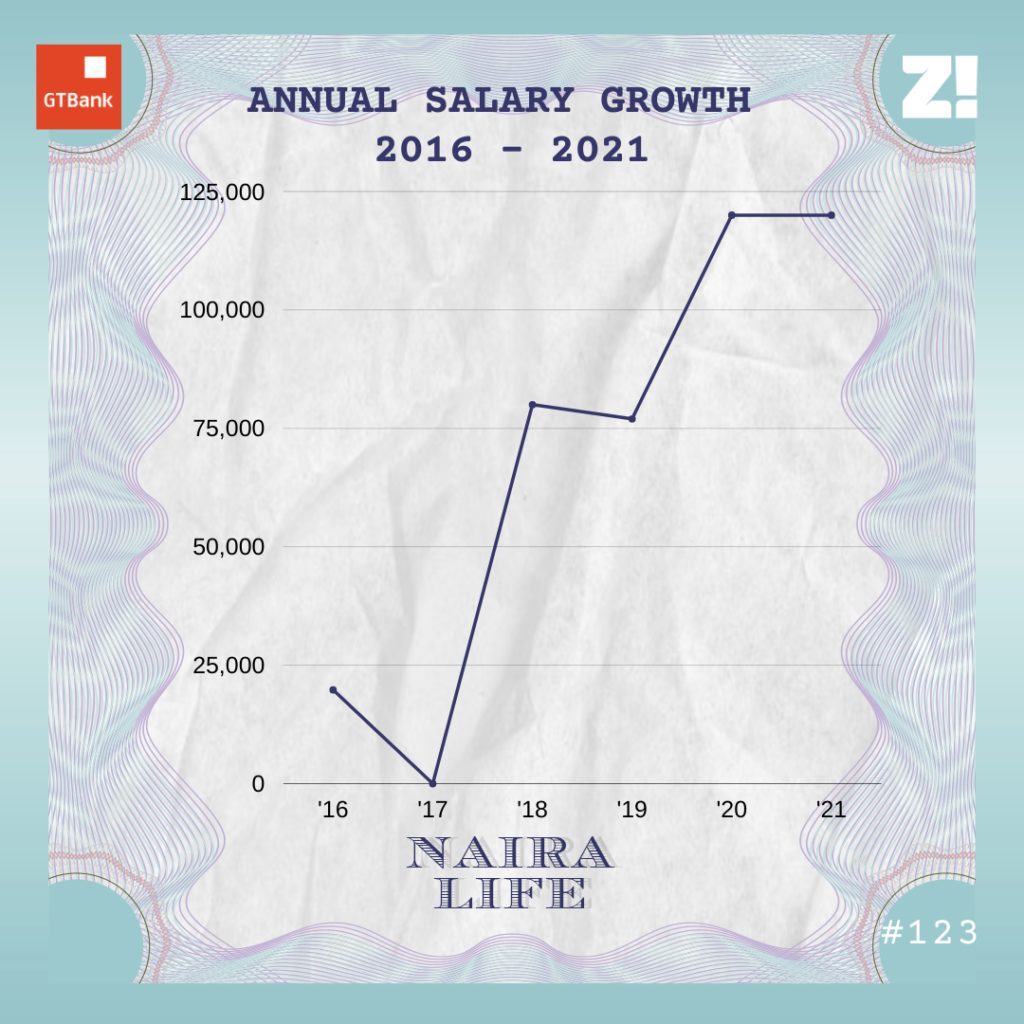
    In March, she popped up again and asked if I was still interested and open to resuming work the following week. There was no formal interview or negotiation. I was offered ₦80k per month. 

    The salary never came on time even though it was owned by a politician. We got our salaries two weeks into the new month. This meant that we got paid for only eleven months in a year.

    Ah. 

    I was working but living hand to mouth. Because my salary wasn’t coming frequently, I was borrowing money to fund my running costs every month. Yet the workload was crazy — I was the research assistant, the front desk representative, the tea girl. At some point, I was putting the gen on and off.

    Omo. 

    On the plus side, the politician always had visitors who sometimes tipped us between ₦5k and ₦10k.

    Still, I knew I needed to leave in 2019.

    What happened?

    He travelled in January for an election campaign. Before he left, we told the CEO to talk to him and get him to leave a standing order with the bank so we would get our salaries. Nothing happened. The man was gone from January to April and we didn’t get paid once. Guess the first thing he did when he returned?

    I can’t. We’re talking about a politician here

    He bought a new car for his second wife. 

    That’s actually on-brand.

    There’s something else — the wife was an employee who worked with us before he married her. I was so miserable watching him spend money without caring about the welfare of his staff. I would see the company’s statement of account and find out that he was taking out the company’s money.  He had seven staff; he needed to spend only ₦750k every month to settle all of us. He could afford to pay us. He just didn’t want to.

    By the time I left in May 2019, I was owed ₦240k. When I asked the new CEO he’d just hired, he removed me from the office group chat and blocked me. 

    I’m sorry about that. You left because you’d gotten a new job, right?

    Yes. My mum works with a couple of influential people and she called in favours to get me the job. It was as a laboratory assistant job at a military university in Kaduna state. My starting salary was ₦77k. 

    Five months into the job, I got a proper placement and was promoted to a graduate assistant. I joined the academic staff and started teaching students. My salary got bumped to ₦120k.

    Nice.

    It got complicated though. The commandant who promoted us was transferred and they brought in a new one. Some staff members were disgruntled with the promotion process. They claimed that due process wasn’t followed so they signed a petition. As a result, the new commandant directed that the new batches of promotion should be reversed. I was one of those people who was affected. And no, they didn’t return me to my old salary. Between March and August 2020, I was earning between ₦60k and ₦80k.

    Ah, I’m confused. Why did that happen?

    It’s part of the ritual of working in the civil service. There’s a lot of politics behind the scenes. The salary thing happened because IPPIS couldn’t find a proper pattern to use in paying us because of the promotion situation, so they just paid everyone affected what they felt was right. 

    The situation was fixed in August and the promotion stood. From September, I went back to earning ₦120k.

    Lit.  How do promotions and salaries happen in the university?

    First, you’re due for confirmation after your first two years at the university. I haven’t even been confirmed as a full staff year.

    After confirmation, the academic and non-academic staff are due for promotions every three years. But the people in academic staff need certain qualifications to stand a chance of being promoted. I’m currently doing my masters programme and when I get my results, I can expect to be promoted to an assistant lecturer. But again, it doesn’t always happen like that because of the politics involved. 

    In an ideal situation, If I get my PhD, I’ll move from assistant lecturer to lecturer II. I could wait three years to be promoted to lecturer II or get research papers published in academic journals. Each published work will earn me points and as I get more points, I move up the academic ladder. Every promotion comes with a ₦15k increase. 

    I think professors in the university I work at earn about ₦600k. But it’s a lot of years of teaching and research. I’m not sure I want to be an academic for the rest of my life when job satisfaction is this low. 

    Why do you think that is?

    For starters, I don’t get any allowances — no 13th-month allowance or any other welfare benefits. My monthly salary is the only thing I get from this job. Besides, while I love teaching, I’m more interested in scientific research. I took this job because I wanted to be motivated to start my master’s programme. My job satisfaction is 3/10 and that’s because of the breaks when school is not in session. 

    That sounds intense. What’s your monthly running costs like these days?

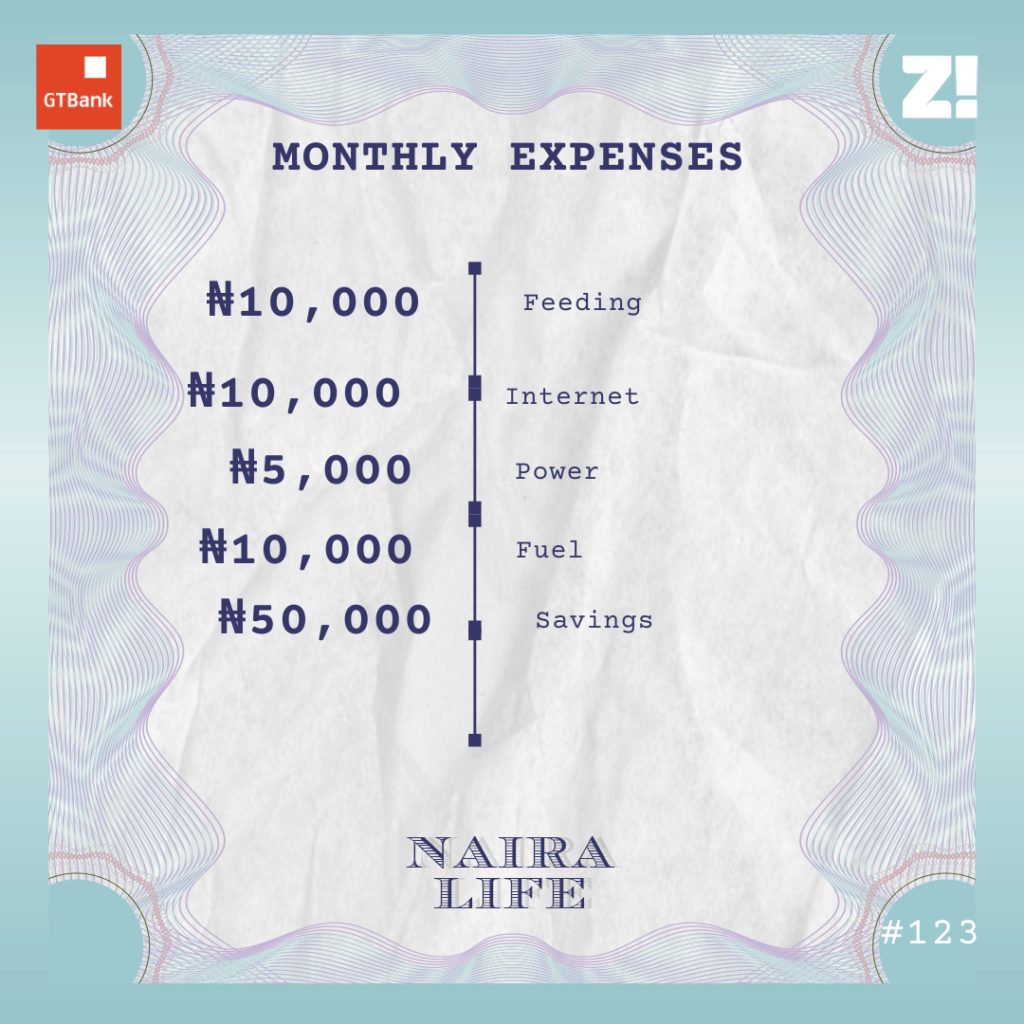
    I don’t do well with savings, so I started this contribution thing with six other people at work. Each person drops ₦50k and one person takes it all at the end of the month. 

    Whatever remains after I settle my bills goes into buying study materials for school. Luckily, my parents are doing well and I’m not obligated to pay black tax. I send money to my siblings only when I can. 

    Great. How much do you have in your savings account right now?

    ₦20k. I had ₦200k in October last year but rent took ₦150k. I started the contribution thing at work shortly after. I’m getting ₦350k in July. At least, I know rent for next year is sorted. 

    How has your relationship with money evolved in the past few years?

    I’ve moved from making money and blowing it to breaking down in tears when an unexpected expense comes up. The other day I wanted to leave work and my car refused to start. I sat in the car for an hour and cried before I called a mechanic. It’s very draining. 

    I’ve realised that I’m not even in the middle class. I’m poor. I feel terrible saying this because I understand that there are lots of people who don’t earn as much as I do. It’s just really difficult to get by. 

    How has all of this shaped your perspective about money?

    Money is very fleeting and can put you in trouble. What really helps is the relationships you build over the years. I got my first job because of my cousin. My mum’s connections got me my current job. I also have a feeling that when I finish my masters and start looking for another job, relationships and friendships will help me get it. 

    Where do you see all of this in five years?

    I should finish my master’s degree later this year or next year. I would like to start my PhD immediately after. I’m not sure I’ll be working in academics five years from now, at least not full time. A laboratory research job will be great. But in that time, I want to be earning at least 6x my current income and working at a job I actually like. 

    Rooting for you. What’s something you want right now but can’t afford?

    A new car? Oh wait — I just need enough money to fix my car and it’s myriads of issues. A month’s salary should be enough for all of it. 

    What’s the last thing you paid for that required planning?

    Tuition for my master’s degree. I paid ₦100k and an extra ₦30k for lab fees.

    When was the last time you felt really broke?

    Last week. I didn’t have any money and a friend randomly sent me ₦5k. What did I do with the money? I used it to buy pizza. I just wanted to do something good for myself for once. The bills pile up every month and by the time I settle the ones I can, there’s hardly anything left. 

    What part of your finances do you wish you could be better at?

    Investing. It would be nice to have a passive source of income. The returns don’t even have to be huge. An extra ₦10k every month is good enough for me. But I’m currently not doing any of that. I was looking at crypto but I don’t want to cry because of money anymore. 

    Lmao. Do you have an emergency plan?

    My parents. They’ve come through for me so many times and I’m grateful for them. But I know it’s not sustainable. I’m working to have an actual emergency plan I can fall back to. Building a savings nest will be a good place to start. 

    On a scale of 1-10, how would you rate your financial happiness?

    1/10. I don’t want to sound ungrateful but I could do so much more than I’m currently doing. It’s hard when I want to do something but I can’t do it because of my finances. Or when people reach out to me for help and I can’t do anything. Things like that get to me a lot. I’m not unhappy, I’m just very dissatisfied.


    Great! You got to the end of this article. Know what’s even better? You can get QuickCredit faster than the time it took you to read this article. With Quickcredit, GTBank customers can get N2million in less than 2 minutes and pay back over 12 months at an interest rate of 1.5%. No forms. No collateral. No hidden charges. Get Your Quick Credit on GTWorld

  • This quiz will test your knowledge of Super Eagles players and their stint in the English Premier League. Have you been paying attention? Let’s find out:

  • A lot has happened in the country this week. If you haven’t been up to speed, you will like this rundown of some of the most important events that has occurred in the past few days.

    Jump in.

    1. Another set of students abducted 

    About 136 students were abducted by “gunmen riding on motorcycles” from a school in Tegina town, Niger State. This is the latest in the spate of school abductions in the country and happened only a day after the remaining 14 kidnapped students of Greenfield university were freed

    As it stands, there have been at least six different cases of unknown men kidnapping students from their schools in the north-west and north-central since December 2020, according to a BBC report. More than 800 students and staff have been abducted.

    2. Two high profile deaths 

    Ahmed Gulak: How Buhari, Atiku, odas react to di killing of former aide to  Goodluck Jonathan - BBC News Pidgin

    On Sunday May 30, 2021, a former Honourable Speaker  of the Adamawa State House of Assembly and former political adviser to President Goodluck Jonathan was murdered by alleged gunmen in Owerri, Imo State. According to reports, he was enroute Sam Mbakwe Airport, Owerri to catch a flight when the unknown gunmen attacked the vehicle he was in. A police statement confirmed the event and read:

    “On the 30/5/2021, at about 07:20hrs, armed bandits intercepted and attacked a Toyota Camry cab carrying Ahmed Gulak and two others who were on their way to Sam Mbakwe Airport to catch a flight.

    “Ahmed Gulak left his room at Protea Hotel without informing the Police nor sister agencies in view of the fragile security situation in the South East and Imo in particular.

    “He left without any security escorts and while the cab driver took irregular route to the airport, six armed bandits who rode in a Toyota Sienna intercepted, identified and shot at Ahmed Gulak at around Umueze Obiangwu in Ngor-Okpala Local Government Area close to the Airport.

    72 hours after Obioma's death, NECO gets acting registrar - Punch Newspapers

    The following day after Gulak’s murder and in unrelated events, it was reported that the registrar of the National Examination Council, Professor Godswill Obioma died in his home at Minna, Niger state. Some earlier reports alleged that the professor was assassinated but this claim has been debunked by his family. 

    The late Registrar’s son, Godwill Obioma, in a message sent to the Director, Human Resource Management at Neco, confirmed that the Registrar passed away after a brief illness. 

    3. Buhari threw a tantrum

    Anger as Buhari threatens to deal with promoters of insurrection - Punch  Newspapers

    The Buhari administration is not new to controversy. In a series of tweets on June 1, President Buhari condemned the recent attacks on “critical infrastructure” and said that the people behind this “will soon have the shock of their lives.” But the president said more than that. One of his tweets referenced the civil war, which many people believed was a threat to the south-east.

    A public outcry followed and lasted for hours, with Nigerians criticising the president’s choice of words and the intent behind the tweet. 

    Twitter has now deleted the tweet for violating its rules. 

    4. The Federal Government can’t take a hit

    The federal government hit back at Twitter and announced an indefinite suspension of the social media service on Friday evening.

    In a statement released by The Minister of Information and Culture, Alhaji Lai Mohammad, the ban is a result of “the persistent use of the platform for activities that are capable of undermining Nigeria’s corporate existence.”

    The ban went into effect a few hours after this statement was released. At the time of writing this, network providers in Nigeria have blocked access to the service.

    5. New name, wu dis?

    On Wednesday, June 2, Adeleye Jokotoye, a tax consultant, did something no one saw coming at a public hearing in Lagos. He submitted a proposal to change the country’s name from Nigeria to United African Republic. He said the change is necessary because “Nigeria” was forced on us by the colonial masters. 

    He believes his choice of name is only right as it takes into account the hundreds of ethnic groups that make up the country. Also, he has an alternative name in case UAR doesn’t fly. His second name choice? United Alkebulan Republic, which means United Mother of Mankind Republic. 

    As you can expect, Twitter had a field day with this one:

    https://twitter.com/Girl_isBlessed/status/1400195082385563656

    Lmao. E reach to ask

    https://twitter.com/OgbeniPrince/status/1400198751109722113

    It’s unlikely that the lawmakers will act on this one, but again, this is Nigeria. 

    6. Youths obey the clarion battle call?

    In a time when scores of people are calling for the complete scrap ora reform of NYSC, the Director-General of the scheme, Shuaibu Ibrahim, has a slightly different idea. During an interview with Channels TV, the Brigadier-General said that corps members are part of the national defence policy of the country. What does this mean? Well, they can be mobilised and trained to fight in the event of  “serious war”


  • Every week, Zikoko seeks to understand how people move the Naira in and out of their lives. Some stories will be struggle-ish, others will be bougie. All the time, it’ll be revealing.

    This week’s Naira Life is brought to you by Quick credit. With Quick credit, you not only get the funds you need instantly, but you also get to pay back at the lowest interest rate in Nigeria.


    What’s your oldest memory of money?

    One evening in 2012, my dad returned from work and gathered the family around. He opened his bag and there were bundles of ₦1000 notes inside. The money inside the bag was ₦1m, and he called us so we could see what that kind of money looked like.

    Oh wow. Did he say where the money came from?

    My dad is a civil servant who dabbled in politics. Around this time, he was making bank because of his political affiliations. So the money came from that. 

    Unfortunately, he spent all the money he made on women, and when it dried up, we went back to square one. 

    Can you paint a picture of what square one looked like?

    I grew up in a face-me-I-face-you house that belongs to my mum’s father, and we lived there for years. At first, our financial situation wasn’t totally bad because we weren’t dying of hunger.

    When my dad’s political money started coming in, we started living a little better. We moved to a proper apartment and finally had DSTV. It was an opportunity for my father to get us out of the lower class. But he took mismanagement of funds to a different level, got a new wife and new girlfriends. Eventually, he set us back to a point where we were worse than before.

    You know what is funny? Through the years we lived in a face-me-I-face-you compound, I didn’t think we were poor. 

    Why?

    I don’t know. I was surrounded by poor people, but for some reason I thought I was a rich kid. I always believed I was an exception. 

    It wasn’t until I went off to a polytechnic in 2014 that I realised I was indeed poor. When other kids were going to restaurants for lunch, I could only afford to buy a packet of Cabin biscuits.

    Ah.

    I left the polytechnic after a year. No reason. I just dipped. 

    At home, things spiralled out of control when my father ran out of money again. He became physically abusive towards me and my mum. They eventually separated in 2015. 

    I’m sorry. What was it like with your dad out of the picture?

    Things were okay for a while. My mum is also a civil servant, so there was a regular stream of income even if it wasn’t great. The year we left my dad was probably the best year of our lives. But it lasted for only a short time. 

    What happened?

    The government didn’t pay my mum her salary for several months, and when they did, they paid only half of one month’s salary. 

    By the way, I was back in school, in a university in Benin Republic. I wasn’t getting an allowance from my mother. I’m not sure my father even knew where I was. I had to borrow money to pay tuition. But there was hardly enough money left for rent or feeding. Sometimes, I would eat only once in two days. On the good weeks, I would boil rice and beans together just so I could have something close to a balanced diet. I dropped out of school again in 2016 because there was no money.

    Omo.

    It was soul crushing. I was forced to move from my childlike mentality of “We’re not rich but we’re also not poor.” to “Oh shit. We’re POOR poor.” I realised there were limits to what I could do because of my family’s financial situation. I was on my own. For a long time, I couldn’t buy new clothes and couldn’t participate in other activities regular kids my age could. Poverty closed me off.

    When I returned to Nigeria, I had nothing to do, so I opened a blog. From there, I started learning how to use social media. A few months later, I met someone who worked in marketing online, and they helped me get a job as a social media manager for a lingerie brand. My salary was ₦10k per month. 

    That must have been a huge relief. 

    It definitely was. I didn’t have a bank account, so the money was going into my mum’s account. The job ended after two months because the person handling the brand’s marketing left. 

    Later that year, I got a one-off project and wrote a blog post for a company in the US, and it paid $50. I didn’t even withdraw the money — I just used it to purchase a proper domain name for my blog. 

    Lit. When did you find another job?

    Three months after the last one ended. Someone I follow on Instagram used to write for this publication and always shared the content she created for them on her Instagram story. One day, I went from her account and landed on the publication’s website, then their contact page where I found the editor’s email. I was like, “You know what, I’m not a bad writer.” So I sent an email to the editor and attached a copy of my badly done resume. She reached out, we had a conversation, and I got the role. Guess how much they offered to pay?

    How much?

    ₦1k for an article and I had to write at least three articles every week. I didn’t mind. I had just started at a university in Nigeria, and my mother wasn’t sending me an allowance because she couldn’t afford to. I was writing up to five articles and making between ₦15k and ₦20k per month. The money was doing a lot for me because I needed money to pay for food in school, transportation and things in between.

    A couple of months after I started the job, I got an email from another person who owned a fashion publication and she offered me a job. That one was ₦25k per month. However, I left after two or three months because I realised that the person didn’t really have a structure or direction. 

    By this time, I had gotten bored with the one that paid ₦1k per article. My earnings at the job weren’t consistent — the amount of work I did in a day determined how much I got paid at the end of the month. I wanted to leave, but I didn’t know what else to do. Or if I had options to do anything else. 

    Out of the blue, a bigger media company reached out to me. The editor of the publication had seen my work and asked if I would like to be a contributor for their website. It wasn’t going to be a paid gig. 

    Oh?

    I’d realised that as much as money is important, clout is almost as important in some situations. This job was going to give me some level of clout, so I was hyped about it and determined to make the best of it. I started writing for them in October 2018. 

    I’m guessing you remained at the ₦1k per article job. 

    I did. But the editor of the publication I’d just started working with had a PR agency she was running on the side and asked me to come on board for a copywriting project. I got ₦45k from that. 

    After two months on the job, we had another conversation, and I told her that I would like to join the team as a full staff. They were concerned that I didn’t have a degree, but I gave her a whole ass speech about why they needed me. She promised to do something about it but nothing was guaranteed. 

    Now, the publication where I was earning ₦1k per piece terminated my contract. Apparently, I was working for a direct competitor, and they didn’t like that. I lost the only paying job I had without any idea if the second publication was going to offer me a full time job. I was pretty much running on vibes. 

    Did the offer ever come?

    Thankfully, it did. I got a call from HR in January 2019 to notify me of my promotion. It was ₦50k per month — the biggest salary I’d earned up until that point. However, I was going to write three articles every day of the week, including Saturdays and Sundays.

    The ghetto.

    It was mostly 200-300 words newsy stuff and the occasional opinion article, but I was perpetually tired because I was also working on weekends and still had to go to school.

    By the way, I didn’t have a laptop. I had been typing with my phone. I barely slept and spent most of the night writing so I could have enough time to spot any errors and fix them. My first laptop came in February 2019. I put out a request on Twitter and people donated about ₦100k in a few hours. 

    Whoa.

    The laptop made the process easier, but I was still working every day of the week. At some point, I started managing two of their social media accounts. I left the job in September 2019.

    Why did you leave?

    I started making more money.

    Whooop. Tell me how that happened.

    In March 2019, I got an idea for an article. I was going to write it for the publication I was working with at the time, but their editorial process was too restrictive. So I randomly googled “How to pitch articles when you’re a freelance journalist”. I wrote a pitch and sent it to an editor in the UK. They liked the idea and commissioned me to write the story. 200 pounds, which was about ₦90k at the time.

    I was like, “Wait, this is almost 2x of my salary.”

    Cue in the existential moment.

    Lmao. I got another job off that story. One of the people I interviewed recommended me to the commissioning editor of a consulting company. They asked me to write a report on youth culture in Nigeria and offered me ₦200k for it. That was literally my salary for four months. It picked up from there — I got two more gigs back to back and each paid me more than my full time job.

    I knew my time at the publication was over when someone I met on social media who was attracted to me flew me out to Abuja for a week, and I spent the whole week relaxing and spending someone else’s money. That was my first time on a plane. It was also when I realised that I deserved to live a proper baby boy lifestyle. When I returned, I texted my editor and told her I was done working there.

    And you went full freelance?

    Yup. But I’m not going to lie; it was scary. I was leaving paid employment for something that may not have worked or even be sustainable in the long run. The gig could stop coming at any point. Lucky for me, a publication I’d previously written reached out to me in October or November and wanted me to cover an event for them. They paid me about ₦400k to attend and cover the event. And boy, did it calm me down a bit. I also had another company that paid me ₦200k for another story. I knew I was good for the rest of the year. 2019 was the first time I had a steady source of income for a whole year. And I just carried the energy into 2020.

    Love it. Let’s talk about 2020. 

    I had found a balance and knew I wanted to stick with freelancing for at least most of the year. It’s a bit hard to give an accurate picture of what I was making per month because of the way freelancing is structured. I could get commissioned for a story in January and get paid in March.

    Also, the first quarter of each year is usually slow because publications are trying to figure out their plans for the year. But I didn’t do badly. On average, I made about ₦500k monthly in the first quarter of 2020. And I was writing about three stories for different publications per month. 

    That’s way more than you were making in the quarter of the previous year. Lit.

    Yes. By the time the second quarter started, Covid had hit and the media industry was unstable. But I got a lucky break — I landed a gig and started writing for a publication every week. $200 for each article. That meant I was sure of at least $800 at the end of the month, which was about ₦288k. Other than that, I was writing an average of five stories per month for different publications, and was getting paid anywhere between $1300 – $2000 per month.

    What was the highest amount you got paid to write a story in 2020?

    ₦800k. I got a DM on Instagram about the possibility of doing a profile of an artist. This was even in the thick of Covid, but I accepted it. The process was straightforward —  I did the interview, wrote the story and got paid.

    Interesting. So what were your finances looking like at the end of 2020?

    They weren’t bad, but when you are a freelance journalist, you always have anxiety about money. In the last three months of 2020, I was making something around ₦700k per month. It’s a struggle to know if you’re doing good because you’re not sure when the next gig will come. Also, it didn’t help that I was bad at saving. 

    How so?

    I was making enough money in 2020 to afford anything I wanted, and I didn’t hold back. There was a time my phone fell down and the screen cracked. I bought a new phone the following week. Also, I was in a long distance relationship and was flying across states almost every week and spending about ₦200k on flights and accommodation each month. Things like that. I started actively saving around October 2020. By December, I had ₦1m — most of it came from one article I wrote so I don’t think it counts as savings. The money eventually went into renting an apartment in 2021.

    Ah, I see. What’s 2021 looking like for you?

    Well, I got a full time job with publication in January 2021. It happened in the DMs. I indicated interest, and they set an interview up for me the following day, which was a Friday. I got the job offer in my mail on Monday. By Wednesday, I resumed work.

    How much?

    ₦300k. I’m trying to live a nice baby-boy lifestyle, and I thought it was wise to diversify my streams of income. Also, I want to leave the country and the programme I might use as my ticket out requires me to have a paying full-time job.

    Man. How much do you make every month these days?

    About ₦700k-₦800k. My salary from my full time job is ₦300k. On average, I make between ₦400k-₦500k from freelance work monthly. It’s hard to break it down because it’s not in naira. Also, the money fluctuates because each publication has a different rate. 

    This is the part where we break down your monthly running costs.

    What’s your savings plan now?

    I’m trying to be better with savings. My salary pays for my running costs each month now. I started saving ₦200k from what I make from freelancing since February after I sorted my house rent. 

    Investment scares me because I’m bad with numbers, but in the near future, I’ll explore my investment options and hopefully learn how best to manage and invest my money. 

    Lit. Looking at your career now, how much do you think you should be earning?

    I don’t have a problem with my current earnings. It just would be nice if all of it comes from one source. However, any job that wants my 100% focus at the moment has to pay me between ₦800k and ₦1M. But to be honest, I don’t think I have any interest working with any Nigerian company moving forward.

    Energy! How has your experience shaped your perspective about money?

    I know that when people tell you that money doesn’t bring you happiness, they are just being liars and dirty bitches. Money definitely does bring happiness. My therapist told me that my self worth is tied to how much I make because of my experiences, and she’s right. I mean, I come from proper poverty and the anxiety of not wanting to go back there is always there. In a way, it powers me because I’m working so hard to ensure that I never experience it again. I realised that I hated being the poor kid when I was in the polytechnic, and I was determined to never be the poor kid again. 

    My only financial struggle right now is the black tax. It’s the bane of my existence. 

    When did you start paying black tax?

    From the moment I started earning. I’m the oldest son and the first child of my mum. When I started the first job that fetched me money, I didn’t have a bank account, so it was going into my mum’s account. The only thing I took out of the money was what I needed for data. 

    In 2018, I was funding my schooling but my mum was also “borrowing” money from me. There was a time she called me to ask for ₦60k to pay for my sister’s school fees. That was even more than my salary at the time. There is an expectation that I need to chip in and help regardless of what I make. 

    At what point did you clock this?

    I don’t think there was an exact moment where I realised this. It’s always been a lingering feeling in the air. And I know it’s going to be perpetual. I really don’t know how I feel about that. On one hand, you’re making good money. But on the other hand, you’re taking responsibilities you shouldn’t have to. 

    When I’m at home, I pay for everything from food to light bills. At the end of each year, I know my bills are about to skyrocket because of Christmas. Someone needs to buy clothes. Or they need to stock the house with food. Now there are things I want to do with money that I can’t because of these responsibilities. 

    Sounds hectic. 

    See. Just after I paid my rent in February, my mother started calling me that their rent was also due. I had to pay for that one too. 

    On some days, I just pretend to not hear what they need. My sister called me the other day to ask for me to buy a phone, I just didn’t say anything till she ended the call.

    Do you ever think your black tax expenses will stop at some point?

    I really doubt that it will. I’ll feel guilty if I stop giving to my family. Also, my family feels like I owe it to them, so there’s that. I might be in this forever. I really hate it and have a lot of anger about it, but I’m trying to deal with those emotions in a healthy way by seeing a therapist.

    Sending you love and light. What was the last thing you spent money on that made you happy?

    My TV. I don’t even watch TV like that, but it was a good idea to get one. It cost me ₦150k. Also my Apple Watch. It was a very random buy but I started going to the gym this March and I thought it would be great to have one, so I went out and bought it and I’m really glad I did. It cost about ₦200k and I have no regrets.

    When was the last time you felt really broke?

    At the beginning of the year. I had less than ₦200k in my account because I had just paid rent. It felt scary, not having money for me means not having options, and I hate that feeling. I was anxious until the next credit alert came in. 

    On a scale of 1-10, how would you rate your financial happiness?

    7. It would have been an eight if I wasn’t dealing with black tax. I’m making money I couldn’t fathom a few years ago. However, with black tax and the anxiety I have about money, I occasionally find it hard to enjoy it.  But hey, we move.


    Great! You got to the end of this article. Know what’s even better? You can get QuickCredit faster than the time it took you to read this article. With Quickcredit, GTBank customers can get N2million in less than 2 minutes and pay back over 12 months at an interest rate of 1.5%. No forms. No collateral. No hidden charges. Get Your Quick Credit on GTWorld