On August 14, 2021, unknown armed individuals attacked a convoy of five buses and killed at least 22 travellers along Rukuba Road in Jos North Local Government. According to multiple reports, the victims were returning to Ondo State after attending an Islamic festival in Bauchi state. Reports also say that another 23 people were injured, while 26 people escaped unhurt.
Widespread condemnation followed the incident. The Nigerian Governors Forum described the attack as “barbaric and senseless. President Muhammadu Buhari also decried the incident. In a statement by his spokesperson, Garba Shehu, the president said that the attack was unacceptable and alluded that the attack was “a well-conceived and prearranged assault”
One thing was clear: this was another security issue for the Plateau state government to deal with. In an effort to manage the escalating tension, the governor, Simon Lalong, imposed a 6 p.m. to 6 a.m. curfew in three local government areas of the state: Jos North, Jos South, and Bassa.
However, a curfew couldn’t stop the fresh attack on human lives that plagued the state in the following days. In one incident, unknown people raided Tafi-Gana, a village in Bassa local government on Tuesday August 17, 2021, killing at least five people in the process.
Subsequently, academic activities in the state were affected as the management of University of Jos suspended the school calendar and shut down student hostels.
I'm a student of University of Jos and also an indigene of plateau state. I fear for my life with every move I make, I cringe at the sound of the slightest noise, I've been deprived the right to be called a graduate. I have sleepless nights because of the fear of "Unknown gunmen
Between the time the latest spate of violence erupted in Plateau state and now, at least six state governments have ordered the evacuation of their indigenes, mostly students, from Jos for fear of reprisal attacks. The states include: Oyo, Ogun, Kaduna, Enugu, Abia, and Delta states.
The tension in the state rose to a new high on August 25 when armed men suspected to be herdsmen invaded Yelwan Zangam, a community in Jos. The rampage claimed over 30 lives.
Following the attack, angry youth in the community staged a protest to the Plateau State Government house and dumped more than 20 corpses — victims of the previous night’s attack — at the main gate of Plateau’s seat of government.
At the moment, it is unclear how the state government plans to manage the situation. However, the governor has imposed a 24-hour curfew on the affected local government areas in the state.
What’s your relationship status? Wait, don’t answer that. It’s totally written all over you and we can conveniently guess what it is. Take this quiz and leave the rest to us.
Let’s go.
Every week, Zikoko seeks to understand how people move the Naira in and out of their lives. Some stories will be struggle-ish, others will be bougie. All the time, it’ll be revealing.
This week’s Naira Life is brought to you by QuickCredit. With QuickCredit, you not only get the funds you need instantly, but you also get to pay back at the lowest interest rate in Nigeria.
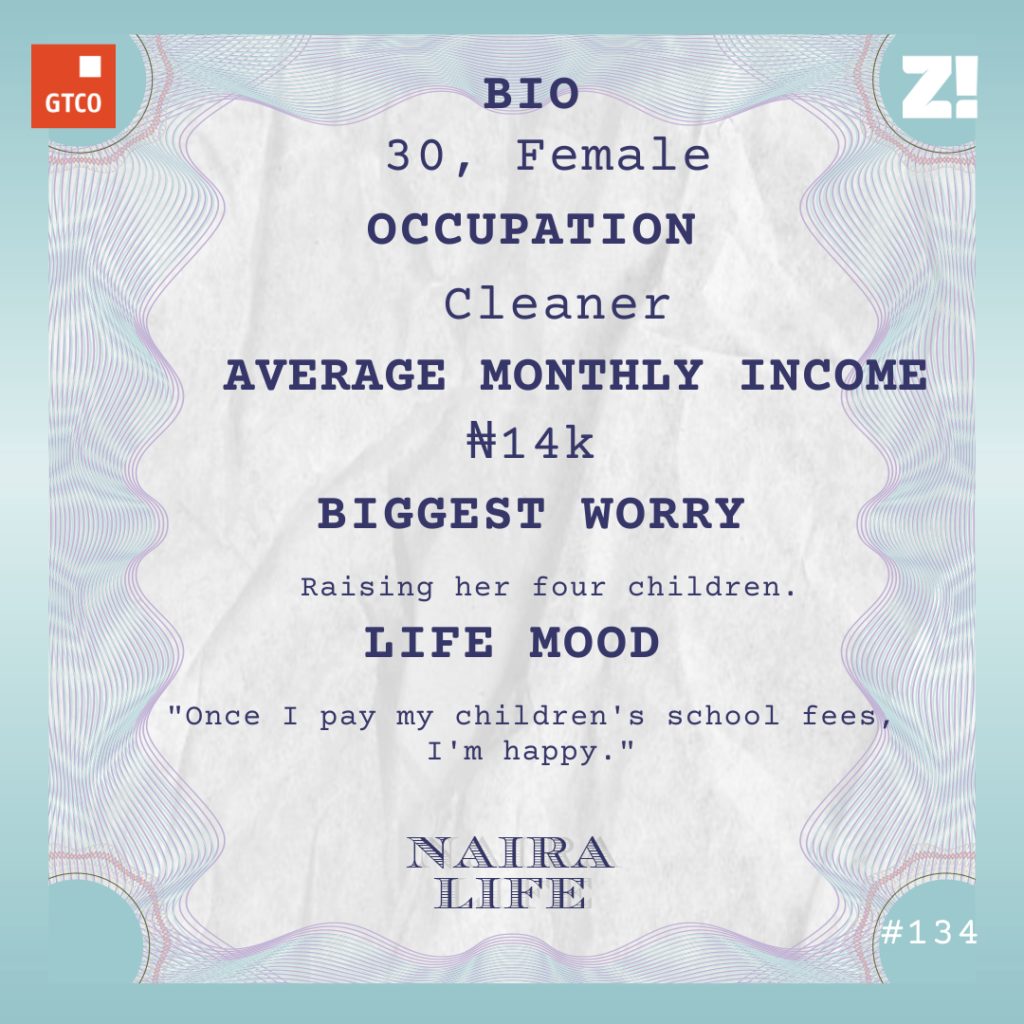
On this week’s #NairaLife, this 30-year-old lady’s quality of life nosedived after the death of her husband in 2020. Her current biggest worry? Raising her four kids on an average monthly income of ₦14k.
When did you first realise the importance of money?
That would be after my father died in 2003. We lived in a village in Ankpa in Kogi state and didn’t have much. But we didn’t suffer because my father took care of us. He made furniture and was also a farmer.
When he died, my mother had to mourn him for two years. This meant she had to stay at home, so someone had to take care of our family.
And that person was you?
Yes. I was 12 years old and the eldest of five children. The first thing I sold was oranges. A basin of oranges cost ₦700, and I made a profit of ₦800 after each sale. Any money I brought home was what we used to buy food.
After a while, I started going into the bush to gather firewood to sell. One bundle went for ₦300, and that paid for my school fees.
How much was your school fees?
₦1200.
How long did you do this for?
About two years. In 2005, one of my aunts who live in Lagos came to the village and asked me to come with her. She said we were suffering too much, and she wanted to help us. My mother’s mourning period had ended, so I didn’t have to stay in the village if I didn’t want to. I agreed and followed my aunt to Lagos.
What did you do when you got to Lagos?
I helped my aunt with her soft drinks business. She showed me how it worked, and I started selling on the streets. At the end of every month, she paid me ₦5k. She also put me in a tutorial centre. I sold drinks during the day and went to my classes in the evening.
It didn’t reach two years after I came to Lagos when I got married.
Tell me about how it happened.
A soldier took an interest in me. Whenever he bought drinks from me, he gave me something extra. That was all at first. Later, he said he wanted to marry me. I looked at him, and I looked at myself. I thought if someone like me could marry a soldier, maybe our suffering would be reduced. So I agreed to marry him.
I introduced him to my aunt and her husband. From there, we went home to my village to meet the rest of my family. We got married later in 2006. I think the whole thing cost him like ₦50k. My people don’t collect a bride price, but my uncle took ₦50 and my mother took ₦20 out of the money to show that they supported the marriage. The remaining money was used to entertain our guests.
Ah, I see.
He was a lance-corporal in the army and his salary was about ₦48k when we got married. We gave birth to our first child — a daughter — in 2007.
Things were good: I won’t lie. He took good care of me. From his salary, he’d give me ₦10k to send home to my mother and give me extra money to buy food in the house and take care of myself.
In 2009, we gave birth to our second child. That was also when I decided to start making some money on my own. I started selling fruits — oranges, pineapples and watermelons. For every ₦5k market I bought, I made ₦7500.
I did this until 2011 before my husband asked me to stop. The market wasn’t selling very well anymore, and I was also pregnant with our third child.
What made me stop was what he promised me.
What did he promise you?
A shop where I could start a better business. At some point, he wanted to take a loan to start me up, but I told him not to — I fear loans.
Now that I wasn’t working or selling anything, my children and I relied on him, and he didn’t fail. Not even when our last child came in 2015. He had started earning ₦60k and was close to being promoted to a corporal.
Every month, he sent us ₦20k for our feeding. It was enough because things were still cheap at the time. I’d spend ₦5k on baby food and diapers, ₦10k for foodstuff and save the remaining ₦5k so we could have something to spend before the month was over.
My husband also took care of the children’s school fees. When it was time to pay, he’d send his whole salary for that month. That’s how our family worked — I stayed home to take care of the children and he did the rest.
Then in 2017, they said he should go to Maiduguri to fight Boko Haram. My last child wasn’t even up to two years at the time. Nothing much happened until March last year.
What happened?
One night, I got a call around 9:30 p.m. The person introduced himself as a major and said that he was sorry, but they lost my husband in combat. I wanted to run mad. We had spoken the previous day, and he talked about coming back home in three months.
Oh my God. I’m so sorry.
Thank you. They buried him there and sent his things home. I couldn’t even go for his burial because it was during the lockdown, and they said everybody should stay at home.
I’m very sorry. He passed on active duty. Did you get any of his benefits?
That’s where the problem is. His brother was his next of kin, so his name was on paper. After they got the money, his family turned their back on me. Now they don’t even remember me or the children. I don’t know how much they gave them, but nothing got to me or the children.
Ah!
That wasn’t all. We were living in the barracks before my husband passed. After the army paid my husband’s people, they asked us to leave the barracks. I moved in with one of my cousins and that’s where I’m squatting now.
What are you doing these days?
Since June, I’ve worked at the barracks. I sweep two blocks in the barracks every morning for ₦14k at the end of the month. I have no money in my bank account or my savings. I use everything to buy food and take care of my children.
How do you manage it?
The first thing I do is to take ₦4k out every month. From that, I give my children ₦50 each every morning when they go to school so they won’t be looking at other children. The rest of what I make is for food. Thank God for the neighbours that bring something from time to time. My aunt sends me money when she can and my younger ones send foodstuffs.
My biggest headache is their school fees.
How much is their school fees?
My first child is 14 years old and is in JSS 2. I withdrew her from the private school after my husband died and took her to a government school. They don’t collect school fees there even though I pay ₦5k for PTA and other things. The second child is 12 years old and in Primary 5, and the school fees is about ₦25k. I also pay about that amount for the third child who is 10 years old and in Primary 3. My last born is six years old and in primary one. His own school fee is ₦20k.
How do you raise the money?
Ah, when it’s time to pay their school fees, I start to disturb my people. Some of my husband’s friends also send me money for this. I gather the money from everywhere I can find. I fear that people will stop helping me soon. That’s why I want to start my own business.
What business do you have in mind?
I want to get a shop and start selling provisions and drinks. I don’t even know how much I need because I’ve not started asking around. I want to have some money in my hand first.
But I know it’s the next thing for me. It’s my prayer request every day. I even drop something when I go to church — even if it’s ₦100. I just want to have enough money to take care of my children.
As you are now, how do you see life and money?
If you’re alive and you don’t have money, you’re nothing and nobody. But if you have money, you will be okay and happy. The people around you will also be happy and proud of you because they know you can help them.
Hmm. What was the last thing that made you happy?
When my husband was alive, he would send us extra money during holidays so I could take the children out. That used to make me happy. Now, it’s their school fees. Once I pay it like this, I’m happy.
It’s been a difficult year, but how would you rate your financial happiness on a scale of 0-10?
2. But I know that nothing is hard for God. I’ll be happy very soon, and people will know that I’m happy.
Great! You got to the end of this article. Know what’s even better? You can get QuickCredit faster than the time it took you to read this article. With Quickcredit, GTBank customers can get N2million in less than 2 minutes and pay back over 12 months at an interest rate of 1.5%. No forms. No collateral. No hidden charges. Get Your Quick Credit on GTWorld
Lagos is on the list of the most expensive cities to live in Nigeria. However, by many accounts, the quality of life in the city is not the best. I spoke to a few Nigerian living in Lagos about how they get by and the financial cost of living in the city.
1. Amanda, 26
“Living in Lagos is ridiculously expensive and the quality of life is poor. I’m aware of my privilege and I think my cost of living would be exponentially more expensive if I wasn’t living with my parents. We’re not spending too much or saving too much, we just don’t have money. The jobs don’t pay enough. However, the chaos in the city keeps me grounded, so I’ll take what I can. “
Occupation: Management consultant.
Monthly income: My salary is ₦100k a month. I get an additional ₦90k from my parents. Also, I get dividends from stocks. While they don’t come in every month, they run into ₦1m every year.
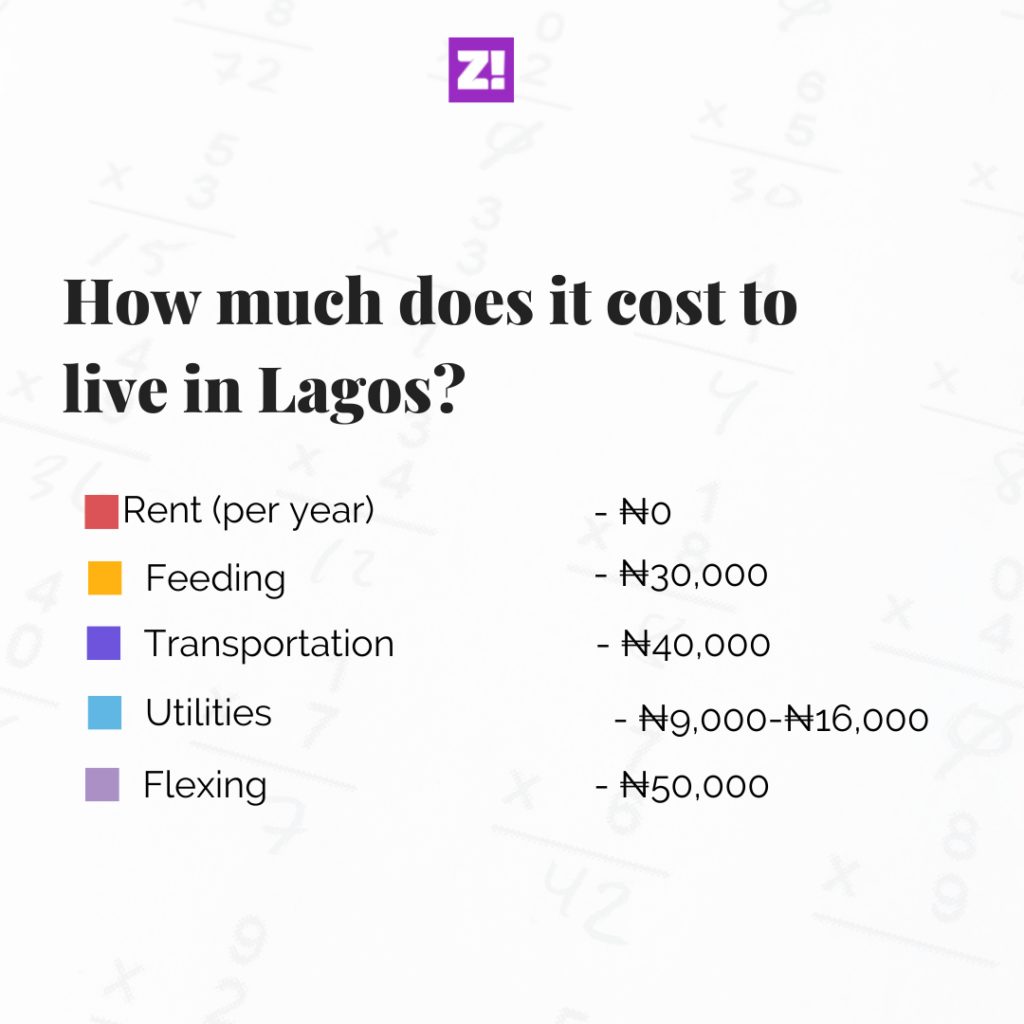
Feeding: ₦30k. I live with my parents and my feeding budget would have been nothing if I don’t eat out. I go to the office three times a week and I spend about ₦1k on lunch. Also, I spend ₦5k on Tacos every other Tuesday.
Accommodation: I don’t pay rent. My parents live in a 3-bedroom apartment on the Island. I think a 3-bedroom apartment in the area costs about ₦2.2m.
Transportation: ₦40k. I have a car and my dad gives me ₦10k every week for fuel. I don’t go out unless it’s a work thing so that does it for me. However, there are times I spend an additional ₦2k-₦4k on fuel.
Utilities: I don’t pay the power bill. Occasionally, I offer to buy diesel for the generator and this is between ₦9k and ₦16k. However, this is far and in-between and I don’t consider it a major expense.
Flex: I don’t have a flex budget. Anything I don’t save goes into this. But I’ll put the figure at ₦50k. The money mostly goes into buying my skincare products and investing in my wardrobe.
Savings: I save ₦40k from my salary and ₦40k from what I get from my parents. I still think I’m living above my means though.
2. Ronke, 27
“Lagos is all hype.It’s like everyone is surviving but not thriving. I’m praying for a breakthrough that will up my lifestyle and an opportunity to change location. “
Occupation: Teacher
Monthly income: ₦70k
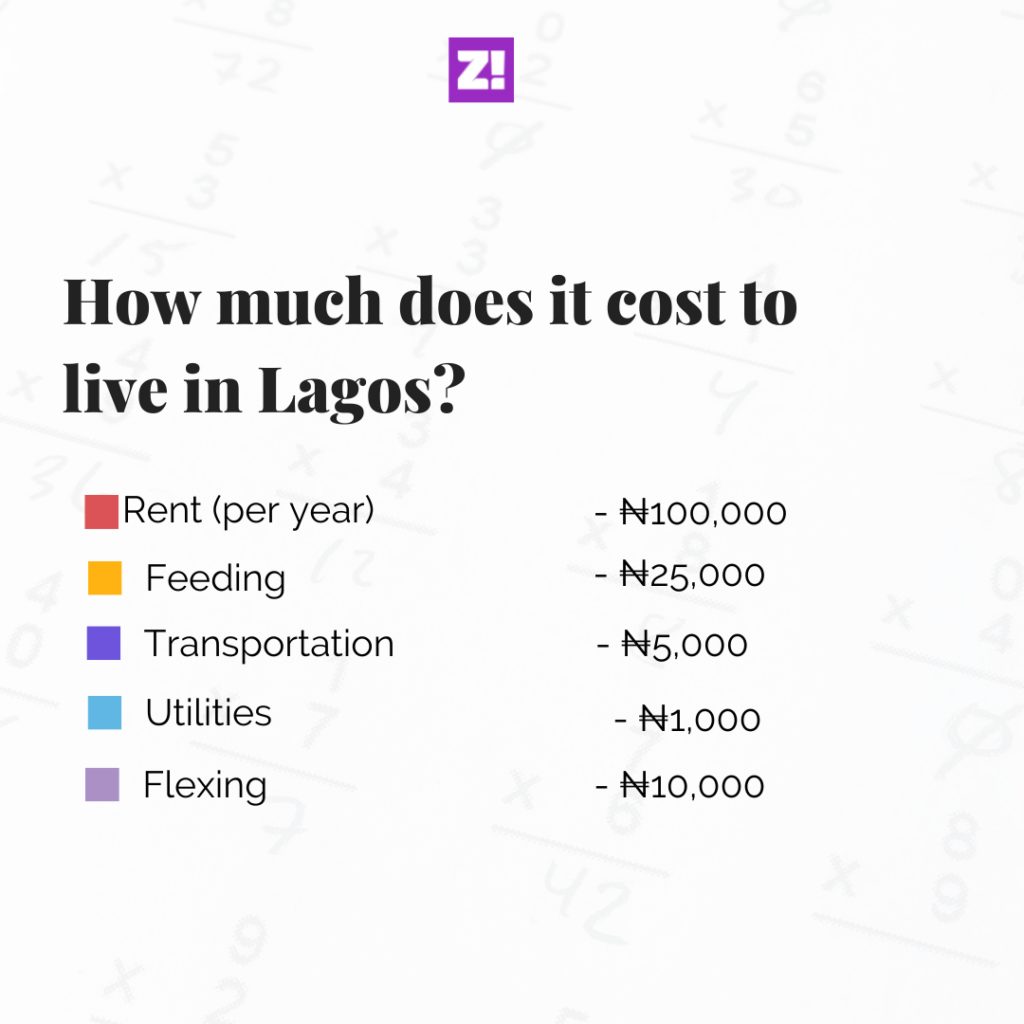
Feeding: ₦25k. I cook all the food I eat and take lunch to work. I don’t eat out at all and I don’t spend a lot of money on groceries because I don’t eat a lot.
Accommodation: ₦100k for a room self-contained apartment in Berger. The average cost of self-contained apartments where I live is between ₦150k and ₦200k.
Transportation: ₦5k. I live very close to work and I rarely go out.
Utilities: My neighbours and I split the power bill with my neighbours, and my share is ₦1k. I don’t spend money on laundry — I wash my clothes myself.
Flex: I set aside ₦10k every month to buy something nice for myself. The bills are rarely on me when I hang out with my male friends because they take care of it.
3. Keji, 26
“I’m not exactly happy living in Lagos. This place is not good for my health and personality. I’m here because I don’t have another choice. The crime rate has also increased, which means I’m not safe. Going out requires a lot of planning to evade traffic and crime hotspots.”
Occupation: Graphics Designer and Content Writer
Monthly Income: My 9-5 pays me ₦132k. Side gigs bring in between 0-₦100k
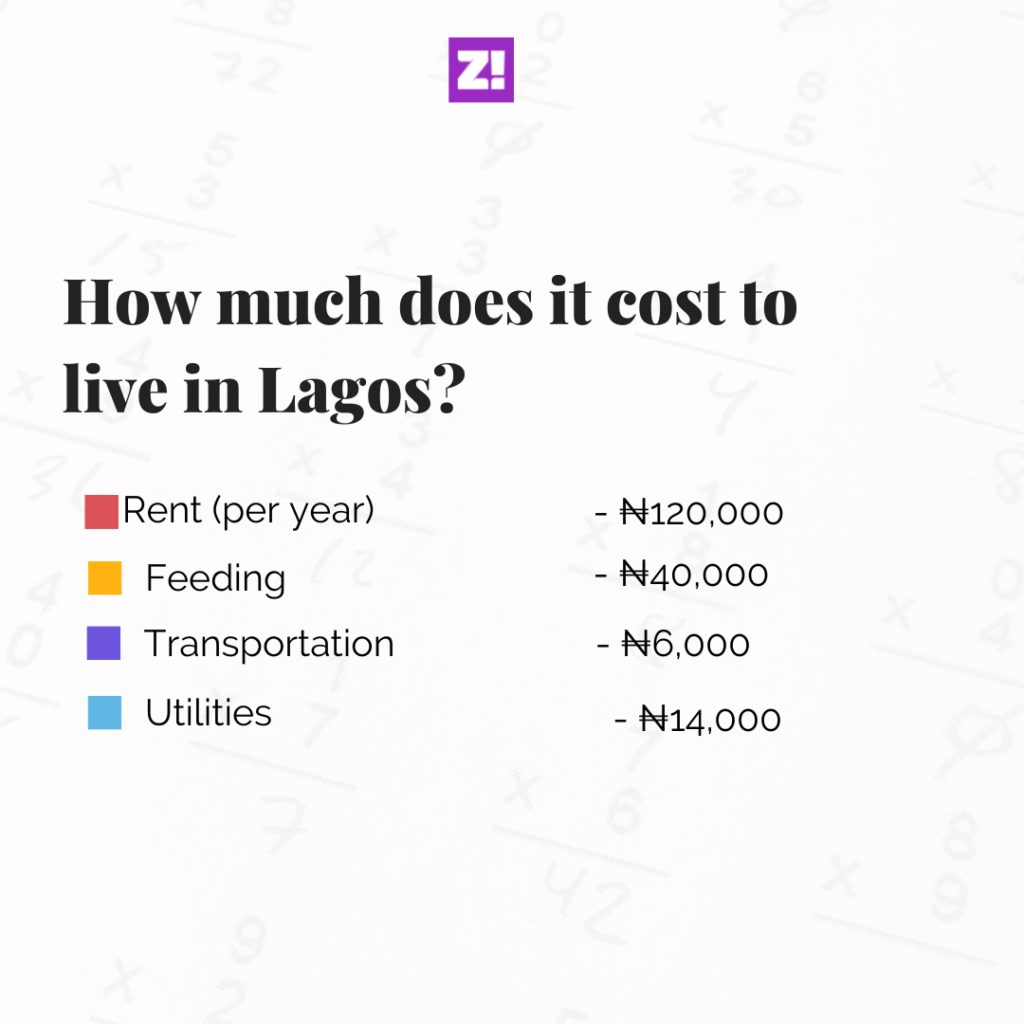
Feeding: ₦40k. My younger siblings live with me and we cook a lot. However, I’m looking at ways to cut the feeding budget because there’s an increase in the price of food every time I visit the market.
Accommodation: ₦120k for a studio apartment in Alimosho LGA. I don’t consider rent a monthly expense because my 13th-month salary can take care of it. My landlord has been moving mad lately and has stopped maintaining the property. I may have to move out soon.
The average cost of studio apartments in the area is between ₦150k – ₦300k depending on the quality of the apartment.
Transportation: ₦6k. I go to work once in a week, so I don’t spend a lot on transport. I rarely go anywhere else. For the occasional outings, I rely on Bolt and Uber rides.
Utilities: ₦14k. Power is relatively stable where I live so I don’t use my generator often. I think the power bill is reasonable.
Flex: I don’t have a budget for this. If I feel like going out, I consider the impact it will have on my finances for the week or month before I make a decision.
Savings: Between ₦50k and ₦90k. It depends on how much I earn that month.
4. Dammy, 23
“There’s no such thing as too much money in Lagos. Just cut your coat according to your size.”
Occupation: Designer
Monthly income: ₦300k+
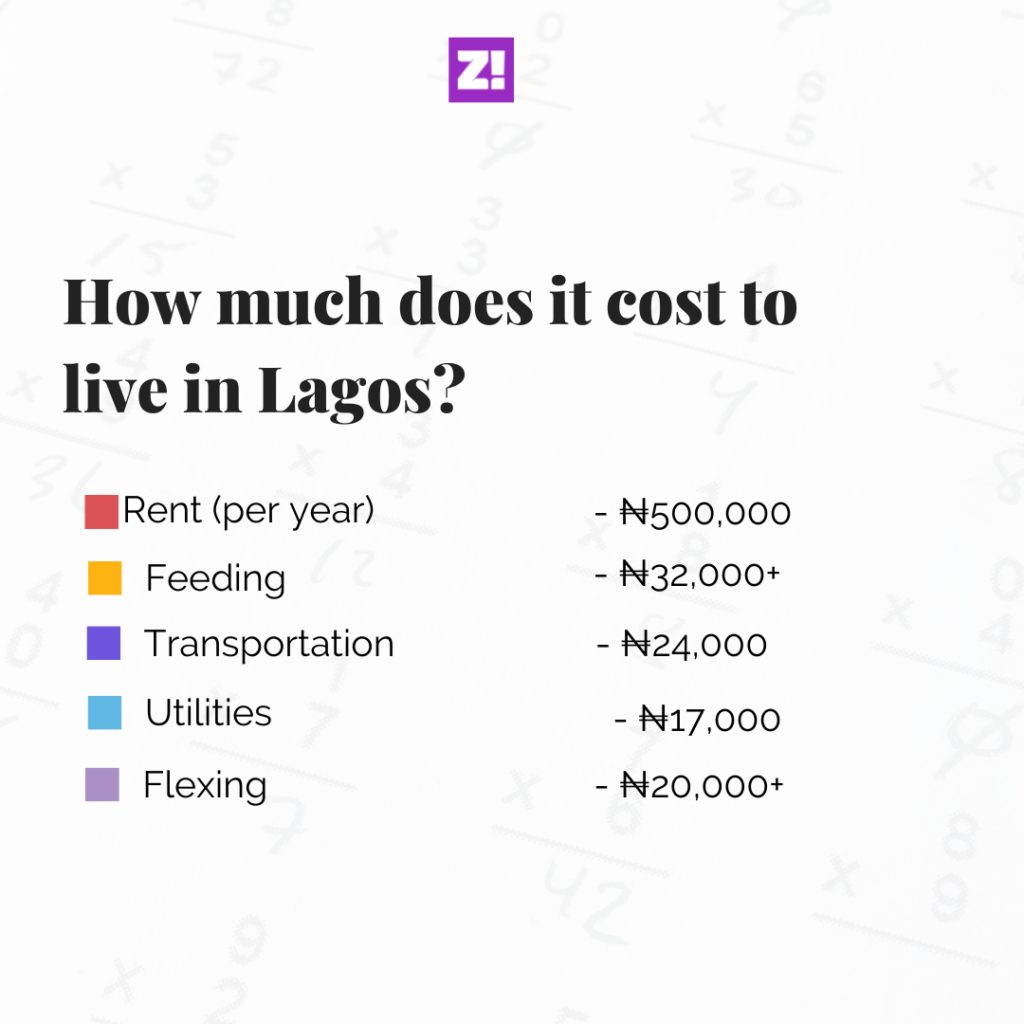
Feeding: >₦32k. On average, I spend ₦6k on groceries and other foodstuffs every week. On days I order food, I spend about ₦3500 per meal.
Accommodation: ₦500k. I have only had my place for less than a year. It’s a 2-bedroom apartment I share with a flatmate.
Transportation: ₦24k. I don’t have a car, so I use Bolt and Uber to move around. I spend an average of ₦6k per week on transport.
Utilities: ₦17k. Light and cleaning expenses are about ₦N12k monthly. I spend about ₦5k on laundry every month.
Flex: I don’t particularly have a budget for this. I put aside ₦10k every month for books though. I don’t have a budget when I go out but I can spend up to ₦10k or more on one occasion.
5. Olufunmi, 25
Occupation: Software Tester
Monthly income: ₦130k
“Living in Lagos is about survival. My quality of life is 4/10.”
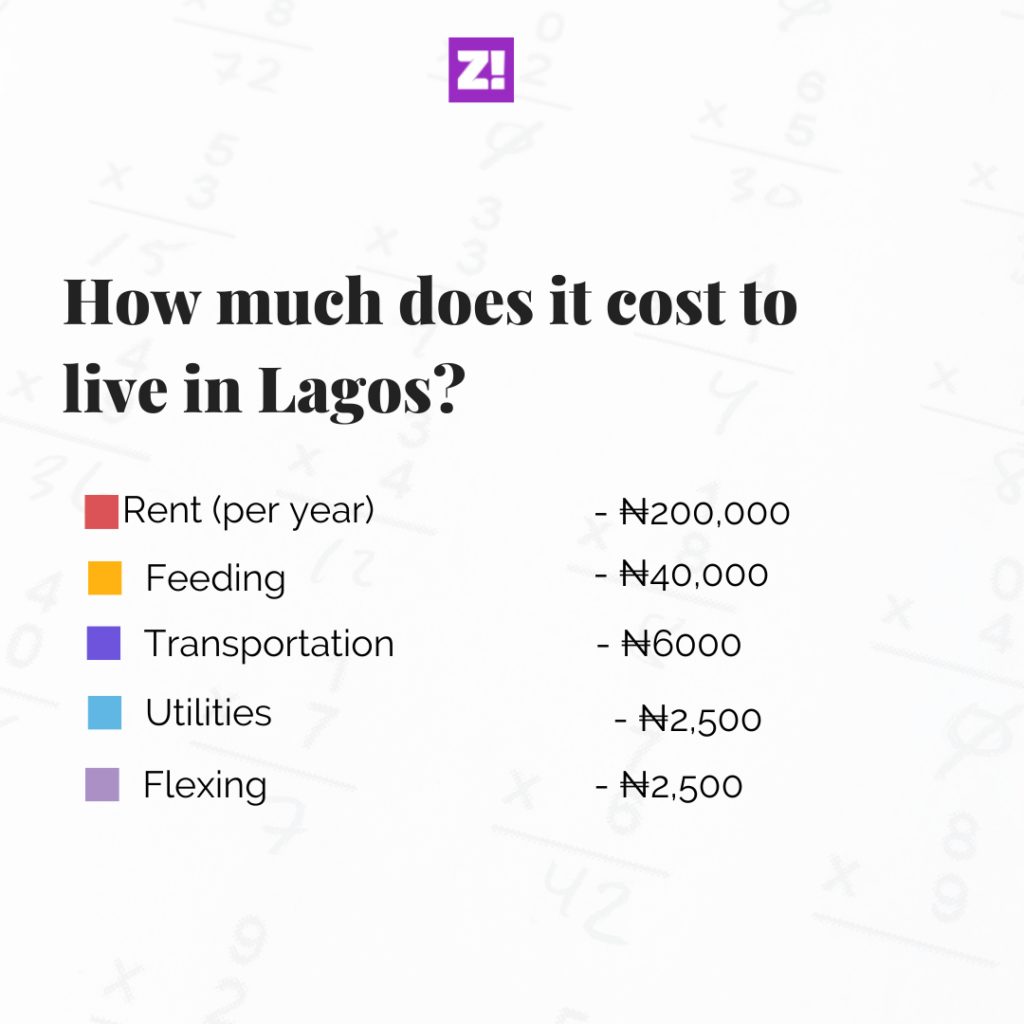
Accommodation: ₦200k. I live in a very tiny self-contained room in Yaba. The bathroom is ensuite but the kitchen is not, and I share it with three other neighbours. Now my landlady wants to increase the rent to ₦250k. I’ve managed to convince her not to increase the rent this year but now, I have to fix the roof of my apartment myself. That will cost ₦25k
Feeding: ₦40k. I buy food in bulk at the beginning of the month. My basic foodstuff runs into ₦25k. The other groceries cost ₦15k. However, the price of food has increased. A litre of vegetable oil has jumped from ₦700 to ₦1700. A crate of eggs is now ₦1500 from ₦850.
Transportation: >₦6k. I only go out for work and church. I spend an average of ₦300 on my daily commute. My church is in Ikeja and I spend about ₦1k on a round trip when I take public transport. On days when I want to flex, I order a bolt ride — a trip is about ₦1300.
Utilities: ₦2500. My power bill is ₦2k and waste management is ₦500.
Flexing: The only thing I flex on is my GoTV subscription and it costs ₦2500. I don’t go out.
Savings: I try to save ₦60k a month to make rent. When that’s settled, I use what I have left to change my daughter’s wardrobe and splurge on things we’ve both wanted for some time.
6. Oluwadamilola, 21
“Living in Lagos is not easy. It’s the survival of the richest. I constantly have to remind myself that I’m just 21. While the quality of my life is good, I think it can be better.”
Occupation: Call centre representative (NYSC)
Monthly income: ₦58k. 9-5: ₦25k. Allawee: 3₦3k
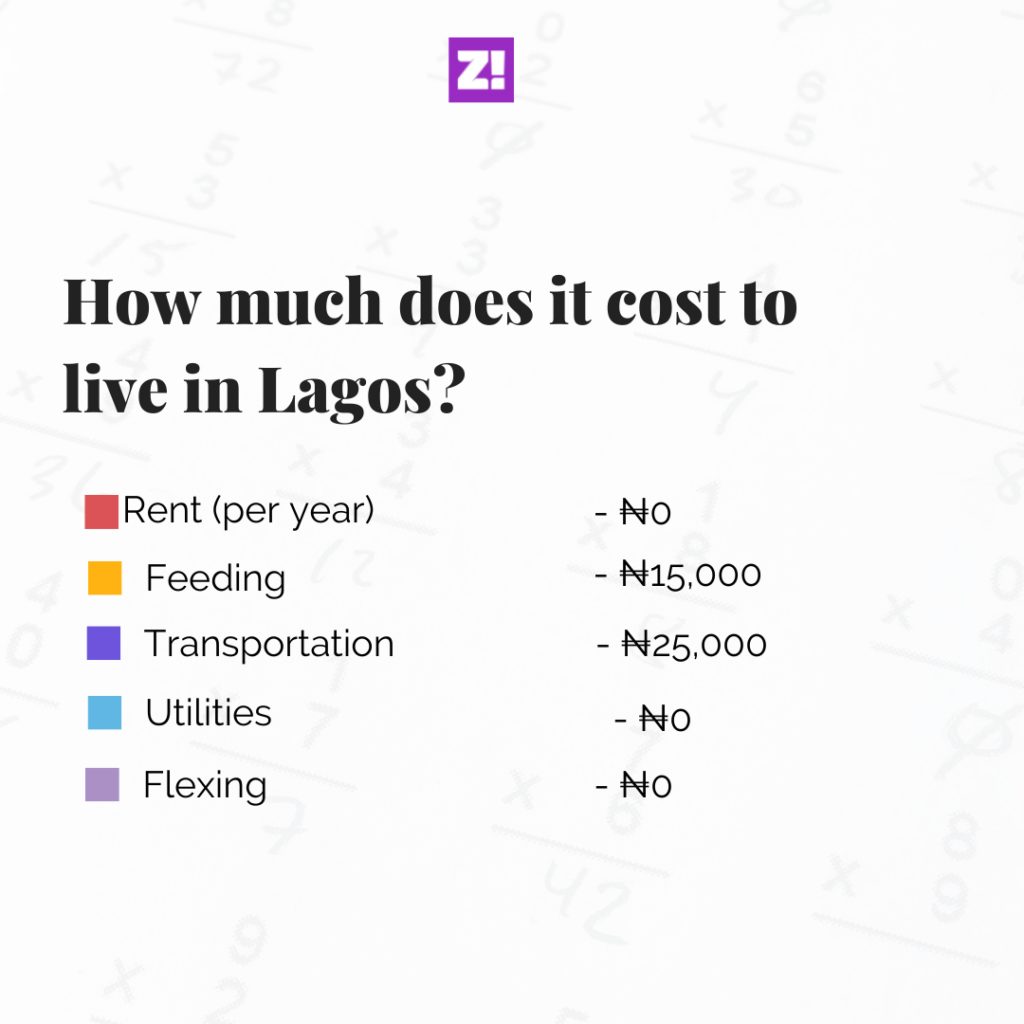
Feeding: ₦15k. I live with my parents and they take care of that. But on days I don’t eat at home, I buy food and this costs between ₦500 and ₦1000 per meal. My favourite places to go to are the mama-put restaurants and chicken republic.
Accommodation: Haha, I live with my folk in a 4-bedroom apartment at Ogba. The average cost of rent for similar apartments in my estates ranges from ₦1.3m to ₦1.5.
If I was living alone, I imagine I’d be somewhere at Yaba and paying ₦300k for a studio apartment.
Transportation: ₦25k. I rely on the public buses on most days and spend between ₦700 and ₦800 daily.
Utilities: I don’t worry about those thanks to my parents.
Flex: I don’t have a budget anymore. I haven’t gone out in about three months because I can’t afford it.
Savings: I have a friend abroad who sends me ₦20k every month. That goes straight to my savings.
Every week, Zikoko seeks to understand how people move the Naira in and out of their lives. Some stories will be struggle-ish, others will be bougie. All the time, it’ll be revealing.
This week’s Naira Life is brought to you by QuickCredit. With QuickCredit, you not only get the funds you need instantly, but you also get to pay back at the lowest interest rate in Nigeria.
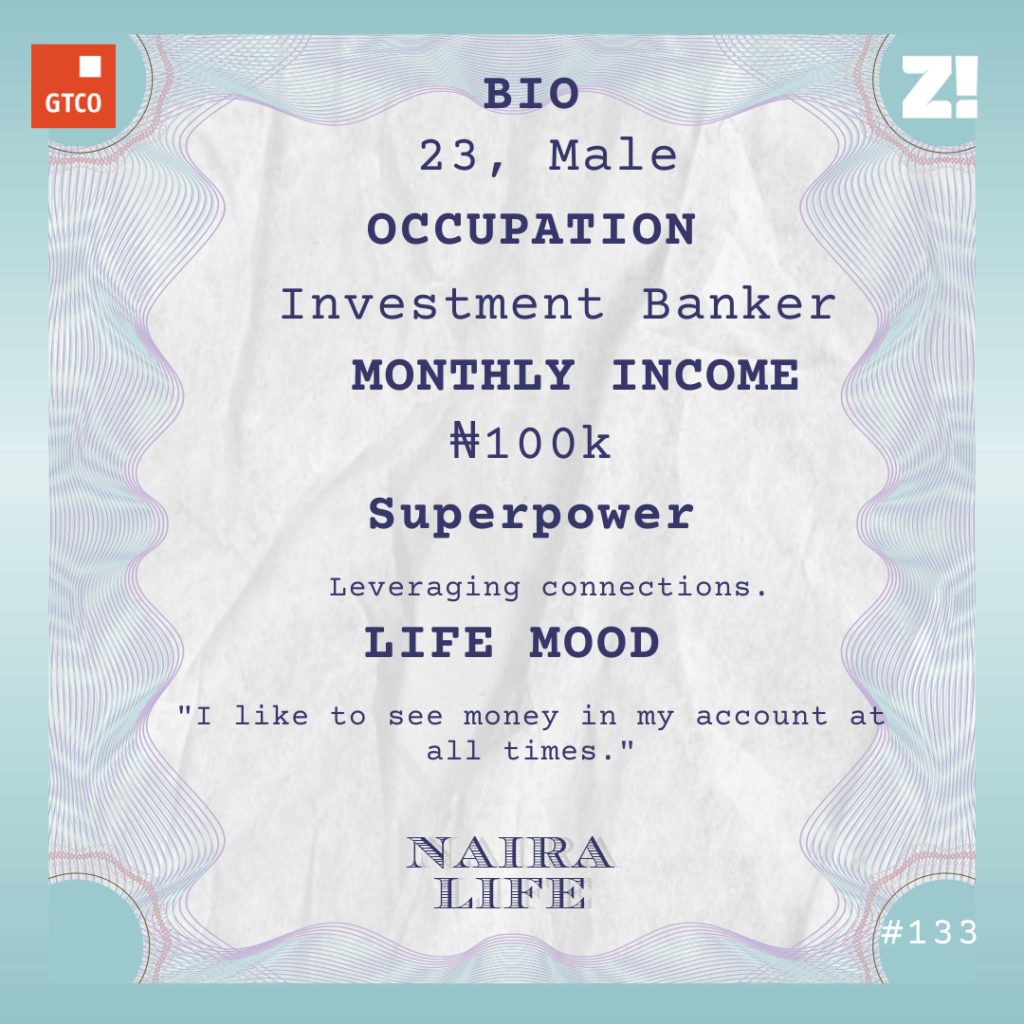
This 23-year-old has an investment banking job and a couple of side hustles, but that’s not the most interesting thing about him. It’s how he makes much more money from his side businesses than he does at his 9-5, and how leveraging his privilege and connections got him there.
What’s your oldest memory of money?
I can’t think of a specific memory but growing up, my cousins and I danced for my uncles and aunts at weddings and other family events, and they sprayed us money. I liked balloons, and I understood that I needed money to buy balloons. I had to dance to get the money. It was that simple.
Haha. That makes sense. Can you tell me what growing up was like, financially?
My dad works in financial services and is a senior employee at a company he has worked at for decades. My mum did and still does a lot of business. I grew up comfortable although I didn’t understand how well the family was doing until I was older. A part of it was because I was too young to understand how money works. Also, I was exposed to a lot of kids who came from wealthier families, and that skewed my perception of money. At some point, I may have developed a bit of an inferiority complex.
For context: I went to a private secondary school and the kids there could spend $500 on an item when they go on vacation without blinking. There was no way my parents would sign off on such purchases.
However, once I started to get a wider perspective, I understood that my family was indeed doing well.
When did you come to this realisation?
That would be around 2014. I was 15 and about to leave Nigeria for uni. My dad had planned for me and my sister’s education and had a university fund for us. I had to go for my A-Levels first and I decided on a private college in Canada. The tuition was C$50k and my dad told me he couldn’t afford it at the time. Subsequently, I got a partial scholarship at the college and my dad still paid about C$30k. That was a lot of money, but he made it happen. Later that year, I moved to Canada.
Lit.
At first, I was living on a C$100 allowance every month, but my dad always ended up sending more money before the month ended. When he realised that it was more expensive sending smaller sums of money to me, he started sending C$2k at a time. Now, it wasn’t a monthly thing. The money was supposed to last me for a few months before I could request more. On average, C$2k lasted me for three to four months.
I finished my A-Levels in March 2016 and got into a university in the US to study Economics. I moved there in May 2016
How did it go in the US?
Nigeria was in a recession in 2016, so I knew that my dad must have been stressed having huge expenses in dollars. He was sending $200 every month, and I was determined to make do with it.
In my first year, I lived in school housing and was on a meal plan which had been paid for. I wasn’t saving money or working, so the $200 was everything I lived on. I finally picked up a job at a call centre on campus in my second year but I wasn’t completely committed to it. Thankfully, the minimum wage was $14 in the state I lived in. On average, I worked 20 hours in a month, which brought in an extra $200-$300. At that point, I’d say that at least half of my income went into feeding. I managed to save some $100 a month if I didn’t party a lot in the month, but those were far and between. I partied a lot when I was in uni.
Haha.
2018 was when I became intentional about making money.
How?
I saw what was happening in the financial market in Nigeria, and I was like “Wait, this could be a gold mine.” Here’s what happened: the CBN decided that they were going to start a “promo” and would be giving between 13% and 15% returns on short-term government securities. I thought that was a sweet deal and went in.
With ₦100k, I started buying and trading treasury bills. The returns weren’t a lot but I started to understand how money compounds over time. I did the math and the ₦100k would compound into millions of naira in 30 years, and I wouldn’t even have turned 50 years by that time.
However, in the short term. I realised that to scale, I needed to increase my capital. The way I saw it, it could happen in two ways: I could work more hours to earn more money or I could convince people to let me manage their money for them and charge them a small commission. I went with the second option.
Mad. Tell me how it went.
I started with my dad. I pitched the idea to him and managed to get ₦1m from him. I bought a few equities and invested most of the money in treasury bills, and it did very well. I made about ₦200k in fees I charged him.
I managed to convince a couple of other people in my family to help me invest for them and I got small sums of money here and there. I put whatever money I made from them into my portfolio and by the end of the year, I had about ₦500k in it.
That’s interesting.
I had been coming to Nigeria every summer since my first year in uni to intern at investment companies, so I was plugged into the climate. This came in handy in 2020 when COVID hit. Prices of assets all around the world dropped like crazy. I reacted quickly and sold as many treasury bills as I could and started putting money in the Nigerian stock market, which was also pretty risky at that point. But when I was returning to Nigeria in August 2020, my investment portfolio was worth about ₦2m and I had another ₦250k in cash.
You want to know why I returned to Nigeria, don’t you?
Now that you mention it, please.
I’d been thinking about it since my second year at uni. For the most part, I got my summer internships in Nigeria through my dad’s connection. My privilege became clearer and I thought it wouldn’t make sense not to take advantage of it.
Also, something happened when I was in the US that solidified this decision.
What was it?
I tried to get into an internship program at a big investment bank. During one of the interview stages, I met a girl I knew from school and her dad was one of the managing directors at the bank. We were in the interview room when one of the analysts came and was like “This is so and so daughter.” They took her from the interview room and gave her a tour of the facility. It was very clear that she was going to get the internship. I felt like I had this in Nigeria, so it made perfect sense to return and explore the opportunities I have here.
That makes sense.
I knew getting a job here wouldn’t be a problem. I had an understanding with one of the investment banks I had worked with to return to work for them when I graduated. I reached out to them, took a few tests, and that was sorted. In October 2020, I resumed work. My salary was ₦100k.
That didn’t make all the difference though. What I did between August and October did.
What did you do?
A couple of my old friends had returned to Nigeria before I did, so they had their feet on the ground already. When I got back, one of the first things I did was reconnect with them. I realised how much money they were spending when we went out.
We could go to the club and by the end of the night, they would have spent ₦1m on drinks. They split the bill but each person chipped in at least ₦150k. For the first few times we went out together, they didn’t ask me to chip in but I knew it was only a matter of time. The first time I dropped ₦50k, I knew my cash savings couldn’t possibly sustain that kind of lifestyle. I figured that they must be making a lot of money if they could afford to spend like that, which was interesting because they weren’t working 9-5 jobs — they had businesses.
What kind of businesses?
They did everything they thought could work. Eventually, I spoke to a couple of my friends and asked about businesses I could do with little capital. They gave me a couple of ideas but the most viable one was pushing large volumes of commodities. In my case, it was finding a rice supplier who needed to sell their trucks of rice and a buyer who was willing to buy.
A truck takes 600 bags of rice. Now, if the supplier sells a bag for ₦24500, I could add my markup, sell a bag for ₦25,500 and make a profit of ₦600k. The good part was that I didn’t need capital to start — I was just a middleman. The hard part was finding a buyer, but I committed to it.
The easiest way to find the right buyer was by leveraging my contacts. I asked everyone in my family and someone linked me to another person who knew the right person to call. Ultimately, it was about my connections. Between August and December 2020, I was able to sell three trucks of rice, and I made about ₦1.8m from these deals.
Sweet!
This was also the period my perspective started to shift away from my job. It would have taken me 18 months to make ₦1.8m at my day job. Naturally, I started looking out for more business opportunities. The next one happened in January 2021.
I’m listening.
In December 2020, I met someone looking to sell two plots of land in an upscale neighbourhood on Lagos Island valued at ₦350m. I told them that for a commission, I would ask around and see if I could find a buyer, and they agreed to it. I was pretty confident about it because a few of my friends’ families are into real estate development and are constantly on the lookout for properties. Within a week, we found a buyer. Less than a month later, the deal closed and they bought the land for about ₦340m. I got the biggest lumpsum amount ever in commissions.
How much?
₦20m. It was a complete dream. I mean, it was the kind of thing I envisioned would happen for me in Nigeria — being able to use my contacts for opportunities like that but I had no idea how it would materialise. Then this happened.
I was just looking at my phone over and over again, trying to take it all in. Once I got over the excitement, I knew I wanted to keep grinding. Now that I had some cash, I could afford to join a few of my friends in one of the businesses they were so big on — importing cars.
These moves. Inject it!
I wanted to see how it would work out, so I dropped ₦1m the first time when the total cost of bringing the car in was ₦4m. My cut on that was ₦100k when the car arrived and we found a buyer for it. Afterwards, I started increasing the amount of money I had in the business.
What types of cars were you bringing in?
At first, it was the old 2008/2009 Lexus RX and Toyota cars. We have a car dealer in the US who finds these cars at auctions and ships them to us. On average, it cost ₦3m or ₦4m to bring one of such cars in and we typically added a 30% markup, but it’s not set in stone.
Later, we noticed an uptick in demand for higher-end cars, so our focus shifted to the Highlanders, the newer Lexus RX, and Mercedes C-300 cars. We could make a profit of about ₦2m each on these cars. It’s only been a couple of months but we are growing and expanding the business.
I put ₦18m in the last batch of cars we imported from the US. They should arrive soon, and I expect to make about ₦4m in profit, which I think is very fair. Fingers crossed on their arrival.
Fingers crossed. I’m curious about what your earnings look like now.
Well, I still make ₦100k from my day job. But I make anything from ₦3m-₦4m every quarter from importing cars. Usually, I re-invest whatever I make back into the business and only take money out once every quarter.
What about your investment portfolios, how much are they worth now?
Most of my money is tied up in physical businesses, mostly car importation. The total value should be about ₦30m now. My other major investment is primarily in the Nigerian stock market and my brokerage account has about ₦10m in it. Because my portfolio is liquid and I can take money out any time, I don’t feel the need to save a lot of money in Naira. I have less than ₦500k in cash at the moment.
I’m very focused on opportunity cost and returns. If I think that I can make more money from my portfolio in the period it would take to ship and sell a car, I will pull money out of the business and put it into the portfolio.
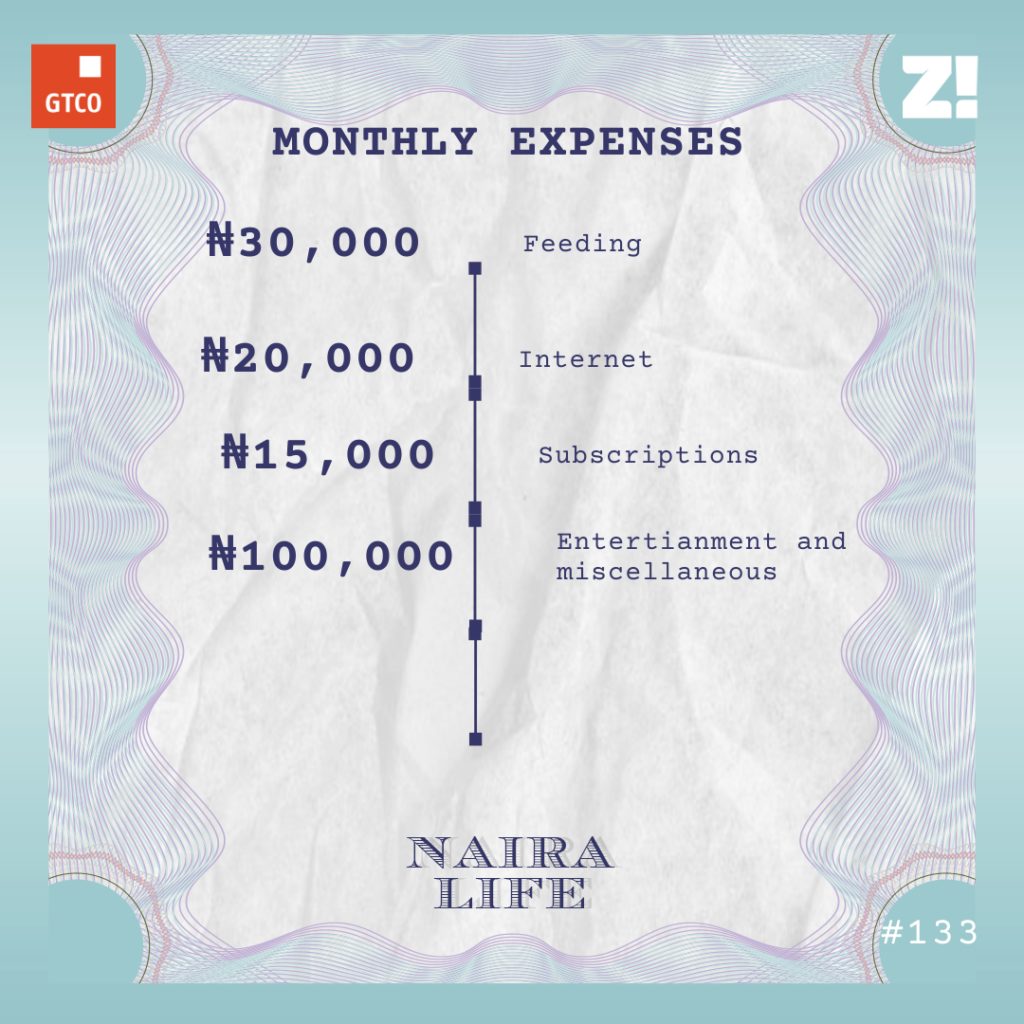
Interesting. Let’s break down your monthly running costs, please.
How much do you think you should be earning now?
At least ₦600k at my 9-5. I’m underpaid at my day job, and that’s mostly because I haven’t done my NYSC yet. I love my job but I’m starting to value my time more than I value the work and the experience. The original plan was to work in the capital market for five years, then branch out on my own to start a business in fund management. Now, I’m not even interested in managing money for other people. I’m all about generating money from multiple businesses and pumping it into my investment portfolio. That’s always been the end game.
Nice. How have all your experiences shaped your perspective about money?
Working in the capital market where my job is to bring people who need money and the people who have it together has shown me that the best way to make money is to have money. It gets exponentially easier to grow wealth when you have some of it.
Also, the people around me have always been wealthy, and the more I see the way they spend and make money, the more confident I am to take risks.
Do you think there’s a part of your finances you could be better at?
Ah, yes. My investments are not as diversified as I’d like them to be. Most of my money is currently tied up in the car importation business. If something goes wrong — like if a ship sinks — it will wipe out most of my net worth.
I could be better with budgeting as well. Sometimes I need to make a purchase but can’t because I don’t have liquid cash around. For the most part, this wouldn’t happen if I’d budgeted better.
Speaking of purchases, is there anything you want right now but can’t afford?
It’s not a pressing need but I’d like a new car. I only started thinking about it when our focus shifted to higher-end cars. A Mercedes GLE-63 will be great but I need around ₦20m for it. As much as I want it, I can’t spend that much money on a car right now. My net worth has to be at least 10x what it is now before I consider it.
What about a purchase that significantly improved the quality of your life?
I paid for a one-year subscription to an online service that provides data in financial markets across Africa. It cost only $300, which was such a good deal and since I paid for it, it’s been way easier to do research. The quality of my life has improved because of it.
On a scale of 1-10, how would you rate your financial happiness?
7. I’m not doing badly for a 23-year-old, and I acknowledge that I had a lot of help to get here. I know the role my privilege has played, and I’m proud of the ways I have leveraged it. My salary from my day job is only enough for my baseline expenses, and I don’t know where I’d be if I didn’t have people to help me get into these side businesses. I’m definitely in a better place than I was a year ago. However, there’s a lot of things I want but can’t afford yet but I’m taking it one day at a time.
Great! You got to the end of this article. Know what’s even better? You can get QuickCredit faster than the time it took you to read this article. With Quickcredit, GTBank customers can get N2million in less than 2 minutes and pay back over 12 months at an interest rate of 1.5%. No forms. No collateral. No hidden charges. Get Your Quick Credit on GTWorld
Do you ever wonder if the people you know actually respect you? Forget all the signs to look out for to figure this out, this quiz will do the hard work for you. Just answer a few questions and leave the rest to us.
Let’s begin.
From recent conversations happening on social media, it seems like there are two warring factions discussing the culture of side gigs. One school of thought thinks Nigerians are within their rights to look for side jobs while the second argues that it’s not fair on employers as they bear the brunt of this.
It makes sense that Nigerians work multiple jobs concurrently. Living on a salary is becoming increasingly difficult, no thanks to rising inflation and plummeting purchasing power. We decided to speak to a couple of Nigerians who have day jobs and side gigs and ask them about how they balance the demands of both jobs.
1. Ola, 25
My role at my day job has increased in the past few months but my salary hasn’t. I make extra money from side gigs, but the existence of my day job is even threatening this. There are lots of demands from my day job that it’s hard to work on the side projects during the week. So I end up using my weekends to work on them. I’m actually behind the deadline for one of my side job assignments right now.
Now, my 9-5 pays in Naira while my side gigs pay in Dollars. It would make sense to quit my day job and focus on the dollar gigs but I can’t. I feel like I owe my boss. Asides from that, there’s nothing keeping me there anymore because I’m doing more than my job description for little money.
2. Lanre, 27
Every great developer I know runs multiple gigs and I’ve been working as a software developer for about four years now. When I started out, my mentor at my workplace at the time had a bunch of gigs coming his way and would outsource some of them to me. This was my introduction to side gigs.
When I got my first side gig at a freelance company that hired African developers, It was difficult to combine it with my day job — which to be honest, was more of a 9 a.m. to 12 a.m arrangement. But the motivation was to make more money and at the same time, become a better developer. I made it work, but my weekends and any free time I had suffered for it.
More recently, I’ve worked two full-time jobs concurrently — one in Nigeria and the other in Canada. Every day, I’d wake up by 4 a.m. to finish hard tasks before 9 a.m. and work on the simpler tasks and attend meetings during the day. Whatever I couldn’t do during the week, I did on weekends. I burned out eventually, so I dropped one.
I’ve never had more than two running gigs at a time. The one time I had three, I failed to deliver. Also, I place priority on the full-time job over the side job, which is easy to do because side gigs have more flexible deadlines. Personally, I don’t think having a day job and a side job is a problem if the employee delivers. Besides, there’s not much that employers can do to prevent this. The best talents will always attract multiple opportunities.
3. Kadet
A lot of tech roles these days are remote. The good thing about this is that people who work in tech can easily have a full-time job, a side contract and a few personal projects. Nigerian employers’ argument against this is that there’s no way anyone could possibly deliver when they work two to three jobs at the same time. This is not entirely accurate.
I currently work two jobs. I was going to get the third one but I knew I couldn’t keep up, so I turned the offer down. Before these jobs, I worked at a Nigerian company and man, they almost killed me. It was only one job, but it felt like five. I couldn’t take a break without thinking, “Omo, I still have tasks to do.” I was writing code for 40 hours a week and this doesn’t include the hours I spend on meetings and other tasks. I gave everything to these guys but the only thing that kept coming were complaints about the quality of my work. I was eventually fired because I asked for a one-week break. Why did I ask for time off? My mental health was almost at a zero.
My next job was at a European startup. A few weeks later, I got another offer and I took it. I currently work both jobs and — I’m not trying to brag — I’m a star employee at both.
What’s more? My employers know that I have two jobs but they don’t care. The only thing that matters is that I do my job properly and deliver on time. I’m happy, earn well at both companies — better than anything a Nigerian company has offered me — and have enough time to work on personal side projects if I want to and watch Anime.
I should also add that working multiple jobs isn’t fun. I’m just trying to survive. If anything, I’d love to sleep and watch movies as much as I can, but here we are.
4. Japheth
I’m a student, and time is a scarce resource for me. I have a job that pays me around 300k per month. It helps with some of the bills, including school expenses but what is left is never enough to take care of several other things. So I work side gigs to augment my income and these bring about 700k every two months.
Typically, my days start at 5:30 a.m. or 6 a.m. and run late into the night. It’s very exhausting but at the end of the day, it’s okay. I don’t believe that it’s impossible or wrong to run multiple jobs at the same time. The only important thing is working within your limit and saying no to side gigs that aren’t worth it. I lost sight of this and almost had a mental breakdown during lockdown last year. Things were tight and I had bills to pay. I took up four low-paying side gigs out of desperation and it didn’t work out well. Eventually, I had to default on one, referred one to a friend and finished working on the remaining two.
5. Mayowa, 22
I work as a culture reporter and run a merch business on the side. My 9-5 takes prominence, so I don’t have a lot of contracts coming in from my side business. This also has something to do with the fact that I’m not much of a business-oriented person. However, the contracts do come in and when they do, I have to make market runs during the day and source materials. Ordinarily, it should affect my tasks at my day job but I plan ahead and make sure that the tasks I have at hand while I’m out are things I can do on my phone. I think I balance both pretty well. Maybe it would be different if I had more contracts coming in. Or maybe it wouldn’t — I can always outsource tasks related to my side business.
Every week, Zikoko seeks to understand how people move the Naira in and out of their lives. Some stories will be struggle-ish, others will be bougie. All the time, it’ll be revealing.
This week’s Naira Life is brought to you by QuickCredit. With QuickCredit, you not only get the funds you need instantly, but you also get to pay back at the lowest interest rate in Nigeria.
What’s your oldest memory of money?
When I was eight years old, I found a big bar of soap at home and dissolved it in water. The younger kids in the compound were fascinated by the bubbles it formed, and they wanted it. I told them they had to pay ₦5 for a handful. They all went to their apartments and brought the money. However, their mums found out and confronted me. I had to return the money.
I liked how I felt when I thought I was going to make some money, and I wanted to feel that way again. I told my mum, and she said I could sell something tangible and she would help me get it started. During the next holiday, she helped me set up my first business — selling homemade zobo drinks. A cup went for ₦10, and I sold it in a neighbour’s shop. I don’t remember how much I made at the end of the holiday period, but I gave everything to my mum.
I sold a couple more stuff when I was in secondary school. My mum owns a primary school and during the summer lessons, I’d make snacks and sell them to her students.
However, I got my first real job at my mum’s school after I finished secondary school in 2008.
Tell me about it.
I wrote an application letter to my mum, asking to work as a staff, and she agreed to bring me on as a teaching assistant. My salary was ₦6k and I stayed for two months. Then I got into a pre-university programme in a state in the north-central and moved in with a family friend living in the state. My parents put me on a ₦10k monthly allowance.
The programme lasted for seven months, and I returned to my parents after that. When I didn’t get into uni that year, I returned to working at my mum’s school. My salary was now ₦10k. On the side, I was making and supplying snacks to the school and some of my mum’s friends and making a monthly profit of ₦5k and ₦8k.
Baller.
Hehe. In 2010, I quit my job and went for a diploma programme in another university, which meant I had to go back to being on a ₦10k allowance. The family friend I lived with gave me an additional ₦5k every month.
A year later, I finally got an offer to study biochemistry at the university where I did my diploma. I moved out of the family friend’s home and into the hostel.
I renegotiated a new allowance with my parents, and they started sending me ₦10k every two weeks. This was what I was on until I finished university. When I settled into school, I looked for ways I could make extra money but that happened only once. I constantly had to figure out the best way to manage my allowance. Funny story. . .
Yes?
Sometime in 2012, a friend introduced me to a lady who was looking for students to help sell her magazines. A copy of the magazine sold for ₦300, but she said we could add a markup and keep the extra money. It sounded easy, so I signed up for it and I took some copies off her. I walked the length and breadth of the city and couldn’t sell one. As I was returning home, tired and frustrated, I met a group of people and one of them was like, “Fine girl, what are you doing out so late?” I told them that I was out selling magazines and hadn’t sold any all day. They asked for the price and for some reason, I said it was ₦5k. They took one magazine and paid.
Oh wow.
There’s more. I decided to make one last stop at a country club close to where I was. I approached two guys who were leaving and told them about the magazines. When they asked for the price, I told them it was ₦10k, and they also paid. They didn’t even take the magazine with them. On some level, I think they just felt some pity for me. Anyway, I made close to ₦15k that day.
Mad.
I didn’t do anything else for money until I left university in 2015.
NYSC was next?
I took a gap year before I went for NYSC. My parents had started a publishing company when I was in uni, and they needed someone to manage the place. I took it up since I was available, and I was put on a ₦30k salary. Also, I started selling hair products by the side and made about ₦20k in profit every month. I was saving my salary and living on what I made from the hair business.
Towards the end of 2016, I was mobilised for NYSC and went on to serve in the north. My Place of Primary Assignment (PPA) was a health centre, and they paid a monthly stipend of ₦5k. There was also the federal government ₦19,800 allowance. But I thought I could do better than that, so I started looking for a new job. I got a part-time job at a primary school where I taught two days a week, and they paid ₦7k. A few months later, I got a better paying offer at another school — ₦12k per month, but I had to go in every day. Not long after, I found another job in a spa as an attendant. This paid ₦15k.
Interesting. How did you juggle three jobs?
I had stopped going to my PPA because there was hardly any work to do. I worked at the school from morning until afternoon and resumed at the spa afterwards.
It worked for me, and I was able to save as much money as I could. When NYSC ended in 2017, I returned home with about ₦240k in savings.
Lit.
My parents still wanted me to work at their publishing company. My starting salary was ₦50k, but it was going to increase to ₦100k after my first six months. I agreed, but I didn’t spend up to six months there.
Why?
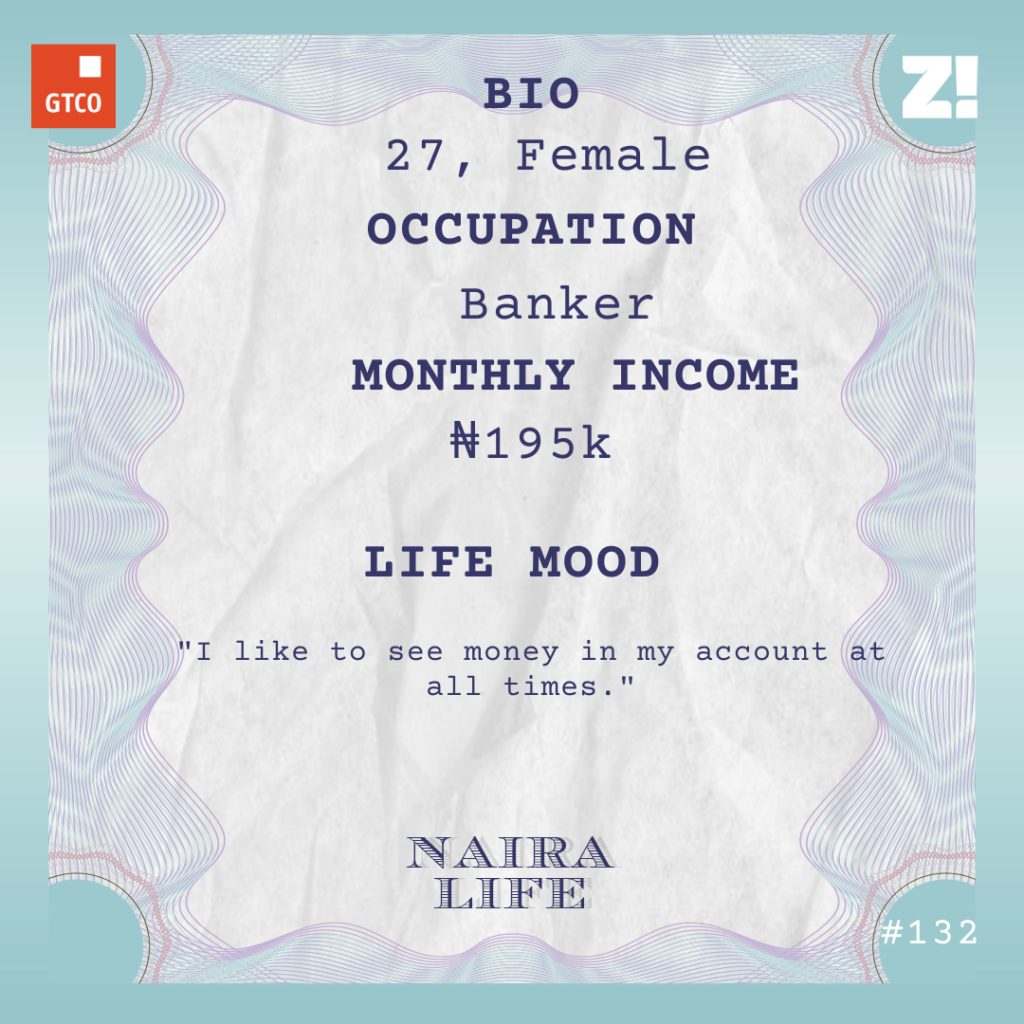
I got restless after five months and wanted to do something else. My parents weren’t happy with it because they thought I was abandoning the family business, but they respected my decision. I actively started looking for a job in FMCG companies and banks. I applied to a few places and landed some interviews. I joined a bank in 2018. In their training school, I was paid ₦30k. After training school, my salary increased to ₦80k.
A few months later, I realised that the money wasn’t a lot. But it was fair in comparison to what a lot of my friends were earning.
I was spending a lot on transportation too, and the best thing to do was move closer to my workplace. I found a mini-flat and the total package was ₦600k. I got ₦240k from a monthly contribution scheme I was a part of. My parents took care of the rest and I moved into the apartment.
What’s happened between then and now?
I was promoted for the first time in 2019 and my salary was bumped up to ₦100k. My standards of living remained the same, and I started saving ₦20k every month. In January 2020, I got another promotion and my salary increased to ₦195k. This meant I could save more, so I joined another contribution scheme with a few people and started putting ₦50k away every month. Three months after my promotion, the pandemic hit.
How did that affect you?
It didn’t affect me directly, but my parents felt the heat. Shortly before the lockdown started, they had invested heavily into publishing some new books, hoping to recoup their investment when schools opened, but that didn’t happen and they had salaries to pay.
My parents are proud people, and I knew they would never ask me for money even though they needed help. During the height of the pandemic when they were out of business, I sent about ₦300k home to them.
I don’t think my savings took a big hit because, at the end of the year, I had ₦1.2m in savings.
That’s lit.
Then I blew everything away.
What happened?
I got married and the wedding wiped out my savings.
Lmao. How much did your wedding cost?
About ₦4m. It’s weird it cost that much because it was a small wedding, and we invited only 100 guests. My parents were recovering from the effect of the pandemic and couldn’t do a lot. My husband’s family did what they had to do, but I had to chip in something too.
Fast forward to January 2021. I started the year with nothing. I tried to save more but realised that it was going to take some time before I recovered. So I did something different.
What was that?
I took a ₦700k small interest loan from work and I invested in a mutual fund, which yields anything between 7% and 14%. Now, you’d expect me to have more than ₦700k in my mutual funds account, but I have ₦500k in it. I have access to the account and can liquidate it at any time. This has happened a few times in the last couple of months.
I’m curious about how you approach savings and investments.
At the moment, I only have investments in mutual funds. I like to have emergency funds too, so I used to take ₦30k out of my salary and save somewhere. But I kept dipping into that because I needed to do something before my salary came in. Recently, I started another ₦50k a month contribution scheme with a few people, and that money will probably go into starting a new business. I’ve been thinking about starting one because I’m not making as much money as I’d like to.
How much do you think you should be earning now?
The number I have in mind is ₦400k, but it’s tricky. On one hand, I feel like I can’t ask for that much because I have only my BSc certificate. I have a couple of skills, but there’s no certification to back them up, and I work a job where certification is important.
What do you need to do to unlock your next level of income?
For starters, I need to upskill. I was going to start getting the certifications I needed a few weeks ago, but my laptop gave up on me. Can you believe it?
Also, I need to return to having a side business. Working in the banking industry has shown me that having one source of income can be dangerous. Last year, I saw people with families and responsibilities come into work in the morning and before the day ended, they lost their jobs. It was horrible. I’m sick and tired of my job and thinking strongly about returning to my family business. I feel like I will be better appreciated there, and it wouldn’t even affect my finances. My parents have agreed to pay me what I currently earn, and I’ll have more time to focus on starting and running my side business. However, it’s not an easy decision to make.
I get that. What part of your finances do you think you could be better at?
Making more money. I don’t have a bad savings habit, but I end up dipping into my savings because I’m not making enough. I could do better with following a strict budget, but the priority is to get my earnings up.
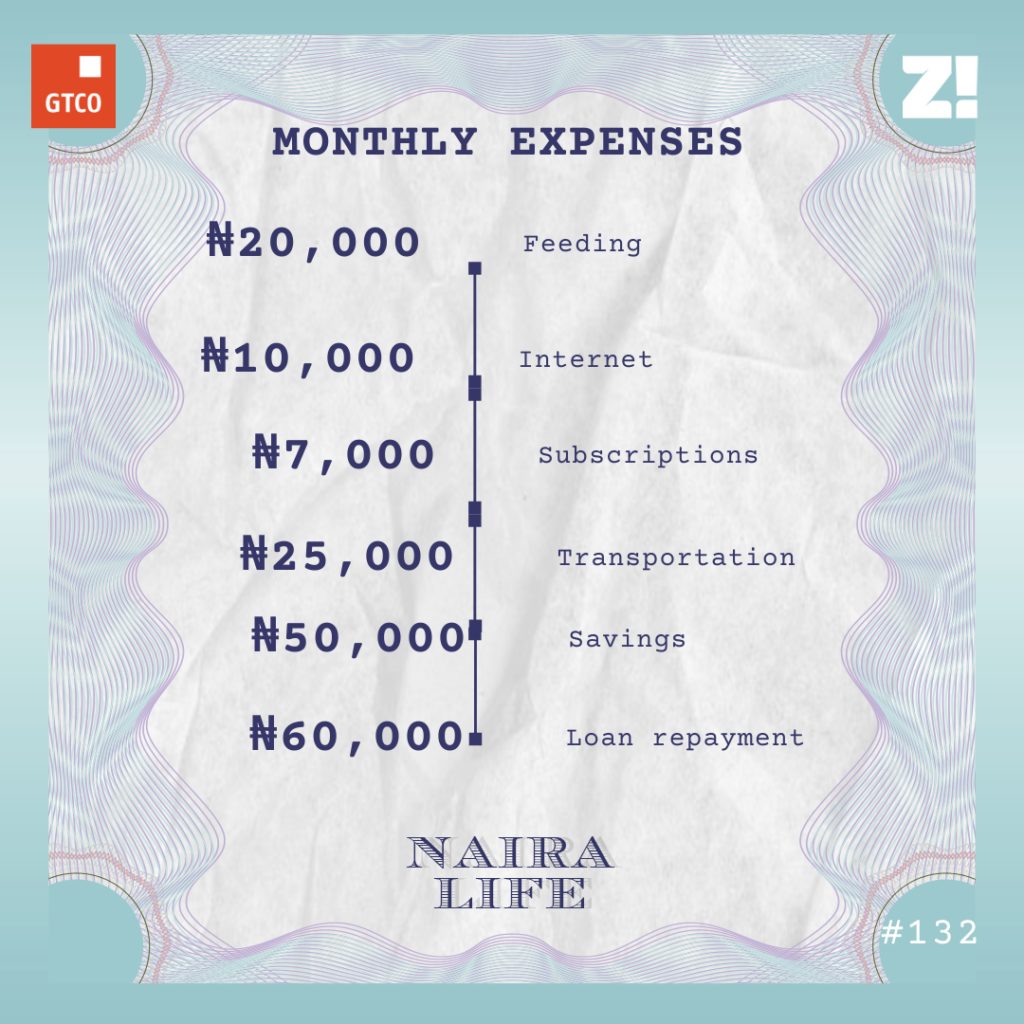
This feels like a good point to talk about your monthly running costs.
There’s not a lot left after all of this, so I’m mostly surviving on vibes. Thankfully, my husband comes through when I’m almost out of money and salary day is still some time away.
How have your experiences shaped your perspective about money?
As a kid, I didn’t have a reason to worry about money but now I think about it all the time. While money is not the most important thing in the world, it’s central to the quality of life you can afford. I like to see money in my account at all times because it’s security for me. I always want to know that I have something to fall back on if push comes to shove. It’s stressful, but it’s what it is.
I’m wondering if there’s anything you want right now but can’t afford?
I’d love to get a car. Public transportation in this country is killing me. But I imagine that I’d need about ₦3m to get me something that works, and I don’t have it right now.
What about something you bought recently that improved the quality of your life?
A pair of ear buds. I talk to more than 50 people on the phone every day, and I’m doing other things while I’m on the phone. The ear buds have made the experience better, and it cost only ₦28k. Great value for the money.
Love that for you. On a scale of 1-10, how would you rate your financial happiness?
2. There’s a lot of things I currently don’t like about my finances — my paltry savings and the fact that my salary is not enough to get me through the month sometimes. I don’t like that I don’t have an extra source of income even though I’m working on it. It’s stressful crunching numbers every time I need to buy something.
Great! You got to the end of this article. Know what’s even better? You can get QuickCredit faster than the time it took you to read this article. With Quickcredit, GTBank customers can get N2million in less than 2 minutes and pay back over 12 months at an interest rate of 1.5%. No forms. No collateral. No hidden charges. Get Your Quick Credit on GTWorld
Let’s be honest, everyone loves extra money. A side hustle might be what’s standing between you and the soft life. But you need to work for it, and a side hustle is one way to ensure that it happens. The best part? You’re building a business while you still have a stable job and income. Doing this is never easy, though. It takes a whole lot to build a business. While we don’t have all the answers, this article will show you a few hacks in thinking through about how to start a side hustle.
1. Understand the problem and provide the solution
The point of starting a side hustle is to make extra money. The best way to do this is to make sure that your business idea solves a problem. That’s one fool-proof way to incentivize people to pay for the service. Nobody wants to part with their money if they can help it, so you’ll need to give them a good reason to. That means offering a solution to a problem that affects them. It doesn’t matter the side hustle you decide on, optimise it to solve a problem.
2. Identify your skills and abilities
You’re starting a side business to solve a problem so you need to be equipped with the skills necessary to do that. It’s very important to take stock of your skillset and everything that goes with it. This will also help you decide what kind of business you’re best suited for. Do you love to write and are good at it? Content writing or copywriting might be for you. If you’re great at handling a camera, then photography might be the right fit. Do you get the gist?
Jumping into a side hustle only because it looks profitable isn’t sustainable. Your ability to back your interest up with skills will make all the difference. Also, remember that skills can be honed and improved on.
3. Is there a market for your business idea?
Simply put, will people pay for it? It’s not only enough to understand the problem and identify the skills you need to solve it, it’s also important to figure out if the business you intend to create out of these is in demand. The market shifts all the time, and a service that is wildly sought after now might see a sharp drop in demand in a few months or a year. Think about the long-term sustainability and market share before you commit to the business. A side hustle is no good if there’s no one willing to pay for it.
4. Passion might not get you there, but grit will
So you’ve just gotten a solid business idea you think will fly. Even better, it’s something you’re passionate about. Everything is set — you can turn it into a business that will bring in more income for you. Nothing could go wrong. Or so you thought.
You see, passion can be fleeting sometimes. The fact that you feel strongly about something now doesn’t mean you will always feel that way. Also, your business might not be the instant success you thought it would be. So what happens when the business from the ground up is not profitable and you’re losing sight of what got you in it in the first place? You will feel tempted to count your losses, give yourself B for effort, and close shop. No, building a side hustle is not sexy work. Of course, passion is important. But you see grit? It will get you through the worst days. An important question you should ask yourself before you start your side hustle is how badly you want it to succeed. When you successfully (and convincingly) answer that, you may continue the process of setting up the side hustle.
5. Set yourself apart from the competition
This is a no-brainer, right? Chances are that there are a couple (Hell, hundreds) other people who have been in business way earlier than you. And there will be more people after you. Now, everyone is competing to be the biggest player in the market. You’re selling the same thing to the same target audience. So, what do you do to stay ahead of the competition? Competitive advantage. And this can be anything from pricing to marketing, to customer service. Anything. This is something you need to figure out.
6. Don’t quit your job… yet
It’s normal to be excited when you start your side hustle. However, remember that a side hustle is a means to making additional income. Sure, you can build it to a point where you don’t need the money from your day job anymore. However, keep your head down until you successfully scale the business and the money starts coming in. Try as much as you can to not get overexcited about the prospects of your side hustle and turn in your resignation letter. It might be dangerous.