• On May 3, 2023, Twitter user @yeankhar claimed the House [of Representatives] (HOR) was passing a Bill to criminalise protests. The tweet has been viewed over 134k times at the time of writing.

    On Wait First, we divide claims into three categories. A valid claim is fresh banana. A false claim is burnt dodo. And a misleading claim is cold zobo.

    So, how valid is this claim?

    Verification

    We looked into news reports to see if any Bills banning protests had recently been passed. There were none. The Policy and Legal Advocacy Centre (PLAC), an NGO that promotes civic participation by, among other ways, tracking Bills being read at the National Assembly, had no report on this Bill. We also looked at the Twitter handle of the HOR. It has no record of this Bill. 

    We were, however, able to identify a news report by The Guardian from July 2021. It mentioned a Bill that claimed to propose a five-year jail term for unlawful protesters. This Bill, which generated controversy, was sponsored by Emeka Chinedu, representing Ahiazu Mbaise and Ehinihitte Mbaise Federal Constituency of Imo state. In an interview with Punch, Chinedu clarified that his sponsored Bill only condemned mob action, not protesters.

    His words

    “The caption of the Bill that went viral was never my intent or opinion. Neither was it an embodiment of the Bill I sponsored that passed the first reading on the floor of the National Assembly on Tuesday, July 6, 2021. Hence, a clear case of misunderstanding, misconception and misrepresentation of the facts.

    “As a representative of the people, whose political idealogy is rooted in democratic tenets, I can never be a party to a system that seeks to stifle or cripple dissenting voices whose right to freedom of assembly, expression and protest is guaranteed by the combined effort of section 39 and 40 of 1999 Constitution as amended, as well as Article 11 of the African Charter on Human and People’s Right to assemble freely.

    “While I urge Nigerians to imbibe the culture of reading beyond newspaper captions to comprehend the body of a message, it is imperative to put the record straight to douse tension and allay the concerns of my teeming adherents.

    “The Criminal Code Amendment Bill, 2021, did not discuss criminalising protests or protesters in Nigeria. Rather, it is a Bill that proactively seeks to preserve life and protect the killing of the innocent through mob action, known as ‘jungle justice’ in our local parlance.”

    Verdict

    The tweet about a Bill to criminalise protests is based on events that happened in 2021 that have been debunked. The poster presented it as new information that no available evidence can support. The claim is, therefore, misleading and is cold zobo.

    Did Peter Obi Pay a Visit to BAT, Gbaja, Sanwo and Dangote?

    On April 28, 2023, a Twitter user @donortez shared a photo that appeared to show the Labour Party (LP) presidential candidate, Peter Obi, in company with the president-elect, Bola Ahmed Tinubu (BAT), businessman Aliko Dangote, Speaker of the HOR, Femi Gbajabiamila and Lagos state governor, Babajide Sanwo-Olu. 

    The poster claimed that the meeting took place after Jumat, which refers to the prayers by Muslims on Friday. This tweet which was still up at the time of writing, has been viewed over 95,000 times.

    So how valid is this claim?

    Verification 

    Our partners at FactCheck Elections looked into this claim, and here’s what they found:

    “The original photograph featured Aliko Dangote and BAT, but not Peter Obi. The photograph was taken during a previous meeting between the two men, which has been misrepresented by the person who manipulated the image.

    “No credible evidence supports the claim that Peter Obi visited BAT recently. No major news outlet or credible source has reported such a meeting, and no photographic or video evidence has been produced to support the claim.

    “Upon closer examination, it is clear that the photograph has been manipulated. The image of Peter Obi has been superimposed onto the photograph, creating the false impression that he was present at the meeting. This manipulation is common on social media, where users frequently create and share false or misleading images to gain attention or spread false information.”

    Verdict

    No evidence exists of any such meeting taking place between Obi and BAT. The photo has been dismissed as a doctored one. Therefore this is burnt dodo and should be treated as false.

  • If you love instant noodles, now might be a good time to pause and look at what you’re ingesting. The National Agency for Food and Drug Administration and Control (NAFDAC), on May 2, 2023, issued a press release concerning the recall of a flavour of the Nigerian staple, Indomie.

    The Indomie “Special Chicken Flavour” is being recalled due to health concerns. Here’s the gist.

    Why is NAFDAC issuing a recall of the “Special Chicken Flavour”?

    [Banned Indomie / Premium Times]

    In the statement signed by the director general of NAFDAC, Prof Mojisola Adeyeye, she said NAFDAC has begun sampling and analysing other Indomie noodles flavours. This also includes their seasonings, as they’re testing for the presence of ethylene oxide. 

    Why’s ethylene oxide bad? Ethylene oxide is a colourless and odourless gas. According to the National Cancer Institute, “In smaller amounts, ethylene oxide is used as a pesticide and a sterilising agent. The ability of ethylene oxide to damage DNA makes it an effective sterilising agent but also accounts for its cancer-causing activity.”

    The statement from NAFDAC read, “The Management of the National Agency for Food and Drug Administration and Control, NAFDAC is aware of the recall of Indomie Instant Noodles ‘Special Chicken Flavour’ by the Ministries of Health in Malaysia and Taiwan on account of the alleged presence of ethylene oxide, a compound associated with an increased risk of cancer.

    “NAFDAC, as a responsible and responsive regulator, is taking swift actions to carry out random sampling and analysis of Indomie noodles (including the seasoning) for the presence of ethylene oxide, as well as extending the investigation to other brands of instant noodles offered for sale to Nigerians.

    “We use this medium to assure the public that a thorough investigation of the products will be conducted both at the factory and market levels, and our findings will be communicated.“

    Adeyeye also noted via Twitter that noodles are on the import prohibition list. They’re not allowed to be imported into the country. 

    The ban only affects noodles imported into the country, not those produced in Nigeria. 

    What can I do?

    You can help spread the word so people don’t consume harmful food. Also, look out for where the noodles are made. If it shows that it’s an exported product, there’s a good chance it’s illegal. Worse, it might be carcinogenic — which could spell double trouble. 

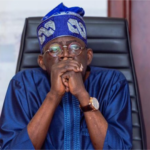
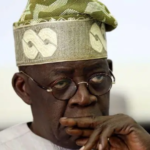
  • These are not the best times for the president-elect, Bola Ahmed Tinubu (BAT). In an exclusive report by Bloomberg, it has been revealed that BAT’s son, 37-year-old Oluwaseyi Tinubu, has gotten himself in the mud by acquiring property linked with fraud.

    [Seyi Tinubu (L) with dad, Bola Tinubu (R) / Twitter]

    What’s the gist?

    According to corporate documents seen by Bloomberg, Oluwaseyi, a principal shareholder for Aranda Overseas Corp. —an offshore company— paid $10.8m to Deutsche Bank for a property in St. John’s Woods, north London, in late 2017. Buying property overseas is not in itself the issue. The trouble here is that the Nigerian government wanted to confiscate this particular one Seyi bought. Its former owner, Kolawole Aluko —an associate of former petroleum minister Dieziani Madueke— was suspected of having acquired it with proceeds from crime.

    In June 2016, a federal judge in  Abuja granted a request by the Economic and Financial Crimes Commission (EFCC) to seize more than a dozen properties that Aluko owned in Nigeria and overseas, including the one in St. John’s Wood. That forfeiture order was still in effect when Seyi bought the house 16 months later.

    To provide a basic analogy, it’s like going to Computer Village in Ikeja to buy a phone. You have the option of buying from any of the registered phone dealers. Instead, you buy from a suspected thief the police are after, maybe because you think you’d get it cheap. But what complicates matters is you’re not just anybody — you’re the president-elect’s son. 

    Essentially, while Buhari’s government was, in the public eye, going after allegedly corrupt persons in the previous administration, behind the scenes, their properties were being reacquired in offshore deals. 

    Neither BAT’s, nor Seyi’s spokespersons responded to Bloomberg for comments. Aluko’s lawyer also declined, saying the matter was “sub judice”, i.e. a matter still in court and could not be discussed. Deutsche Bank also refused to comment. However, Bloomberg did note that this apartment was what BAT used to receive Buhari in August 2021 when the president came to visit. 


    ALSO READ:  What to Expect from a BAT Presidency

    What next?

    Whether the president-elect or his son will respond to these allegations in the coming days remains to be seen. But we cannot overlook that BAT’s list of scandals is piling up by the day. Carrying that kind of baggage not only bodes poorly for him but for the reputation of Nigeria — if he gets sworn in. With 27 days left till May 29, we wonder what other controversies BAT has for us.

  • For Navigating Nigeria this week, Citizen spoke to Nanretdeng, a Nigerian student who had to leave schooling in Nigeria for the Benin Republic after a lengthy ASUU strike. Her story shows that leaving Nigeria doesn’t always insulate you from trouble, as it can find its way back to you. Here’s the sad experience she and her colleagues are currently facing at the hands of a dubious man named Shehu. If this were a movie, it would be titled “The Good, The Bad, and the Shehu.”

    Editorial Note: Navigating Nigeria is a platform for Nigerians to passionately discuss the Nigerian experience with little interference to individual opinions. While our editorial standards emphasise the truth and we endeavour to fact-check claims and allegations, we do not bear any responsibility for allegations made about other people founded in half-truths.

    My name is Nanretdeng. Let me tell you my story.

    I used to study at the University of Jos (UNIJOS), but a strike by the Academic Staff Union of Universities (ASUU) in 2020 disrupted my studies for almost a year. I started thinking about going to school outside Nigeria. Before the strike, I had a friend who left UNIJOS to study at École Supérieure de Management (ESM) in Cotonou, Benin Republic. So I asked her how she did it, and she referred me to this guy named Shehu, who was part of the AP Usman Foundation and had links with ESM. 

    When she referred me to Shehu, I had no idea that the foundation offered scholarships. All I knew was that he had helped my friend process her admission to the university. I contacted him, and he asked me to visit Jos’s AP Usman office.

    I met him there, which was when he showed me my options. Before issuing a form, he asked me about the course I wanted to study and other relevant information. I still wasn’t aware at this point that this was a scholarship. I wasn’t honestly looking for that. All I wanted was enlightenment on attending school in Cotonou, but then Shehu later told me that the foundation had provided half scholarships for students applying.

    That must have felt like good news at the time

    The tuition was ₦430k thereabouts. The foundation promised to take on some of that fee while other colleagues and I were to pay ₦‎150k each with an additional ₦‎20k bringing the total payment to ₦‎170k. So that’s what I paid to the foundation. I still have the receipts. This was in October 2020. We were 14 and were told to prepare to leave either in December 2020 or, at the latest, by January 2021.

    Instead, we went in February of 2021 since they kept postponing our resumption date. On the day we were to leave, a few of us were at the AP Usman office in Jos. We all took off from there and arrived in Cotonou.

    When we got to Cotonou, we started school activities. Things were going okay until it was time for exams, and we needed clearance. We realised that we hadn’t received receipts from the school confirming that our tuition was paid. Shehu had only remitted about 60 per cent of the payments to the school, even though we thought it was all taken care of. I ended up tweeting about it to draw attention to our situation, and we found out that it was the school that offered the scholarship. Crazy, right?

    [ESM Benin / Facebook]

    Crazy

    It came as a surprise to us all. We tried reaching out to him, but a back-and-forth amounted to nothing. The school was generous and let us write the exams and participate in other activities. They were aware that we had made payments to the foundation. We finished our first year with nothing productive coming out of the talks with Shehu.

    Before the commencement of our second year, Shehu still reached out to people asking them to make payments. This was after he hadn’t remitted first-year tuition fees. 

    At the time, I’d resolved to make all payments directly to the school going forward. When the second year began, Shehu referred other students using the foundation as cover to pay tuition fees to ESM through him without remitting our outstanding payments. 

    That’s audacious

    That went on for a while. At one point, the school admin that had been in touch with Shehu told us that Shehu had stopped responding to his messages and calls. Shehu had gone MIA. The second year rolled by with these issues unresolved.

    In our third year, we agreed that no one would make any payments to Shehu or the AP Usman Foundation but to the school directly. At this time, I was the university’s president of the Plateau Students Union. I was picked for this because I was bilingual, and the Benin Republic is a francophone country. It helped, too, that I studied foreign languages at UNIJOS.

    After our joint resolution, students from the union began making tuition payments to another bank account I own — different from my primary one. I was then remitting payments to the school from my end. The amount I paid to the school was around thrice what Shehu sent. Despite this, we still have some ground to cover, which explains why I put up that Twitter thread. There are some people among us who Shehu believed were only making a one-time payment. These people are stranded with no hope of getting financial support from home. 

    We need all the help we can get because we’re in the last lap. It’s a three-year degree. The school has been gracious enough up until now, but that can no longer last. I’m grateful that my story is getting enough traction. Hopefully, it translates to financial help to offset our outstanding bills.

    Sounds like this Shehu guy is fraudulent. What has the school done about it?

    The school has done their best. It has tried to maintain contact with Shehu. But the school is in Benin Republic while Shehu is in Jos. By the time Shehu decided to stop taking calls, there was nothing anyone from ESM could have done about it. When I returned to Jos, I tried to swing by the office only to find out it was no longer there. It’s not a lack of effort on the part of the school per se. I know the school’s various efforts to get Shehu to remit our fees. They’ve not been successful.

    How do you hope this ends? Do you want to see Shehu apprehended, or are you content with settling the outstanding fees?

    My priority as the student representative isn’t Shehu getting apprehended. I mean, that would be nice, but what I’m hoping for is that we offset all our debts. The means to that end don’t matter to me. Whether through crowdfunding, a donation, or a charity that notices us and decides to help, it doesn’t matter to me now. If Shehu gets caught and is made to pay, that would be the icing on the cake. But to be honest with you, I’ve taken my mind off of Shehu. 

  • You probably know what “419” means unless you’re not from Nigeria. It’s the section of the Criminal Code that deals with fraud and obtaining property under false pretences, also known as the “advance fee scam.” In today’s news, the Nigerian government may have pulled off a massive scam for the ages, which even Yahoo boys would applaud. The FG has proposed suspending the removal of the fuel subsidy.

    What’s the gist?

    In November 2022, the Minister of Finance, Budget, and National Planning, Zainab Ahmed, announced that Nigerians should prepare for the removal of fuel subsidies by June 2023. 

    [Zainab Ahmed / Businessday]

    Fuel subsidies are a type of price control that makes fuel cheaper for consumers. The government pays the difference between the actual fuel supply cost and the consumer price, thus subsidising fuel.

    This policy has generated a lot of controversy over the years. Businessday says fuel subsidies have consumed at least ₦‎7.3 trillion under President Buhari’s administration. What makes this funnier is that Buhari once claimed fuel subsidies were fraudulent, leading to the Occupy Nigeria protest in 2012. Ten more years of this expensive experiment led Buhari to see the light finally—or so we thought.

    What happened next?

    On April 6, 2023, Mrs Ahmed announced to Nigerians that we had secured an $800m grant from the World Bank. As we would later discover, this wasn’t a grant but another gbese.

    But even more important was the reason for this loan. It was meant to be a palliative, distributed to 10 million households considered to be most vulnerable, to cushion the effect of the subsidy removal. So imagine the shock of Nigerians to learn that the National Economic Council (NEC) on April 27 proposed suspending the planned removal of subsidy by June because “it is not a favourable time for the action.” A rather convenient revelation to have after collecting $800 million.

    It’s giving 419. We wonder how the World Bank is feeling after hearing this news.

    What else should I know?

    As Buhari’s government is winding down, we’re seeing cashouts at an unprecedented scale. We could point to the coming population census, which was initially budgeted for ₦‎198 billion but has now ballooned to ₦‎869 billion. There’s also the incredible tweet by the Minister of Aviation, Hadi Sirika, where he announced that he “commissioned” ten firefighting trucks at the cost of ₦‎12 billion.

    We’re using this medium to beg Buhari to have some pity on Nigerians. Because at the rate his administration is going, 419 would become yesterday’s news, and we’d be forced to add a new number to the Criminal Code — the emergency number 911.

  • On April 19, 2023, a Twitter user with the handle @cbngov_akin1 claimed that the poverty rate increased while Peter Obi was governor of Anambra state. The tweet has garnered over 91,000 views as of the time of filing this report.

    On Wait First, we divide claims into three categories. A valid claim is fresh banana. A misleading claim is cold zobo, while an outrightly false claim is burnt dodo.

    So, how valid is this claim?

    Some background

    [Peter Obi / Africa Report]

    Peter Obi, the Labour Party’s (LP) presidential candidate, had a staggered time in office as governor of Anambra state. In 2003, he contested for governor under the All Progressives Grand Alliance (APGA). Chris Ngige was declared the winner, but in a lengthy court battle, the victory was overturned at the Supreme Court. Obi was reinstated as the election winner and assumed office in March 2006. 

    Obi was impeached in November 2006 and reclaimed his mandate following another court ruling. He returned to office in February 2007. He was removed again after the 2007 election but was reinstated by the Supreme Court. Obi won reelection and served as a two-term governor from March 2006 to March 2014.

    Obi’s performance as governor has come under intense scrutiny since he declared his intention to run for president, particularly as his campaign promises hinged on combatting poverty. The Independent National Electoral Commission (INEC) announced him third in the presidential election with 6,101,533 votes. 

    Poverty is more than just a number. It’s a complex issue that affects many aspects of a person’s life. OECD data shows that poverty rates are measured by income levels falling below the poverty line. But poverty is not a one-dimensional problem that can be summed up with a single indicator. The National Bureau of Statistics (NBS) is the go-to agency in Nigeria for collecting, analysing, and disseminating crucial statistical information that helps understand the socioeconomic realities of the country’s citizens.

    Verification

    Our partners FactCheck Elections, looked into this claim. Here’s what they found.

    “Findings by FactCheckElections revealed the (NBS) National Poverty Rates For Nigeria: 2003-04 (Revised) and 2009-10 (Abridged Report). The report showed that Anambra had 41.4% state-level headcount per capita poverty measure in 2003-04 and 53.7% in 2009-10. 

    “The National Poverty Rates For Nigeria: 2003-04 (Revised) And 2009-10 (Abridged Report) capture poverty rates across Nigeria with the Absolute Poverty Approach (using a per capita approach of assigning 3000 calories requirement for an adult).

    [Source: NBS]

    “FactcheckElection can find no official data report on the poverty rate between 2011 – 2018. Aside from forecasts and predictions, there’s no absolute poverty study in those years. According to a reply tweet by Dr Yemi Kale (former statistician general of Nigeria), ‘NBS has not conducted any absolute poverty study since 2009’.

    “However,  there is a 2019 Poverty & Inequality in Nigeria report published by the NBS. The report showed Anambra had a poverty rate of 14.78%.”

    Verdict

    So what’s the status of the claim? Based on data from the (NBS), Anambra’s state-level headcount per capita poverty increased from 41.4% in 2003-04 to 53.7% in 2009-10. Peter Obi was governor between 2006 and 2014. So the claim is partly true, and we give it a banana rating. However, no official data shows the poverty rate when he left office in 2014.

  • What comes to mind when you hear “Ponzi”? You’re probably thinking about the Mavrodi Mundial Moneybox, known as MMM. This infamous fraudulent scheme, which Sergei Mavrodi ran until he died in 2018, had a presence in over 100 countries, including Nigeria, before its inevitable crash in December 2016

    Many Nigerians lost their life savings in a scheme that promised quick and eye-popping returns on investment. Nigerians learned the hard way that there’s no free lunch. However, it seems the Nigerian government learned a different lesson from the whole affair and entered into a sovereign Ponzi finance scheme. What is this, and why does this spell serious trouble for Nigerians?

    Ponzi schemes: An explainer

    The name Ponzi comes from Charles Ponzi, an Italian con artist born in the 19th century. His scams were simple enough and were aptly described as “Robbing Peter to pay Paul”. He ran a scheme where he promised investors great returns on investment in a short time. 

    The scheme depends on getting as many people as possible to buy into it so that as new entrants come in, their contributions fund the payouts of older members. This is why Ponzi schemes are also described as pyramid schemes. 

    Pyramid schemes are mathematically doomed to failure because they eventually become unsustainable. There’d be way too many people waiting for new entrants to fund them, and when that doesn’t materialise, it becomes clear their investments are gone with the wind. This is when the scheme crashes.

    The FG’s Ponzi financing scheme

    So here’s what the Nigerian government did. Imagine a giant financial scam where the government tricks investors into buying bonds with promises of juicy returns on their investment. Sounds good, right? But here’s the catch: the government doesn’t use that money to invest in anything that could make a profit. Instead, they use it to cover everyday expenses like salaries and pensions.

    When it’s time to pay back those investors, the government doesn’t have the money, so they issue new bonds to pay off the old ones. It’s like a never-ending cycle of debt that keeps getting bigger and bigger. Eventually, the government’s debt grows so large that it becomes impossible to pay back, leading to a catastrophic financial meltdown. That’s what’s called a sovereign Ponzi scheme, and it’s not pretty.

    According to Proshare, Nigeria’s debt profile rose again after the Paris Club debt was cleared in 2005. However, debt up until 2014 was at least sustainable. In 2015, the national debt rose 22% to ₦19.4 trillion from ₦15.8 trillion in 2014. By 2020, the debt had spiked by 175% to ₦53.3 trillion. 

    [Source: Proshare]

    ALSO READ: Nigeria May Be Moonwalking Into a Debt Trap

    Nigeria kept up the borrowing, and by the end of 2022, our debt had risen to ₦76 trillion. What makes matters worse is the borrowing didn’t translate to economic growth for us. The World Bank predicts slow growth for Nigeria and projects that 13 million more Nigerians will fall into poverty by 2025. As we said earlier, there’s no free lunch.

    What’s the way out?

    A few other countries have adopted the Ponzi financing model, leading to disastrous outcomes.

    A cautionary example is Lebanon which, for many years, accumulated debt recklessly. Today, the country is fighting crippling inflation and has fallen into depression.

    One way out, according to Proshare, involves approaching the International Monetary Fund (IMF) for a policy support instrument (PSI). In simpler terms, it refers to policy advice on issues like market reform, subsidy and the exchange rate. Regardless, it will involve some pain in the short term, but this is preferable to the looming crash ahead if we continue down this path.

    Another option is debt restructuring. This is a process in which a borrower and a lender agree to modify the terms of a debt agreement. This is usually done when the borrower has trouble repaying the debt and needs to change the payment plan.

    Improving efficiency in government spending is also necessary. No more white elephant projects and inflated budgets. The new administration must demonstrate to Nigerians its seriousness in reviving the economy and saving us from falling into a debt trap. Nigeria has a fighting chance of escaping the looming crash if it can implement these reforms.

  • On October 14, 2022, Ogun state governor, Dapo Abiodun, said about 36 investment portfolios worth over $1 billion came into the state.

    He mentioned this at the inauguration of the Ogun State Investment and Facilitation Agency (OGUNINVEST). 

    “We have continued to reap bountiful harvests from our commitment as existing investments are thriving, and new investments are being attracted. As of today, we’ve been able to attract 36 new investments into Ogun State worth over a billion United States dollars and generated an estimated 40,000 jobs since the inception of OGUNINVEST,” he said.

    This claim came up again leading up to the Ogun State governorship election. The National Association of Nigeria Students (NANS) referenced it without any evidence to back it up. This begs the obvious question: 

    Is Abiodun’s claim valid?

    [Dapo Abiodun / PM News]

    Verifying the claim

    Our partners, Fact CheckElections, looked into this claim. Here’s what they found:

    “The National Bureau of Statistics (NBS) released ‘Nigeria’s Capital Importation’ data for the four quarters of 2022. Ogun State and twenty-six others did not receive foreign investment in 2022.

    “Foreign investments in the country fell by 20.47 per cent ($1.37bn) from $6.7bn in 2021 to $5.33bn in 2022. Nigeria’s capital importation plunged to $1.06bn in Q4 2022 — down by 8.53%.

    “According to the NBS, only five out of the 36 states and the federal capital territory (FCT) attracted capital investments in Q4 2022.

    “For 2022, the report cumulatively showed that only Lagos and Abuja had investments of $billion at 3.61 and 1.63, respectively. Others were in the millions. Ogun had no investment in 2022, according to the NBS.”

    In 2022, the state claimed to have signed an MOU worth $400 million. However, Statisense showed that Ogun attracted only a $30.5m investment in four years (2019-2022).” This is far from $1bn as claimed.

    A civic organisation, Paradigm Leadership Support Initiative (PLSI), has ranked Ogun State 28th with a score of 18 per cent on the level of transparency and accountability operational in managing public funds and implementing public policies in the State. 

    Verdict

    Abiodun’s claim that Ogun state attracted $1bn in investments during his first term in office is burnt dodo. There’s no evidence to support this claim.

    Join us on Twitter on April 25 at 6 p.m. to discuss Nigeria’s worrying rise as a cocaine trafficking hub.

  • For Navigating Nigeria this week, Citizen spoke to Pascal* and Folake* who told their stories of being mugged. For Pascal, staying calm while being robbed is the “smart” thing to do. Folake’s experience taught her that this is Nigeria, where you should “expect anything.”

    Editorial Note: Navigating Nigeria is a platform for Nigerians to passionately discuss the Nigerian experience with little interference to individual opinions. While our editorial standards emphasise the truth and we endeavour to fact-check claims and allegations, we do not bear any responsibility for allegations made about other people founded in half-truths.

    Pascal*

    I was a student at UNILAG at the time. This was in September 2015. My friend and I went to see a friend at the Radiography Hall. It’s a part of UNILAG but outside the school gates and much closer to the Yaba environs. She had thrown a small birthday party, and we turned up. 

    We left a bit late, around 9 p.m., but not “Lagos life late”, if you know what I mean. I remember telling my friend that we should take a bus back to school, and he was like, “Which bus? Let’s walk this thing, jare.” Because at the end of the day, that’s what my guy always does: he believes he can leg any distance. To be fair to him, though, waiting for a bus would have taken a lot of time, so I agreed and decided to walk.

    We had passed underneath that overhead bridge at WAEC junction when my friend heard someone shout at him from a distance as though he had recognised him. It was dark, and it was a poorly lit road. We should have picked up the pace and made a run for it had we known what was coming, but my friend, thinking it was a case of mistaken identity, responded that they had the wrong person. 

    Big mistake

    The next thing we knew, two guys were on us. I faintly recall one of them, fair-complexioned, in a white shirt and looking so haggard. He dipped into my friend’s shorts and picked up his phone while struggling with another assailant. I had a small iPhone then, but it looked like the thieves were in a hurry and didn’t hassle me much. 

    Another guy was walking along that road who looked like he was keeping watch, and I suspected he was among them. I had to tell my friend to let go when they held a broken bottle to his neck— he didn’t know.

    My friend was still furious and was fighting them when the third guy joined them. I could tell he was reaching for something in his pocket, although I couldn’t say what, maybe a knife or a gun. 

    Or perhaps he was bluffing. 

    I’m naturally calm, and the way I read the situation, fighting there wasn’t worth the danger. So I convinced my guy to free the phone, which he did. It was late, and the road was lonely. Getting back to school safely was the priority.

    I laughed when I replayed the incident in my head the next day. I was thinking, what if my friend had died that day? What would have been the story? That we went to see Babe and got stabbed on the way back? I was thinking of the narratives that could have come up, like how we should have stayed in school and not gone outside. This would’ve been funny because my friend and I were doing great at school, and the one time when we decided to take a break, we nearly paid dearly for it.

    We joked about it for a long time, as guys do, but things could have gone sideways in an instant. Looking back, my reaction to the whole thing was fair and calm. Since it was at night and these guys were confident enough to mug us, letting go was smart.

    Folake*

    My mugging experience happened in Ajah around December 2019. I was heading for work at about 4:30 a.m. This was the best time to leave home to beat heavy traffic. I remember feeling very reluctant to go to work that day, but I had no choice as it was a weekday. I left home singing. On my way to the bus stop, I saw a group of boys ahead of me, but I thought they were regular people returning from a party. They were in my path, so I passed between them. 

    Immediately, one of them said, “Hey, come here”. I hissed because I thought they were teasing. Before I could even turn to see who called, I saw the other guys with knives telling me to give them my bag. I had to surrender my bag to them because I didn’t want to get stabbed. 

    Damn

    They took my phone, which I had just bought, my ATM card, shoes and some money I planned to deposit at the bank that day. I was lost and confused for about five minutes. I saw them as they left. It took a while to dawn on me that they’d taken everything from me and that I had nothing left. I didn’t know when I started running. I ran to the bus stop. When I arrived, I began begging people to help me, telling them I had been robbed. Nobody responded. I went to the main road to cry for help; no one was willing to help. 

    I didn’t report the incident at the police station because I knew that if I did, they wouldn’t bother to do anything about it. You know the Nigerian police nau. They’ll ask you to write a statement and ask you to cough up money, and nothing will come out of it.

    I returned home sad. After the incident, I felt terrible for two days. But then I told myself this is Nigeria, where you should expect anything. I later got a new phone and continued with my life.

    *Name changed to protect their identity.

    Join us on Twitter on April 25 at 6 p.m. to discuss Nigeria’s worrying rise as a cocaine trafficking hub.

  • On April 29 1998, the federal government of Nigeria awarded an Oil Prospecting Licence (OPL) 245 to Malabu Oil & Gas Ltd. for $20 million. The license covers a defined deep-water offshore area over 1,000 m below sea level and approximately 150 km off the Niger Delta.

    As awards go, however, this has turned out to be a poisoned chalice. It’s been a constant source of litigation for successive governments due to allegations surrounding fraud and corruption in awarding the licence. The FG may have finally thrown in the towel based on the latest reports. 

    The Cable has reported that Abubakar Malami, the attorney-general of the federation (AGF) and minister of justice, has written a memo to President Muhammadu Buhari asking the federal government to end all cases relating to OPL-245 because it has little chance of winning.

    Timeline of events

    Here’s a timeline of key events over the last 25 years.

    April 1998

    The FG awards OPL 245 for $20 million to Malabu Oil and Gas. The company belonged to Dan Etete, an associate of the former head of state, Sani Abacha and a former petroleum minister who served between 1995 and 1998. Etete awarded the license to himself using false identities.

    [Dan Etete (right)  /  picture-alliance/dpa/G. Barbara]

    May 1999

    Nigeria is in its Fourth Republic under the administration of Olusegun Obasanjo. On behalf of Malabu, Etete pays $2.04 million for the OPL 245 licence out of the $20 million the company had agreed to pay.

    March 2001 

    Shell signs an agreement to acquire a 40 per cent stake in OPL 245 from Malabu. The agreement was on the condition that Shell would pay the outstanding $18 million to the FG.

    July 2001

    The FG revokes Malabu’s OPL 245 licence. This sets off a series of litigations over its ownership.

    May 2002

    Shell informs Malabu that its contracts have been frustrated by the revocation of the licence. Shell is officially awarded 40 per cent of OPL 245. It starts exploration and appraisal work and later signed a production-sharing deal with the Nigerian National Petroleum Corporation (NNPC). Under the deal, Shell Nigeria Ultra Deep (SNUD) agrees to pay a $209 million signature bonus, placed in an escrow account until the Malabu dispute is resolved.

    August 2002

    Shell goes to the International Court of Arbitration (ICC) to file a case against Malabu based on terms of the March 2001 agreement.

    May 2003

    The House of Representatives (HOR) orders Shell to pay Malabu $550m for damages resulting from the revocation of the OPL 245 license. It also asks the FG to return the licence to Malabu. The FG refuses to comply.

    November 2004

    The ICC rules in favour of Shell.

    November 2006

    Malabu settles with the FG. It agrees to pay $218 million to the FG in return for the licence being fully reinstated to Malabu. Malabu, however, fails to pay.

    April 2007

    Shell (SNUD) commences Bilateral Investment Treaty arbitration against the FG for wrongful expropriation.

    August 2007

    The FGN promises Shell a new prospecting licence in other blocks, worth 50 per cent of OPL 245. Shell declines.

    2008 

    The FG seeks a resolution, and negotiations commence.

    December 2010

    Mohammed Abacha, son of the former head of state, enters the ring. He launches a legal challenge arguing that Etete pushed him out of his partial ownership of Malabu.

    2010

    Eni proposes to Malabu and Shell to buy a stake in OPL 245. Malabu refuses. 

    April 29, 2011

    Malabu, Shell, Eni, and the FG reach a resolution. Malabu agrees to hand OPL 245 back to the government for $1.092 billion. Shell and Eni agree to pay the FG $1.092 billion and a signature bonus of $208 million, bringing the total payment for OPL 245 to $1.3 billion.

    [An oil rig / The Cable]

    May 20, 2011

    The $1.092 billion is placed in an escrow account opened by the FG with JP Morgan Bank. $875 million is transferred to Malabu bank accounts.

    2011

    A former Russian diplomat Ednan Agaev, claims Malabu owed him millions of dollars for arranging meetings with Shell and Eni.

    2014

    The HOR votes to cancel the OPL 245 deal.

    December 2017

    FG sues JP Morgan in London for its role in transferring the $875 million to Etete’s Malabu, alleging negligence.

    May 2018

    The main trial in Milan starts. 

    April 2019 

    A Nigerian judge issues arrest warrants for Dan Etete.

    November 2020

    A London judge rules that the Nigerian lawsuit against JP Morgan can go to a six-week trial.

    March 17, 2021 

    A Milan court acquits all the defendants in the Italian trial.

    What did Malami tell Buhari?

    In the AGF’s memo to Buhari dated February 6, he listed a lengthy series of losses that the FG has faced over the OPL-245 matter. They included defeats in the UK, US and Italy, where the courts ruled in favour of Eni and dismissed any fraud cases against Eni and JP Morgan.

    Malami asked Buhari to settle all civil and commercial cases between the FG and Eni and to convert the OPL to an Oil Mining License (OML), which, in Malami’s words, would help Nigeria take “advantage of the fast-disappearing opportunities in the oil exploration industry.”

    What else should I know?

    [Mohammed Abacha / Channels]

    The case involving Mohammed Abacha hasn’t been resolved. The EFCC is recommending that Eni pays $500m to the Abacha family. A former AGF, Mohammed Adoke, in 2017 said that even if Abacha had a claim to the oil field, he had to forfeit them to the FG.

    His words: “By Decree No 53, the (Abacha) family had forfeited all identified assets to the federal government. All undeclared assets were also forfeited.

    “People should ask if, in a decent country, the children of Abacha could come out openly to say ‘we own OPL 245’ when their father awarded the oil block. Should they have been so confident to lay that kind of a claim?

    “Why has the EFCC not gone after them to ask how they acquired an interest in OPL 245? If not that the political environment is conducive for them, they wouldn’t raise their head to be making such claims.”

    It remains to be seen if Buhari will approve this $500m payment to Abacha or whether he’ll pass the ball to the new administration. Whatever the case, it’s a relief that Nigeria can have some closure over the controversial OPL-245.