Stefkaly has made a name for herself in the Nigerian gaming industry. Still in her early 20s, she has built a prominent social media following, worked with popular international brands, and earns a living by streaming gameplay from the comfort of her home.
But it has taken her a lot to get here: from a draining career in healthcare to a pivotal career switch into tech, before finally becoming a gamer and dealing with all the societal and gendered issues that come with it. Here is how Stefkaly broke into the gaming and streaming world, and how you can do it too.
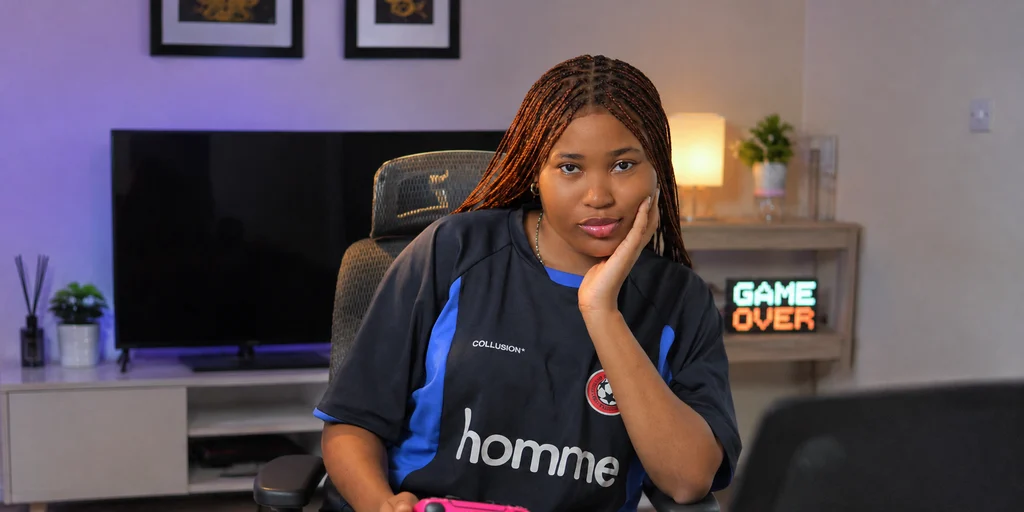
This is Stephanie’s story, as told to Azara.
Gaming is not a woman’s hobby.
At least, that’s what I heard growing up. For girls, gifts were usually clothes and jewellery, while boys got game controllers and consoles. For a while, I believed it was the natural order of things, but as I approached my teenage years, I began to see things differently, thanks to my brother.
It was 2005, and my parents had gifted him a SEGA game. I would watch him in fascination as he racked up high scores and beat character after character. Being a bystander soon bored me, and I wanted to experience his excitement for myself.
So, when we got older and he switched to playing games like Pro Evolution Soccer (PES) on his laptop, I would wait for him to leave it unattended and then try those games myself. I liked the feeling, and I soon began to desire my own games.
The opportunity finally came to me around 2014, when I got my first phone. I started playing mobile games and would go to friends’ houses and game centres to play console games too. I was drawn to football games like Dream League Soccer and PES, and I’d play them for hours. I liked to win, and luckily for me, I usually won. Beating other players quickly became my guilty pleasure.
But playing the games was just that: playing. In Nigeria, it’s a common expectation that you “grow up,” get a university degree, secure a job and be serious. I couldn’t exactly make gaming my job, so I set it aside and labelled it a hobby while I pursued a university degree.
By 2019, I was a social worker at a hospital, where I helped patients navigate difficult and vulnerable moments. While the work was meaningful, it was often emotionally demanding.
At the time, I was also tinkering with design and creative work, which led me to digital design. A career with more earning potential, more creative freedom, and new opportunities? It was a no-brainer.
In 2020, I got a freelance opportunity and was invited to apply for a job. This allowed me to explore digital design alongside social work. It started small, but a month into it, I began earning some money.
After a while, I could afford a bunch of my wants: I got an apartment, furnished it to taste, and started funding little pleasures like travel and tech gadgets.
After two years, I was able to make my favourite purchase ever: my gaming console.
Despite my journey into an “adult job”, gaming never left my life. I played on my phone, in my friend’s houses, game centres, and anywhere I could affordably access my favourite hobby. But with the money I was making from digital design, I could finally make my dream of having my own gaming setup a reality, and I did.
In 2021, I bought myself a PS5 and started recording myself playing games, usually FIFA, choosing to record my reaction or just the gameplay. I’d upload the videos to TikTok, while still exploring going live and streaming on Twitch and YouTube. Doing these things should have been enough to take gaming beyond a hobby, but, to be honest, I still saw it as something I did for fun. Even with most financial barriers to gaming gone, my old ideologies about it didn’t make me consider it as a career.
So, for fun, I started joining online communities to meet other gamers and creating content on TikTok and Instagram.
By day, I was a social worker and digital designer, working on cases and international projects. By evening (at least, on the evenings I made time for it), I was gaming and putting out content. I was fine continuing that way, but in 2024, a popular international brand reached out to me for a sponsorship deal.
It was an amazing deal. They had seen my gaming content, and the sponsorship was for a programme that connects gaming and music, particularly the integration of music into my gaming content. The brand paid me good money for that deal.
That was when it hit me that gaming could be a job, and I swore to take it seriously.
Since then, I have worked with Samsung, Xiaomi, Spotify, and other well-known companies. I’ve also made some money streaming on Twitch and TikTok, from subscribers and from people who give gifts during streams. But my brand deals have been the most lucrative part of my gaming and creator business. Thanks to how much I’ve earned, I’ve been able to build a decent gaming setup.
It has been nothing short of incredible, but gaming isn’t always easy, especially since I game alongside my digital design work. It has been a hassle trying to figure out how to manage both jobs, and usually one side suffers more than the other. I think I have a better handle on it now than I did at the start, but I’m still figuring it out.
As if my personal problems aren’t already a challenge, being a gamer in Nigeria comes with its own struggles. For one, the epileptic power supply is hard for a streamer. Not too long ago, I got a time-sensitive brand deal for a company I really liked. I had planned to make two videos for them in the evening, but moments after I set up my camera to record, NEPA took their power, nearly causing me to miss my deadline.
I don’t think I had panicked like that in a long time. I eventually finished the videos, but the situation scarred me enough that I got an inverter system.
Even when I manage to get consistent electricity, I still have to deal with backwards male players.
“What are you doing here? Shouldn’t you be in the kitchen?” This is something a man on my stream said to me. I don’t get comments like this often, but when I do, it always reminds me just how underestimated women are in the gaming space.
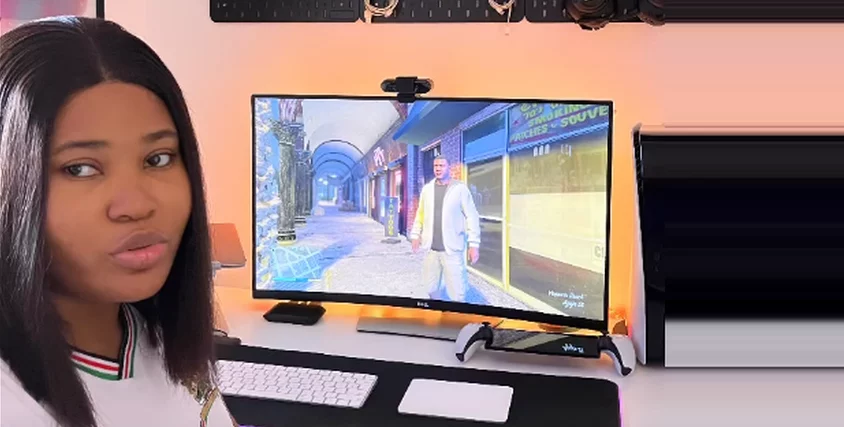
For the most part, I have a pretty good community, but some Nigerian men still think gaming isn’t a place for women. They like to taunt until I pick up my controller and show them what I can do. Funny enough, most of that disrespect disappears once I beat them, which is usually the case.
Beyond creating content and streaming, I’ve also started taking things a step further by hosting my own gaming events. It’s another way for me to bring gamers and creators together, create experiences around something we all enjoy, and help build the gaming community here in Nigeria. I love that I’m now able to create these opportunities rather than just wait for them to exist.
I’d love to see more of that happening in Nigeria. Gaming is still largely seen as just a hobby, and I think that’s a missed opportunity.
Buying games in Nigeria is also unnecessarily expensive. There are so many games and tools I buy that I know are more affordable abroad. Plus, with most of our country being impoverished, no one even thinks of buying games. Again, many see it as a hobby, and many Nigerians can’t afford hobbies.
I really think that, if gaming were made accessible, it could be as lucrative as any other major career field in Nigeria. Abroad, people compete in tournaments and win hundreds of dollars. Imagine how many lives could change if opportunities like that were made available here?
Beyond Nigeria’s development, I also think about my future. I’d still love to grow my career by connecting with more brands. I want gaming and educating people about gaming to be a full-time, long-term career, and I expect that to happen for me.
While I want to achieve more, I’m quite comfortable where I am now. It has taken me a lot of dedication to turn something “not meant for women” into a multi-million-naira business, and if I had known playing my brother’s games would turn into this, I would have fought for my right to play sooner.