On my fourth day at AFRIFF, I set out to answer a question: how many films can I watch in one day?
After spending much of days two and three at the film and content market, I wanted a proper festival day dedicated to screenings and discovering gems. Few things are as exciting as finding a new film you love on a whim. So day four’s dispatch is a set of mini reviews of the films I saw, in case you discover your next watch once they become available to the public.
Trials of the Spear
My first film was an animated short, a Yoruba-inspired story about a young boy with a magical spear undergoing a trial in the forest. Like many animated shorts, it feels more like a proof of concept than a complete narrative, but it was a refreshing introduction to the world the studio is trying to build. I asked the director about his research process, and he said the team travelled into forests to capture our natural vegetation and used it as inspiration for the film’s environment. I’m excited to see how they expand the story.
The AI-generated short
Next was what appeared to be an AI-generated animated short that I won’t dignify with critical analysis. I already have reservations about AI in filmmaking, and this film took the worst parts of the technology and turned them into a short film. The animation was a clear derivation of 2010s Disney, and the voice acting sounded like a ChatGPT voice response. The bigger question is how it got programmed at AFRIFF with this many real films fighting for a slot.
Love and Blood
Another short, Love and Blood, follows a young love story during the Jos crisis of the 2010s. It tackles an important topic awkwardly, turning preachy before it finds its footing in the love story at its centre. It’s the kind of film you’ll expect at a festival like AFRIFF but it doesn’t meld it;s message with the storytelling well enough
Waiting For My Sister
It truly was a day of short films, because I watched Waiting For My Sister next. I don’t want to say too much because it would spoil it, but Betty Agbo gives an eerie performance as a young girl who meets an escaping thief while waiting for her sister at a stream. It’s one of the most affecting films of the festival, even though it undercuts its thesis at the end. It was a hit at AFRIFF and I want to see what ideas the filmmakers explore next.
Jarabi
I took a break from narrative shorts for a documentary short, Jarabi. It has a rough-around-the-edges energy and follows three men who left Europe to return to Namibia, exploring heritage, regret and the loss of culture.The plotless nature was a bit difficult to follow and the platitudes about loving your home were cliche. After the screening, I asked the director, a white man, how he connected to such a specific subject, and he said it was mostly a combination of fate and spontaneity. He started with one subject, borrowed a camera and travelled to Namibia with a friend. That casualness is exactly why the film had no rigor.
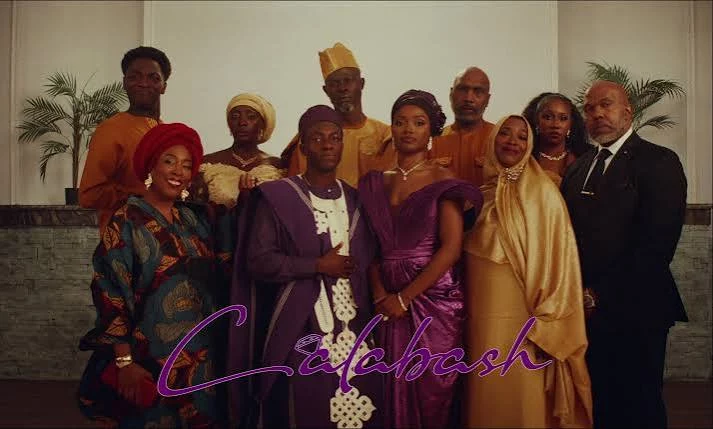
Calabash
I returned to narrative shorts with Calabash, set at an African wedding in the diaspora, where chaos ensues when the bride’s father butts heads with the new husband of his ex-wife. It sometimes feels like a Nollywood parody, with its sharp camera movements and exaggerated reactions. It ends on a clichéd scene where the couple first dance to an afrobeats song and then a hip hop song, a very overt message about diaspora unity. The chaos was the best part of the film.
The Hospital Chronicles (aka The ICU)
My final film was my first and only feature of the day. It’s a psychological thriller about a woman who suffers a miscarriage and is admitted to a hospital, where she finds her autonomy threatened by forces of authority. It’s not a perfect film, but it finds a visual energy that works for it, and Michelle Dede gives a very creepy performance as a facility manager who lives a double life.
Final tally
Seven films: six shorts and one feature. And a pair of hurting eyes all thanks to AFRIFF.
As I headed home, I met Remi and Ife, two film writers I had met online, and we spent about an hour talking about the state of Nigerian cinema. It was an invigorating conversation, and a reminder that we cannot renege on quality when making films in Nigeria. AFRIFF has to find sharper curation, a festival ethos and a dedication to the actual films and not just the glitz and glamour.
See you on Day 5.