Day 1
The 15th edition of the African International Film Festival (AFRIFF) kicked off on 1 November with the theme Frames of the Future and the opening film, Lady, directed by Olive Nwosu. The biggest stars in the industry showed up that night to open a week-long festival of screenings, panels and conversations.
For the third consecutive year, I sat in the screening hall for the opening film, and I found myself reflecting on AFRIFF’s place in the industry: a festival aware of how much performance matters to a film’s presentation. The festival is by no means perfect, but it has always reached high. Its 15th edition promised appearances from Djimon Hounsou, Yetide Badaki and Danielle Brooks, alongside homegrown names like Rita Dominic, Somkele Iyamah and Wale Ojo, and I spotted Somkele giving an interview on the carpet—quick, someone give her a script so we can get her back on set. AFRIFF has always aimed to bridge the chasm between Hollywood and Nollywood, and this year it’s more ambitious.
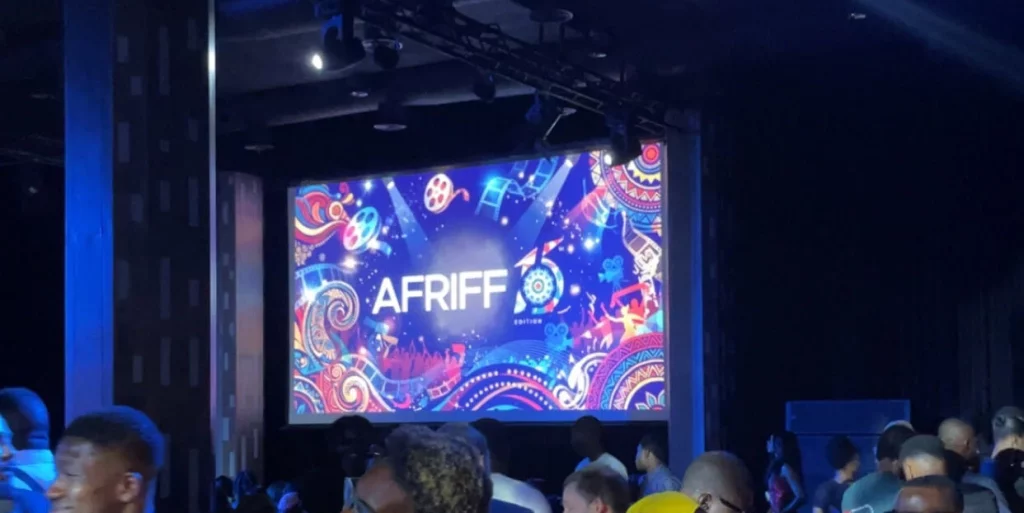
I found a seat close to the screen saved for me by my friends, the unofficial jury of AFRIFF, a group that started spontaneously last year when we gathered after every screening to give our verdicts that nobody asked for . Olive Nwosu took the stage to introduce her film, calling it a look into the underbelly of Lagos. It follows a female taxi driver and the sex workers she transports around the city for work.
Watching Lady amid the glitz of opening night was jarring. People dressed in their best sat down to witness a brutal reality that exists not many streets away. The film’s titular character grapples with the way sex work continues to warp her mind in a politically volatile Nigeria. Nwosu captures Lagos with colourful familiarity, never prettifying its worst parts. Avoiding drone shots and coming down to stare Lagos in the eye most times.
Lady’s only concern is to make enough money to move to Freetown, which is both her literal and figurative escape from Nigeria, while she reluctantly ferries sex workers, including her childhood friend Pinky, around the city. It’s a familiar tale, told with care and acute political awareness. It’s not perfect but it has a lot of heart and a star-making performance from Tinuade Jemiseye as Sugar. As the film closed and the audience clapped, I hoped the film’s call for revolution would inspire minds, though that may be too much to ask of one film.
The night closed with more pictures and conversations. The unofficial jury and I discussed Lady as we made our way downstairs and back home, reaching somewhat similar conclusions. The week had begun in earnest.
Day 2
On Monday, I got to Landmark Centre first and met my friend Mariam, who is also part of the unofficial jury. We were directed to the film market at Twin Waters to collect our press tags, and ran into more friends there.
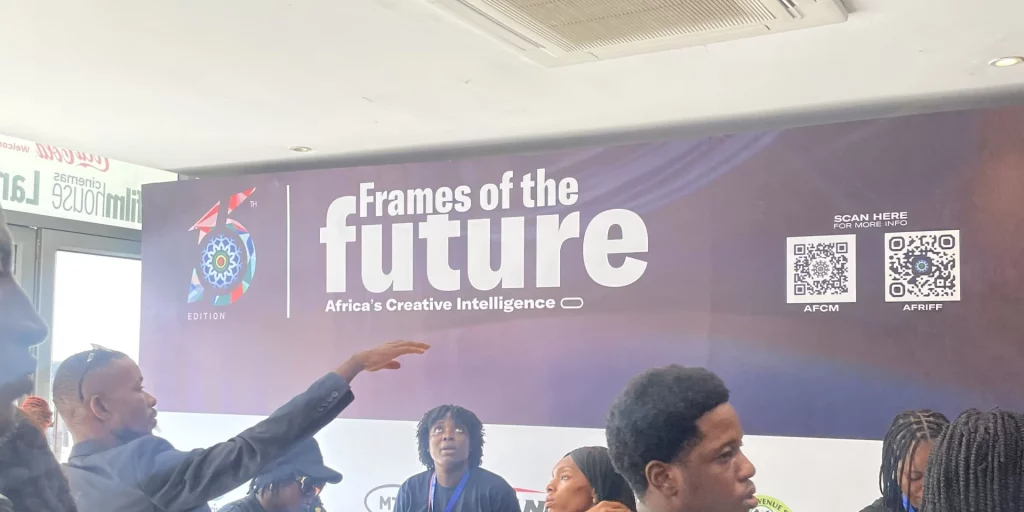
The first panel of the day was about positioning African stories for a global audience. It’s a conversation that has happened many times, but at AFRIFF 15 it found new life. Panelists drew on personal experience to map out a path to authenticity for ourselves first, so the world can catch up.
The next panel, on coproduction in Africa, shed light on a role that’s often talked about without a real definition. Josh Olaolu described producing as many things: finance, organization, collaboration, discovery, creation and problem-solving. Most importantly, a producer has to care about people. Filmmaking is tied to personhood, and the work often defines the people who make it, so a producer must manage it with respect for both the film and the people working on it. It’s a delicate balance, and it left me with greater respect for producers.
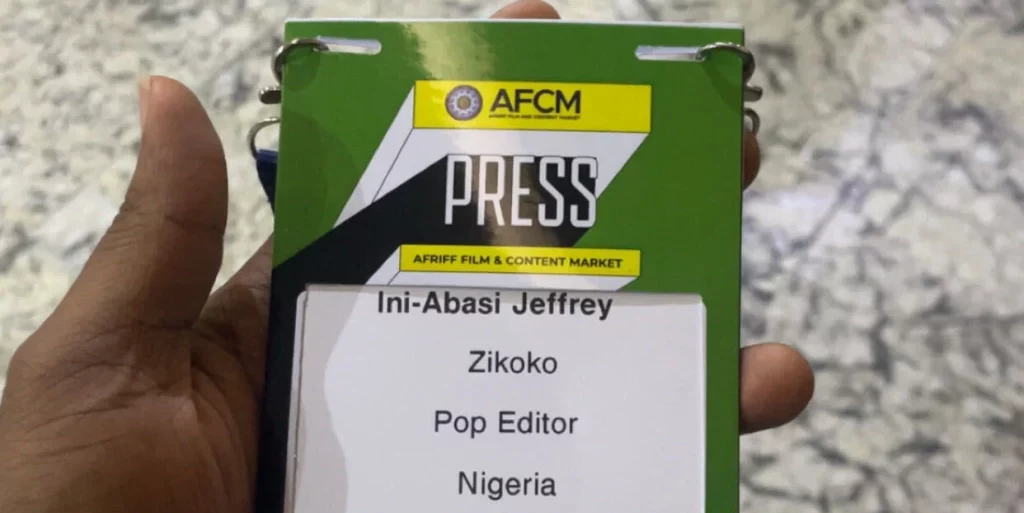
From there, it was back to Landmark to watch Bad Blood. Before the screening, my press friends commandeered a corner and called it our press room. We wrote there (the first draft of this piece happened in that corner), shared a meal and talked about the films we wanted to see during the week.
I trooped into my second screening of the festival exhausted, and unaware of the acting masterclass I was about to witness from Shammah Agah, who played Vera, a woman always on the edge of a violent rage complicated by religious psychosis. Bad Blood tackles the blood transfusion policy of Jehovah’s Witnesses through a fractured psychological thriller about two couples faced with difficult choices and consequences. Watching it with a Nigerian audience is unlike any other experience: someone screamed that one of the husbands in the film should cheat on his wife. The side comments, the animated reactions, the shared joy and frustration all became part of the film.
As the cast and crew gathered for a Q&A, I slipped out of the hall and into a bustling crowd of conversations and interviews, Seun Ajayi giving an interview just opposite me and my friends while the cast of Bad Blood hugged their fans. It reminded me why this festival means something to me: the way everyone flows into each other, the capacity for connection and the love of film that binds it all together.
See you on Day 3. I’m excited to see what it holds.