• If there’s one thing society struggles to accept, it’s a woman who says she doesn’t want children. Somehow, making a personal decision about not becoming a mother is enough to invite unsolicited advice, religious lectures, predictions of future regret and, occasionally, questions about whether something is wrong with you.

    It’s almost as though a woman cannot simply say she doesn’t want children without having to defend her decision to an entire committee.

    child-free

    First, let’s establish something: being child-free is not the same as being barren or experiencing infertility. A child-free woman is someone who chooses not to have children, regardless of whether she is biologically capable of having them. Infertility, on the other hand, is a reproductive health condition that can make it difficult to conceive. While some women who experience infertility may eventually choose to live without children, there’s a significant difference between not being able to have children and not wanting them in the first place.

    But somehow, when a woman says she doesn’t want children, people are quick to assume she hasn’t thought it through or that she’ll eventually change her mind.


    The questions are almost predictable. What happens when you get older? What if you meet a man who wants children? Won’t you regret it? Who will take care of you when you’re old? Don’t you want to experience the joy of motherhood?

    Apparently, the possibility that a woman has considered all these things and still doesn’t want children is too difficult for some people to comprehend.

    And this pressure doesn’t just come from family members who are eager to become grandparents. Religious leaders also contribute to conversations that frame choosing not to have children as going against God’s will.

    In many Nigerian Christian communities, women are constantly reminded of the biblical instruction to be fruitful and multiply. Sermons about marriage and family often present procreation as an essential part of God’s plan, with some religious leaders suggesting that women who deliberately choose not to have children are being selfish, disobedient or refusing to fulfil their purpose.

    A similar expectation exists in many Muslim communities, where marriage, family and raising children are strongly encouraged. Islamic teachings describe children as blessings and a source of joy, and some religious leaders use these teachings to encourage women to embrace motherhood. While there’s nothing wrong with celebrating motherhood as a blessing, problems arise when these conversations suggest that a woman who deliberately chooses not to have children is going against her faith or failing in her religious responsibilities.


     You’d Also Like: Women – Led Protests That Made A Difference History


    But does believing that children are a blessing mean every woman must have them? Can a woman not be devoted and faithful, maintain her relationship with God and live a purposeful life without becoming a mother?

    The problem isn’t that religious teachings celebrate having children. It’s when those teachings are used to make women feel guilty about choosing otherwise. Why is a woman’s reproductive decision being treated as a spiritual obligation she cannot opt out of?
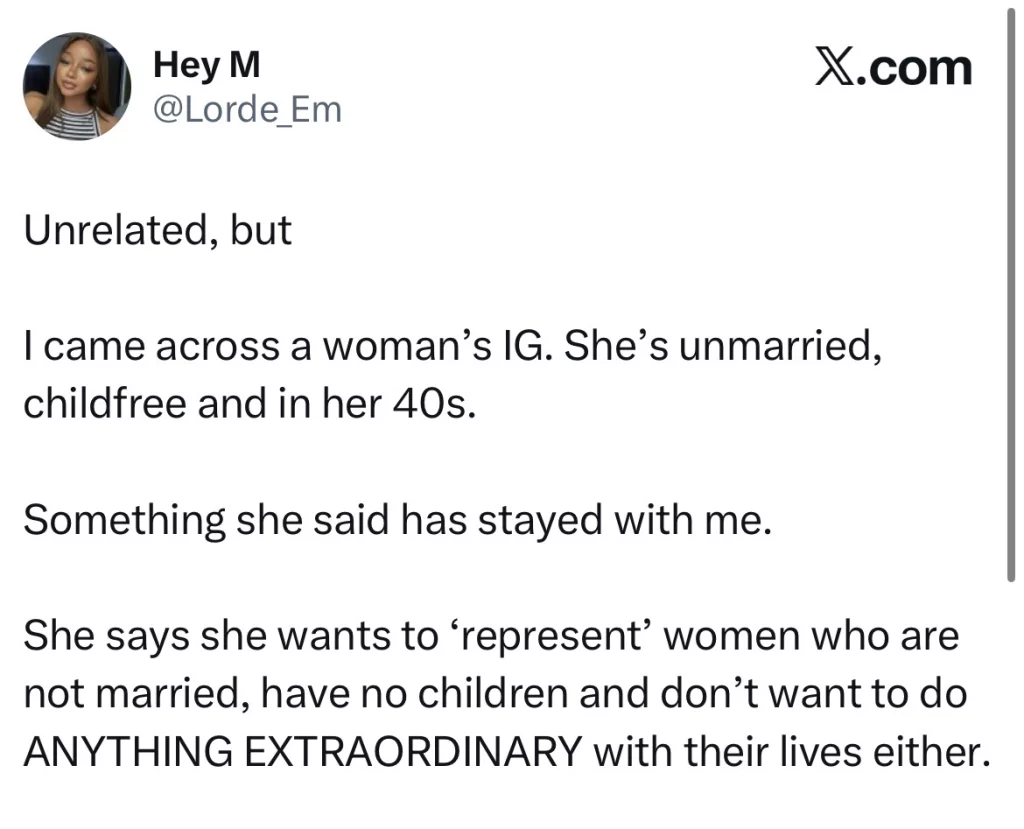

    The irony is that these conversations rarely acknowledge that motherhood is a significant, lifelong responsibility. It involves physical, emotional, financial and psychological commitments that shouldn’t be undertaken simply because a woman has been told it’s what God or society expects of her. And if we’re going to talk about God’s will, shouldn’t we also consider that people can have different purposes, callings and definitions of fulfilment?

    Get More Zikoko Goodness in Your Mail

    Subscribe to our newsletters and never miss any of the action

    Read next: My Ex Is Holding Our Business Hostage
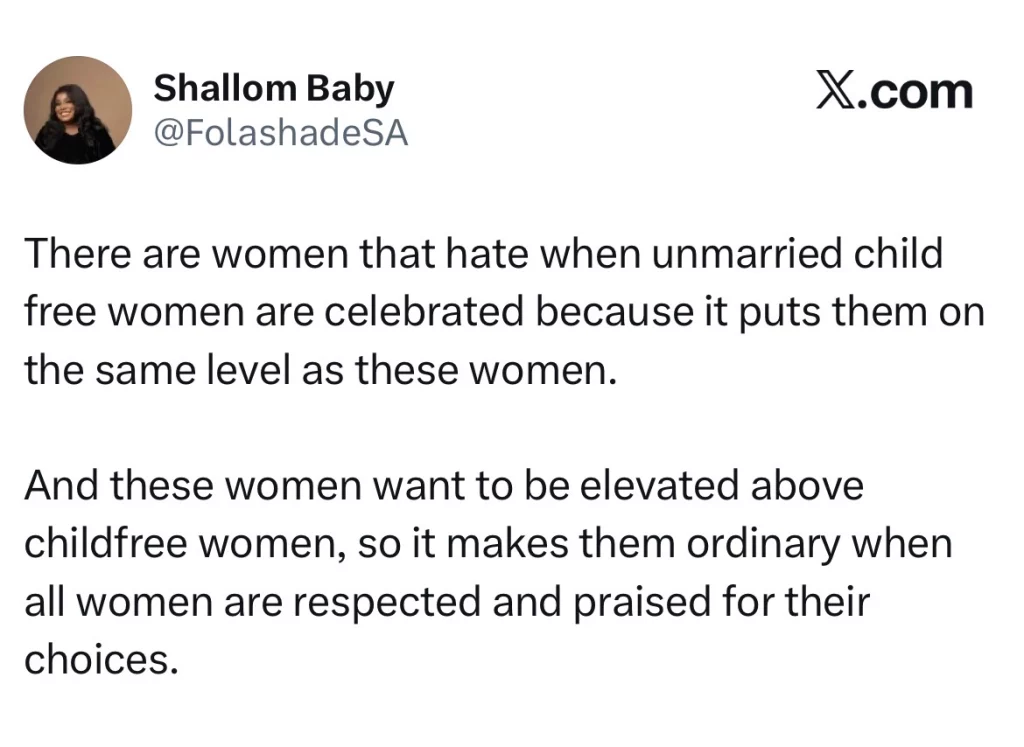

    Some women don’t want to experience pregnancy or childbirth. Others don’t want the responsibility of raising children. Some would rather dedicate their time, resources and energy to their careers, businesses, relationships or personal interests. And some women simply don’t want children. They don’t have to be traumatised, financially unstable or secretly unhappy to arrive at that decision.

    Yet, society seems to struggle with the idea that a woman can find fulfilment outside motherhood.
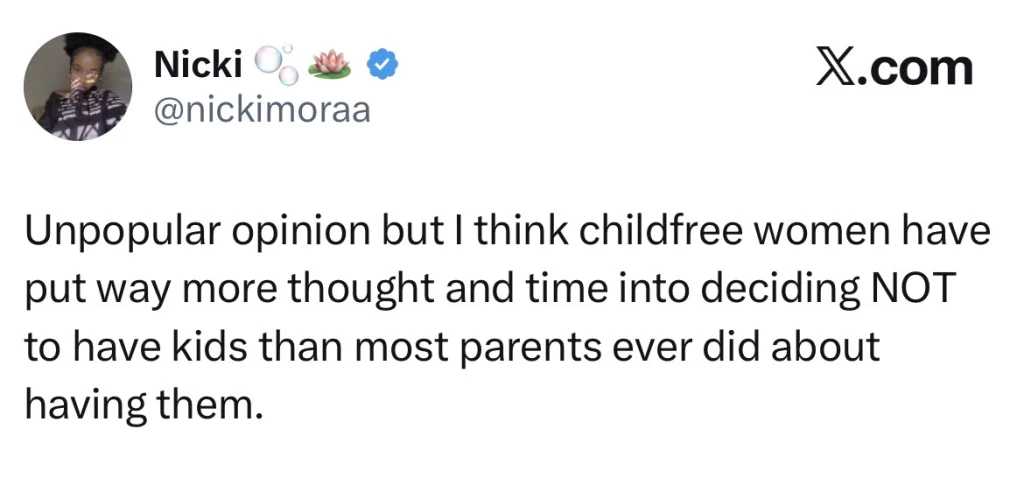
    This is particularly interesting because many women grow up with the assumption that marriage and children are inevitable parts of their future. From childhood, conversations about their lives frequently revolve around finding a good husband, getting married and having children. Motherhood is presented as the natural destination of womanhood, and women who choose a different path are treated as though they’ve missed an important appointment.

    Even when a woman is firm about her decision, people are quick to tell her she’ll change her mind. Apparently, she’s too young to understand what she wants, hasn’t met the right man or hasn’t developed her maternal instincts yet. It’s almost as though people would rather believe a woman doesn’t know her own mind than accept that she might genuinely have no interest in motherhood.

    And speaking of men, why is one of the first questions women are asked whether their husbands or future partners agree with their decision? Why does a woman saying she doesn’t want children immediately become a conversation about what a man wants? Of course, having children is something partners should discuss before committing to a life together. However, a woman’s personal decision shouldn’t be treated as invalid until a man approves of it.

    There’s also the argument that choosing not to have children is selfish. But what’s particularly interesting about this accusation is how little consideration is given to the sacrifices women are expected to make when they become mothers. Their bodies, finances, careers, time and personal ambitions can all be affected by parenthood, yet choosing not to take on those responsibilities is somehow considered selfish.

    Nobody should have children simply because their parents want grandchildren, their church expects them to, their religious community demands it or society has decided that motherhood is the ultimate measure of a woman’s success. Children deserve to be wanted, and parenthood should be a decision people make willingly, not out of fear of disappointing everyone around them.

    And this isn’t an argument against motherhood. Women who want children should absolutely have the freedom to become mothers without being judged for that decision. But that same freedom should extend to women who don’t want children. Neither decision should make a woman more or less deserving of respect.

    At the end of the day, being a woman shouldn’t come with a compulsory motherhood clause. A woman’s purpose cannot be reduced to her ability or willingness to reproduce, and her life doesn’t suddenly become incomplete because she doesn’t have children.

    Maybe the real question isn’t why some women don’t want to have children. It’s why everyone else feels so entitled to convince them otherwise.


    Also Read: 16 Single Women Share The Worst Things Their Married Friends Have Said

  • We all have that one wishlist. That one tab you leave open on your browser, the cart you’ve been stacking since H1, and the items you randomly go back to stare at when you’re bored or wish you were holding them in your hands. 

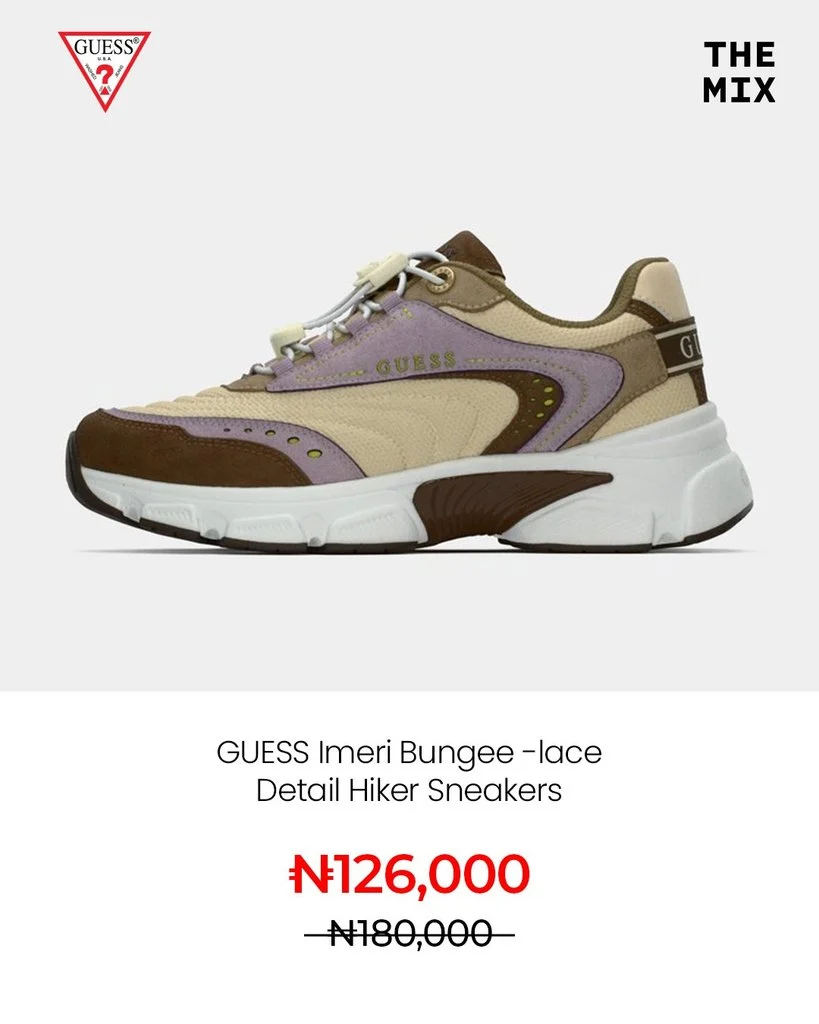
    Well, it’s Black Friday season, which means the universe is giving you the green light to hit checkout like a sweet offer of a 70% discount if you shop with themix.ng. So, if you’ve been waiting for a sign to change your wardrobe and get new fashion accessories, these are seven reasons to stop looking and start buying.

    1. Black Friday with your favourite brands

    It’s Black Friday, and your favourite fashion brands are offering friendly prices on the pieces you love. Open your purse and grab your favourite brands like PUMA, Lacoste,e and GUESS asap.

    2. Staring at the same cart for months

    You’ve added, removed and re-added the same items so many times that your cart might start charging you for space. My friend, it’s Black Friday, and it’s the best time to get your wishlist for less. Shop now at themix.ng.

    3. Wardrobe doesn’t match moodboard

    You know what you want for your Detty December:to be outside and look like a million bucks. If you want to spice up your fashion with the best fashion pieces to go this season, GUESS is calling your name. Pick up the call.

    4. Rich look without breaking the bank

    You love the idea of looking sophisticated and wealthy. When you walk past people, you want them to wonder if you own a yacht. Lacoste is what you need. And you don’t have to spend all your money to get it.

    5. Need new sportswear for the gym

    If you’ve been hitting your fitness goals, or plan to start next week, you need sportswear that keeps you dry and focused through every rep. A fresh pair of PUMA sneakers or sportswear will never go wrong.

    6. You want to look like a Pinterest board

    Whether you’re shooting content for Instagram, filming a TikTok “Get Ready With Me”, or just outside enjoying life, you want your outfit to hit. Best bet? Get yourself some PUMA pieces.

    7. You love discounts

    Honestly, there’s a special type of joy that comes from catching your favourite pieces on sale. So what are you waiting for?

  • Building a career comes with challenges. Working as a Nigerian woman comes with its own special package: the pressure to say yes before the opportunity passes you by, figuring out money while everyone assumes your salary is plenty, the labels that follow women who speak up in meetings, and the family obligations that arrive with your first real salary. Sometimes what you need is to hear another woman say it out loud first.

    That’s the whole premise of Don’t Let the Smile Fool You, Uche Ofodile’s podcast about what’s really going on underneath the calm of leadership. No aspire to perspire to maguire. Just honest talk about the things women are actually navigating at work and with money. 

    We went through the catalogue so you can start with the essentials: five episodes to get you on your way. 

    1. “Somehow the financial floor doesn’t feel as solid as it should”

    Don’t Let the Smile Fool You, EP38, with Lisa Aladekomo

    Earning good money still comes with a specific kind of shame: if the salary is this nice, why doesn’t it feel like freedom? 

    Uche and Lisa explore why a good salary doesn’t automatically mean financial freedom. There’s the delivery trap  where the reward for hard, good work is more work. And the “your work will speak for itself” trap, this advice Uche calls almost criminal.

     Then the visibility tax, where panels, advisory seats and co-investment deals go to the women people actually see speaking, not the ones with their heads down and letting the work speak for itself. Finally,  the family tax every first daughter knows by heart: being the one who books grandpa’s doctor’s appointments costs you, and the first step is naming it so you can share it or outsource it.

    The most useful part might be the silence they name between senior women who trust each other with everything except investments, salary ranges and deals. Plus negotiation gems worth the hour on their own: no number is crazy, and every woman should know her ‘get out of bed’ number before any offer lands.

    2. “Later in your career the challenge changes. Your scarcest resource is time.”

    Don’t Let the Smile Fool You, EP37

    Saying yes builds early careers, and Uche has the receipts: a last-minute flight to London that put her in rooms she otherwise couldn’t access, and a Ghana move people called a demotion that ended with her as Chief Marketing Officer (CMO). But as you get more established in your career, your scarcest resource becomes time.

    Every yes now carries a cost: focus, time, energy, reputation. And the advice that made you visible doesn’t come with an expiry date. You just discover it stopped serving you.

    This solo episode gets into what happens when the yes stops working. Her example: a diversity, equity and inclusion committee she said yes to out of pure passion, without asking the practical questions. Did the committee have influence? Would the senior leaders she wanted to be seen by actually show up? Would its recommendations ever be executed? A good opportunity is not the same as a good opportunity for you. And her advice to women in their twenties: start training the no muscle now, not in your forties.


    You May Also Like: My Best Friend Set Me Up With a Man She Was Dating


    3. “It’s okay to doubt but never let doubt lead your life”

    Don’t Let the Smile Fool You, EP1, with Annick Atougbe

    If you’re waiting to feel ready before you raise your hand, press play. CEO of the Day, an initiative Uche and her team started to make International Women’s Day less performative, one young woman in the company is chosen to be CEO for a day, literally walking in the CEO’s shoes for 24 hours. Other companies were challenged to join. Seven did at the start; 33 joined in 2025.

    Annick, the 2025 winner, perfected her application all weekend and still sent it on deadline day; she was so sure she had lost that she asked for a few days to recover, then walked the floors so confidently that Uche wondered if she was even needed. 

    Her lessons are clear: leaders don’t need to have every answer; they need to ask the right questions. Strategy isn’t people deciding things in a room; it’s customers reacting to what you bring to the table.

    4. “Self-awareness can make you better. Self-consciousness will make you smaller.”

    Don’t Let the Smile Fool You, EP27 

    “She’s too aggressive.” “You’re being emotional.” “Too direct.” Uche calls these “unintentions”, words that are rarely meant to wound, but repeated often enough, they become instructions. 

    After one meeting comment turned into office gossip, she went quiet for almost a year, and nobody asked her to. That’s the point. No one had to tell her to disappear; the safest version of leadership had simply started to look like silence.

    If one throwaway comment ever made you start editing yourself, this episode is the reminder that not every softening of yourself is growth.

    5. “Your intention does not erase the impact.”

    Don’t Let the Smile Fool You, EP16 (“Am I the Drama?”)

    Inspired by Cardi B’s album (yes, really), this episode sorts workplace drama into three types. 

    Unaware Drama: The teammate whose good intentions keep producing chaos, because if ten people are telling you the same thing, it’s not gossip, it’s data. 

    Misunderstood Drama: Being read wrong for your face, your outfits, your presence, where the fix is not shrinking but giving context, like “I’m being direct because I care”. 

    Self-imposed Drama: Apologising  for existing, where the prescription is a proof list of your wins and retiring “sorry, can I just”. Confidence is clarity, not volume.

    Send this to the friend who needs it. Or the one who is the drama and needs to be told.


    Read Also: “You Love Your Child & Still Miss Who You Were Before” — Podcast Episodes Every Woman Should Listen To At Least Once

  • Do you remember where you were when Katniss Everdeen volunteered as tribute to replace her sister during the first Hunger Games? We definitely do! All the excitement and the fear during the games, what a rush. Anyway, because we in Lagos couldn’t be left out, Filmhouse organized a treasure hunt inspired by the newest Hunger Games so we too could feel like we were in Panem on the streets of Lagos. If you missed it, we have the perfect recap for you.

    Hunger Games treasure hunt

    We had our own tributes 

    No Hunger Games experience is complete without tributes and this treasure hunt had people come to participate from all over Lagos. We all know Panem has 12 districts so imagine how many districts Lagos would have, what do you think?

    It’s not the Hunger Games without a games master

    Every Hunger Games has the very scary but captivating games master. Most recently we had Viola Davies as Dr. Volumnia Gaul, the iconic leader of the games. In our Lagos version we had Kenzy Udosen as our games master, controlling the tributes on their hunt for the grand treasure of the day. 

    The games had an arena

    All Hunger Games have an arena and for this treasure hunt it spanned from Filmhouse Palms to Filmhouse Lekki IMAX. So participants had to follow a path of clues and hints from Palms To Lekki. There were no iconic bows and arrows this time but if you were fast on your feet and quick to decipher all the hints, you were definitely primed for success!

    One tribute prevailed 

    Hunger Games treasure hunt

    All the competition was in pursuit of the grand prize of an iPhone 18 Pro. We know that all Hunger Games have only one winner (except you’re Peeta and Katniss) so only one person was successful in winning the grand prize at the treasure hunt. 

    There were prizes for everyone 

    The Hunger Games experience in Lagos had something for everyone. Even if you didn’t win the coveted iPhone 18 Pro, there were a host of other prizes and gifts like Zaron skincare and hair care products to be won so all the tributes went home happy. Now, which other Hunger Games can boast of that? 

    This experience was organised in celebration of the upcoming release of The Hunger Games: Sunrise on the Reaping, which opens in cinemas on Friday, November 20, 2026. So, if you missed the treasure hunt then you definitely shouldn’t miss the movie behind it. 

    You’ll get to meet a whole new generation of tributes in a never before seen arena and with some tragic love stories. Who doesn’t love that? So, make sure you dash to the Filmhouse website and cop your tickets to the next Hunger Games and may the odds be ever in your favour.

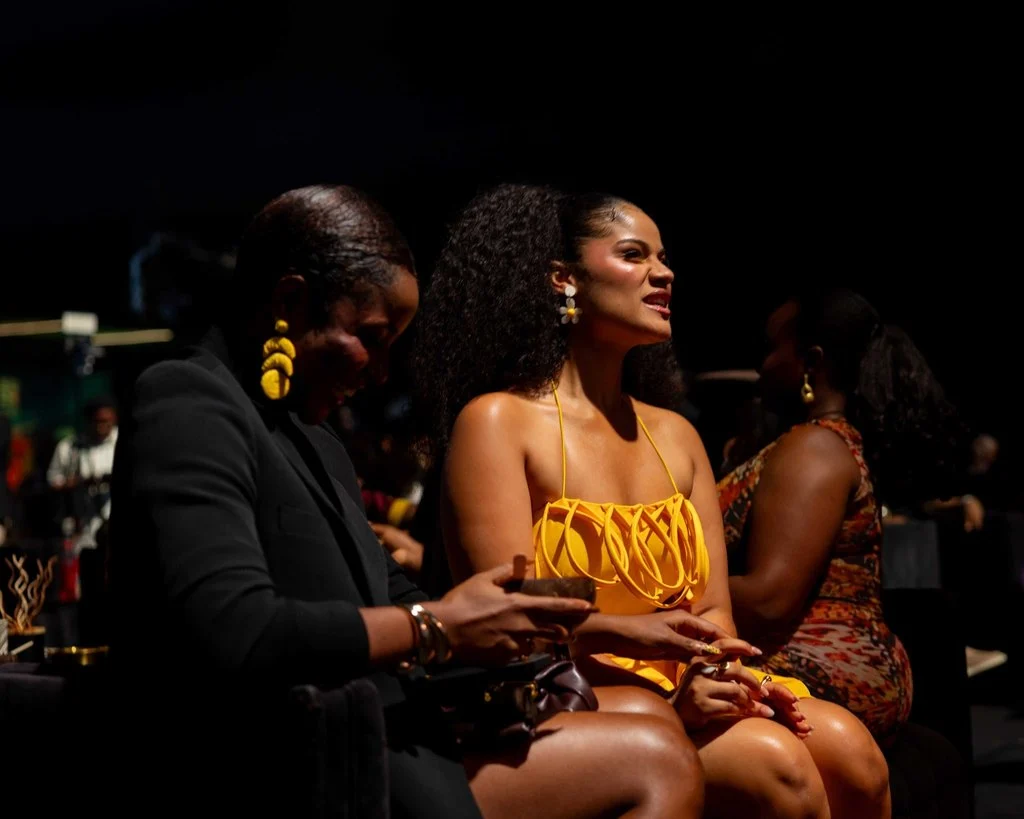
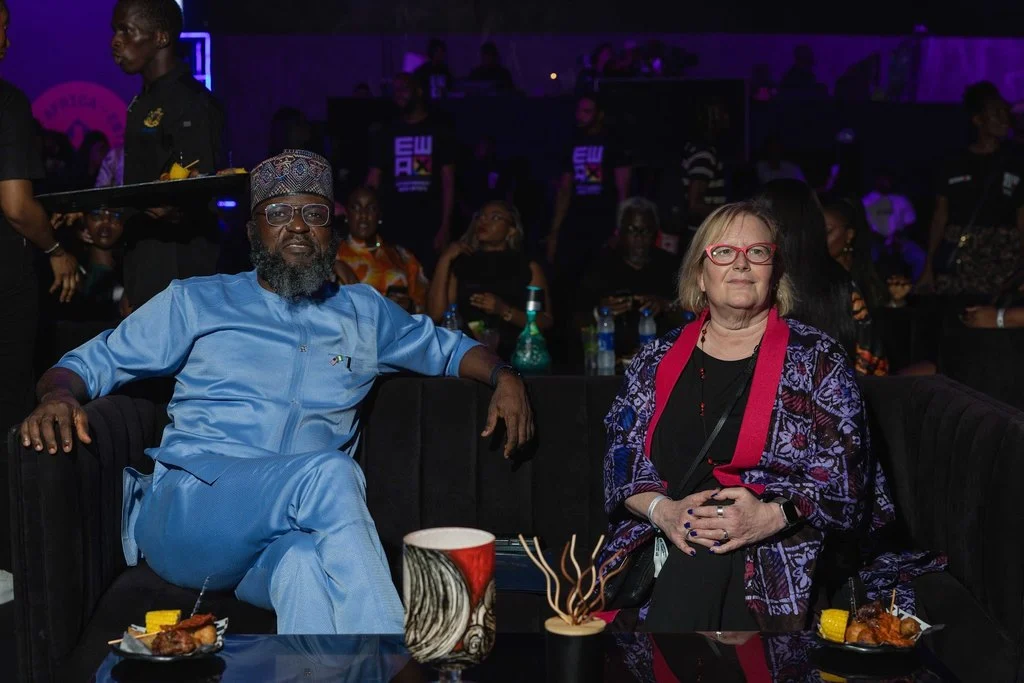
  • As a creative living in Lagos, Entertainment Week Africa (EWA) is the place to be. The event kicked off on Wednesday, November 18th at Livespot Entertainment Centre, where it officially opened its fifth edition which runs till 21st.

    EWA is celebrating five solid years of uniting Africa’s creative community, and this year’s theme is “Closing The Gap.” From music and fashion to film and tech, the night was a mix of creative economy conversations, money talk, music, performances, style and good times.

    entertainment week

    If you missed the opening night, here’s a quick rundown of everything that went down:

    1. The hosts with the most

    After the Awajo Dancers opened the stage with an epic dance, the hosts, Darey Art Alade and Nancy Isime, steered us through the opening night with speeches, activities, banter, and style.

    entertainment week

    2. Robot took the stage

    As part of an industry that’s rapidly intersecting with global innovation, EWA tapped into robotics and AI at the opening night. On stage, a robot called Libo was introduced as the third host. It walked to the front, greeted the audience and engaged. That was cool.

    3. An exclusive movie preview

    Livespot Studios decided to feed our eyes with a 35-minute exclusive preview of their new movie, University of Side Hustle. The cast includes Tobi Bakre, Martha Ehinome, Mike Afolarin, Vine Olugo, Shine Rosman, etc. There was also a performance of the movie soundtrack by a music group called 11ven.

    4. More music performances

    What’s an entertainment event without music? Ghaffar, Meji the One, Martins Feelz, Töme and many others rocked the stage.

    5. Fashion was served

    EWA officially launched its 2026 Fashion and Beauty Track with a runway showcase of African style and design. A showroom was also set up to exhibit the pieces—African excellence.

    fashion at entertainment week

    6. Government co-signs

    It wasn’t just about entertainment, glitz and glamour. There were talks of business and infrastructure. Kwara State’s First Lady, Olufolake Abdulrazaq, gave development updates on the Sugar Factory Film Studio, the Ilorin Innovation Hub and an ongoing Fela exhibition at ICAAF. Ministers Hannatu Musawa and Jumoke Oduwole also sent their goodwill. EWA’s grab of the government’s attention is a seat at the table for creatives.

    7. Taking African talent global

    Darey reflected on how EWA has hosted over 67,000 participants in five years. The goal now is to turn creative connections into sustainable dollars. With initiatives like the Deal Room, Content Market, LABSPOT, and the invite-only EWA Creative Connect (which has already touched down in London and LA), they’re closing the gap between African talent and the global market.

  • Image Credit: Pinterest

    Alt: “Choosing the right soap for acne-prone skin”

    If you’ve dealt with breakouts for years, chances are somebody has told you it’s because your skin isn’t clean enough. Well thanks to this article, you can go back and tell them that is untrue. Acne isn’t a hygiene problem, and no amount of scrubbing will fix what’s happening under your skin. What you actually need is the best soap for acne-prone skin, paired with a routine that protects your skin barrier instead of attacking it. Once you understand what causes acne in the first place, choosing the right soap gets a lot easier.

    What Acne Actually Is

    Acne is not about how often you wash your face. What causes acne is a mix of blocked pores, too much oil production, dead skin cells that don’t shed the way they should, and inflammation. Bacteria plays a part too, but it’s not the main driver; hormones and genetics do most of the damage. Once that clicks, it’s easier to stop blaming yourself and start treating your skin the right way. This one shift in thinking is often the difference between people who stick with a routine and people who give up on it after two weeks.

    Why Washing More Often Makes It Worse

    When a new pimple shows up, the first instinct for most people is to wash more, scrub harder, or reach for hot water. This is exactly the wrong move. Stripping your skin’s natural oils only tells it to produce more oil to compensate, and that leads to more irritation and more breakouts, not fewer. If you’ve ever wondered why my acne gets worse when I wash more, this is your answer: your skin barrier is under attack, and it’s fighting back the only way it knows how. Twice a day, with a gentle cleanser and lukewarm water, is really all your skin needs.

    Image Credit: Pinterest

    Alt: “How washing too often affects acne-prone skin”

    What a Soap Can and Cannot Do

    So does soap help acne? Yes and no. A cleanser can lift off sweat, oil, and dirt sitting on your skin, and that matters because it clears the way for other products to actually work. What it cannot do is unclog a pore that’s already blocked deep down. Soap also spends less than a minute on your skin before it’s rinsed away, which is why it can never do as much as a leave-on treatment. If you’re serious about tackling breakouts, ingredients like benzoyl peroxide, retinoids, and salicylic acid for acne are the ones with real evidence behind them. No soap on the shelf, antibacterial bars included, contains these at treatment strength, but knowing this keeps your expectations where they should be.

    Where an Antibacterial Bar Fits

    An antibacterial soap has its place, just not everywhere. It works well for oily skin that needs a proper deep clean, and it holds up on tougher, spot-prone areas like the back, chest, and shoulders. It’s not built to be a facial acne treatment, especially if your skin leans dry or sensitive. If you do use one on your face or body, follow it up with a light moisturiser so your skin doesn’t dry out after. Tura Medicated Soap from The Diva Shop Nigeria is a good example of this kind of soap, built for oily and spot-prone skin, not marketed as a miracle cure.

    Body Acne Is a Different Problem

    Body acne treatment isn’t the same conversation as facial acne. Sweat trapped under tight clothes, gym wear left on too long after a workout, and hair products running down your back are common triggers most people never think about. Your back and chest skin can also take a stronger cleanser than your face, so you have more room to work with. Shower as soon as you can after sweating, wash your gym clothes and bedding regularly, and let your soap sit briefly on the affected area before rinsing off. This is where something like Tura Medicated Soap earns its keep, helping deal with the oil and sweat that keep body breakouts coming back.

    Image Credit: Pinterest

    Alt: “Washing for body acne on the back and chest”

    How to Wash When You Have Acne

    Knowing how to wash your face with acne properly makes a bigger difference than people expect. Stick to lukewarm water, not hot. Use your fingertips in soft, circular motions instead of a washcloth or scrub brush that can tear at your skin. Pat dry with a clean towel rather than rubbing. Do this morning and night, consistently, and give it time to work before you decide it isn’t. If you’re looking for a soap built with this kind of gentle routine in mind, you can check out the antibacterial range here and see what suits your skin.

    FAQs

    Can soap alone clear acne?

    Soap alone cannot clear acne because it only deals with the surface of your skin. A good cleanser removes oil and sweat, but acne comes from things happening underneath: hormones, clogged pores, dead skin buildup, and these need proper active ingredients or medical treatment to fully clear.

    What soap is good for back acne?

    Body skin is thicker than facial skin and can handle a stronger cleanser built for oil control. An antibacterial bar, used with a short lather-and-leave approach, can help manage sweat and oil across the back, chest, and shoulders.

    When should I see a dermatologist about acne?

    See a dermatologist if you’re dealing with painful cystic bumps, visible scarring, or acne that hasn’t improved after weeks of gentle, consistent care. This isn’t extreme; it’s a normal step for anyone whose skin needs more than over-the-counter products can give.

    Conclusion

    Clearing your skin takes patience and the right approach, not harsh scrubbing or expensive miracle products. Once you accept that your breakouts were never your fault, it gets easier to stick to a gentle, consistent routine. Focus on the basics, protect your skin barrier, and don’t be afraid to see a dermatologist if your skin needs more help than soap alone can give.

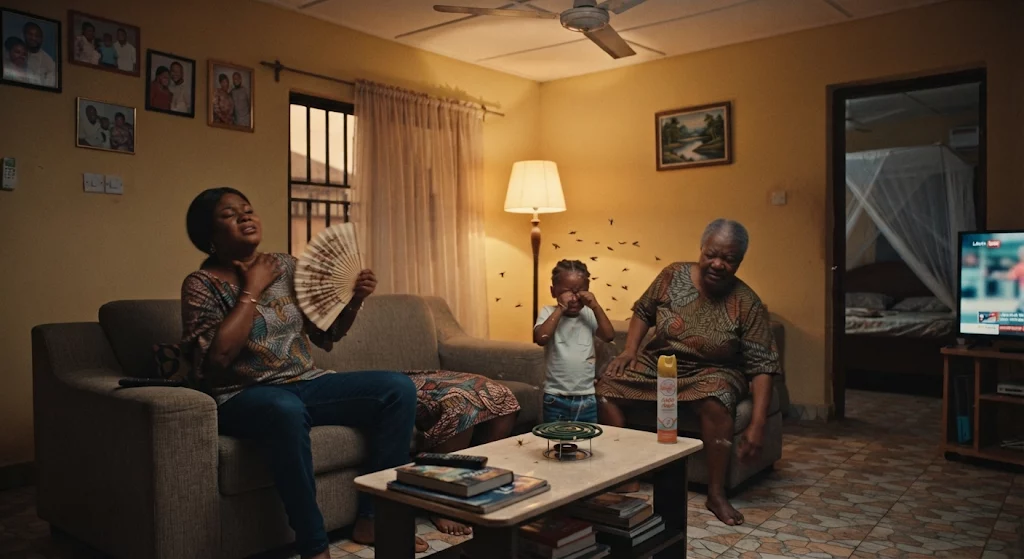
  • Everybody knows the pattern. The rains start, and within a few weeks you are killing three of them before bed instead of one. Rainy season mosquitoes are not a feeling, though. The numbers really do climb, and they don’t appear immediately when the rain falls, which is why the worst nights arrive weeks after the first heavy rain.

    Why the Rains Bring Them to Nigerian Homes

    Rain creates temporary pools, and Anopheles gambiae, the main vector across much of Nigeria, breeds in exactly that kind of shallow, sunlit water. Mosquito numbers rise within a week or two of the rain. The rise in malaria in rainy season months follows about two months behind.

    The second half is less obvious and matters more. Humidity keeps adult mosquitos alive longer, and a mosquito has to live long enough for the parasite inside it to develop before it can pass anything on. A study in north central Nigeria measured adult longevity at 6.8 days in the dry season and 16.95 days in the rains.

    More of them, living more than twice as long.

    The Breeding Sites Around Your Home

    Alt text: “Mosquito breeding sites around a Nigerian home”

    The standing water mosquitoes need is far smaller than people picture. 

    The usual mosquito breeding sites around a Nigerian house: buckets and storage drums, especially uncovered ones, blocked gutters along the roofline, old tyres in the yard, plant saucers under the pots, bottle caps and tins in the corner nobody sweeps, uncovered tanks, and puddles that sit for days.

    Egg to flying adult takes ten to fourteen days for Anopheles, so anything holding water a fortnight is capable of producing mosquitos.

    The honest limit is that mosquitoes travel. Your compound being clear helps, and helps much less when the one next door is not.

    The Problems Everybody Recognises

    Four of these will sound familiar.

    The Ones That Get In When You Open the Door

    You open the door for ten seconds and three come in with you. Then the light goes on and they vanish into the ceiling until you are lying down.

    How do I stop mosquitoes coming in when it rains is really a question about gaps. The doorway is one. Windows without nets, or nets torn at one corner, are the rest, and most get in around the frame rather than through the mesh.

    Standing Water You Cannot Control

    You clear your own compound. Then there is the gutter outside the fence that has not drained in years, the empty plot next door holding water across half of it, and the street drainage everybody complains about and nobody fixes.

    That part is outside your control, which is why indoor protection is more important here than where the outdoor side can be solved.

    Power Cuts on the Worst Nights

    The plug-in is running, the light goes, and it stops. It always seems to happen on the night they are loudest.

    There is no way to dress that up. A vaporiser needs a socket, and no socket means no cover for as long as the outage lasts. Which is the argument for a second layer that you can spray and get protected.

    Children Playing Outside at Dusk

    Six in the evening, the rain has stopped, the compound has finally cooled, and no child is coming inside voluntarily.

    That hour is the start of the mosquito biting window. You are not keeping them in, so the workable version is long sleeves as the sun sets.

    What to Do Before the Season Peaks

    Everything here works better done in May than in August.

    Walk the compound weekly and empty whatever holds water. Cover the drums and the tank. Clear the gutters before the rain tests them. Check every net and door gap now, while you can still get somebody to fix them.

    Alt text: “GoodKnight Power Activ+ for rainy season mosquito protection”

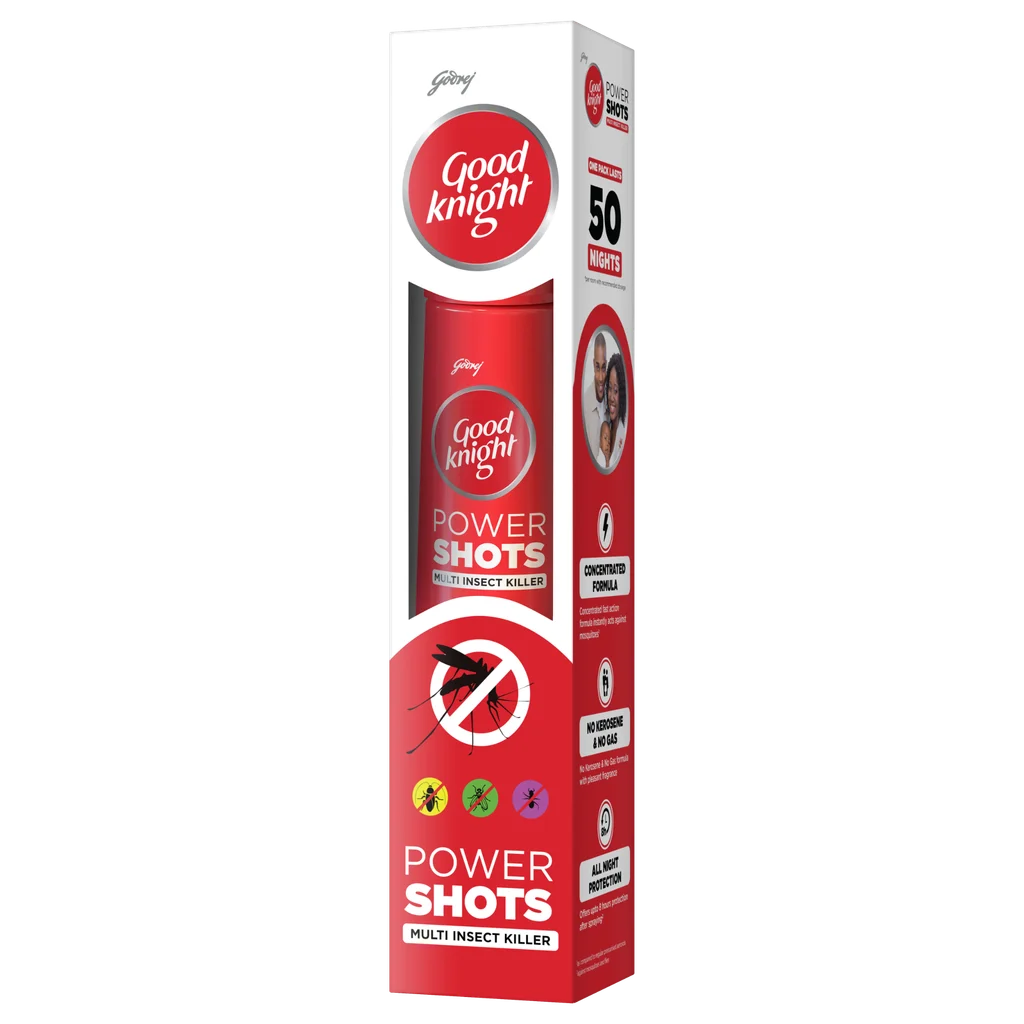
    Then get the overnight layer running. GoodKnight Power Activ+ is the one to have going through the peak, and starting early means you are not reacting at 1am. Keep a spare Power Activ+ refill on standby. A can of Power Shots alongside it covers the rest. That is most of how to prevent mosquitoes during the rainy season.

    Keeping It Up Through August and September

    Alt text: “GoodKnight Power Shots spray for indoor mosquitoes”

    August and September are the peak. Malaria cases in Nigeria climb from June and top out around then, so this is where the routine has to be consistent the most.

    GoodKnight Power Shots deals with whatever gets in, and it is the answer on the night the power goes, you can spray it while your family is indoors. Spray the room, corners and behind the curtains, you can still have your family time while it does its work. 

    Keep Power Activ+ is great for every night protection, just plug it in or dedicate a wall socket to it that you can switch on whenever you are indoors. The value of a continuous layer is that it is continuous. The GoodKnight range at The Diva Shop has both, and the case for year-round protection covers why none of this stops in November.

    FAQs

    Why Are There More Mosquitoes When It Rains?

    Rain creates the shallow temporary pools Anopheles gambiae breeds in, so numbers rise within a week or two of heavy rain. Humidity also extends adult survival, and in north central Nigeria longevity measured almost 17 days in the rains against under 7 in the dry season.

    When Is Malaria Season in Nigeria?

    Transmission peaks roughly June to October, with cases climbing from June and topping out in August and September. It is not a season with an off switch, though. Malaria transmits year-round across most of Nigeria, all year in the south and around three months in the far north.

    How Long Does It Take Mosquitoes to Breed in Standing Water?

    Around ten to fourteen days from egg to flying adult for Anopheles, depending on temperature. That is why emptying containers weekly works. Anything holding water for a few days produces nothing, and anything holding it for a fortnight or more is producing mosquitoes.

    Conclusion

    The rains do not create the problem, they enlarge it. Clear the water weekly, close the gaps before June, and have the overnight layer running before August rather than after the first bad night.

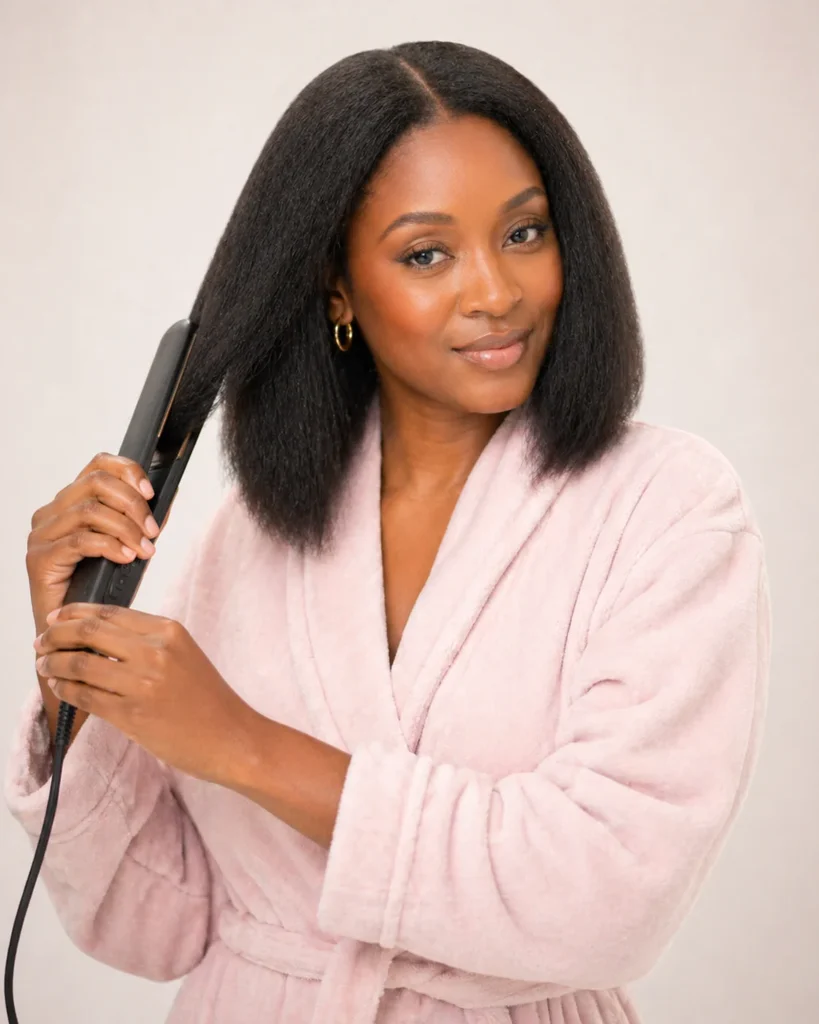
  • Relaxed hair does not have to be perfect to be healthy. It should have movement, feel comfortable and respond well to moisture and conditioning. If you want healthy relaxed hair, start by paying attention to what your hair is actually doing.

    What Healthy Relaxed Hair Actually Looks Like

    Healthy relaxed hair is realistic rather than aspirational. It has some movement instead of feeling stiff, and it should not feel dry again a few hours after moisturising. When wet, it should stretch slightly and return rather than immediately snapping.

    Your ends should look relatively even rather than thin, wispy or see-through. Your hair should also hold moisture for more than a few hours. If it constantly feels rough, dry or brittle despite regular conditioning, your routine may need adjusting.

    If you are asking how to know if your hair is healthy, look at patterns rather than one bad hair day. Consistent dryness, tangling or snapping tells you more.

    Shedding or Breakage: They Are Not the Same Thing

    Shedding is hair completing its natural growth cycle and coming away from the scalp. A shed strand comes from the root and may have a small white or club-shaped bulb at one end. Broken hair is different. It is usually a shorter piece with no bulb because it has snapped somewhere along the shaft.

    This distinction matters. Seeing strands in your comb does not automatically mean your hair is damaged. Look at what you are actually losing. Full-length strands with a bulb point towards shedding. Numerous short pieces without a bulb, especially around your clothes or sink, are more likely relaxed hair breakage.

    The Early Signs Most People Miss

    Some signs of damaged relaxed hair develop gradually. Ends that become increasingly thin, hair that tangles more than usual, excessive dryness and snapping during detangling are all worth noticing.

    Another clue is how your hair behaves after moisturising. If it feels soft briefly but becomes dry and brittle again quickly, adding more product may not solve the problem. Look instead at your conditioning routine, handling, heat use and chemical processing.

    Protein or Moisture: How to Tell Which You Need

    The practical way to assess protein moisture balance is to watch how your hair behaves when wet. Hair that feels rough, straw-like or stiff and snaps quickly generally needs more moisture. Hair that stretches excessively, feels mushy or limp when wet and does not bounce back generally needs protein or reconstruction.

    So, how do I know if my hair needs protein or moisture? Use that wet-hair response as your starting point rather than automatically adding whichever treatment is popular. A moisturising deep conditioner most weeks can support softness and flexibility, while a protein or reconstructing treatment every four to six weeks may help when hair needs more structure.

    MegaGrowth Deep Conditioner can fit into the moisturising side of that routine and support softer, more flexible hair. Between washes, Breakfree Leave-In Strengthener can help maintain moisture and manageability without weighing hair down.

    Where Damage Shows Up First

    Damage often becomes obvious at the ends because they are the oldest part of the hair. They have experienced more washing, styling, friction and heat than newer hair closer to the scalp.

    The demarcation line, where new growth meets relaxed hair, is another vulnerable area. The texture change creates a weaker point, particularly during washing and detangling.

    Pay attention to both areas. Thinning ends and lots of short broken pieces around new growth are signs to reduce manipulation and improve protection.

    What to Change, and How Long Before You See It

    Start with the habits most likely to reduce unnecessary stress. Be gentle when detangling, limit excessive heat and avoid repeatedly manipulating fragile ends. Keep your conditioning routine consistent instead of changing products every week.

    MegaGrowth Damage Protection can support an aftercare routine focused on protecting hair during everyday styling and handling. But the goal is not to make damaged hair healthy overnight. Damaged hair does not repair itself. It has to be protected while new, healthier growth comes in.

    Measure progress over months, not weeks. You may notice less snapping before you see a dramatic difference in length. Consistency allows healthy new growth to remain on your head long enough to become visible length.

    FAQs

    Why is my relaxed hair breaking?

    Relaxed hair can break when it is overprocessed, repeatedly manipulated, excessively heat-styled or not adequately conditioned. Breakage can also happen at the demarcation line where new growth meets relaxed hair. Look for short pieces without a root bulb and review how you handle, detangle and chemically process your hair.

    How do I know if my hair needs protein or moisture?

    Pay attention to how it feels and stretches when wet. Rough, stiff hair that snaps quickly often needs moisture, while hair that feels mushy, stretches excessively and fails to bounce back may need protein. Use your hair’s response to guide the next treatment.

    Is it normal for relaxed hair to shed every day?

    The important thing is what those strands look like. Full-length strands with a small bulb suggest shedding, while numerous short pieces without a bulb point more towards breakage. If shedding seems unusually heavy or is accompanied by visible thinning, seek professional advice rather than assuming it is routine shedding.

    Conclusion

    Healthy relaxed hair is not defined by zero shedding or perfectly smooth ends. It is hair that remains flexible, retains moisture, handles normal styling without excessive snapping and continues to grow without constantly losing length to breakage. If you are asking what does healthy relaxed hair look like, focus on how your hair behaves over time.

    If your routine is not giving you those results, adjust one thing at a time and give it time to work. MegaGrowth products can support a consistent conditioning and protection routine, but the bigger win is learning what your hair is telling you.

    If you notice patchy hair loss, traction alopecia or scalp symptoms, speak with a doctor or trichologist rather than treating the problem as ordinary breakage.

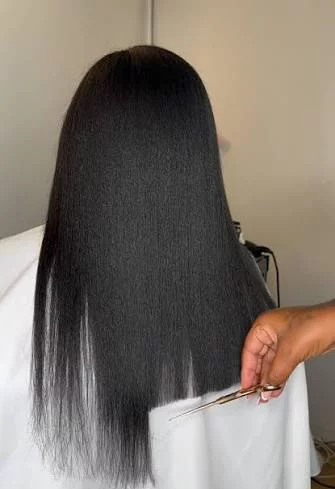
  • If you want to know how to relax hair without damage, start with four mistakes that cause most problems: overlapping onto already-relaxed hair, leaving the product on too long, combing while it processes and under-neutralising. The right technique protects the hair from unnecessary chemical and mechanical stress.

    What Damage Actually Comes From

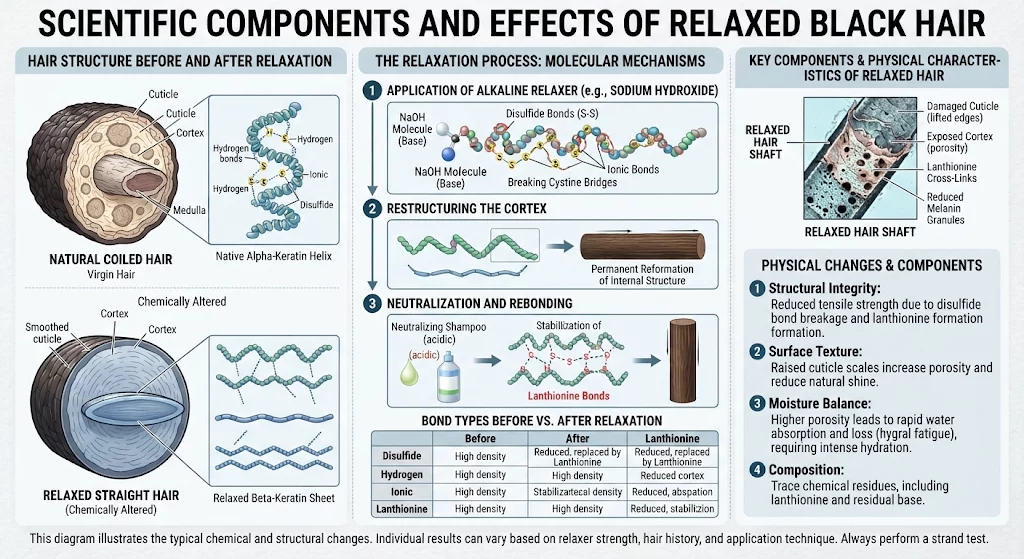
    A relaxer changes the hair’s structure to make it straighter. The process is permanent, so previously relaxed hair does not need another application.

    Overlapping is a major source of weakness because the same section receives repeated chemical processing. Breakage may not happen on relaxer day; weakened hair can show the damage weeks later. Excessive combing adds mechanical stress, while excessive processing increases chemical exposure. Neutralisation matters because the relaxer must be thoroughly rinsed away and the chemical process properly stopped.

    The Week Before

    Preparation begins before application. Avoid shampooing for a day or two beforehand unless your product instructions say otherwise. Natural oils can help reduce scalp irritation.

    Check your scalp and hair. If the scalp is sore, scratched or irritated, or the hair is already breaking badly, postpone the service. A strand test is also worthwhile, particularly with a new product or unfamiliar hair.

    Have everything ready before you begin: gloves, clips, protective base, applicator, timer, towels, water and neutralising shampoo. Working with everything within reach means you are less likely to rush once the chemical process has started.

    The Process, Step by Step

    Sectioning

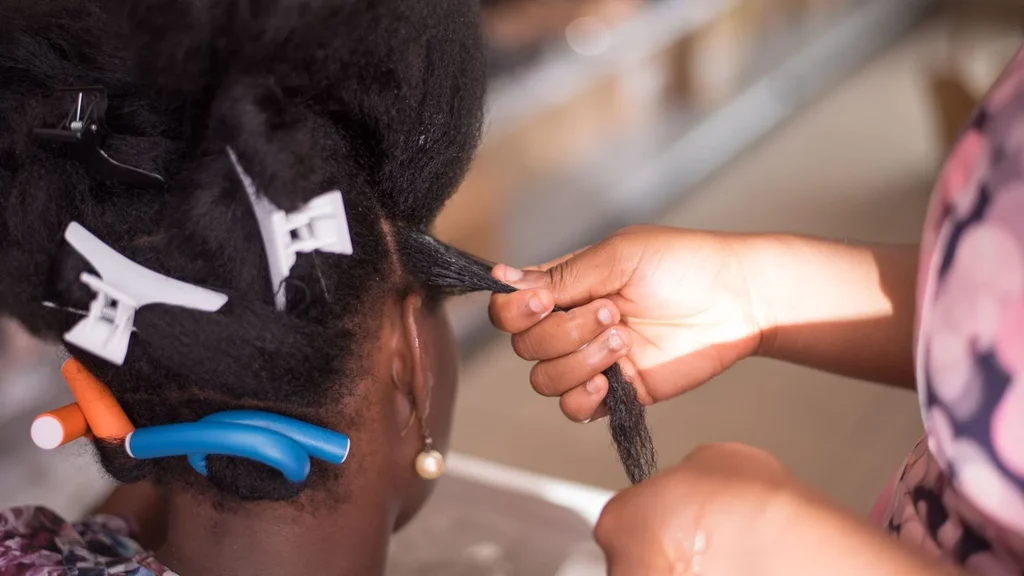
    Divide the hair into four or five sections before applying the relaxer. Good sectioning lets you work efficiently and keeps the application controlled and even.

    Basing the Scalp

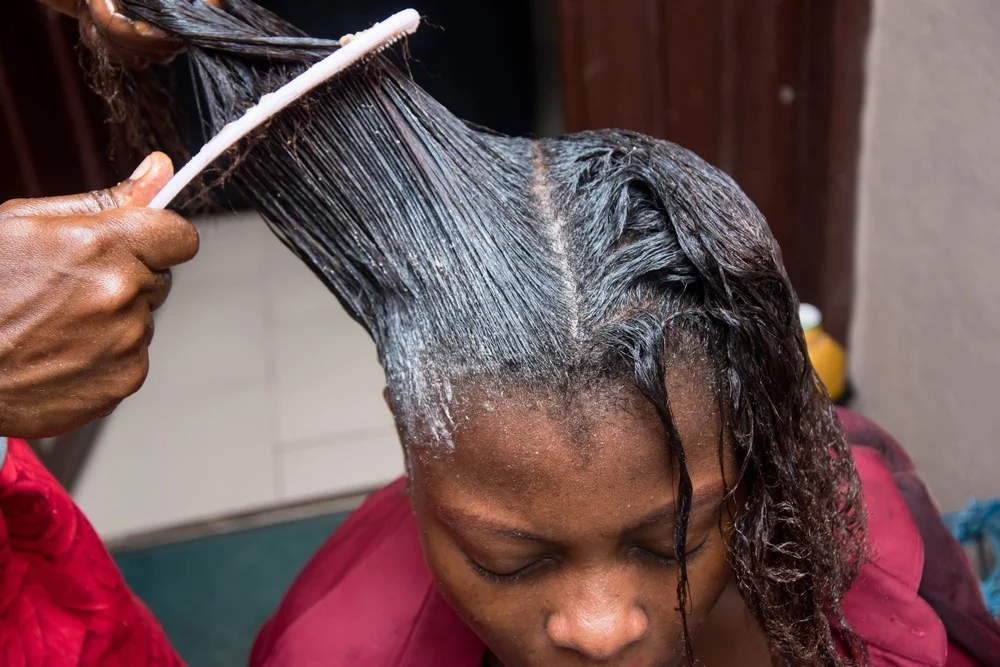
    Apply the protective base recommended for your relaxer to the scalp, hairline, ears and nape before the product comes near your head. Do not apply relaxer directly to the scalp. Pay particular attention to the hairline and nape because these areas can be delicate.

    Applying to New Growth Only

    This is the most important instruction: relaxer new growth only.

    New growth is hair that has appeared since the previous relaxer. Previously relaxed lengths have already been processed and should not receive another application.

    So, should relaxer be applied to the roots or the ends? Apply it to the new growth at the roots, not through the previously relaxed lengths. Overlapping can over-process the hair and lead to weakness and breakage. Apply the hairline and nape last because they can process quickly.

    If you use MegaGrowth Relaxer, follow the directions supplied with your specific kit for application, strength and processing time.

    Smoothing, Not Combing

    After application, gently smooth the new growth according to the product directions. Do not comb relaxer through the hair to make it straighter. Smoothing distributes the product without unnecessary manipulation; combing can add stress while the hair is chemically processing.

    Timing and Rinsing

    A common question is how long to leave relaxer on. There is no universal timing for every product or head of hair, so follow the manufacturer’s instructions for your relaxer.

    Do not extend processing because the hair is not as straight as you want. Around 80 percent straight can leave more strength than chasing bone-straight hair. Under-processed hair can be addressed at a later service; over-processed hair cannot simply be reversed.

    When the recommended time is reached, rinse thoroughly with plenty of water before neutralising. Make sure you remove as much relaxer as possible before moving to the next stage.

    Neutralising Properly

    Neutralising is not an optional final wash. After rinsing, use the neutralising shampoo specified for your relaxer system. Work it through thoroughly and follow the instructions for how many applications are required.

    If the shampoo has a colour-change indicator, use it as directed and continue until the product indicates adequate neutralisation. Do not substitute ordinary shampoo for a neutralising shampoo designed for the chemical service.

    This is also why knowing how to neutralize relaxer properly matters. Rinsing alone is not the same as completing the neutralisation process.

    Conditioning Straight Afterwards

    Once neutralisation is complete, condition immediately. A strengthening or reconstructing treatment can support chemically processed hair, followed by moisture to improve softness and manageability. Use products recommended for your system and follow their directions rather than piling on several treatments.

    Salon or at Home

    If you are wondering how do I relax my hair safely at home, preparation and precision matter. Home relaxing is common, but working alone makes the back of the head harder to reach and increases the chance of uneven application or overlap.

    A second pair of hands can make the process easier. A professional stylist can also assess new growth and previously treated hair more easily, but a salon appointment does not remove the need for good technique. Ask how the stylist will prevent overlapping and neutralise the hair.

    Either way, a strand test is worth doing. It is a small step that can reveal how your hair responds before you commit to treating the entire head.

    The First 72 Hours

    Freshly relaxed hair needs gentle handling. Avoid tight styles, unnecessary pulling and excessive heat immediately after the service.

    Keep manipulation low and moisturise when needed. Do not repeatedly test the hair by pulling or combing it. The real measure of a successful relaxer is not only how straight it looks on day one, but how well it holds up in the weeks that follow.

    FAQs

    How long should relaxer stay on your hair?

    Relaxer should stay on the hair only for the processing time specified by the manufacturer and appropriate for your hair. Do not extend the timing for a straighter result. Leaving relaxer on too long increases chemical exposure and can contribute to over-processing, weakness and breakage.

    Should relaxer be applied to the roots or the ends?

    Relaxer should be applied to new growth rather than previously relaxed lengths. The new growth needs the chemical treatment, while the ends have already been processed. Applying relaxer over those lengths can cause overlapping and unnecessary damage, particularly when repeated during successive touch-ups.

    What happens if you leave relaxer on too long?

    Leaving relaxer on too long can over-process the hair, making it weaker, drier and more prone to breakage. Follow the instructions for your specific relaxer rather than extending the processing time. If your hair is not straight enough, address it at a later service instead of processing it beyond the recommended time.

    Conclusion

    Knowing how to relax hair without damage is really about controlling every stage. Prepare the scalp, section the hair, apply only to new growth, smooth rather than comb, respect the processing time, rinse thoroughly, neutralise properly and condition immediately.

    If MegaGrowth Relaxer is part of your routine, follow the directions supplied with your specific kit. You can also shop MegaGrowth products at The Diva Shop for your wider post-relaxer routine.

    Straight hair is only one measure of a successful relaxer. Hair that remains manageable, healthy-looking and strong weeks later is the result worth aiming for.

  • GridLocked is a daily pop culture guessing game built for Nigerians. Every weekday by 9am, you’ll get six clues, sixty seconds, and an answer only a Nigerian would know.


    Today’s GridLocked is a song.

    How many clues do you need to get it right? 👀

    Share your result when done, but don’t spoil the answer for others. (Missed the last GridLocked? Play it here.)

    23 NOVEMBER 2026

    Come back every weekday by 9am for a new grid or subscribe to Z Daily, Zikoko’s daily newsletter, to get new GridLocked puzzles, real Nigerian stories and other fun content in your inbox.


    How to Play GridLocked

    • The Goal: Guess the answer for the day before time runs out. (The answer could be a Nigerian person, place, song, movie, or even slang.)
    • The Lock: You cannot type a guess until you have revealed at least one tile (clue).
    • The Reveal: Tap any tile to reveal a clue. Every clue describes the answer for the day. The fewer tiles you flip, the better.
    • The Clock: You have 60 seconds to guess right. The timer starts the moment you flip your first tile. (You get multiple guesses.)

    The GridLocked Squares: What Do They Mean?

    When the game ends, you see your guess count, total time spent, and the number of tiles flipped. The tiles are shown as white and purple squares.

    • ⬜ (White) = A tile you flipped
    • 🟪 (Purple) = A tile you left closed

    The fewer white tiles you have, the better your result.

    • Best Result = ⬜🟪🟪🟪🟪🟪 | Guesses: 1 (Only needed one clue and one guess to get it right)