• Relaxed hair does not have to be perfect to be healthy. It should have movement, feel comfortable and respond well to moisture and conditioning. If you want healthy relaxed hair, start by paying attention to what your hair is actually doing.

    What Healthy Relaxed Hair Actually Looks Like

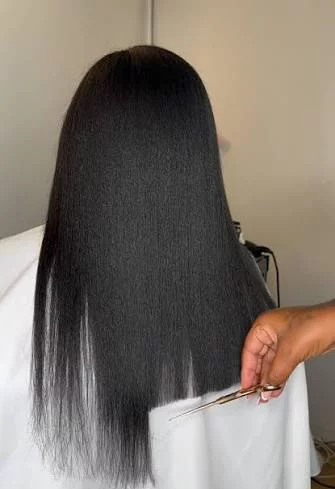
    Healthy relaxed hair is realistic rather than aspirational. It has some movement instead of feeling stiff, and it should not feel dry again a few hours after moisturising. When wet, it should stretch slightly and return rather than immediately snapping.

    Your ends should look relatively even rather than thin, wispy or see-through. Your hair should also hold moisture for more than a few hours. If it constantly feels rough, dry or brittle despite regular conditioning, your routine may need adjusting.
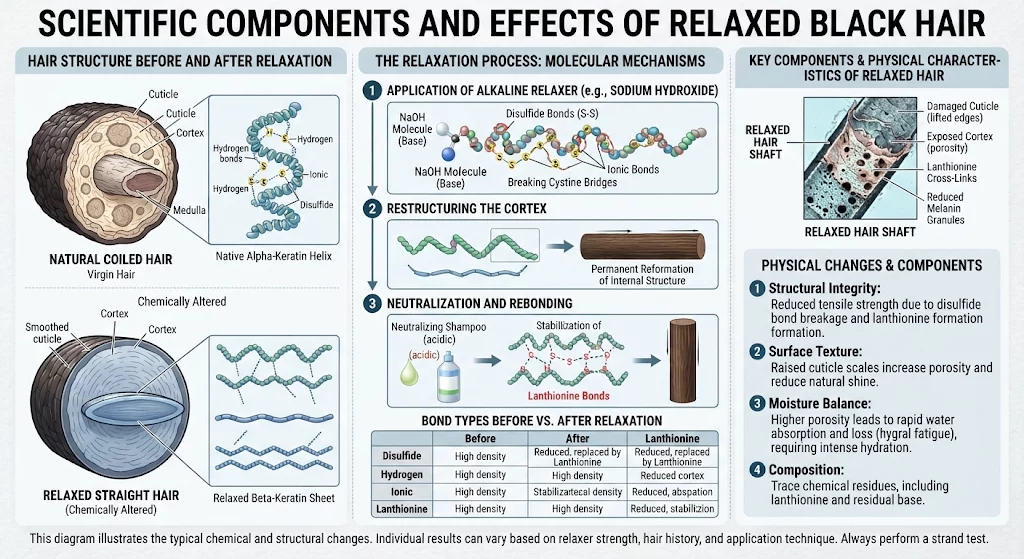
    If you are asking how to know if your hair is healthy, look at patterns rather than one bad hair day. Consistent dryness, tangling or snapping tells you more.

    Shedding or Breakage: They Are Not the Same Thing

    Shedding is hair completing its natural growth cycle and coming away from the scalp. A shed strand comes from the root and may have a small white or club-shaped bulb at one end. Broken hair is different. It is usually a shorter piece with no bulb because it has snapped somewhere along the shaft.

    This distinction matters. Seeing strands in your comb does not automatically mean your hair is damaged. Look at what you are actually losing. Full-length strands with a bulb point towards shedding. Numerous short pieces without a bulb, especially around your clothes or sink, are more likely relaxed hair breakage.

    The Early Signs Most People Miss

    Some signs of damaged relaxed hair develop gradually. Ends that become increasingly thin, hair that tangles more than usual, excessive dryness and snapping during detangling are all worth noticing.

    Another clue is how your hair behaves after moisturising. If it feels soft briefly but becomes dry and brittle again quickly, adding more product may not solve the problem. Look instead at your conditioning routine, handling, heat use and chemical processing.

    Protein or Moisture: How to Tell Which You Need

    The practical way to assess protein moisture balance is to watch how your hair behaves when wet. Hair that feels rough, straw-like or stiff and snaps quickly generally needs more moisture. Hair that stretches excessively, feels mushy or limp when wet and does not bounce back generally needs protein or reconstruction.

    So, how do I know if my hair needs protein or moisture? Use that wet-hair response as your starting point rather than automatically adding whichever treatment is popular. A moisturising deep conditioner most weeks can support softness and flexibility, while a protein or reconstructing treatment every four to six weeks may help when hair needs more structure.

    MegaGrowth Deep Conditioner can fit into the moisturising side of that routine and support softer, more flexible hair. Between washes, Breakfree Leave-In Strengthener can help maintain moisture and manageability without weighing hair down.

    Where Damage Shows Up First

    Damage often becomes obvious at the ends because they are the oldest part of the hair. They have experienced more washing, styling, friction and heat than newer hair closer to the scalp.

    The demarcation line, where new growth meets relaxed hair, is another vulnerable area. The texture change creates a weaker point, particularly during washing and detangling.

    Pay attention to both areas. Thinning ends and lots of short broken pieces around new growth are signs to reduce manipulation and improve protection.

    What to Change, and How Long Before You See It
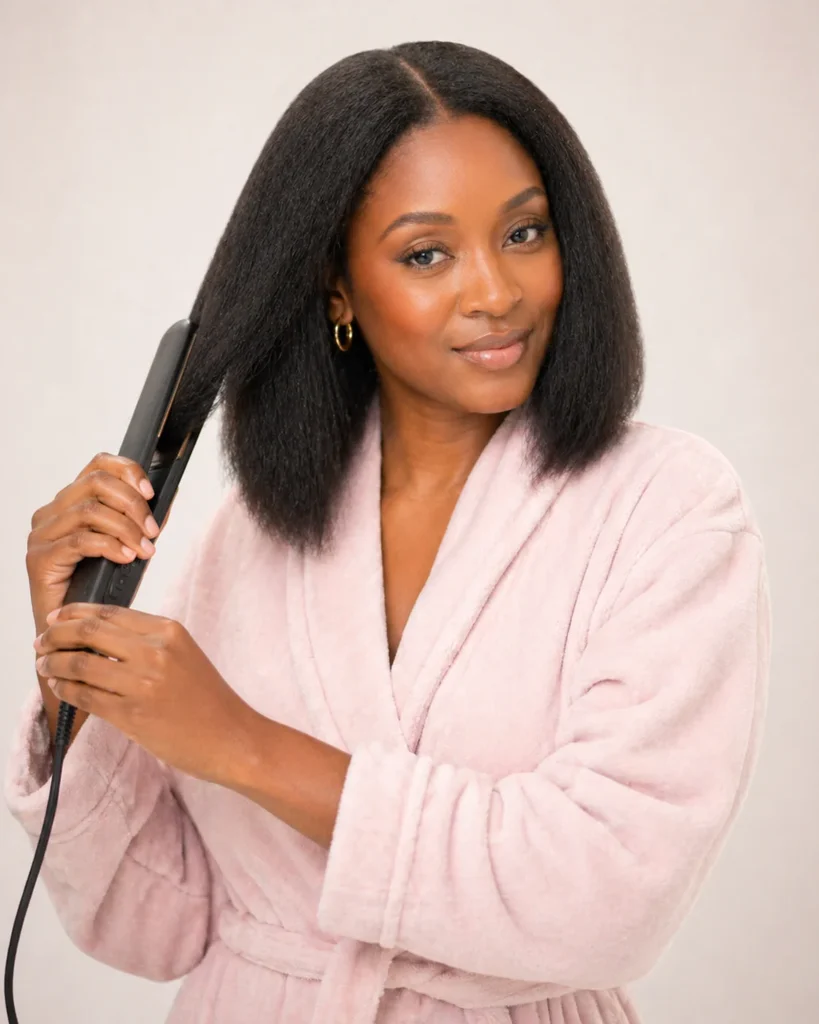
    Start with the habits most likely to reduce unnecessary stress. Be gentle when detangling, limit excessive heat and avoid repeatedly manipulating fragile ends. Keep your conditioning routine consistent instead of changing products every week.

    MegaGrowth Damage Protection can support an aftercare routine focused on protecting hair during everyday styling and handling. But the goal is not to make damaged hair healthy overnight. Damaged hair does not repair itself. It has to be protected while new, healthier growth comes in.

    Measure progress over months, not weeks. You may notice less snapping before you see a dramatic difference in length. Consistency allows healthy new growth to remain on your head long enough to become visible length.

    FAQs

    Why is my relaxed hair breaking?

    Relaxed hair can break when it is overprocessed, repeatedly manipulated, excessively heat-styled or not adequately conditioned. Breakage can also happen at the demarcation line where new growth meets relaxed hair. Look for short pieces without a root bulb and review how you handle, detangle and chemically process your hair.

    How do I know if my hair needs protein or moisture?

    Pay attention to how it feels and stretches when wet. Rough, stiff hair that snaps quickly often needs moisture, while hair that feels mushy, stretches excessively and fails to bounce back may need protein. Use your hair’s response to guide the next treatment.

    Is it normal for relaxed hair to shed every day?

    The important thing is what those strands look like. Full-length strands with a small bulb suggest shedding, while numerous short pieces without a bulb point more towards breakage. If shedding seems unusually heavy or is accompanied by visible thinning, seek professional advice rather than assuming it is routine shedding.

    Conclusion

    Healthy relaxed hair is not defined by zero shedding or perfectly smooth ends. It is hair that remains flexible, retains moisture, handles normal styling without excessive snapping and continues to grow without constantly losing length to breakage. If you are asking what does healthy relaxed hair look like, focus on how your hair behaves over time.

    If your routine is not giving you those results, adjust one thing at a time and give it time to work. MegaGrowth products can support a consistent conditioning and protection routine, but the bigger win is learning what your hair is telling you.

    If you notice patchy hair loss, traction alopecia or scalp symptoms, speak with a doctor or trichologist rather than treating the problem as ordinary breakage.
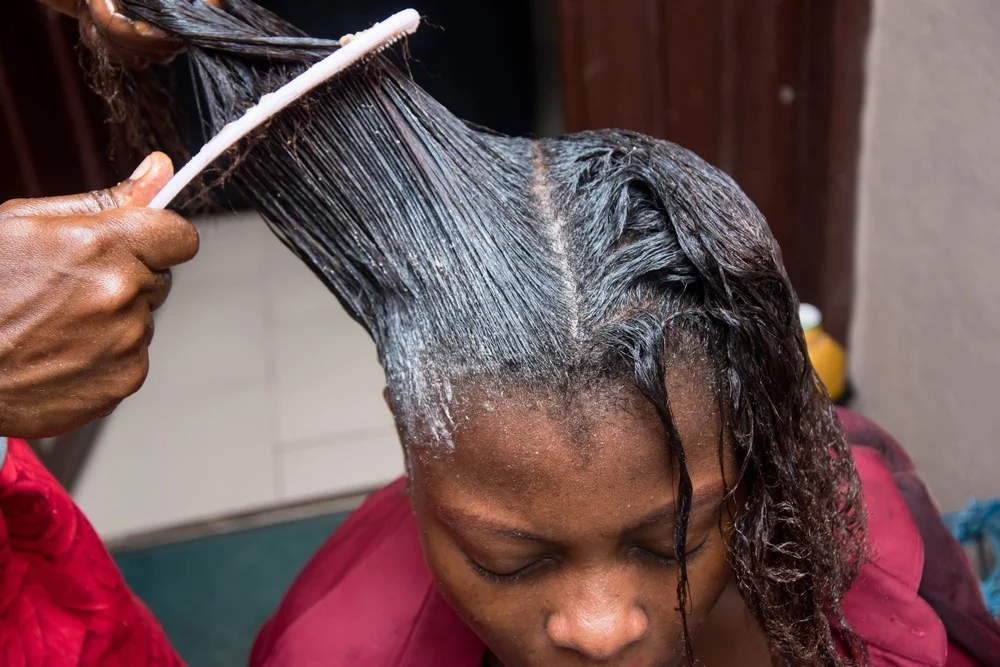
  • If you want to know how to relax hair without damage, start with four mistakes that cause most problems: overlapping onto already-relaxed hair, leaving the product on too long, combing while it processes and under-neutralising. The right technique protects the hair from unnecessary chemical and mechanical stress.

    What Damage Actually Comes From

    A relaxer changes the hair’s structure to make it straighter. The process is permanent, so previously relaxed hair does not need another application.

    Overlapping is a major source of weakness because the same section receives repeated chemical processing. Breakage may not happen on relaxer day; weakened hair can show the damage weeks later. Excessive combing adds mechanical stress, while excessive processing increases chemical exposure. Neutralisation matters because the relaxer must be thoroughly rinsed away and the chemical process properly stopped.

    The Week Before

    Preparation begins before application. Avoid shampooing for a day or two beforehand unless your product instructions say otherwise. Natural oils can help reduce scalp irritation.

    Check your scalp and hair. If the scalp is sore, scratched or irritated, or the hair is already breaking badly, postpone the service. A strand test is also worthwhile, particularly with a new product or unfamiliar hair.

    Have everything ready before you begin: gloves, clips, protective base, applicator, timer, towels, water and neutralising shampoo. Working with everything within reach means you are less likely to rush once the chemical process has started.

    The Process, Step by Step

    Sectioning

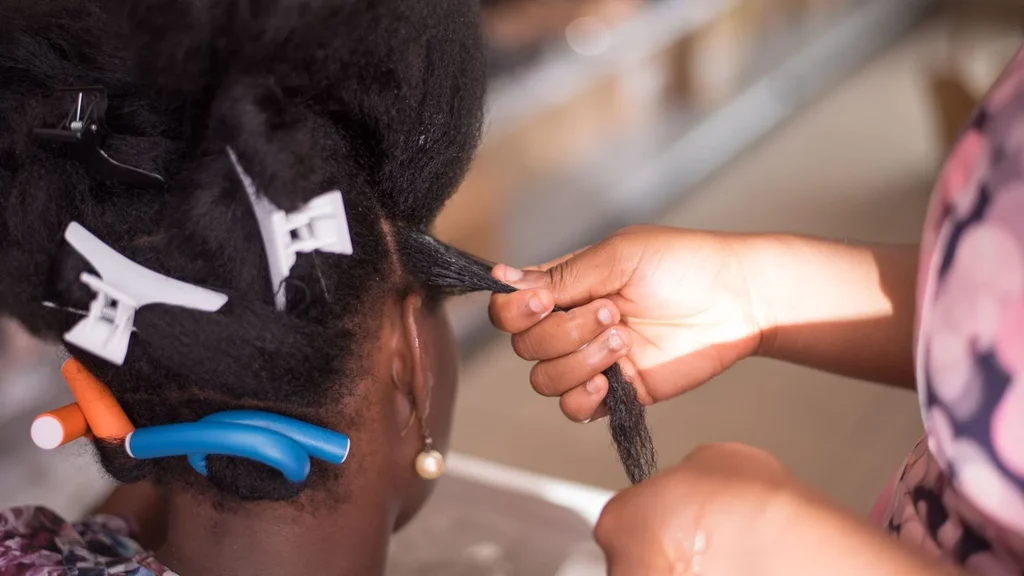
    Divide the hair into four or five sections before applying the relaxer. Good sectioning lets you work efficiently and keeps the application controlled and even.

    Basing the Scalp

    Apply the protective base recommended for your relaxer to the scalp, hairline, ears and nape before the product comes near your head. Do not apply relaxer directly to the scalp. Pay particular attention to the hairline and nape because these areas can be delicate.

    Applying to New Growth Only

    This is the most important instruction: relaxer new growth only.

    New growth is hair that has appeared since the previous relaxer. Previously relaxed lengths have already been processed and should not receive another application.

    So, should relaxer be applied to the roots or the ends? Apply it to the new growth at the roots, not through the previously relaxed lengths. Overlapping can over-process the hair and lead to weakness and breakage. Apply the hairline and nape last because they can process quickly.

    If you use MegaGrowth Relaxer, follow the directions supplied with your specific kit for application, strength and processing time.

    Smoothing, Not Combing

    After application, gently smooth the new growth according to the product directions. Do not comb relaxer through the hair to make it straighter. Smoothing distributes the product without unnecessary manipulation; combing can add stress while the hair is chemically processing.

    Timing and Rinsing

    A common question is how long to leave relaxer on. There is no universal timing for every product or head of hair, so follow the manufacturer’s instructions for your relaxer.

    Do not extend processing because the hair is not as straight as you want. Around 80 percent straight can leave more strength than chasing bone-straight hair. Under-processed hair can be addressed at a later service; over-processed hair cannot simply be reversed.

    When the recommended time is reached, rinse thoroughly with plenty of water before neutralising. Make sure you remove as much relaxer as possible before moving to the next stage.

    Neutralising Properly

    Neutralising is not an optional final wash. After rinsing, use the neutralising shampoo specified for your relaxer system. Work it through thoroughly and follow the instructions for how many applications are required.

    If the shampoo has a colour-change indicator, use it as directed and continue until the product indicates adequate neutralisation. Do not substitute ordinary shampoo for a neutralising shampoo designed for the chemical service.

    This is also why knowing how to neutralize relaxer properly matters. Rinsing alone is not the same as completing the neutralisation process.

    Conditioning Straight Afterwards

    Once neutralisation is complete, condition immediately. A strengthening or reconstructing treatment can support chemically processed hair, followed by moisture to improve softness and manageability. Use products recommended for your system and follow their directions rather than piling on several treatments.

    Salon or at Home

    If you are wondering how do I relax my hair safely at home, preparation and precision matter. Home relaxing is common, but working alone makes the back of the head harder to reach and increases the chance of uneven application or overlap.

    A second pair of hands can make the process easier. A professional stylist can also assess new growth and previously treated hair more easily, but a salon appointment does not remove the need for good technique. Ask how the stylist will prevent overlapping and neutralise the hair.

    Either way, a strand test is worth doing. It is a small step that can reveal how your hair responds before you commit to treating the entire head.

    The First 72 Hours

    Freshly relaxed hair needs gentle handling. Avoid tight styles, unnecessary pulling and excessive heat immediately after the service.

    Keep manipulation low and moisturise when needed. Do not repeatedly test the hair by pulling or combing it. The real measure of a successful relaxer is not only how straight it looks on day one, but how well it holds up in the weeks that follow.

    FAQs

    How long should relaxer stay on your hair?

    Relaxer should stay on the hair only for the processing time specified by the manufacturer and appropriate for your hair. Do not extend the timing for a straighter result. Leaving relaxer on too long increases chemical exposure and can contribute to over-processing, weakness and breakage.

    Should relaxer be applied to the roots or the ends?

    Relaxer should be applied to new growth rather than previously relaxed lengths. The new growth needs the chemical treatment, while the ends have already been processed. Applying relaxer over those lengths can cause overlapping and unnecessary damage, particularly when repeated during successive touch-ups.

    What happens if you leave relaxer on too long?

    Leaving relaxer on too long can over-process the hair, making it weaker, drier and more prone to breakage. Follow the instructions for your specific relaxer rather than extending the processing time. If your hair is not straight enough, address it at a later service instead of processing it beyond the recommended time.

    Conclusion

    Knowing how to relax hair without damage is really about controlling every stage. Prepare the scalp, section the hair, apply only to new growth, smooth rather than comb, respect the processing time, rinse thoroughly, neutralise properly and condition immediately.

    If MegaGrowth Relaxer is part of your routine, follow the directions supplied with your specific kit. You can also shop MegaGrowth products at The Diva Shop for your wider post-relaxer routine.

    Straight hair is only one measure of a successful relaxer. Hair that remains manageable, healthy-looking and strong weeks later is the result worth aiming for.

  • GridLocked is a daily pop culture guessing game built for Nigerians. Every weekday by 9am, you’ll get six clues, sixty seconds, and an answer only a Nigerian would know.


    Today’s GridLocked is a slang.

    How many clues do you need to get it right? 👀

    Share your result when done, but don’t spoil the answer for others. (Missed the last GridLocked? Play it here.)

    23 NOVEMBER 2026

    Come back every weekday by 9am for a new grid or subscribe to Z Daily, Zikoko’s daily newsletter, to get new GridLocked puzzles, real Nigerian stories and other fun content in your inbox.


    How to Play GridLocked

    • The Goal: Guess the answer for the day before time runs out. (The answer could be a Nigerian person, place, song, movie, or even slang.)
    • The Lock: You cannot type a guess until you have revealed at least one tile (clue).
    • The Reveal: Tap any tile to reveal a clue. Every clue describes the answer for the day. The fewer tiles you flip, the better.
    • The Clock: You have 60 seconds to guess right. The timer starts the moment you flip your first tile. (You get multiple guesses.)

    The GridLocked Squares: What Do They Mean?

    When the game ends, you see your guess count, total time spent, and the number of tiles flipped. The tiles are shown as white and purple squares.

    • ⬜ (White) = A tile you flipped
    • 🟪 (Purple) = A tile you left closed

    The fewer white tiles you have, the better your result.

    • Best Result = ⬜🟪🟪🟪🟪🟪 | Guesses: 1 (Only needed one clue and one guess to get it right)

  • The people behind your favourite payment apps, savings platforms and financial transactions are swapping their usual work routines for football boots as the Fintech Football Championship (FFC) 2026 prepares to bring 16 companies together for two days of sporting action.

    Taking place on November 21 and 28 at Astroturf, Osborne Road, Ikoyi, Lagos, the championship will feature five-a-side football matches between teams representing some of Nigeria’s leading fintech, banking and payments companies. A FIFA PlayStation competition will also run alongside the tournament.

    The participating companies include Fincra, Busha, Payaza, Quidax, Canarypoint, Novac, Risevest, Bluebulb, Juicyway, ParkFirst, Rabafast, Moniepoint, Optimus Bank, Flutterwave, Grey and Raenest.

    Usually, competition between these companies happens through better services, faster transactions and the race to win customers. This November, however, the competition moves to the football pitch, where goals, teamwork and match-day performances will determine who takes home the championship trophy.

    Beyond the football, FFC offers an opportunity for people across the fintech ecosystem to connect, socialise and enjoy a different side of the industry. Attendees can look forward to exciting matches, entertainment, music, food and opportunities to meet other professionals and football enthusiasts.

    Zikoko and TechCabal are media partners for the championship, supporting the event’s reach and bringing the excitement to wider audiences.

    The preliminary rounds will hold on Saturday, November 21, while the quarter-finals, semi-finals, final and award ceremony will take place on Saturday, November 28, from 9:00 a.m.

    Whether you’re coming to support your favourite company, catch up with friends or simply enjoy a good football match, FFC 2026 promises an exciting weekend.

    EVENT DETAILS

    • Event: Fintech Football Championship (FFC) 2026
    • Dates: November 21 and 28, 2026
    • Venue: Astroturf, Osborne Road, Ikoyi, Lagos
    • Activities: Five-a-side football and FIFA PlayStation competition
    • Registration: fintechchampionship.com

    This November, the competition isn’t just about transactions. It’s about goals, teamwork and bragging rights.

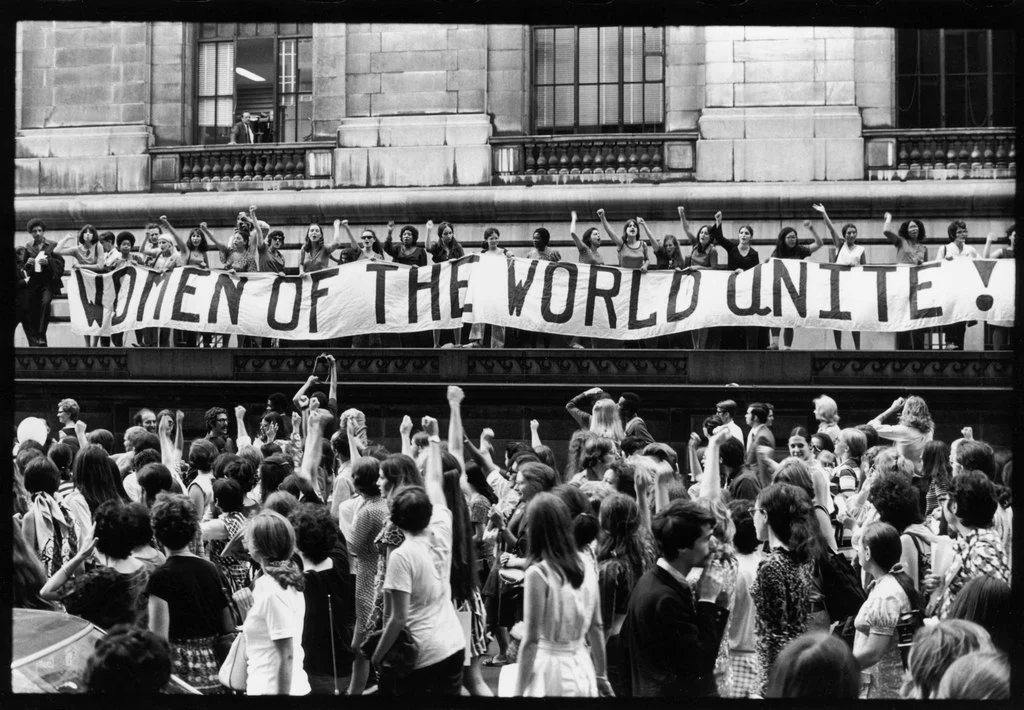
  • Women have often taken to the streets when their lives, rights and communities were under threat. Whether they demanded better working conditions or challenged colonial rule, these protests show what collective action can achieve. Some changed policies, others helped shift public opinion, and many laid the groundwork for movements that continued long after the demonstrations ended.        

    1. The Uprising of the 20,000, 1909 (USA) 

    Frustrated by low wages, long working hours and unsafe factory conditions, 23-year-old garment worker Clara Lemlich called for a general strike at a labour meeting in New York. Her speech inspired more than 20,000 mostly immigrant women to walk out of garment factories and picket their employers, despite arrests and police violence. The strike secured improved wages and working conditions in several factories and became a defining moment in America’s labour movement.

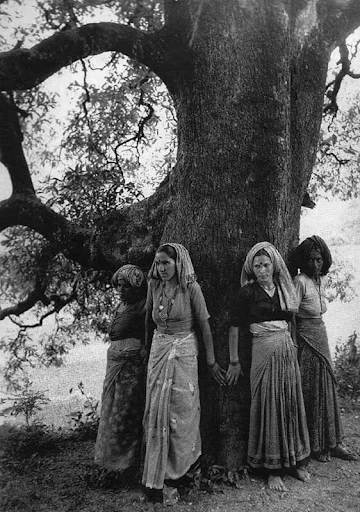
    2. The Chipko Movement, 1973–1980 (India) 

    When commercial logging threatened their forests and livelihoods, women in India’s Himalayan villages began embracing trees to prevent them from being cut down. Activist Gaura Devi became one of the movement’s most recognised leaders when she mobilised women in Reni village in 1974 to confront logging contractors, and their resistance helped secure a 15-year ban on commercial tree felling in parts of the Himalayan region, inspiring environmental movements around the world.

    3. The Escravos Takeover, 2002 (Nigeria) 

    Completely livid over environmental destruction, unemployment and the neglect of their communities by oil companies, hundreds of Itsekiri women occupied ChevronTexaco’s Escravos oil terminal on July 8, 2002. For ten days, they blocked access to its docks, airstrip and helipad, initially preventing hundreds of workers from leaving while demanding local jobs, clean water, schools, and healthcare. Their occupation forced the company into negotiations and led to commitments to employment and community development, inspiring further women-led protests across the Niger Delta. 

    4. Black Monday / Czarny Protest, 2016 (Poland) 

    When Poland’s government considered a bill that would have introduced an almost total abortion ban, women organised nationwide demonstrations and refused to attend work or school. Inspired partly by Iceland’s 1975 women’s strike, thousands dressed in black and took to the streets to protest the potential loss of reproductive rights. The demonstrations generated significant public pressure, and parliament rejected the bill days later, marking a major victory for Poland’s reproductive rights movement.

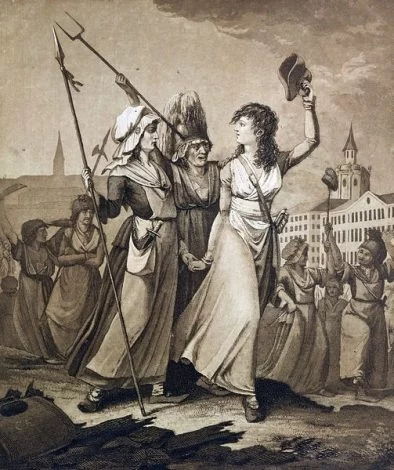
    5. Women’s March on Versailles, 1789 (France) 

    When bread prices began to soar and food shortages worsened in Paris, thousands of women, especially the market traders, marched to the Palace of Versailles demanding affordable bread and political action. They also confronted the royal family, forcing King Louis XVI and the royal household to return to Paris and live at the Tuileries Palace. The relocation brought the monarchy under close revolutionary scrutiny, weakened its independence and marked a major turning point in the French Revolution. 

    Get More Zikoko Goodness in Your Mail

    Subscribe to our newsletters and never miss any of the action

    Next Read: Cynthiaisafxxkingbitch was Born Out of Failure

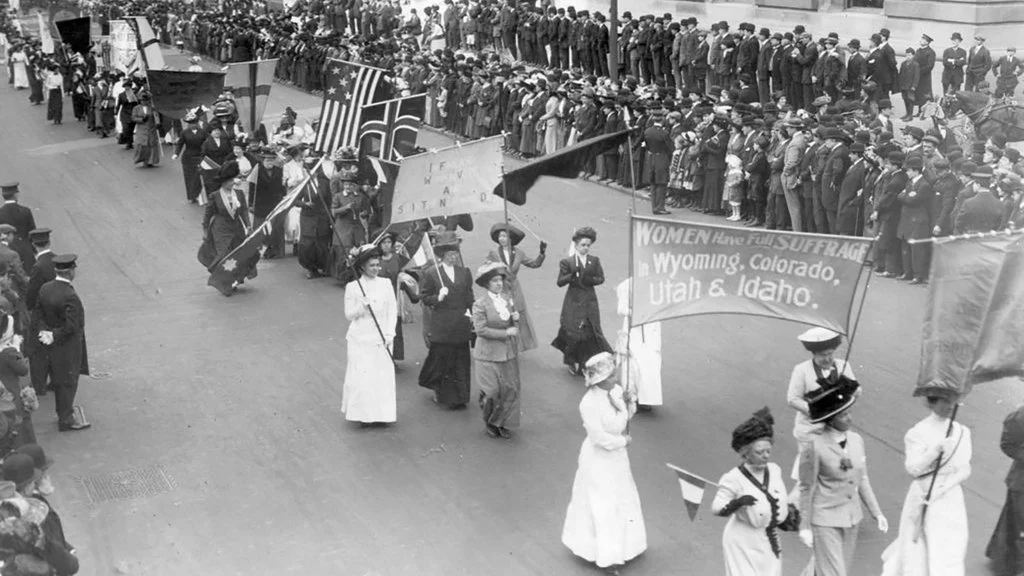
    6. Woman Suffrage Procession, 1913 (USA) 

    Organised by women’s rights activist Alice Paul and Lucy Burns, more than 5,000 women marched down Pennsylvania Avenue in Washington, D.C., demanding the right to vote. Held the day before President Woodrow Wilson’s inauguration, the marchers faced hostility and physical attacks from spectators. The demonstration attracted national attention to the suffrage movement, strengthened demands for voting rights and helped build momentum towards the ratification of the 19th Amendment in 1920.

    7. The Aba Women’s War, 1929 (Nigeria) 

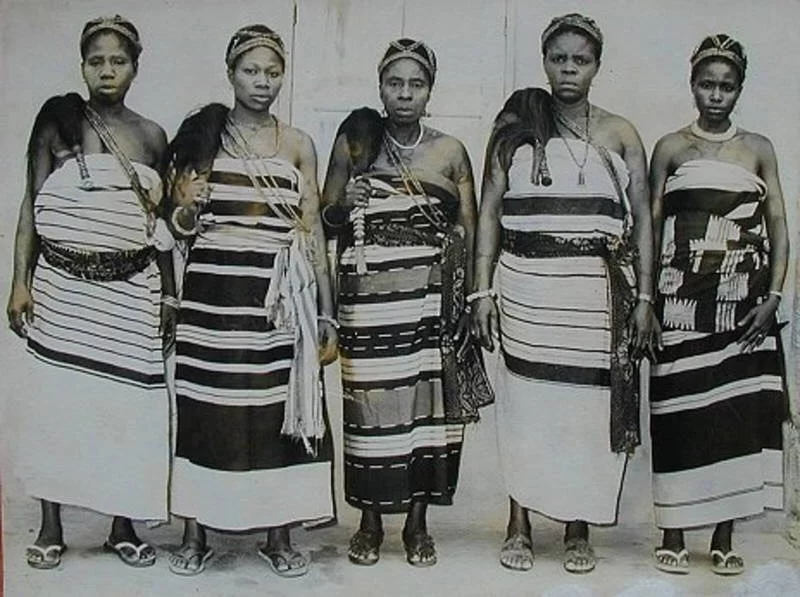
    When rumours spread that colonial authorities intended to impose taxes on women, thousands of Igbo, Ibibio and other southeastern Nigerian women mobilised against British rule and the growing power of warrant chiefs. Known as Ogu Umunwanyi, the uprising involved mass demonstrations and traditional public shaming tactics. The protests led to the abandonment of plans to tax women, the removal of several warrant chiefs and a review of the colonial system of local administration. 

    8. Abeokuta Women’s Revolt, 1946–1949 (Nigeria) 

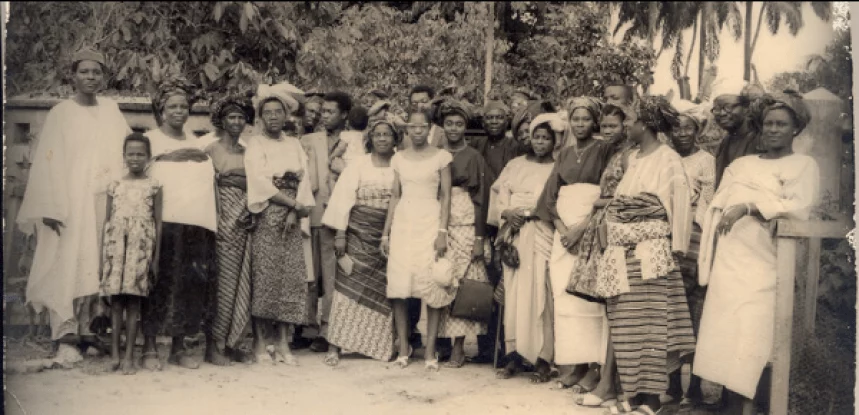
    Led by Funmilayo Ransome-Kuti, the Abeokuta Women’s Union (AWU) rallied thousands of Egba women against unfair taxation and the authoritarian rule of the Alake (ruler), Oba Ademola II. Through demonstrations, resistance to tax and protests outside the palace, they demanded political representation and an end to discriminatory policies. Their campaign secured the abolition of women’s taxation, forced the Alake into temporary abdication and strengthened women’s participation in local government.

    9. Women’s March on Pretoria, 1956 (South Africa) 

    Approximately 20,000 women marched to Pretoria’s Union Buildings to protest apartheid pass laws. The demonstration was organised by the Federation of South African Women, with leaders including Lilian Ngoyi, Helen Joseph, Rahima Moosa, and Sophia Williams-De Bruyn. They delivered petitions containing 14,000 signatures against restrictions on Black women’s movement, and even though the laws remained in place, the demonstration became a defining moment in the anti-apartheid struggle, and August 9 is now celebrated as National Women’s Day in South Africa.

    10. Women’s Day Off/ Kvennafrídagurinn,  1975 (Iceland)

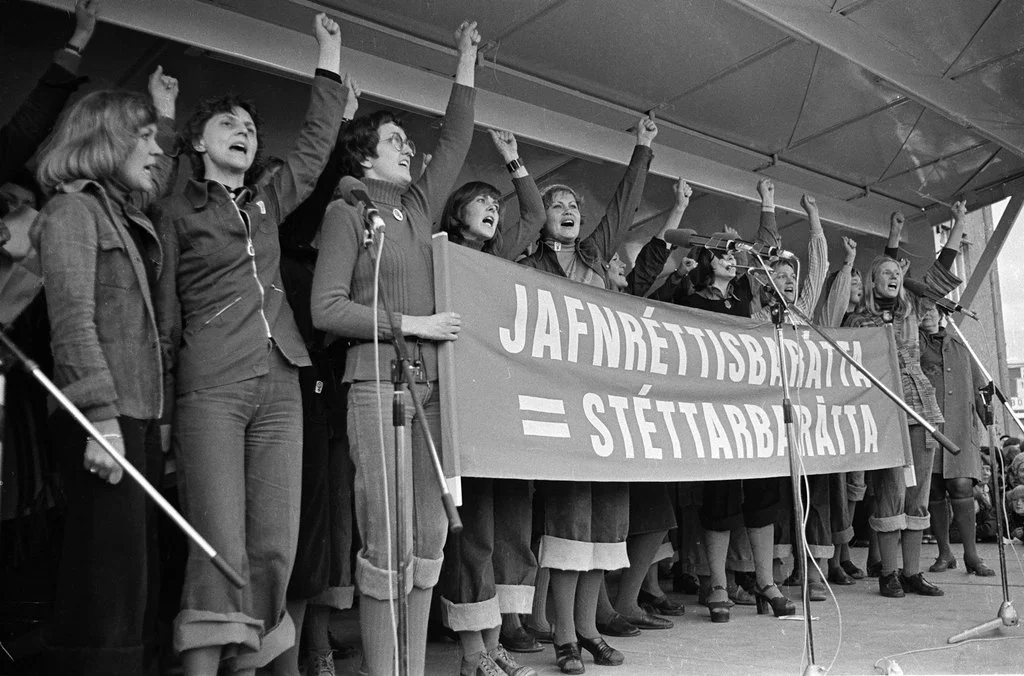
    On October 24, 1975, roughly 90% of Icelandic women refused to work, cook, clean or perform childcare duties to demonstrate how much society depended on their labour. Organised by women’s rights groups, the strike brought the country to a standstill as businesses, schools and essential services struggled without their contributions. The demonstration strengthened the campaign for gender equality and helped build momentum for Iceland’s 1976 Gender Equality Act.

    11. Mothers of the Plaza de Mayo, 1977–Present (Argentina) 

    After Argentina’s military dictatorship began forcibly disappearing people, mothers whose children had been taken started gathering in Buenos Aires’ Plaza de Mayo. Led initially by women including Azucena Villaflor, they wore white headscarves and marched every Thursday, demanding answers about their missing children. Despite intimidation and the abduction of several founding members, they continued their demonstrations, drawing international attention to the dictatorship’s human rights abuses and becoming a lasting symbol of resistance and the fight for accountability. 

    12. Mass Action for Peace, 2003 (Liberia) 

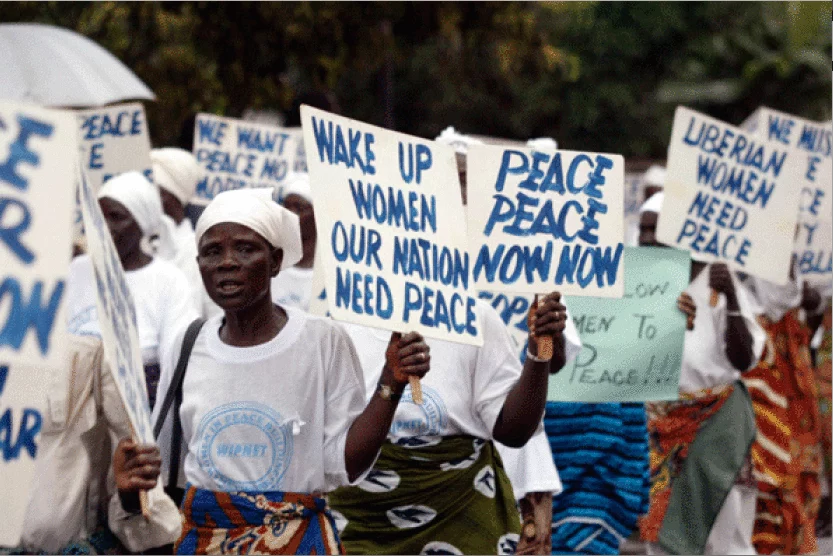
    Led by Leymah Gbowee, Liberian women from Christian and Muslim communities united to demand an end to the country’s brutal civil war. They organised demonstrations, staged sit-ins, and eventually occupied a venue for peace negotiations in Ghana, refusing to let the warring parties leave until they reached an agreement. Their campaign helped pressure the parties into signing the 2003 peace agreement, contributing to the end of the war and Liberia’s transition towards peace.

    13. Bring Back Our Girls, 2014 (Nigeria)

    After Boko Haram abducted 276 schoolgirls from Chibok, Borno State, women’s rights advocate Oby Ezekwesili and activist Aisha Yesufu became prominent figures in the #BringBackOurGirls campaign. They helped organise daily demonstrations in Abuja, demanding urgent government action while mobilising international attention through social media. The movement kept the girls’ disappearance in the public consciousness, increased pressure on the Nigerian government and helped turn their abduction into a global human rights issue.

    14. Woman, Life, Freedom Protests, 2022 (Iran) 

    When 22-year-old Mahsa Amini died in police custody after her arrest over alleged hijab violations, Iranian women took to the streets demanding freedom and an end to compulsory veiling. Women and girls cut their hair, burned their headscarves and led demonstrations despite violent government crackdowns. Although the protests did not overthrow the government, they challenged the enforcement of compulsory hijab laws and inspired a lasting wave of resistance to restrictions on women’s freedoms.


    You’ll Love: What She Said: My Ex Married a Man But Is Holding Our Business Hostage to Keep Me Close


  • Walk into almost any supermarket in Nigeria and you’ll find a shelf full of soaps promising to keep you fresh, fight germs, clear spots or stop body odour. The difficult part is deciding which one actually suits your skin?

    The phrase “medicated soap” doesn’t tell you much by itself. Different bars sold under that label can contain very different ingredients and serve very different purposes. If you’re looking for the best medicated soap in Nigeria for body odour, start with the content not just what is written on the pack.

    What a Medicated Soap Is Actually Doing

    Body odour isn’t simply the smell of sweat. Fresh sweat is generally odourless, the smell develops when bacteria on the skin break down secretions, particularly those produced by the apocrine glands around areas such as the underarms and groin.

    That’s where the right soap can help. A cleanser that removes sweat, oil and some of the bacteria involved in odour can address part of the process. It won’t stop your body from sweating, though. If excessive sweating is the bigger problem, you may need an antiperspirant as well.

    The Types on the Shelf

    Antibacterial soaps

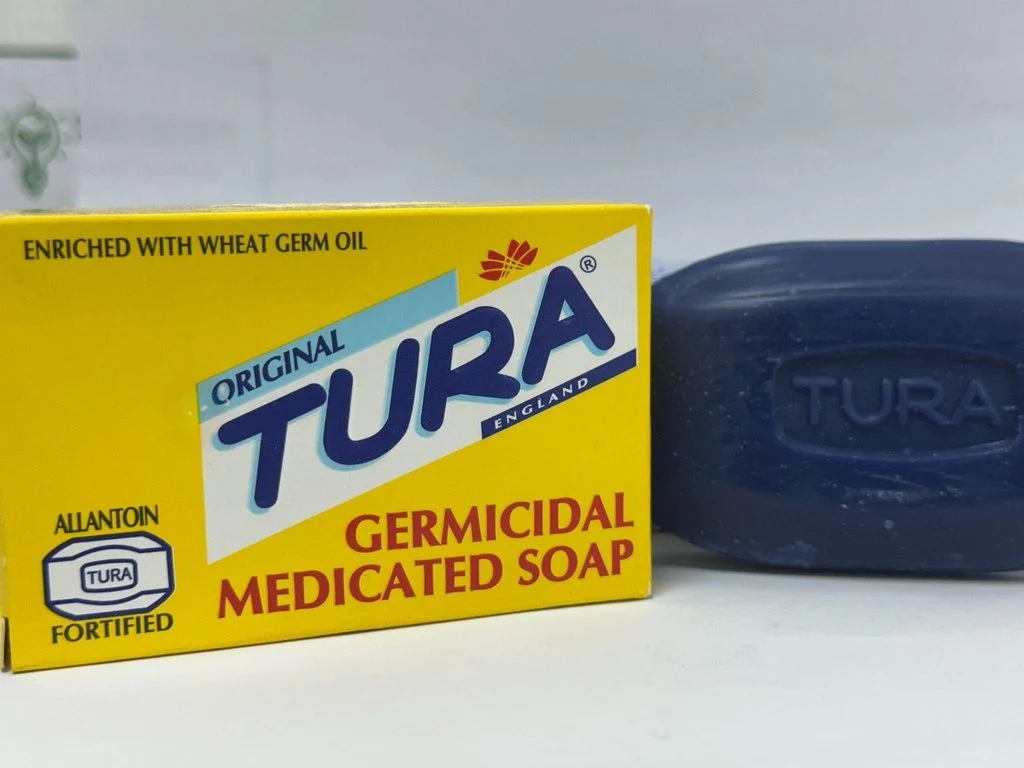
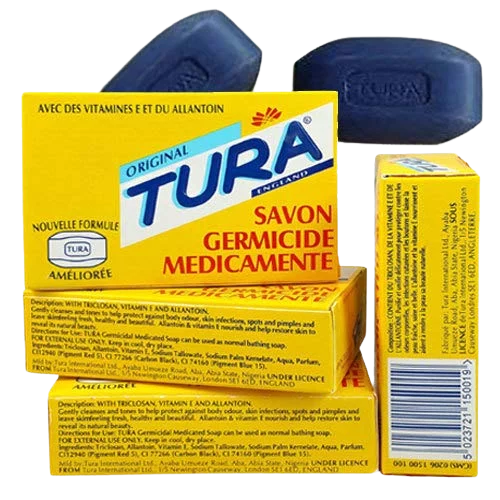
    An antibacterial soap for body odour is the most direct option if bacteria are your main concern. These soaps contain an antibacterial ingredient intended to reduce bacteria on the skin while cleansing away sweat and oil. They’re particularly worth considering if you also deal with oily or spot prone areas such as the back and chest. The trade-off is dryness, a strong cleansing formula may leave already dry or sensitive skin feeling tight. Tura Medicated Soap, for example, is listed with 0.28% triclosan, plus allantoin, vitamin E and wheat germ oil, with a minimum 70% total fatty matter. 

    Sulphur soaps

    Sulphur has long been used in skincare because of its antibacterial and antifungal properties. That makes sulphur soaps a reasonable choice for someone whose concern goes beyond ordinary body odour, particularly where fungal or oily skin problems are also involved. The downside is that sulphur can be drying and its characteristic smell isn’t everyone’s favourite. If your skin already feels dry, flaky or easily irritated, this may not be the first bar to reach for.

    Tea tree and essential oil soaps

    Tea tree and other essential oil soaps appeal to people who want a cleansing bar with a lighter, botanical feel. Tea tree oil has antimicrobial properties but a soap containing it shouldn’t automatically be treated as a medical treatment. These bars can suit someone with mild odour concerns who prefers a cleanser with a gentle feel.  Natural doesn’t necessarily mean irritation proof, essential oils can still bother sensitive skin, particularly when used frequently.

    African black soap

    African black soap for body odour is a familiar choice in Nigeria and across West Africa, largely because of its strong cleansing reputation. It can be useful for removing sweat, oil and everyday grime making it a sensible option for people who prefer a traditional cleansing bar but black soap isn’t one standard formula. Ingredients and processing vary significantly between makers, so two bars labelled “black soap” can behave very differently on the skin. If your skin is dry or sensitive, pay close attention to how your particular bar feels after washing.

    Ordinary soap with a deodorant claim

    A pleasantly scented soap can certainly make you smell fresher after a bath, but fragrance and odour control aren’t the same thing. If a bar mainly relies on perfume without an antibacterial active, it may mask an unpleasant smell rather than address the bacteria involved in producing it. That’s perfectly reasonable if you’re simply looking for freshness, but it’s worth knowing the difference before you buy.

    How to Match a Soap to Your Skin

    The answer to how to choose a medicated soap becomes much easier when you start with your skin first rather than the marketing claims.

    Oily skin: Choose a cleanser that removes excess oil effectively without leaving your skin painfully tight. An antibacterial bar may be useful if odour and breakouts occur together.

    Dry skin: Prioritise a bar that doesn’t leave your skin stripped. Look for moisturising or skin conditioning ingredients and avoid repeatedly scrubbing or washing simply because you are worried about odour.

    Sensitive skin: Choose a simpler formulation and introduce it gradually. If burning, persistent itching or redness develops, stop using it.

    Spot prone back or chest: An antibacterial cleanser can make more sense than a heavily fragranced deodorant bar, particularly if bacteria and excess oil are contributing to the problem.

    People who work outdoors or in hot conditions: A thorough wash after sweating is important but remember that soap cannot stop sweating. If perspiration itself is excessive, an antiperspirant may be the more important addition.

    These are practical starting points, not rules. Your skin should ultimately decide whether a soap suits you.

    What to Check on the Wrapper

    Before buying, turn the bar around. The front tells you what the manufacturer wants you to notice while the back tells you what you’re actually buying.

    Look for a named active ingredient: “Medicated” alone doesn’t tell you what the soap does. An ingredient list gives you something concrete to assess.

    Check the NAFDAC registration number: NAFDAC regulates cosmetics in Nigeria and its registration system provides a way to verify registered products. The agency’s online system specifically allows consumers to verify products using a NAFDAC number. 

    Check the total fatty matter (TFM). TFM is a useful quality marker for traditional bar soaps. Nigerian research referencing SON specifications places medicated soaps around the 70–76% range while studies of soaps sold in Nigeria have found that some products fall below recommended specifications.  A 70% minimum is therefore a useful benchmark when comparing bars.

    Look for an ingredient list: If a product makes big claims but doesn’t clearly tell you what is in it, that’s a reason to pause. A transparent wrapper is a much better starting point than guesswork.

    Using It So It Works

    More soap doesn’t mean more protection. Wash normally and pay attention to the areas where sweat and odour tend to build up. Rinse thoroughly and dry properly especially around skin folds.

    Tura Medicated Soap’s current product listing recommends using it twice daily, morning and evening, followed by thorough rinsing. It also lists allantoin, vitamin E and wheat germ oil alongside the antibacterial active, while stating a minimum TFM of 70%.

    That doesn’t mean everyone needs to wash twice a day. If your skin becomes tight, flaky or irritated, washing more frequently may make matters worse. And if you’re asking, “can medicated soap dry out your skin?” yes, it can depending on the formulation and your skin type.

    FAQs

    Which type of soap is best for body odour?

    For ordinary body odour, an antibacterial soap like Tura Medicated Soap is a sensible starting point because it targets bacteria involved in producing odour. However, the best choice depends on your skin. Dry or sensitive skin may need a milder formula, while someone with excessive sweating may also need an antiperspirant.

    Is Tura medicated soap safe to use every day?

    Yes. Its ingredients ensure that it isn’t harsh on your skin and as such, it safe to use as regularly as everyday. If you have any specific concerns about  your skin’s sensitivity, check the Tura medicated soap pack for ingredients to be sure. 

    Can medicated soap dry out your skin?

    Yes. Some antibacterial, sulphur or strongly cleansing formulations can remove too much oil from already dry skin. However, Tura Medicated Soap is especially formulated to ensure your skin keeps moisturized after each use. 

    Conclusion

    So, which soap is best for body odour? There isn’t one answer for every person. The better question is which formulation matches your skin, your level of sweating and the reason you’re experiencing odour.

    Check the active ingredient, NAFDAC registration, ingredient list and TFM before buying. Don’t be distracted by fragrance alone and don’t assume that washing your skin more often will solve the problem.

    For shoppers looking specifically for an antibacterial medicated bar, Tura Medicated Soap combines an antibacterial active with allantoin, vitamin E and wheat germ oil and its current listing states a minimum TFM of 70%. 

    If you’d like to try it, you can find Tura Medicated Soap at The Diva Shop Nigeria 

  • Alt text: “How to avoid mosquito bites outdoors in the evening”

    The heat pushes everybody outside in the evening, and the mosquitoes come out at the same time. That is not a coincidence you can negotiate with. Mosquitos are active mainly between dusk and dawn, which means the hours you most want to spend in the compound are the hours it is most interested in you. So here is how to avoid mosquito bites outside without giving up the evening.

    Why Evenings Outside Are the Problem

    The Anopheles mosquito species that carry malaria in Nigeria feed mainly from dusk through to dawn, peaking well after dark. That is the same window in which the compound has cooled and it is fun to sit outside, so out come the chairs.

    Anything that helps between six in the evening and daybreak is worth doing, and anything you do at two in the afternoon is decoration.

    Preparing the Space

    This is the part almost nobody does, and it produces most of the result.

    Clearing standing water comes first, and it needs days rather than hours, because you are removing the next generation, not the ones already flying. Walk the compound looking at buckets, storage drums, plant saucers, blocked gutters, old tyres and anywhere a puddle sits for days. That is most of how to keep mosquitoes away from your compound, and it costs nothing.

    Cut back dense planting too, since adult mosquitoes rest in shaded vegetation by day and move out at dusk. 

    Alt text: “GoodKnight Power Shots spray for outdoor spaces”

    Then treat the space itself. If you are wondering how do I stop mosquitoes at an outdoor event, the answer is to arrive before the guests. GoodKnight Power Shots handles a covered veranda or canopy, sprayed ahead and left to settle. The GoodKnight Incense Stick suits open air better, since it works through smoke and needs ventilation, which is what a compound gives you and a closed room does not. Each stick burns around 45 minutes, so set them along the edges of the seating.

    What Protects You While You Are Out There

    Three things, roughly in order of what they deliver.

    Covering Up

    The cheapest protection available and the least popular.

    Long sleeves, trousers and covered feet remove the easy targets, and ankles are where most evening bites land, because that is the part nobody thinks about and the part sitting closest to the ground. Loose light fabric is bearable in the heat, and a wrapper over the legs while seated does much the same job.

    Moving Air

    Alt text: “Using a fan to keep mosquitoes away outdoors”

    A standing fan on a veranda does real work, for two reasons rather than one.

    Mosquitoes are weak fliers. In one experiment, moving air at around 0.6 metres per second was enough to reduce the number orienting, landing and probing, and mosquito flight speed sits in roughly that same range.

    The second reason matters more. They find you by smell, mainly carbon dioxide and lactic acid, and a fan breaks up that scent before it reaches them. Point it low, across ankles and legs.

    Where You Sit

    Position is free, and people ignore it.

    Sit away from standing water and dense planting, and if there is a gutter or water drum on one side of the compound, put the chairs on the other. Wind direction counts too.

    What Does Not Work as Well as People Think

    Do citronella candles actually work? Barely, on their own. Studies point to minimal protection, what there is fades within a couple of hours, and any breeze pulls it apart. A citronella candle on an outdoor table is atmosphere rather than protection.

    Ultrasonic repellent apps and gadgets have no credible evidence behind them.

    Eating garlic, drinking anything in particular, and the potted plants sold as mosquito-repelling belong in the same group, since a plant in a pot repels nothing unless the leaves are crushed and applied.

    Coming Back Indoors

    Alt text: “GoodKnight Power Activ+ for overnight mosquito protection”

    The mosquitoes come in with you, which is the part people forget after a good evening.

    Clear whatever followed you inside before bed. GoodKnight Power Shots knocks down what is in the room.

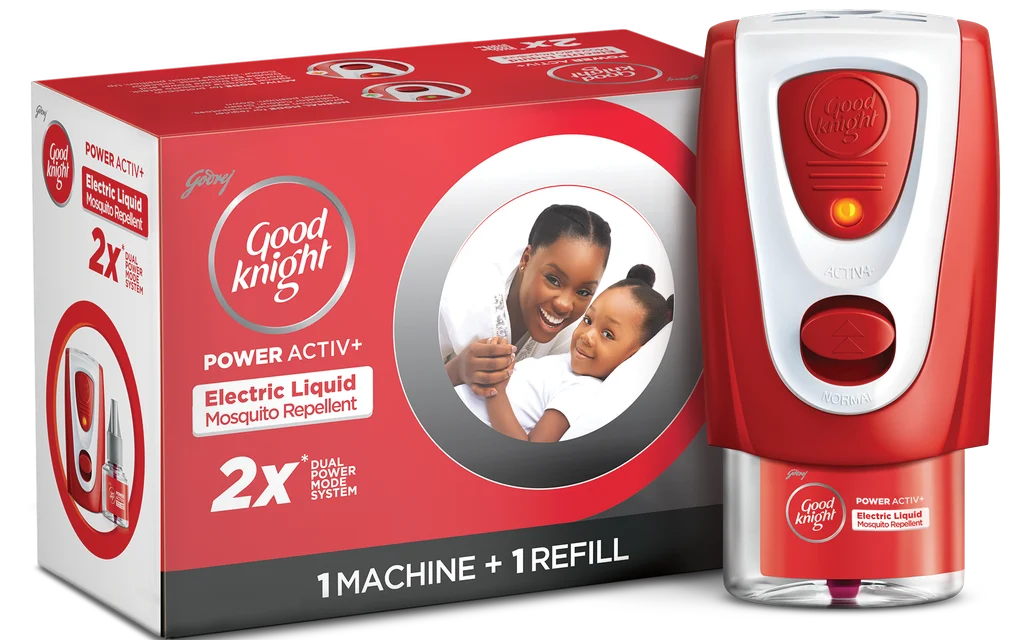
    Then GoodKnight Power Activ+ takes over for the night, running while you sleep, which is the window that decides your risk. The combi pack has the machine, a 45ml refill, a normal setting and a stronger Activ+ mode. It is all in the GoodKnight range at The Diva Shop, and the case for continuous protection covers why the overnight layer matters most.

    FAQs

    What Time of Day Do Mosquitoes Bite Most?

    The Anopheles species that transmit malaria in Nigeria bite mainly between dusk and dawn, with activity peaking well after dark. Aedes species, which carry dengue, are more active in daylight. For an evening outdoors, the window that matters runs from around sunset onwards.

    Does a Fan Keep Mosquitoes Away?

    Yes, more than most people expect. Mosquitoes are weak fliers and moving air at even modest speeds reduces landing and biting. A fan also disperses the carbon dioxide and body odour plume they navigate by, so it works two ways at once. Point it low, at ankles and legs.

    Conclusion

    Clear the water days ahead, treat the covered space before anyone sits down, put a fan where the chairs are, and have something running indoors for when everybody comes back in. None of it stops you sitting outside, which was the point.

  • Alt text: “Everyday pest control in Nigerian homes”

    Spray a room and you kill what is in the room. That is the whole problem. The cockroach you cleared on Monday is back by Thursday and you blame the insecticide. It was fine. The source never moved. Most home pest control Nigeria advice skips that part and goes straight to the can. This one goes pest by pest, since what draws a cockroach has nothing to do with what draws a fly.

    Start With What Is Bringing Them In

    Everything in your house is there for food, water, or somewhere dark to sit.

    Water is the one people underestimate. A dripping tap, a damp cupboard, a bathroom that never fully dries. Crumbs get swept up, and leaks do not.

    Then there is harbourage, the pest control word for hiding place: behind the fridge, inside cabinet frames, cracks in tiling, the drain. Nothing sprayed across an open floor reaches any of it.

    Handling the Common Ones

    Four pests, four different problems.

    How to Get Rid of Cockroaches in Nigeria

    Start with the water, not the crumbs. A cockroach survives long without food and nothing like as long without water, which is why a spotless kitchen with a leak under the sink still has cockroaches.

    They harbour in warm, dark, narrow places where something touches them on both sides: behind the fridge, inside cabinet frames, cracks in tiling, drains. Being nocturnal, they should not be visible in daylight, so seeing one at noon means the population has outgrown its hiding places.

    Which is why spraying the open floor disappoints. The insecticide has to reach the harbourage: the gaps, edges, the back of the fridge, the drain. GoodKnight Power Shots acts on cockroaches directly with up to eight hours of cover, buying time to seal the cracks and fix the leak. Nobody clears them permanently in a shared building, though. The drains connect.

    How to Get Rid of Ants in the House

    What attracts ants into the house is almost always sugar, in a form you stopped noticing. The ring of syrup on the shelf under the tin. Half a teaspoon that missed the cup. Pet food left down.

    Here is the part most people get wrong. Ants lay a chemical trail from the food back to the nest, and every ant that follows makes it stronger, so killing the ones on the counter without wiping the line leaves an invisible road sign for the next batch.

    Wipe first, with soapy water, along the whole trail rather than just where you saw them. Then find the entry point, usually a gap at the skirting or a window frame. Power Shots handles the ants in front of you and the gap decides next month.

    How to Get Rid of House Flies

    Flies are a waste problem in disguise. They breed on it, because a fly needs somewhere wet and rotting to lay eggs, and in most homes that means the kitchen bin, the yard bin, or something that rolled behind the cupboard. No spray outpaces a breeding site you have not found.

    Bins with lids that actually close, emptied before they smell, do more here than anything you can buy. Rinse the bin itself now and then, since the residue at the bottom is the real attraction. Keep food covered, and screen the kitchen window if flies are arriving from a compound you do not control.

    For the ones already inside, Power Shots is a multi insect killer spray, so it is the same can you reached for with the cockroaches.

    Mosquitoes

    Mosquitoes are a health problem first and a nuisance second, and they are covered in full elsewhere, so this is the short version of it.

    They breed in standing water and very little of it, which means the buckets, plant saucers, blocked gutter and old tyre in the yard matter more than anything you do indoors, and walking the compound weekly through the rains beats any amount of spraying. Anopheles bites between dusk and dawn, so the protection that counts is whatever runs while you are asleep rather than whatever you do before bed. GoodKnight Power Activ+ covers the room overnight, and a treated net covers whoever is under it. Between them, the sleeping hours are handled.

    What Nigerian Households Already Do, and What Works

    Alt text: “Common household pest control methods compared

    Most homes already run a routine. Some of it works, some just moves the problem around.

    Sweeping and clearing is the most underrated thing here, removing food and exposing harbourage at once. Bleach down the drains helps with smell and with what breeds in the trap, but will not reach a cockroach in the pipe wall, and coils repel mosquitoes near where they burn, though in a closed room you breathe that smoke all night.

    Camphor and naphthalene balls are worth rethinking, since naphthalene is a classified carcinogen restricted in several markets. Kerosene in the corners does little beyond making the room flammable.

    Making It Stick

    Pest control is maintenance, not an event. Once a week, wipe where food crumbs and droplets, empty and rinse the bin, check under the sink for a leak, look behind the fridge and every other crevice.

    Reinfestation depends on the drains, the neighbours and the building, so nothing is permanent. Use proven protections against household pests like the Goodknight range  GoodKnight range at The Diva Shop.

    Using Insecticide Safely at Home

    Alt text: “GoodKnight Power Shots multi insect killer spray”

    Ventilate. Open the windows during and after, and give the room time before anyone returns.

    Keep it off food surfaces and utensils, and wipe counters afterwards if you sprayed a kitchen. Treat an empty room rather than one with people or pets in it.

    Store it out of reach of children and away from heat. The dose and waiting time on a can of Power Shots are not suggestions.

    FAQs

    Why Do Cockroaches Keep Coming Back?

    Because the spray reaches the room and not the harbourage. Cockroaches live in cracks, behind appliances and in drains, so treatment that misses those places leaves the breeding population intact. Water is the other reason, since a leak under the sink sustains them however clean the kitchen.

    How Do I Stop Flies in My Kitchen?

    Find the breeding site instead of spraying the flies. Bins with tight lids, emptied and rinsed before they smell, remove the main one. Keep food covered and screen the window if they arrive from outside. Spray clears what is indoors, not what comes next.

    How Often Should I Spray My House?

    For maintenance rather than an active infestation, once a week in the problem areas is usually enough, plus whenever you see something. Follow the label. Spraying more often will not make up for an untreated harbourage point or a leak.

    Conclusion

    Find the water, find the hiding place, sort the bin. The spray comes last, not first, and once that order is right the problem stops turning up every few weeks.

  • Alt text: Boho braids hairstyle for Nigerian women using Darling hair

    Two years is a long run for a hairstyle. Most arrive loud, take over everybody’s feed for a season, then drop off. Boho braids never did that. Walk through Yaba on a Saturday, sit in any Ikeja salon, scroll for thirty seconds, and they are still there. The question is not whether the style is over, but what this one has that the others did not.

    What Boho Braids Actually Are

    Three names get used for the same hair. Bohemian braids is the formal version, boho braids is what everyone says, and goddess braids gets thrown in whenever the curls look defined.

    The style itself is simple. A boho braid is a braid, usually knotless, with loose curly pieces left hanging along its length instead of every strand tucked into the plait. Boho braids with curls showing is not a variation on the style, it is the style.

    Why It Has Lasted

    The first reason is that it is like the average Nigerian, it is adaptable to anything. A neat style easily fails when not properly maintained, and after a while on a tight box braid, everyone can see the new growth, while on boho, those same stray hairs appear as part of the loose curl.

    Then there is how broadly it flatters. Curl near the face softens a strong jaw and adds width to a narrow one, which is how two women who look nothing alike both suit it.

    Tension is the third. A knotless base with lighter loading means nothing drags at the roots, and scalp health matters to women now in a way it did not five years ago. Two questions follow. Do boho braids damage your hair, and are boho braids good for thin hair? Installed with nothing heavy at the hairline, the answers are no and yes.

    Last, it photographs. Texture holds shape under a camera flash, where a flat braid goes shiny and dead. At an owambe, that counts as something.

    The Boho Braids Versions Nigerian Women Wear

    Four versions cover most of what you see on the street.

    Boho knotless braids

    Alt text: Boho knotless braids with Darling Boho Braids

    The default, and what most people picture when they book. The braid is fed in from the root and the curly pieces are dropped in as the stylist works down, so nothing heavy sits on your hairline. Medium size is the usual choice, big enough to finish in one sitting and small enough to look expensive. It carries work, church and a night out with no adjustment. Darling Boho Braids handles this version, with the wavy fibre already set so the loose pieces fall against the braid instead of standing away.

    Goddess braids

    Alt text: Goddess braids with Darling Boho Braids

    In most Nigerian salons, goddess braids and boho braids mean the same appointment and price. Where a stylist does separate them, goddess curls are more defined and placed in a deliberate pattern while boho is looser and more scattered. The name also covers the cornrowed version, curls escaping from the plaits, which sits closer to Ghana weaving with texture added. Darling Boho Braids covers both, and it is the range Bora Bora comes from, though Bora Bora is owambe hair and not a style to wear through a working month.

    Boho braids finished with French curls

    Alt text: Boho braids finished with French curls using Darling Curly Braids

    This is the version that took over last year and has not let go since. The braid stays plain down its length and the curl sits at the ends, giving you a clean top with all the movement at the bottom. It reads younger, and it suits anyone who finds curl along the full length like too much hair. Darling Curly Braids gives you the French and Spanish curl for the finish. Just know that curly fibre tangles quicker than plain braid, so those ends will need finger work most nights.

    Bohemian twists

    Alt text: Bohemian twists with Darling Bohemian Passion Twist

    Same principle, twist instead of braid. The hair is two-strand twisted with wavy pieces left loose, so the whole head reads softer and rounder than a braided set does. It is lighter on your neck, which you notice around week two, and it blends into natural texture better than anything else on this list. Darling Bohemian Passion Twist is the range for it. It is also the fastest of the four to install, so pick this one when your appointment is Saturday morning and you have somewhere to be that evening.

    What a Good Installation Needs

    Most disappointing boho jobs come down to one mistake. The style needs two kinds of hair, braid and curl, and people buy for one. Two packs of Darling Boho Braids covers a full head at 82cm, and you still need one to two packs of curl on top, either Darling Curly Braids for a French curl finish or Bohemian Passion Twist for the twisted version. The question every stylist hears is how many packs do I need for boho braids, and the answer is more than the customer brought. Order both from the Darling range at The Diva Shop and skip the mid-appointment trip to the market.

    Say where you want the curls before she starts. Distributed along the length is the classic look, while ends only is a different style worth asking for on purpose. Watch the hairline. If it stings on day one it will still sting on day five.

    Six to eight weeks is realistic wear. Loose curl tangles faster than plain braid, so it needs finger detangling, light spray and a satin wrap at night.

    FAQs

    What is the difference between boho braids and goddess braids?

    In practice, very little. Both are braids with loose curly pieces left out, and most Nigerian salons treat the two names as one booking. Where stylists separate them, goddess braids carry tighter, defined curls in a set pattern, while boho braids look looser and more scattered.

    How many packs of hair do boho braids need?

    Two packs of Darling Boho Braids for the braid itself, plus one to two packs of curl on top. That second purchase is the one people forget. Longer or fuller sets need three, and buying both in one order saves an interrupted appointment.

    How long do boho braids last?

    Six to eight weeks with proper care. The braid holds longer, but the loose curl starts to matt around week seven, and your own hair needs the break. A satin wrap at night and gentle finger detangling get you to eight.

    Conclusion

    Boho braids did not last two years by accident. The style ages well, suits most faces and asks little of your scalp, and that combination outlives any trend cycle, so walk in knowing you are buying two hair types and not one.

  • Author: Nwachukwu Marisvega


    For a lot of men, admitting they are struggling can feel harder than dealing with the struggle itself. But behind the silence are stories of grief, loneliness, pressure and moments when simply being heard made all the difference.

    For International Men’s Day, we spoke to Nigerian men about the moments they reached breaking point, what happened when they finally opened up, and how it changed the course of their lives. Here’s what they had to say: 

    “I almost forgot I was falling apart” — Desmond*, 33

    I was so caught up in performing manliness and toxic masculinity that I didn’t realise how much I was carrying. I thought about ending my life so many times. I once tried to stab myself, but the pain made me think, “Omo, there has to be another way.” Then I considered pills instead. 

    While I was going through this,  a friend called at that exact moment. The second I heard “hello,” I broke down. My friend and her husband came over, and their hugs felt like the first time I’d been able to breathe in a long time. Her husband treated me like a brother, without judgement or shame. I stayed with them for a month and eventually started therapy. I thank God for that call.

    “I spent years thinking my sexual assault was something to be proud of” — Tayo, 31

    You know those animations where everything starts in black and white, the character sees the world as gloomy, and then slowly, the colours return? That’s what my life felt like after speaking up for me. 

    My friends helped me realise that the abuse I experienced as a child from our house help wasn’t some badge of honour I had to carry. That’s when things started becoming clearer. 

    They also connected me with a therapist, who helped me understand why certain memories kept coming back. The memories haven’t disappeared, but it’s comforting to know I’m not crazy for being pulled back into those moments. 

    The abuse also affected how I experienced sex. I’m not a virgin, but sex often made me detach from reality. Now, that weight feels lighter. I’m learning to care for my mental health, and I’m grateful to the people who helped me get here.

    Get More Zikoko Goodness in Your Mail

    Subscribe to our newsletters and never miss any of the action

    “I didn’t know how badly I needed someone to ask if I was okay” — Dave*, 28

    My father had died, my mother was seriously ill, and I was struggling to raise money to deal with both. As the eldest of two children, I felt responsible for keeping our family together. I would cry in the office bathroom, and it started affecting my work. 

    Eventually, the HR lead called me in to discuss my performance. In the middle of that conversation, he asked, “Are you okay?” That question broke me. Nobody had asked me that before. I cried so much and told him everything, including how exhausted I was and how I sometimes wished I could disappear.

    He gave me paid leave, helped with my mother’s hospital bills and raised ₦3M with my colleagues for my father’s funeral. For the first time in a long time, I felt someone was carrying me, too.

    “I thought suffering in silence was what made me a man” — Nelson*, 29

    I was raised with the idea that men should handle their own problems. Naturally, when things got hard along the way, I assumed keeping quiet was the best way to avoid worrying my parents and make them proud. But trying to manage everything alone eventually took a toll on me, and I ended up in the hospital at 2 a.m.

    When my parents saw me, they cried. I’d lost weight, gone bald, and looked nothing like myself. They asked why I hadn’t called them for help. Seeing them like that broke me, and I finally told them everything that was wrong.

    Honestly,  speaking up at that moment got me the help I desperately needed. I used to believe suffering in silence was part of being a man. Now, I speak up because someone out there might have the help or answers I need. We are only men, not God’s strongest soldiers. 

    “I found strength in letting someone stand beside me.” — Dominion*, 34

    Unlike my father, grandfather and uncles, I’ve learned that being a man doesn’t mean carrying every burden alone. My wife has been my safe space since we met, although I didn’t always know how to let her support me.  I grew up believing a man should never let a woman see his struggles. Then she told me, “Two heads can solve a problem quicker than one.” Those words changed something in me.

    Now, when work gets overwhelming, or life feels heavy, I call her. She listens, reassures me and sometimes says exactly what I need to hear. I’ve also learned to be that same safe space for her. 

    Eight years into marriage, we’re still practising this. We fight, but we communicate and find our way back to each other. There’s something deeply healing about knowing you don’t always have to be strong. I’m grateful for her. 

    “I’m still here because he stayed.” — Kennedy*, 30 

    In 2014, during my 200 level, I swallowed pills because I wanted to end my life. My roommate, Chisom, found me and rushed me to hospital. When I woke up, he asked if I was trying to ruin his life.  I begged him not to tell my parents, so he kept my secret. Instead, he listened as I told him everything.

    After that, he took care of me in ways I couldn’t manage on my own. He bathed me when I couldn’t, made sure I ate and took me to his classes so I wouldn’t be alone. He did this for months, patiently helping me find my way back. 

    I eventually chose to live because I couldn’t bear to hurt someone who fought so hard to save me. Chisom died during EndSARS.  I wish he knew how much of him I’m still carrying. I’m still here, Chisom.


    Read Also: Nigerians Share the Disturbing Hygiene Habits They’ve Secretly Tolerated From Partners